
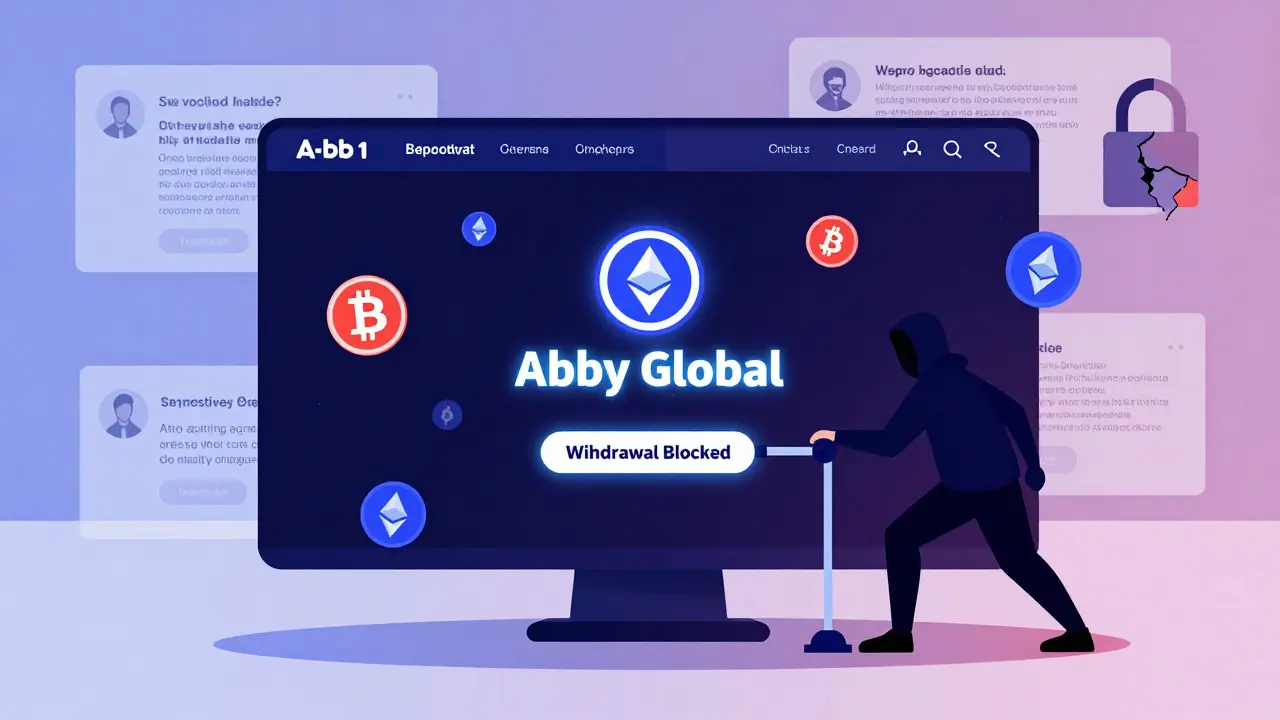
There’s no such thing as Abby Global as a cryptocurrency exchange. Not on any major registry. Not in any trusted database. Not even in the shadowy corners of the crypto world where sketchy platforms sometimes hide. If you’ve seen ads, YouTube videos, or Telegram groups pushing "Abby Global" as a place to trade Bitcoin, Ethereum, or altcoins-stop. This isn’t a review you need. It’s a warning.
What You’re Actually Seeing
The name "Abby Global" is almost certainly a misspelling or scam version of ABM Global Compliance Canada a compliance and risk management firm based in Canada that offers services like digital wallet audits and transaction monitoring for crypto businesses. ABM Global does not let you buy or sell crypto. It doesn’t have a trading platform. It doesn’t hold your funds. It helps exchanges stay legal. Think of it like a lawyer for crypto companies-not a bank.Scammers love this kind of confusion. They take real company names, tweak them by one letter, and slap them onto fake websites. They use stock images of sleek dashboards, fake testimonials, and promises of "10x returns in 7 days." Then they vanish once you deposit money. This isn’t theory-it’s standard operating procedure for crypto fraud.
How to Spot a Fake Crypto Exchange
If you’re ever unsure whether a crypto platform is real, check for these red flags:- No clear physical address or legal registration details
- Website has poor grammar, broken English, or uses stock photos of people shaking hands in front of blockchain graphics
- No verifiable team members-just names with no LinkedIn profiles or public records
- Offers bonuses just for signing up, with no clear terms
- Press releases that sound like AI wrote them, or claim to be "regulated by the Cayman Islands Financial Authority" (which doesn’t exist)
Real exchanges like Binance, Kraken, or Coinbase have years of public records, audit reports from firms like Deloitte or PwC, and clear contact info. You can call them. You can email them. You can find their headquarters on Google Maps.
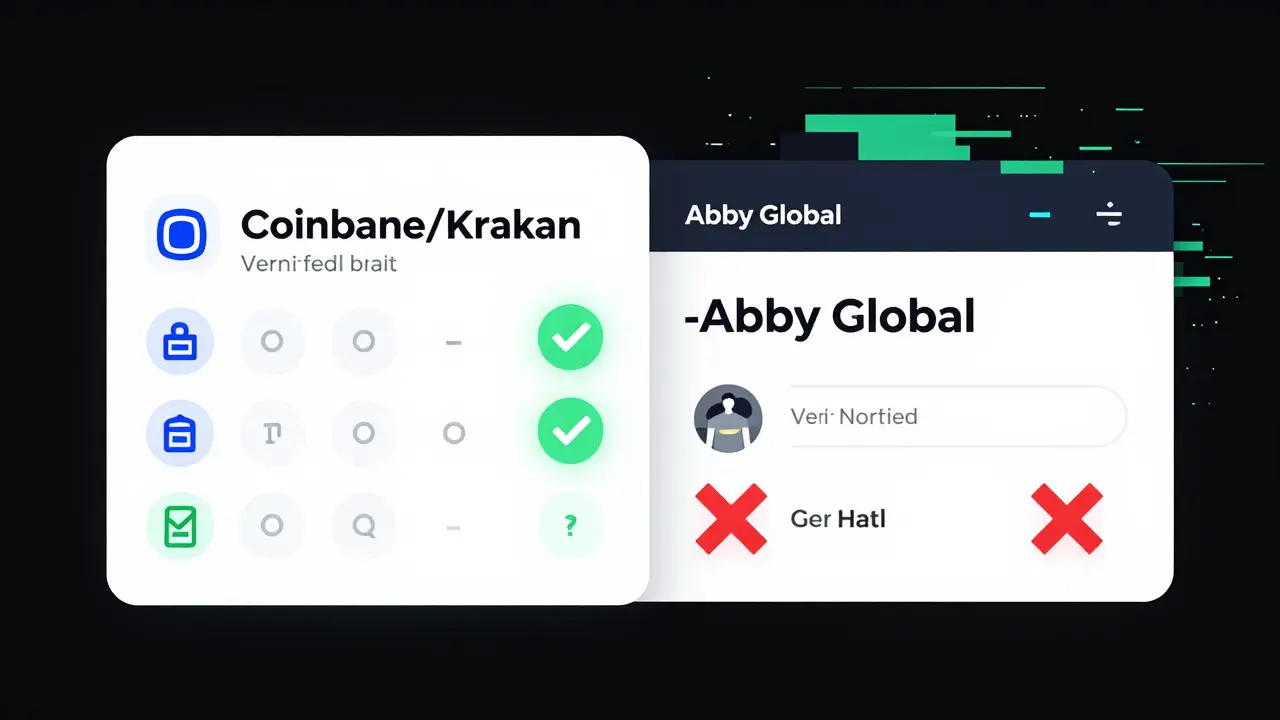
What a Legit Exchange Should Look Like
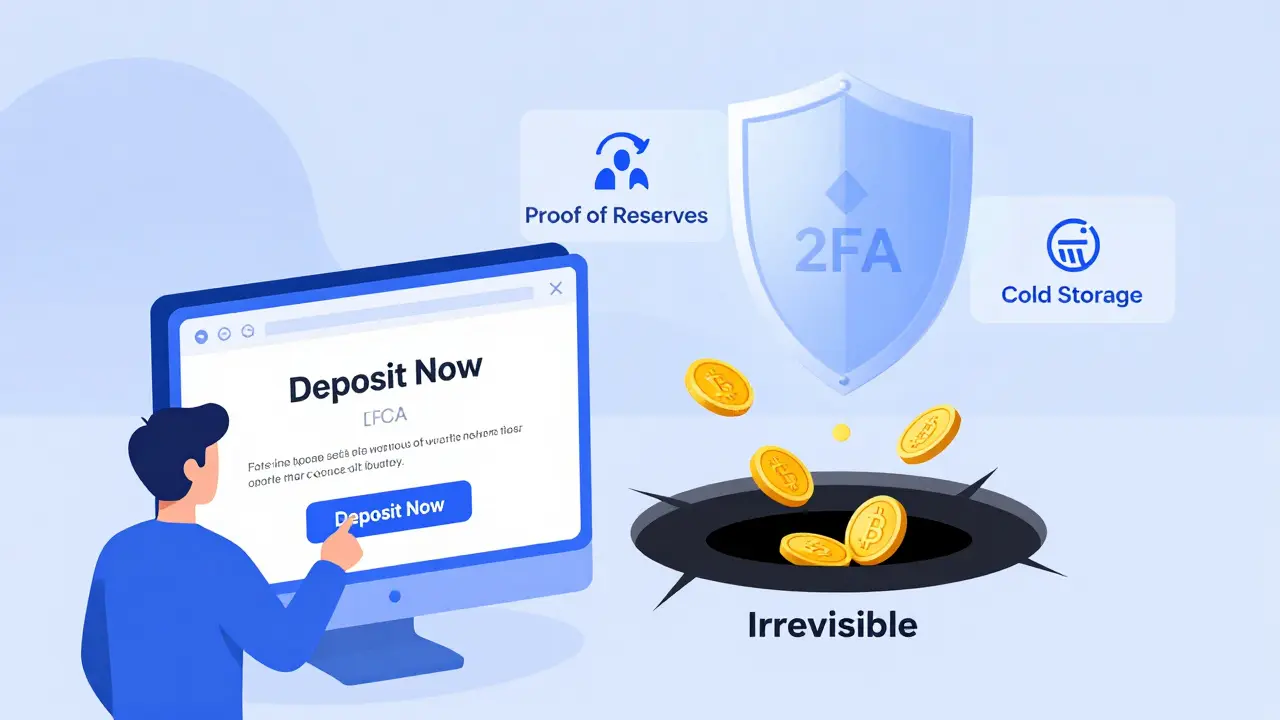
If you’re looking for a real crypto exchange, here’s what you should demand:- Cold storage: At least 95% of user funds stored offline, away from internet-connected servers. This is non-negotiable. Exchanges that keep most funds online are asking to get hacked.
- Two-factor authentication (2FA): Mandatory for every user. Not optional. Not "recommended." If they don’t force you to turn it on, walk away.
- Proof of reserves: Publicly verifiable proof that they actually hold the crypto they claim to. Some exchanges publish cryptographic proofs using Merkle trees-this is advanced, but it’s real.
- Third-party audits: Regular security reviews by firms like CertiK, Trail of Bits, or Kudelski Security. These aren’t marketing fluff-they’re technical reports you can download and read.
- Insurance coverage: If they’re insured by a known provider like Lloyd’s of London or a crypto-specific insurer like Coincover, that’s a good sign.
Chainalysis, a leading blockchain analytics firm, says top exchanges now use Multi-party computation (MPC) wallets a security technology that splits access keys across multiple devices so no single breach can steal funds. They also use Endpoint Detection and Response (EDR) tools like SentinelOne and CrowdStrike to monitor for malicious activity on internal systems. These aren’t buzzwords-they’re baseline requirements in 2026.
What Happens When You Fall for a Fake Exchange
People lose money every week to platforms like "Abby Global." Here’s what typically happens:- You sign up using an email that’s easy to fake-like "support@abbyglobal-crypto[.]com"
- You deposit $500, $2,000, or $10,000 in Bitcoin or USDT
- The platform shows your balance rising-sometimes to 3x or 5x your deposit
- You try to withdraw. They ask for more fees-"taxes," "verification deposits," "compliance charges."
- You pay. The balance keeps growing. But you can’t get your money out.
- One day, the website goes dark. The Telegram group disappears. The customer service email bounces.
Once that happens, recovery is nearly impossible. Crypto transactions are irreversible. Law enforcement rarely steps in unless the amount is over $100,000-and even then, the odds are slim.
Where to Find Real Crypto Exchanges
Stick to platforms that have been around for years and have clear, public track records:- Coinbase: U.S.-based, publicly traded, insured by Lloyd’s. Good for beginners.
- Kraken: Based in Canada, audited annually, supports over 200 cryptocurrencies.
- Binance: Largest exchange by volume. Has faced regulatory issues, but still has strong security infrastructure.
- Bitstamp: One of the oldest exchanges, founded in 2011. Based in Europe.
- Bybit: Popular for derivatives trading. Strong cold storage and insurance fund.
All of these have published security whitepapers, have real offices, and have been covered by major financial news outlets like Bloomberg, Reuters, or The Wall Street Journal.
Final Warning: Don’t Trust Names-Trust Evidence
The crypto world is full of copycats. "Abby Global" isn’t a glitch. It’s a trap. There’s no mystery here. No hidden gem. No opportunity you’re missing.If you can’t find a company’s legal registration number, its physical address, its audit reports, or its team’s LinkedIn profiles-then it’s not a business. It’s a website with a form that takes your money.
Don’t search for "Abby Global reviews." Search for "how to verify a crypto exchange." Read the Chainalysis guide on exchange security. Check Kudelski Security’s framework for penetration testing. Learn what real crypto infrastructure looks like.
There’s no shortcut. But there’s a clear path: use only exchanges that prove they’re trustworthy-not ones that just sound convincing.
Is Abby Global a real crypto exchange?
No, Abby Global does not exist as a cryptocurrency exchange. There are no official records, regulatory filings, security audits, or user reviews that verify its existence. The name appears to be a scam version of ABM Global Compliance Canada, which is a compliance firm, not a trading platform.
What’s the difference between Abby Global and ABM Global?
Abby Global is a fake name used by scammers. ABM Global Compliance Canada is a real company that provides compliance services to crypto businesses-like helping them meet KYC/AML rules. ABM Global does not let you trade crypto. It helps exchanges stay legal. Confusing the two is how people get scammed.
How do I know if a crypto exchange is safe?
Look for cold storage (95%+ of funds offline), mandatory 2FA, public proof of reserves, third-party security audits, and insurance coverage. Check their website for a physical address, team bios with LinkedIn links, and press mentions in reputable media. If any of these are missing, it’s not safe.
Can I get my money back if I sent it to Abby Global?
Almost certainly not. Crypto transactions are irreversible. Once funds leave your wallet and go to a scam platform, there’s no way to reverse them. Law enforcement rarely recovers funds unless the amount is very large and the scammer is identified-which is rare. Prevention is the only real protection.
What should I do if I think I’ve been scammed?
Stop sending more money. Take screenshots of the website, transaction IDs, and communication logs. Report it to your local financial regulator and to the FBI’s IC3 (if you’re in the U.S.) or to the New Zealand Police’s ScamWatch. Don’t pay any "recovery fees"-those are just another scam. Learn from it, and never use unverified platforms again.


Author
Ronan Caverly
I'm a blockchain analyst and market strategist bridging crypto and equities. I research protocols, decode tokenomics, and track exchange flows to spot risk and opportunity. I invest privately and advise fintech teams on go-to-market and compliance-aware growth. I also publish weekly insights to help retail and funds navigate digital asset cycles.