
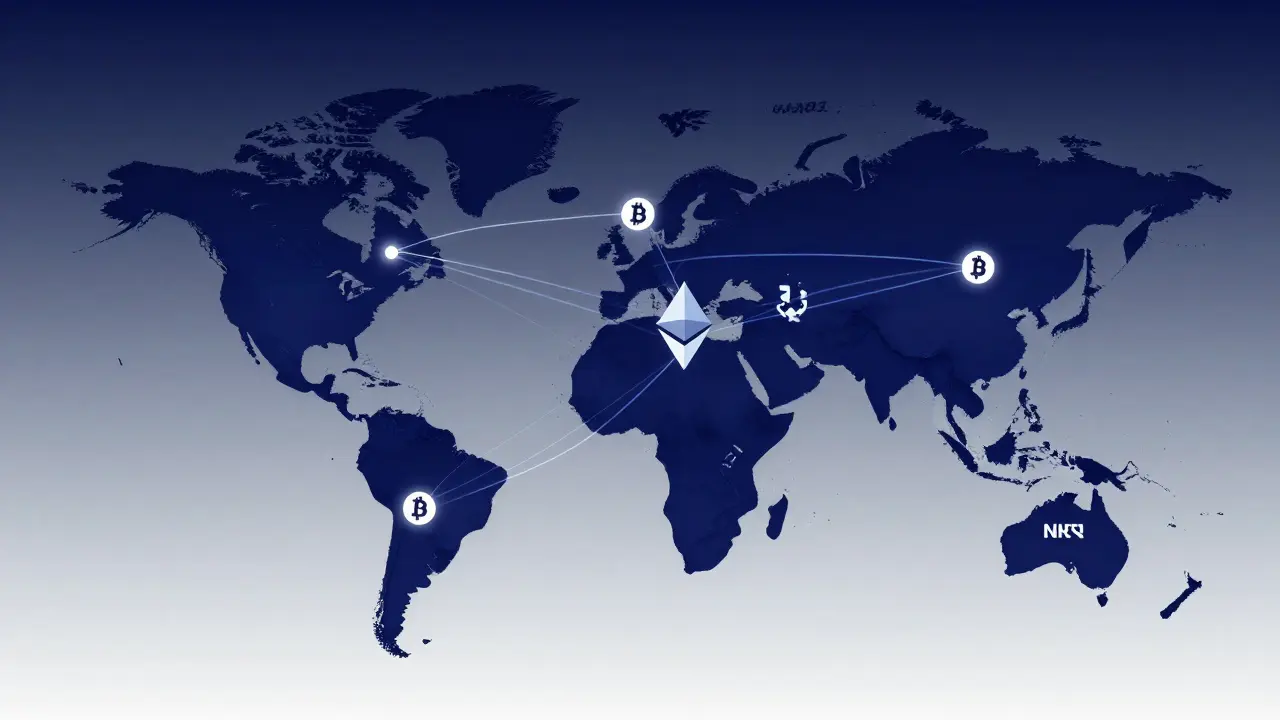
By 2026, if you’re trading, holding, or earning crypto, your tax information is no longer just a private ledger. It’s being shared automatically between governments - and you can’t opt out. This isn’t a future scare tactic. It’s happening right now. The automatic exchange of crypto tax information between countries is no longer a proposal. It’s live, enforced, and expanding fast. If you thought crypto was anonymous, think again. The system designed to track bank accounts now tracks your Bitcoin, Ethereum, and even your NFT sales.
How It Works: The CARF Framework
The engine behind this global shift is called the Crypto-Asset Reporting Framework, or CARF. Developed by the Organisation for Economic Co-operation and Development (OECD), CARF doesn’t just ask countries to share info - it forces them to. Think of it like the Common Reporting Standard (CRS), which already shares bank account details between 100+ countries. CARF just added crypto to the list. Under CARF, any company that lets you trade, swap, or cash out crypto - exchanges, wallets, DeFi platforms - must report your transactions. That includes:- Who you are (name, address, tax ID)
- What crypto you bought or sold
- When you did it
- How much you made or lost
- Who you traded with (if it’s a platform)
Who’s Doing It? The 67-Jurisdiction Push
As of late 2025, 67 countries have committed to full CARF implementation by 2028. That’s not a small group - it covers almost every major economy. The European Union moved first. Their version, called DAC8, became law in October 2023. By January 1, 2026, all EU member states started collecting data. The first reports went out in 2027. That means if you held crypto on any EU exchange in 2026, your tax office already has your transaction history. The United States didn’t sign on to CARF as a whole, but it’s playing along. The IRS now requires foreign crypto brokers to report on U.S. citizens. In return, the U.S. sends info about Americans trading on overseas platforms. It’s a reciprocal system. If you’re a U.S. person using a non-U.S. exchange, they’ll tell the IRS. If you’re a foreigner using Coinbase or Kraken, they’ll tell your home country. Other big players? Canada, Australia, Japan, South Korea, the UK, Switzerland, and Singapore - all on board. Even countries known for crypto-friendly rules, like the UAE and Malta, are complying. Why? Because if you don’t join, your citizens lose access to global exchanges. Most platforms won’t risk operating in non-compliant jurisdictions. The market is too big to ignore.What’s Being Reported? Beyond Just Bitcoin
CARF doesn’t just cover Bitcoin or Ethereum. It covers everything that acts like money or an investment:- Coins and tokens traded on centralized exchanges
- Staking rewards and yield farming income
- Crypto-to-crypto trades (BTC for ETH? That’s a taxable event)
- Payments made in crypto (if you’re paid in Dogecoin, it’s income)
- Derivatives and tokenized assets
- Even central bank digital currencies (CBDCs) are now included
The Real-World Impact: What Changes for You
If you’re an investor, this changes how you think about crypto. Before, you might’ve treated it like cash - buy, hold, forget. Now, every transaction has a paper trail. That means:- Capital gains are no longer optional to report
- Losses matter - they can offset gains, but only if documented
- Gifts and transfers between wallets might trigger reporting
- Using crypto to buy a car, a house, or a vacation? That’s a taxable sale
Challenges and Gaps in the System
This isn’t flawless. There are still cracks. First, decentralized exchanges (DEXs) like Uniswap or PancakeSwap don’t collect user IDs. They don’t know who you are. So technically, they can’t report. But CARF requires platforms to make “reasonable efforts” to identify users. If you link your wallet to a KYC’d exchange, or use a fiat gateway, your trail gets connected. Tax agencies are already building tools to trace wallet clusters. Your on-chain behavior is becoming a compliance target. Second, not all countries have the tech to process the data. Small tax agencies are struggling to build systems that can handle millions of automated reports. Some are relying on third-party vendors. Others are delaying enforcement. But the data is flowing - and eventually, it will all be matched. Third, classification varies. Is a stablecoin a currency? Is a utility token an investment? Different countries answer differently. That creates gray zones. But the OECD’s framework is designed to override those differences. If a transaction is reportable under CARF, your home country will treat it as taxable - regardless of local rules.
What Should You Do Now?
You can’t stop the system. But you can get ahead of it.- Track every transaction - even small ones. Use a crypto tax tool like Koinly, CoinTracker, or TokenTax. They integrate with most exchanges and auto-import your data.
- Know your tax obligations - in New Zealand, crypto gains are taxed as income. In the U.S., they’re capital gains. In Germany, holding over a year is tax-free. Know where you live, and how they treat crypto.
- Don’t wait for a letter - if you’ve traded crypto since 2020 and never reported it, file amended returns. Many countries have voluntary disclosure programs with reduced penalties.
- Don’t assume anonymity - if you used a non-KYC exchange, your wallet address is still traceable. Blockchain analysis firms like Chainalysis work with tax agencies. Your on-chain history is a public record.
What Comes Next?
By 2028, CARF will be fully operational across 67 jurisdictions. The next phase? Expanding to include DeFi protocols, NFT marketplaces, and even crypto mining operations. The OECD is already studying how to track mining rewards and staking pools. They’re also looking at tokenized real estate and AI-generated assets. The framework was built to scale. Expect more pressure on wallets, custodians, and even hardware device manufacturers. If your wallet app holds your private keys and lets you trade, it might soon be classified as a Reporting Crypto-Asset Service Provider (RCASP). That means it has to report - or risk being shut out of global markets. The future of crypto isn’t about anonymity. It’s about accountability. And that’s not going away.Is crypto still anonymous after CARF?
No. While blockchain transactions are public, CARF connects your identity to those transactions through exchanges and service providers. Even if you use a non-KYC platform, linking your wallet to a bank account or using a fiat gateway creates a paper trail. Tax authorities now have tools to trace wallet clusters and match them to real identities. Anonymity is gone for anyone with significant activity.
What happens if I don’t report my crypto gains?
If your exchange reports your transactions and you don’t declare them, your tax agency will match the data. You’ll receive a notice asking for payment. Penalties vary by country - from 10% to 75% of the unpaid tax, plus interest. In some places, repeated non-compliance can lead to audits, fines, or even criminal charges. It’s not worth the risk.
Do I need to report crypto I hold but don’t sell?
Generally, no - holding crypto isn’t taxable. But if you earn rewards (staking, lending, mining), those are income and must be reported. Also, if you transfer crypto between wallets you own, it’s not taxable - but some jurisdictions now require you to report those transfers if they exceed a certain value. Check your local rules.
How does CARF affect DeFi users?
DeFi protocols themselves don’t report - but if you use a KYC’d gateway to deposit fiat, or cash out to a bank account, your activity gets linked. Tax agencies are developing methods to track DeFi transactions by analyzing wallet behavior. If you earn yield or trade tokens on DeFi, you’re still responsible for reporting those gains. Ignorance isn’t a defense.
Can I avoid this by moving to a crypto-friendly country?
Moving won’t help if you’re still a tax resident of your home country. Tax residency, not location, determines your reporting obligations. Even if you live in a zero-tax country, your original tax authority may still claim you as a resident. Plus, most countries now share residency data under CARF. You can’t outsource your tax responsibility.


Author
Ronan Caverly
I'm a blockchain analyst and market strategist bridging crypto and equities. I research protocols, decode tokenomics, and track exchange flows to spot risk and opportunity. I invest privately and advise fintech teams on go-to-market and compliance-aware growth. I also publish weekly insights to help retail and funds navigate digital asset cycles.