

If you've come across a platform calling itself CCRYPTOEX (or variations like Cryptex) promising massive returns and institutional security, you need to stop and look at the facts first. In the world of digital assets, there's a thin line between a legitimate trading platform and a sophisticated trap. After digging into the operational history and regulatory status of this entity, the red flags aren't just waving-they're screaming.
The core problem here isn't just a lack of a few licenses; it's a pattern of operational failure and missing funds. While promotional sites might claim high-tech security, the reality is that users have reported blocked withdrawals and ghosted customer support. If you're looking for a place to grow your portfolio, you need a platform that actually lets you take your money back out.
The Truth About CCRYPTOEX and the Cryptex Ecosystem
To understand CCRYPTOEX, you first have to realize that "Cryptex" isn't just one company. It's a confusing web of different entities. One was a standard exchange that operated from 2017 until it shut down in 2023. Another is a broker platform flagged as potentially fraudulent, and there's even a DeFi project pushing "Hybrid Contracts" with lock-up periods lasting up to seven years.
Why does this matter? Because scammers often hijack the name of a defunct or semi-known platform to gain instant trust. When you see a site claiming to be the "new and improved" version of an exchange that already crashed, it's usually a sign that they're trying to lure in new victims using old brand recognition. For instance, Bestchange, a well-known monitoring service, formally delisted Cryptex in September 2024 specifically because of failed transactions and user complaints.
Comparing the Risk: Regulated vs. Unregulated
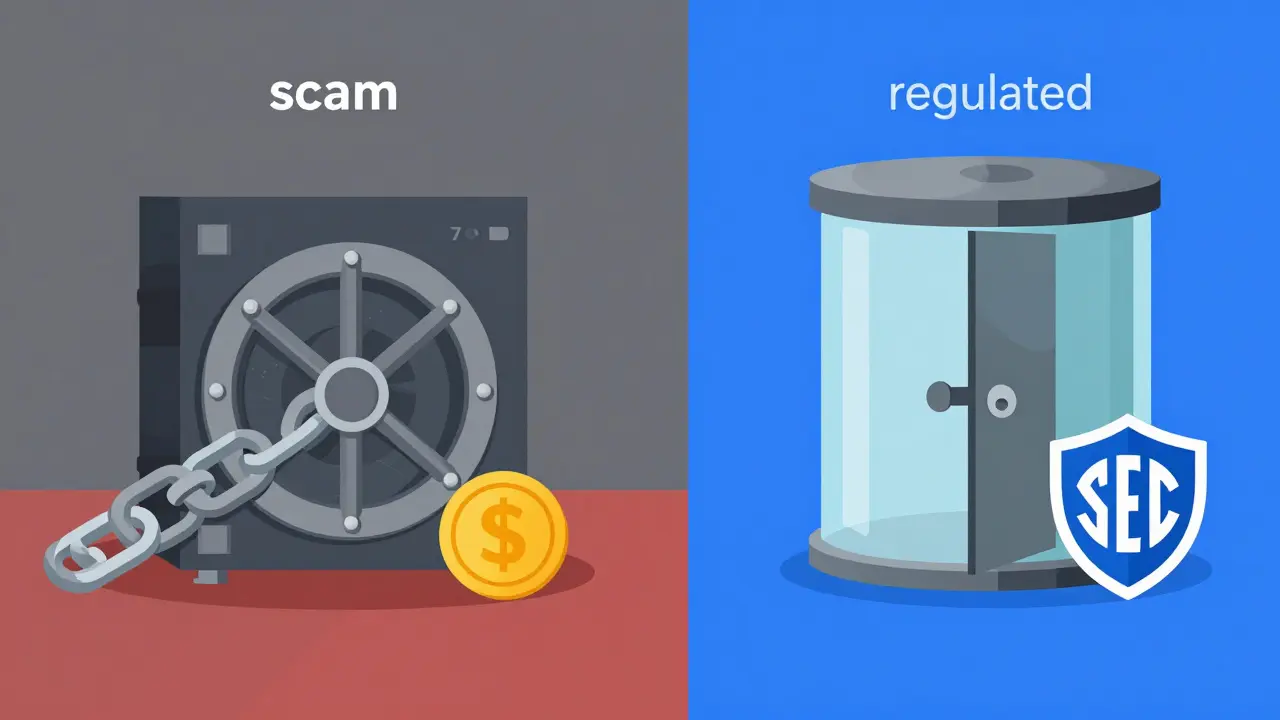
Most people think that as long as a website looks professional, it's safe. But in the Cryptocurrency space, professional design is cheap; regulation is what actually protects you. CCRYPTOEX operates without any recognized oversight from top-tier financial authorities. This puts it in a completely different risk bracket than the platforms you've probably heard of.
| Feature | CCRYPTOEX / Cryptex | Regulated Exchanges (e.g., Coinbase) |
|---|---|---|
| Regulatory Oversight | None (Registered in St. Vincent & the Grenadines) | SEC, CFTC, and other national bodies |
| Withdrawal Reliability | High reports of blocks and delays | Standardized and predictable |
| Transparency | Opaque trading conditions | Public audits and transparent fee structures |
| Security Verifiability | Unverified claims of "institutional grade" | Proven cold storage and multi-sig protocols |
When a platform is based in St. Vincent and the Grenadines, it's often a strategic choice. These jurisdictions provide almost zero regulatory oversight. According to data from Messari, unregulated exchanges in such regions have a staggering 92% failure rate within three years. If you're putting your money there, you're essentially betting against a 92% chance of failure.

Red Flags in the "Hybrid Contracts" and ROI Promises
One of the biggest hooks used by CCRYPTOEX and its affiliates is the promise of DeFi (Decentralized Finance) Hybrid Contracts. They suggest you can get compounding returns with no management fees, sometimes quoting ROI predictions that seem like fantasies. In the real world, no legitimate investment can guarantee a 2,000% return by 2030 without extreme, unhedged risk.
The "Hybrid Contract" model often requires a long-term staking period-sometimes 3 to 7 years. This is a classic tactic. By locking your funds for years, the platform ensures you can't withdraw your principal while they use that money for other purposes, or simply disappear. Compare this to legitimate DeFi protocols like Aave or Compound, where smart contracts are open-source, audited by third parties, and allow for much more flexible liquidity.
Furthermore, the business model is suspicious. Legitimate exchanges make money through small trading fees (usually between 0.1% and 0.5%). CCRYPTOEX, however, has been linked to high processing fees ranging from $100 to $1,000 per contract. This structure mirrors what the FTC identifies as a common trait in Ponzi schemes: a focus on entry fees and high-yield promises rather than actual trading volume.
User Experiences: The Warning Signs
If you look at independent forums, the story becomes very consistent. On Reddit, particularly in the r/CryptoScams community, users have shared horror stories about depositing thousands of dollars and then finding their accounts frozen. One verified user reported depositing $5,000 and being unable to withdraw a single cent for months.
The pattern usually goes like this: the platform is incredibly welcoming when you're depositing money. But the moment you request a withdrawal, the "KYC verification" process suddenly takes forever, or you're told you need to pay an additional "tax" or "activation fee" to release your funds. This is a definitive sign of a scam. No legitimate exchange asks for more money to let you withdraw the money you already have.
Even the reviews on Trustpilot reflect this, with a dismal 1.2/5 rating. The majority of these users aren't complaining about the interface or the trading pairs; they're complaining that their money is gone. When 78% of users report withdrawal issues, it's no longer a "technical glitch"-it's a business model.
How to Spot a Crypto Exchange Scam
Since there are so many platforms like CCRYPTOEX popping up, you need a mental checklist to protect your wallet. If a platform checks more than two of these boxes, run the other way:
- Unrealistic Returns: Any promise of "guaranteed" high ROI is a lie. Markets are volatile; guarantees don't exist.
- Pressure to Lock Funds: Being asked to commit your money for several years in a "contract" to get better rates is a huge red flag.
- Vague Regulation: Saying they are "registered" in a tax haven is not the same as being "regulated" by a financial authority like the FCA or the SEC.
- Payment for Withdrawals: Any request to pay a fee, tax, or deposit to "unlock" your own funds is a 100% guarantee of a scam.
- Poor Third-Party Reputation: Check sites like Bestchange or specialized scam subreddits before depositing.
Final Verdict on CCRYPTOEX
Is CCRYPTOEX a safe place to trade? Absolutely not. Between the documented shutdown of the original Cryptex exchange, the warnings from broker watchdogs, and the flood of user complaints regarding stolen funds, there is no reason to trust this platform. The claims of "institutional-grade security" are empty words designed to fool beginners.
If you have already deposited funds, your priority should be attempting to withdraw them immediately without paying any additional fees. Be wary of "fund recovery services" that claim they can get your money back for a fee; these are often "recovery scams" targeting the same victims twice. The safest path is to move your assets to a regulated exchange and use a hardware wallet for long-term storage.
Is CCRYPTOEX regulated by any financial authority?
No. CCRYPTOEX and its related entities operate without regulation from any top-tier financial authority. While they may claim registration in St. Vincent and the Grenadines, this is a low-oversight jurisdiction that does not provide the investor protections found with SEC or FCA-regulated brokers.
What are the "Hybrid Contracts" mentioned by Cryptex?
Hybrid Contracts are presented as high-yield DeFi investment opportunities with long lock-up periods (3-7 years). In reality, these are extremely high-risk instruments that lack the transparency of legitimate DeFi protocols, serving primarily as a way to lock user funds on the platform.
Why did Bestchange delist Cryptex?
Bestchange delisted the platform on September 25, 2024, after receiving numerous user complaints regarding failed transactions and the inability to withdraw funds, indicating the platform was no longer reliable for currency exchange.
Can I recover my funds if I've been scammed by CCRYPTOEX?
Recovery is very difficult once funds are sent to a private crypto wallet. You should report the fraud to your local authorities and the cybercrime division of your country. Be extremely cautious of "recovery agents" online who ask for an upfront fee to get your money back, as these are usually secondary scams.
What is the difference between CCRYPTOEX and legitimate exchanges?
Legitimate exchanges focus on transparent trading fees, strict adherence to global AML/KYC laws, and regulatory compliance. CCRYPTOEX focuses on promised returns, opaque withdrawal terms, and operates from unregulated jurisdictions, which are hallmarks of fraudulent platforms.


Author
Ronan Caverly
I'm a blockchain analyst and market strategist bridging crypto and equities. I research protocols, decode tokenomics, and track exchange flows to spot risk and opportunity. I invest privately and advise fintech teams on go-to-market and compliance-aware growth. I also publish weekly insights to help retail and funds navigate digital asset cycles.