

When banks shut their doors, people find other ways to move money. In Iran, that way is cryptocurrency. Since international sanctions cut off access to global banking systems, millions of Iranians have turned to Bitcoin, Ethereum, and stablecoins just to buy groceries, pay for medicine, or send money to family abroad. It’s not a choice made for profit-it’s survival.
How Sanctions Forced Iran Into Crypto
After years of sanctions targeting Iran’s oil exports, banking partnerships, and access to SWIFT, the country’s economy was strangled. Businesses couldn’t pay foreign suppliers. Families couldn’t receive remittances. Even basic imports became harder to afford. By 2017, the Central Bank of Iran (CBI) admitted it couldn’t guarantee basic financial services. That’s when crypto started moving from fringe curiosity to essential infrastructure. Unlike in other countries where people buy Bitcoin as an investment, in Iran, it’s used as a lifeline. People convert their rials into USDT or DAI, hold them on hardware wallets, and use them to pay for goods online from Turkey, China, or the UAE. There’s no central authority that can freeze a wallet if you own the private keys. That’s the power of self-custody.The Rise of Nobitex and Domestic Exchanges
Nobitex isn’t just another crypto platform-it’s Iran’s most trusted financial portal. Launched in 2018, it grew rapidly because it worked when banks didn’t. Iranians use Nobitex to buy crypto with rials, sell crypto for rials, and even pay utility bills. By 2025, it handled over 60% of all domestic crypto transactions. But it’s not free from government control. In late 2024, the CBI blocked all crypto-to-rial conversions through regular websites. Then, in January 2025, they unblocked them-but only if the exchange used a government API that gave officials full access to user data. It’s a trade-off: you get access to your money, but the state watches every transaction. This isn’t about security. It’s about surveillance. Every time someone buys USDT on Nobitex, the government knows who they are, how much they bought, and when they sold. For citizens trying to escape economic collapse, it’s a bitter compromise.Crypto Mining: Legal on Paper, Illegal in Practice
In 2019, Iran legalized cryptocurrency mining. At first glance, it looked like a smart move-use excess electricity to generate hard currency. But the reality was far more complicated. The government required all licensed miners to sell their coins directly to the CBI at fixed prices. That meant miners couldn’t profit from market swings. They also faced energy tariffs so high that many couldn’t cover their costs. The result? A massive underground mining industry. Estimates suggest over 70% of Iran’s mining happens without permits. Mines run in basements, warehouses, and even garages. They use stolen grid power or diesel generators. Some are tied to the Islamic Revolutionary Guard Corps (IRGC), which uses mining profits to fund sanctioned operations. The Treasury Department confirmed in 2025 that crypto is now a core part of Iran’s sanctions-evasion network.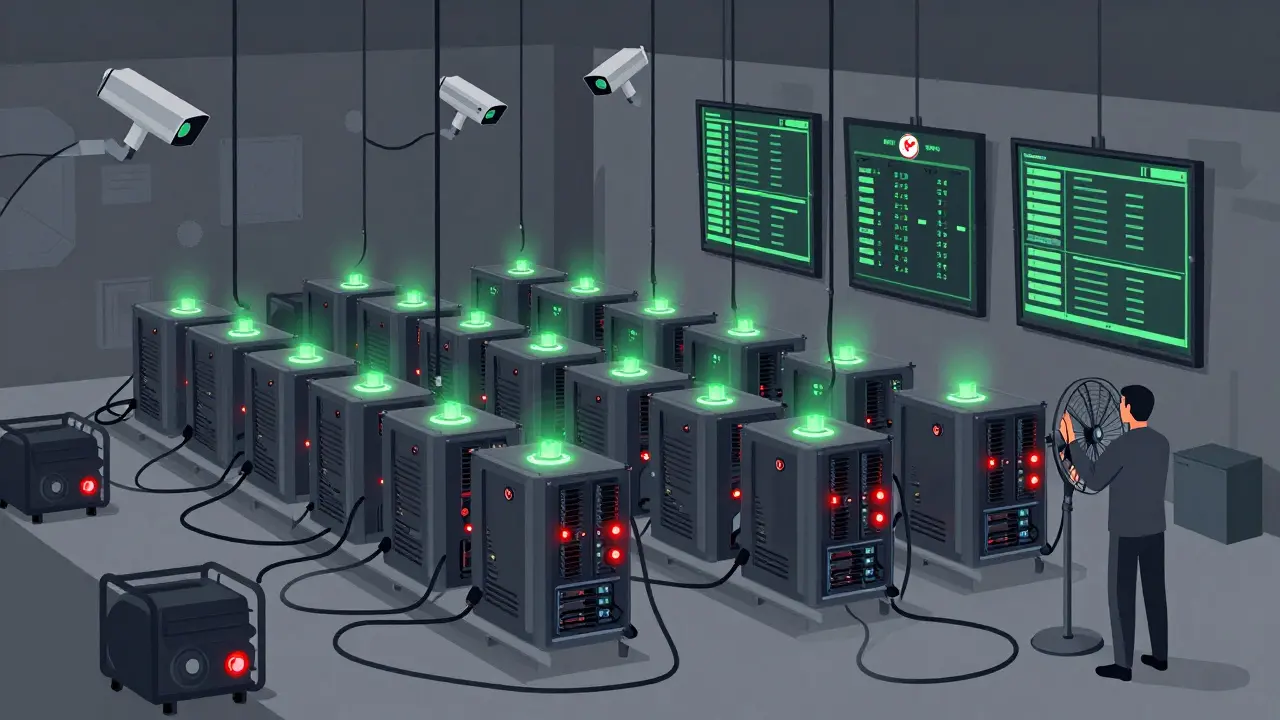
How Iranians Outsmart the Blockades
The government wants control. Iranians want freedom. The battle plays out on blockchain. When Tether froze $100 million in Iranian-linked USDT addresses in July 2025, panic hit. But within days, users shifted. They moved from USDT on Ethereum to DAI on Polygon. Why? Because Polygon is faster, cheaper, and harder to monitor. DAI, being a decentralized stablecoin, doesn’t rely on a single company’s approval to function. VPN usage in Iran spiked by 40% after the freezes. People use them to access Binance, Kraken, and Coinbase-even though those platforms officially ban Iranian users. They create accounts with foreign IDs, use peer-to-peer (P2P) trading, and withdraw to wallets they control. Telegram groups and Reddit threads are full of guides: “How to swap USDT to DAI without triggering OFAC flags,” “Best exchanges with no KYC,” “Which wallet addresses have low risk of being frozen.” This isn’t casual use. It’s a coordinated, decentralized resistance.The Government’s Double Game
Iran’s stance is contradictory. On one hand, it bans foreign exchanges and monitors domestic ones. On the other, it taxes crypto profits-something it wouldn’t do if it saw crypto as illegal. In August 2025, Iran passed the Law on Taxation of Speculation and Profiteering. For the first time, trading crypto, gold, or foreign currency became taxable. The move signaled something important: the government admits crypto is real, widespread, and here to stay. They’re not trying to stop it. They’re trying to control and profit from it. By taxing trades and forcing miners to sell to the CBI, they turn a threat into a revenue stream. But this also means they’re betting that Iranians will keep using crypto-even if they have to pay for it.
Why Iran Leads the World in Sanctioned Crypto Use
In 2024, Iran accounted for nearly 60% of all cryptocurrency activity tied to sanctioned nations. That’s more than North Korea, Venezuela, and Russia combined. Why?- Scale of isolation: Iran’s banking blockade is deeper and longer than most.
- Population size: Over 85 million people need alternatives.
- Technical literacy: Iranian youth are among the most tech-savvy in the region.
- Network effects: Once enough people use crypto, it becomes self-sustaining.


Author
Ronan Caverly
I'm a blockchain analyst and market strategist bridging crypto and equities. I research protocols, decode tokenomics, and track exchange flows to spot risk and opportunity. I invest privately and advise fintech teams on go-to-market and compliance-aware growth. I also publish weekly insights to help retail and funds navigate digital asset cycles.