

By 2025, the crypto derivatives market had crossed $28 trillion in notional value-more than double what it was just two years earlier. That’s not a typo. While traditional finance moves at a crawl, crypto derivatives are sprinting ahead, reshaping how traders hedge, speculate, and bet on digital assets. And it’s not just about Bitcoin anymore. Ethereum options are surging, new product types are popping up daily, and regulators are finally catching up-not to shut it down, but to bring it inside the system.
Who’s Trading These Things, and Why?
Most people think crypto derivatives are just for gamblers. That’s outdated. The real action now is happening in institutional portfolios. Hedge funds, family offices, and even pension managers are using crypto derivatives to hedge against volatility, not chase moonshots. Bitcoin and Ethereum together make up nearly 70% of all trading volume. Why? Because they’re the only two with enough liquidity to move big money without crashing the market. Take Bitcoin options. Open interest hit over $4 billion in Q1 2025. That means traders have locked in billions of dollars worth of bets on where Bitcoin’s price will go next month, next quarter, even next year. These aren’t random bets-they’re calculated moves. A fund holding $500 million in Bitcoin might buy put options to protect against a 20% drop. It’s insurance. And it’s becoming standard practice. Ethereum’s growth is even more telling. Daily options volume jumped 65% between 2024 and 2025. Why? Because smart contract platforms are now the backbone of DeFi, and institutions need ways to hedge exposure to ecosystem-wide risks-like protocol exploits or staking yield shocks.The Rise of DeFi Derivatives
Centralized exchanges like Deribit still dominate, handling over 80% of global crypto options volume. But decentralized platforms are gaining ground fast. dYdX, a blockchain-native derivatives protocol, now handles more than $1 billion in daily open interest. And it’s not just volume-it’s trust. No central server. No KYC. No risk of a hack wiping out your funds because you’re not holding them on an exchange at all. DeFi derivatives work differently. Instead of betting against a counterparty, you’re trading against a smart contract that auto-matches orders and settles in real time. There’s no “house” taking a cut. Fees are lower. Transparency is higher. And because everything runs on Ethereum or Layer 2 chains, you can verify every trade on-chain. New products are emerging too. Crypto.com’s UpDown options let you bet on whether an asset will rise or fall within a 15-minute window. Luxor’s Hashprice NDFs let miners hedge against falling mining rewards without touching actual Bitcoin. FalconX’s staking yield swaps let investors lock in expected staking returns from Ethereum or Solana, even if the network’s yield changes later. These aren’t gimmicks. They’re financial tools designed for real-world use cases. And they’re forcing traditional banks to rethink their own offerings.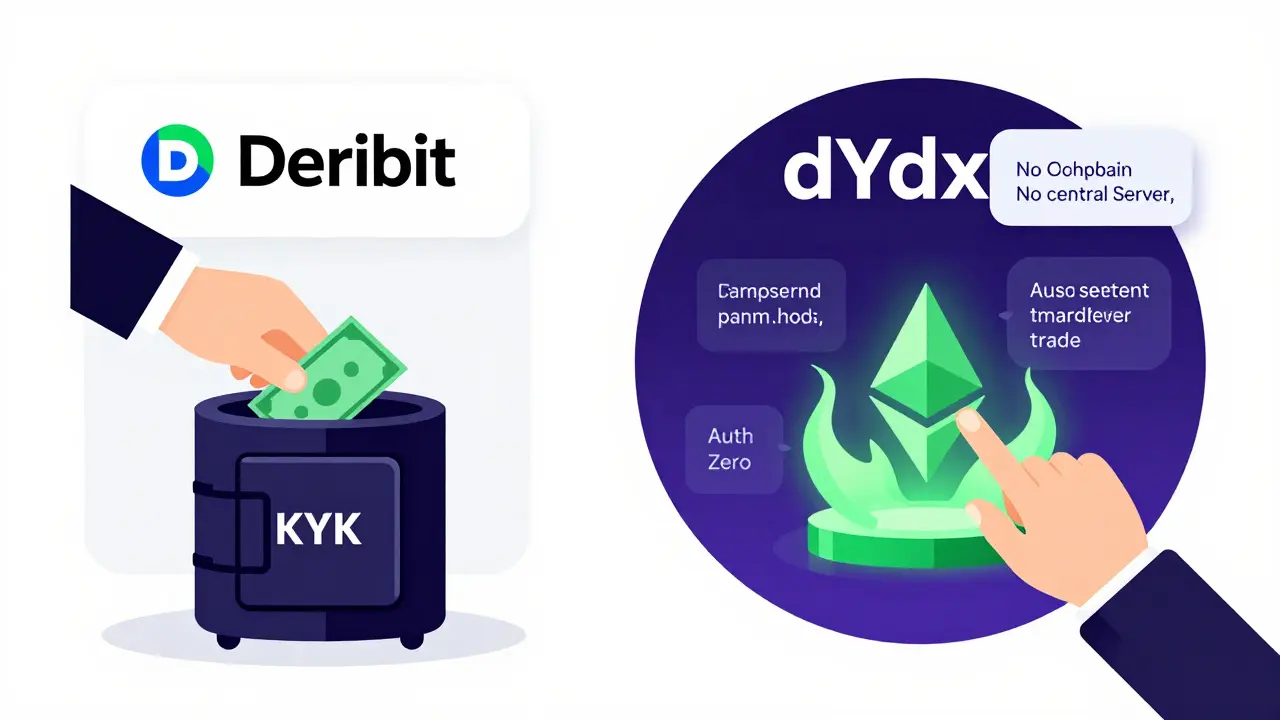
Regulation Shifts-America’s Crypto Surge
January 2025 changed everything. President Trump’s Executive Order 14178 didn’t just say “crypto is cool.” It declared America’s intent to become the global hub for digital assets. The order created a strategic Bitcoin reserve, allowed crypto in 401(k) plans, and revoked the SEC’s controversial “Dealer Rule”-a regulation that had threatened to shut down DeFi liquidity providers overnight. The SEC dropping its appeal wasn’t an accident. It was a signal. The agency stopped fighting the courts and started working with industry. By February 2025, Bitwise’s combined Bitcoin and Ethereum ETF got approved. That wasn’t just another ETF. It was the first to let institutional investors access both major cryptos in one basket, with full regulatory oversight. Trading volume jumped 40% in the first week. This isn’t just U.S. news. The EU is drafting its own rules. Singapore is relaxing licensing. Even Japan is easing restrictions on derivatives trading for retail investors. The global regulatory tide is turning-not toward bans, but toward clarity.The Dark Side: Hacks, Liquidations, and Volatility
None of this progress means crypto derivatives are safe. In January 2025, Phemex lost between $70 million and $85 million in a hack linked to North Korea’s Lazarus Group. The exchange froze withdrawals for three days. Users panicked. Markets dipped. Then came February 3. A geopolitical shock-something about a Taiwan Strait incident-triggered a global liquidation cascade. Over $2.2 billion in positions were wiped out in 24 hours. Bitcoin futures alone saw $409 million liquidated. Ethereum futures? $600 million. The market didn’t crash. It exploded. And it happened because too many traders were over-leveraged. This is the double-edged sword of derivatives. They let you amplify gains. But they also amplify losses. And when leverage hits 50x or 100x-common on some platforms-it doesn’t take much for a 2% price move to erase everything. The fix? Better risk controls. Exchanges are now capping leverage on retail accounts. Some platforms require mandatory margin buffers. Others are introducing “circuit breakers” that pause trading if volatility spikes past a threshold. These aren’t perfect-but they’re steps forward.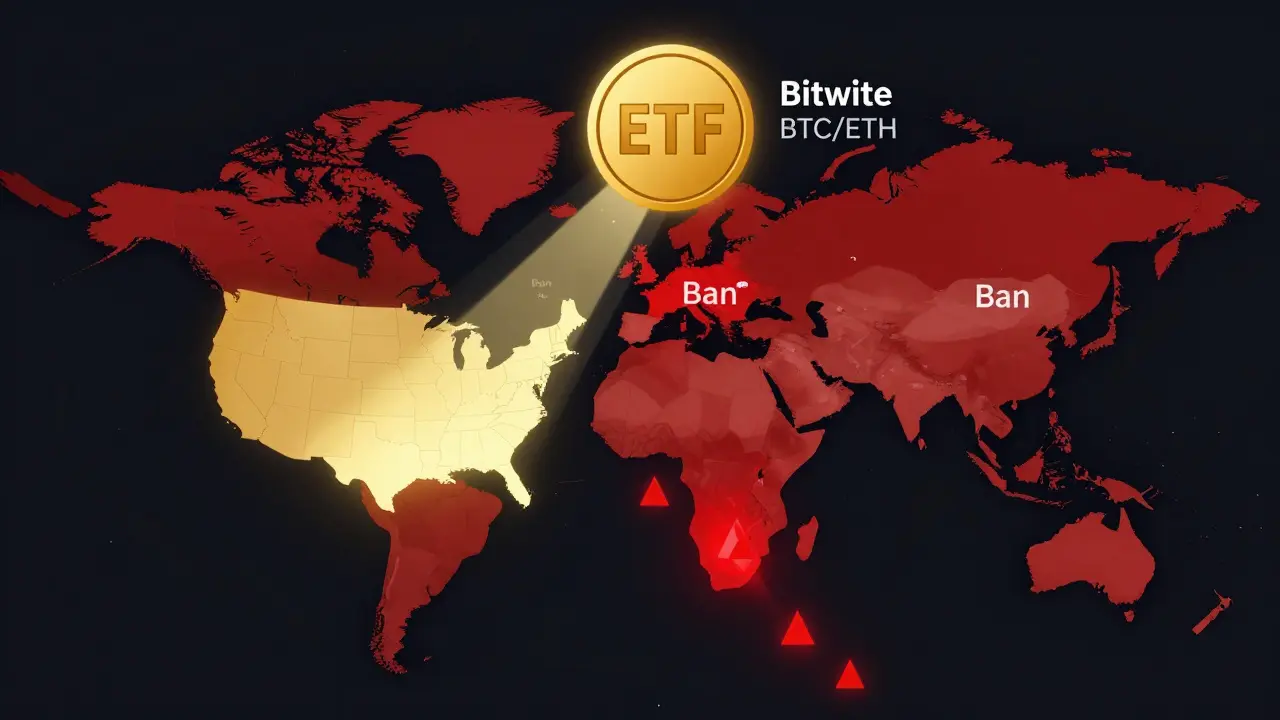
What’s Next? The Next Five Years
The future of crypto derivatives isn’t about bigger bets. It’s about smarter integration. First, expect more hybrid products. Imagine a Bitcoin futures contract that automatically adjusts its margin based on real-time on-chain data-like miner activity or staking rewards. Or an Ethereum option that pays out based on network usage, not just price. These aren’t sci-fi. Protocols are already testing them. Second, traditional finance will keep borrowing from crypto. Banks are quietly building blockchain-based settlement layers for derivatives. Goldman Sachs and JPMorgan have already filed patents for tokenized derivatives systems. They’re not trying to replace Wall Street. They’re trying to upgrade it. Third, regulation will get more granular. Don’t expect one global rulebook. Instead, you’ll see regional standards: strict rules in the EU, light-touch in the U.S., and outright bans in places like India. Traders will need to know where they’re legally allowed to trade-and where they’re not. And finally, infrastructure will catch up. Right now, tracking options volume, implied volatility, and skew across exchanges is messy. But platforms like Deribit’s Data Hub and CoinMetrics are building unified dashboards. Soon, you’ll be able to see the entire market’s sentiment in one view-like a stock market ticker, but for crypto derivatives.Bottom Line: It’s Not a Bubble. It’s a Bridge.
Crypto derivatives aren’t going away. They’re evolving. The wild west days of 2021 are over. What’s left is a mature, complex, and increasingly regulated market that’s changing how money moves. If you’re a trader: learn how to hedge. If you’re an investor: understand what you’re really betting on. If you’re just watching: pay attention. This isn’t just about Bitcoin. It’s about the future of finance itself.Are crypto derivatives legal in the U.S. in 2026?
Yes, crypto derivatives are legal in the U.S. as of 2026. Following Executive Order 14178 and the SEC’s decision to drop its appeal against the overturned Dealer Rule, federal policy now actively supports crypto derivatives trading. CME Group and other regulated platforms offer futures and options on Bitcoin and Ethereum with full compliance. Retail traders can access these products through licensed exchanges, and institutional investors can integrate them into retirement accounts.
How do DeFi derivatives differ from centralized ones?
DeFi derivatives run on blockchain smart contracts-no middleman, no KYC, no counterparty risk. You trade directly against a protocol like dYdX or Hyperliquid. Centralized derivatives, like those on Deribit or Binance, are run by companies that hold your funds, match orders, and can freeze accounts. DeFi is more transparent and censorship-resistant, but can be harder to use. Centralized platforms offer better UIs, customer support, and higher liquidity-but you’re trusting a company with your money.
Why are Bitcoin and Ethereum the only big players in derivatives?
Liquidity. Bitcoin and Ethereum have the deepest order books, the most market makers, and the most institutional interest. You can’t efficiently hedge a $100 million position in Solana or Polygon because there aren’t enough buyers and sellers. Derivatives need depth to work. That’s why over 68% of all crypto derivatives volume is split between just two assets. Other coins are catching up, but they’re still years behind.
Can retail investors use crypto derivatives safely?
Yes-but only if they avoid high leverage. Most retail losses come from using 50x or 100x leverage. Stick to 5x or less. Use stop-losses. Never risk more than 5% of your portfolio on a single trade. Platforms like Deribit and Bybit now offer educational tools and margin caps for new users. The tools are there. You just have to use them.
What’s the biggest risk in crypto derivatives right now?
Regulatory uncertainty in key markets. While the U.S. is moving toward clarity, countries like the UK, Canada, and Australia are still debating how to classify derivatives. A sudden crackdown in one region can trigger global liquidations. Also, hot wallet hacks remain a threat. Even with better security, exchanges are still targets. The safest approach? Use decentralized platforms for long-term positions and keep only what you need on centralized exchanges.


Author
Ronan Caverly
I'm a blockchain analyst and market strategist bridging crypto and equities. I research protocols, decode tokenomics, and track exchange flows to spot risk and opportunity. I invest privately and advise fintech teams on go-to-market and compliance-aware growth. I also publish weekly insights to help retail and funds navigate digital asset cycles.