
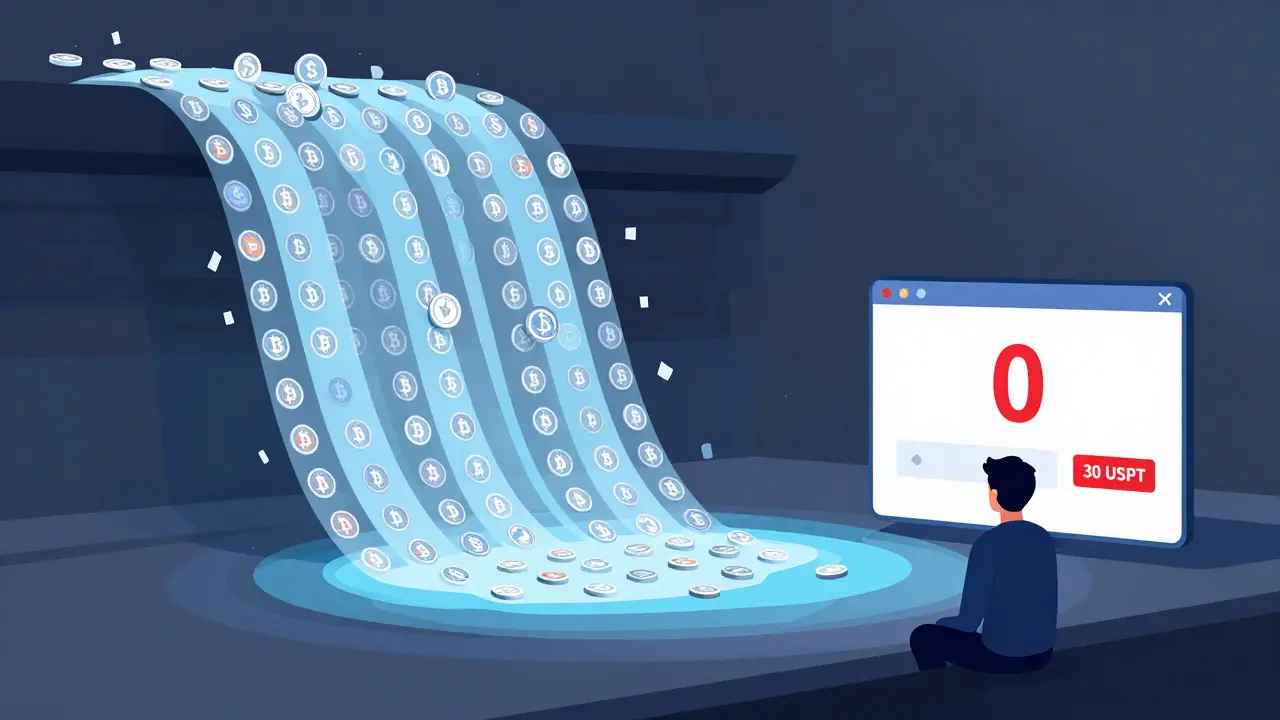
Hotbit was once one of the largest crypto exchanges in terms of coin selection, offering over 2,800 digital assets for trading. At its peak, it attracted users who wanted access to obscure tokens not listed anywhere else. But behind the numbers, there was a deeper story-one of poor oversight, hidden fees, and eventually, a complete collapse. Today, Hotbit doesn’t just operate poorly-it doesn’t operate at all. The exchange shut down permanently in 2023, leaving thousands of users scrambling to recover funds. This isn’t a review of a service you can still use. It’s a case study in what happens when a crypto exchange ignores regulation, customer trust, and basic financial responsibility.
What Hotbit Actually Offered
Hotbit launched in 2018 with a simple promise: more coins than anyone else. While competitors like Binance and Coinbase focused on major cryptocurrencies like Bitcoin, Ethereum, and a handful of stablecoins, Hotbit piled on altcoins-many of them low-volume, poorly audited, or outright risky. This made it a magnet for traders chasing the next big memecoin or token from a new project with no real utility.
The platform had a clean web interface and mobile apps, which made navigation easy. It offered real-time charts, margin trading, and a proprietary market-making engine that supposedly improved liquidity. But none of that mattered if you couldn’t get your money out.
There was no way to deposit or withdraw fiat currency like USD or EUR. You had to buy crypto on another exchange first, then send it to Hotbit. And even then, withdrawals were a nightmare. Users reported being charged 30 USDT just to move funds out. Compare that to Binance’s 1 USDT or Coinbase’s 0.5 USDT fee. For someone with a small balance, that fee was a trap. If you had 25 USDT in your account, you literally couldn’t withdraw it without losing more than you had.
No Regulation, No Protection
Hotbit never registered with any financial authority. Not in the U.S., not in the EU, not even in its home regions of China or Taiwan. That meant users had zero legal recourse. If the exchange froze your account, disappeared with your funds, or went bankrupt, there was no insurance, no ombudsman, no government agency to turn to.
TradersUnion.com, a watchdog group focused on crypto safety, stated plainly: "Hotbit.io is not regulated by any recognized financial authority. This lack of regulation means clients are not protected by financial oversight." That’s not a warning-it’s a fact. And it’s why so many experienced traders avoided it entirely.
While exchanges like Kraken and Coinbase operate under strict licenses in multiple countries, Hotbit operated in the gray zone. That’s not innovation-it’s a gamble with your money.
The Turning Point: August 2022
In August 2022, everything changed. Law enforcement authorities in Asia froze Hotbit’s assets after a criminal investigation into a former executive. The company never publicly explained what happened, but the timing aligned with reports of internal fraud and mismanagement. Withdrawals stopped. Customer support vanished. Users who had been trading for years suddenly couldn’t access their funds.
For months, people waited. Some got partial payouts. Others received automated replies: "We are working on it." The delays stretched into weeks. Some users reported waiting 45 to 60 days for a withdrawal that should have taken under an hour.
The collapse of FTX in November 2022 made things worse. When one major exchange falls, trust in the whole industry cracks. Regulators cracked down harder. Investors pulled out. Hotbit’s user base, estimated at 500,000-750,000 before the freeze, began draining fast. By early 2023, traffic had dropped by over 80%.

The Final Announcement: May 22, 2023
On May 22, 2023, Hotbit posted a final notice: "We are permanently shutting down due to deteriorating operating conditions, market instability, and massive fund outflows." Users were told they had until June 21, 2023, to withdraw any remaining balances. After that, accounts would be closed forever.
But here’s the catch: by then, most people had already tried and failed to withdraw. The system was broken. Withdrawal requests piled up. Many users received confirmation emails that their withdrawal was processed-only to find their funds never left the exchange.
Sitejabber reviews from March 2023 show a 1.7-star rating from 13 reviews. Two-thirds of users called it a scam. One wrote: "They charged me 30 USDT just to withdraw to another USDT address. THIEVES!" Another said: "What initially seemed like a legitimate trading platform turned out to be a cunning scam. After making deposits, I found myself facing unjustified account freezes and impossible withdrawals."
The Recovery Scam Epidemic
After Hotbit shut down, a new wave of websites popped up: "hotbit.us.com," "hotbitrecovery.net," "hotbitfundrestore.com." These sites promised to help users get their money back-for a fee.
Here’s the truth: 92% of these recovery services are scams, according to TradersUnion.com’s 2025 analysis. They ask for your private keys, your login details, or an upfront payment of 5-10% of your "recovered" balance. Then they disappear. The Financial Crimes Enforcement Network (FinCEN) issued a public alert in July 2023 warning users about exactly this pattern, naming Hotbit as a primary target.
Some users swear they got their money back. But those stories are rare. In most cases, the "help" came from someone who had access to old internal systems before the shutdown-not a legitimate recovery service.

How Hotbit Compared to the Rest
Here’s how Hotbit stacked up against top exchanges before it shut down:
| Feature | Hotbit | Binance | Coinbase | Kraken |
|---|---|---|---|---|
| Cryptocurrencies Offered | 2,800+ | 500+ | 100+ | 200+ |
| Fiat Access (USD/EUR) | No | Yes | Yes | Yes |
| Withdrawal Fee (USDT) | 30 | 1 | 0.5 | 1.5 |
| Regulation Status | None | Global, licensed | U.S. regulated | U.S. and EU regulated |
| Customer Support Response Time | 7-10 days | Under 24 hours | Under 12 hours | Under 24 hours |
| Trust Rating (Sitejabber, 2023) | 1.7/5 | 3.8/5 | 4.2/5 | 4.1/5 |
Hotbit’s only advantage was the number of coins. Everything else-fees, support, safety, transparency-was worse than average. And when the system failed, there was no safety net.
Why It Failed: The Bigger Lesson
Hotbit didn’t fail because it was too big. It failed because it was too reckless. It chased volume over trust. It prioritized listing every new token over securing user funds. It ignored regulation because it didn’t want to be held accountable.
The crypto market is full of risky platforms. But most survive because they follow basic rules: transparent fees, clear terms, licensed operations, and responsive support. Hotbit broke every one of them.
Its story is a warning: if an exchange doesn’t tell you where it’s regulated, doesn’t list its fees clearly, or makes you wait weeks for a withdrawal, walk away. No amount of coin variety is worth losing your money.
What Happens to Your Funds Now?
As of 2026, Hotbit remains permanently offline. There is no official way to recover funds. The original company has dissolved. The domain is inactive. Any website claiming to be "Hotbit" now is either a scam or a copycat.
If you still have funds locked in a Hotbit account, your options are nearly zero. You can try reporting the loss to your local financial crime unit, but chances of recovery are less than 1%. Some users have formed online groups to share evidence, hoping to pressure authorities into action-but no legal action has been taken.
The only real lesson here is prevention. Never use an exchange that doesn’t answer these three questions:
- Which government body regulates you?
- What are your withdrawal fees?
- How long does it take to get your money out?
If the answers are vague, high, or nonexistent-don’t deposit.
Is Hotbit still operational?
No, Hotbit permanently shut down on June 21, 2023. All accounts were closed, and the platform no longer accepts deposits or withdrawals. Any website using the Hotbit name today is not affiliated with the original exchange and is likely a scam.
Can I get my money back from Hotbit?
The chances of recovering funds from the original Hotbit exchange are virtually zero. The company dissolved after its shutdown, and its assets were frozen by authorities. Any service offering to recover your funds for a fee is almost certainly a scam. The Financial Crimes Enforcement Network (FinCEN) has warned users about these recovery scams, which have a 92% fraud rate.
Why did Hotbit charge $30 to withdraw USDT?
Hotbit charged 30 USDT per withdrawal, which was 10 to 30 times higher than industry standards. This fee was likely used to discourage small withdrawals and retain funds on the platform. Users with balances under 30 USDT couldn’t withdraw without losing more than they had. This practice is considered predatory and was a major reason users lost trust in the exchange.
Was Hotbit regulated?
No, Hotbit was never regulated by any recognized financial authority. It operated without licenses in the U.S., EU, China, or any other major jurisdiction. This meant users had no legal protection if funds were lost, frozen, or stolen. Regulatory oversight is a critical safety layer that Hotbit completely ignored.
How many users were affected by Hotbit's shutdown?
Before its shutdown, Hotbit had an estimated 500,000 to 750,000 active users. After the August 2022 asset freeze, most users were unable to withdraw funds. By the time the exchange closed in June 2023, hundreds of thousands of accounts remained locked with unclaimed assets. No official recovery plan was ever implemented.


Author
Ronan Caverly
I'm a blockchain analyst and market strategist bridging crypto and equities. I research protocols, decode tokenomics, and track exchange flows to spot risk and opportunity. I invest privately and advise fintech teams on go-to-market and compliance-aware growth. I also publish weekly insights to help retail and funds navigate digital asset cycles.