

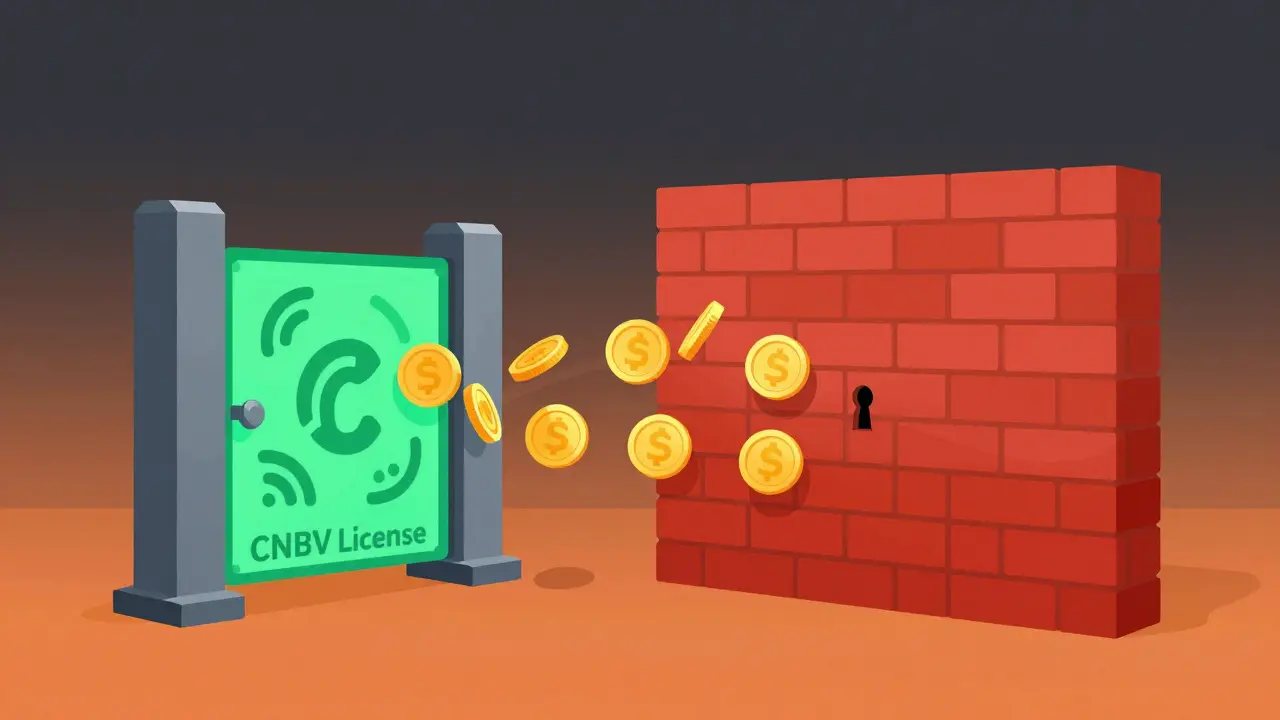
Imagine trying to open a bank account for your cryptocurrency business in Mexico. You have the license from the right agency, but when you try to actually move money or offer services, a different door slams shut. This is the reality of Mexico crypto monitoring regulations by CNBV. The landscape here isn't just about one set of rules; it’s a complex dance between multiple government bodies that often seem to pull in opposite directions.
If you are looking to operate in this space, you need to understand that while the National Banking and Securities Commission (CNBV) hands out licenses, Banco de México (Banxico) holds the keys to the actual banking infrastructure. This split creates a unique environment where being 'licensed' doesn't always mean you can function freely. Let's break down exactly how this works, who watches whom, and what it means for traders and businesses in 2026.
The Tri-Regulatory Structure: Who Does What?
To navigate Mexican crypto law, you first have to map the players. It’s not a single monolith. Since the passage of the Fintech Law in 2018, oversight has been divided among three main entities. Understanding their specific roles is crucial because confusing them can lead to costly compliance errors.
| Entity | Primary Role | Key Responsibility Regarding Crypto |
|---|---|---|
| CNBV | Licensing & Supervision | Issues licenses to fintechs dealing with virtual assets; monitors compliance. |
| Banco de México (Banxico) | Monetary Policy & Banking Regulation | Controls access to the payment system; restricts banks from holding crypto directly. |
| SHCP | Finance Ministry | Oversees tax collection and broader financial policy coordination. |
The Comisión Nacional Bancaria y de Valores (CNBV) is the body you interact with first if you want to be a legitimate player. They define what a "virtual asset" is under the law: an electronic representation of value used as payment for legal acts. However, getting the nod from CNBV is only half the battle. The other half involves navigating the strict operational limits imposed by Banxico.
The Licensing Process Under the Fintech Law
The foundation of all this is the Fintech Law (Ley para Regular las Instituciones de Tecnología Financiera), enacted in 2018. This law was groundbreaking at the time because it formally recognized digital assets. But recognition comes with strings attached.
If you are a financial technology institution wanting to offer crypto-related services-like exchange platforms or custody solutions-you must obtain authorization from the CNBV. This isn't a simple registration form. It’s a rigorous vetting process designed to ensure that only stable, compliant entities enter the market. The commission looks at your corporate structure, your risk management protocols, and your anti-money laundering (AML) frameworks.
Once licensed, you fall under continuous supervision. CNBV conducts regular examinations to ensure you’re sticking to the rules. They monitor your internal controls and require detailed reporting on your virtual asset activities. If you slip up, they have the authority to revoke your license, impose heavy fines, or force remedial actions. This high level of scrutiny is meant to protect consumers, given that crypto is not backed by the government and carries inherent volatility risks.
The Banxico Bottleneck: Rule 4/2019
Here is where things get tricky. While CNBV says "yes, you can operate," Banxico often says "but not through our traditional banking channels." This tension stems from Rule 4/2019, a regulation issued by the central bank.
Under Rule 4/2019, banks and fintech institutions cannot offer crypto services directly to clients unless they have specific authorization from Banxico. More importantly, traditional banks are prohibited from holding cryptocurrencies on their balance sheets or providing direct custody services. This means that even if you have a CNBV license, you can’t just open a standard commercial bank account to hold your Bitcoin reserves. You have to find workarounds, such as using specialized intermediaries or non-bank financial entities that aren't subject to the same blanket prohibitions.
As of 2025 and moving into 2026, Banxico has not publicly granted any authorizations under Rule 4/2019 for broad crypto operations. In practice, this makes such approvals non-existent. For many entrepreneurs, this creates a "regulated gray area." You are legal, you are licensed, but your ability to integrate seamlessly with the traditional financial system is severely limited. This restriction is a key reason why Mexico’s crypto adoption, while growing, hasn't exploded in the same way as some neighboring countries.
AML Compliance and Reporting Requirements
You cannot talk about CNBV regulations without discussing Anti-Money Laundering (AML) and Counter-Terrorism Financing (CTF). These are the backbone of the monitoring framework. The Mexican government is acutely aware that digital assets can be used to obscure illicit funds, so the compliance burden is heavy.
Any business dealing with virtual assets must adhere to strict reporting requirements. This includes:
- Customer Due Diligence (CDD): You must verify the identity of every client. Know Your Customer (KYC) isn't optional; it's mandatory.
- Transaction Monitoring: Systems must be in place to flag suspicious activity in real-time.
- Reporting Thresholds: Transactions involving virtual assets that exceed specific monetary thresholds must be reported to Mexico's Financial Intelligence Unit (UIF).
CNBV actively enforces these rules. Failure to report suspicious transactions can result in immediate sanctions. The goal is to create a transparent ecosystem where every movement of value can be traced back to a verified individual or entity. For users, this means higher friction when signing up for exchanges or transferring large amounts. For businesses, it means significant investment in compliance software and legal expertise.
Tax Implications for Virtual Assets
Regulation isn't just about permission; it's also about revenue. The CNBV coordinates closely with tax authorities to ensure that profits from cryptocurrency are properly taxed. Here is what you need to know if you are trading or investing in Mexico:
- Income Tax for Individuals: Profits from selling cryptocurrency are treated as income from the sale of goods. This means they are added to your total annual income and taxed at progressive rates, which can go up to 35%.
- Corporate Tax: Legal entities face a flat tax rate of 30% on capital gains from virtual assets.
- VAT Considerations: Value Added Tax (IVA) at 16% may apply if you use cryptocurrency to purchase services or goods, depending on how the transaction is classified.
- Withholding Taxes: For high-value transactions exceeding US$12,500, buyers may be required to withhold 20% of the amount and pay it directly to tax authorities. This is a critical detail for large institutional trades.
These tax rules add another layer of complexity. When you sell Bitcoin, you aren't just clicking a button; you are triggering a taxable event that requires precise record-keeping. The CNBV ensures that licensed institutions help facilitate this transparency, often requiring platforms to provide users with detailed transaction histories for tax filing purposes.

New Developments: Digital Agents and CBDCs
The regulatory landscape is not static. In July 2024, Mexico introduced a new concept called "Digital Agents." These are a new type of banking entity specifically designed to offer digital asset services to the public. This development marks a shift toward creating dedicated channels for crypto interaction, separate from traditional retail banking.
Digital Agents require specific licensing from the CNBV and undergo rigorous supervision. Their emergence suggests that regulators are trying to carve out a safe harbor for digital finance without compromising the stability of the traditional banking sector. Companies like Bitso, a prominent local exchange, have been active participants in shaping these new frameworks since early 2024.
Looking ahead, there is also the anticipated launch of Banco de México's peso digital currency (CBDC). Expected to roll out more broadly in late 2025 and throughout 2026, this government-issued digital token will likely require even tighter coordination between CNBV and Banxico. Licensed institutions will probably play a key role in distributing and managing the digital peso, further expanding the scope of CNBV's oversight.
Practical Steps for Compliance in 2026
If you are operating in Mexico, here is a checklist to keep you aligned with current regulations:
- Verify Your License Status: Ensure your CNBV license is active and matches the services you offer. Do not assume a general fintech license covers all crypto activities.
- Audit Your AML Protocols: Review your KYC processes quarterly. Make sure you are reporting to the UIF correctly.
- Separate Banking Channels: Do not attempt to store crypto on traditional bank ledgers. Use approved custodial solutions or Digital Agent partnerships.
- Track Tax Events: Implement automated systems to calculate capital gains and VAT obligations for every transaction.
- Monitor Regulatory Updates: Subscribe to official bulletins from CNBV and Banxico. The rules around Digital Agents and CBDCs are still evolving.
Navigating these rules requires patience and precision. The Mexican government is cautious, prioritizing financial stability over rapid innovation. By respecting the boundaries set by CNBV and Banxico, you can build a sustainable business model that withstands regulatory scrutiny.
Is cryptocurrency legal in Mexico?
Yes, cryptocurrency is legal for individuals and non-financial entities in Mexico. However, it is not considered legal tender and is not backed by the government. Financial institutions face stricter regulations and limitations on how they can handle virtual assets.
What is the role of CNBV in crypto regulation?
The CNBV is responsible for licensing financial technology institutions that deal with virtual assets. They supervise these entities to ensure compliance with anti-money laundering laws and consumer protection standards. They do not control the banking infrastructure itself, which falls under Banxico.
Can banks in Mexico hold cryptocurrency?
Generally, no. Under Banxico's Rule 4/2019, traditional banks are prohibited from holding cryptocurrencies on their balance sheets or offering direct custody services to clients. They must obtain specific authorization, which has rarely been granted.
How much tax do I pay on crypto profits in Mexico?
For individuals, crypto profits are added to your annual income and taxed at progressive rates up to 35%. For legal entities, the tax rate is 30%. Additionally, VAT of 16% may apply to purchases made with crypto, and withholding taxes may apply to large transactions.
What are "Digital Agents" in Mexico?
Digital Agents are a new type of banking entity introduced in July 2024, designed specifically to offer digital asset services to the public. They require special licensing from the CNBV and represent a new pathway for regulated crypto interaction in Mexico.
Author
Ronan Caverly
I'm a blockchain analyst and market strategist bridging crypto and equities. I research protocols, decode tokenomics, and track exchange flows to spot risk and opportunity. I invest privately and advise fintech teams on go-to-market and compliance-aware growth. I also publish weekly insights to help retail and funds navigate digital asset cycles.