

If you're holding Bitcoin, Ethereum, or any other cryptocurrency, the question of taxes is probably on your mind. In most countries, selling crypto for profit triggers a capital gains tax-sometimes as high as 50%. But in Singapore? Zero. That’s right. There is no capital gains tax on cryptocurrency, no matter how much you make. Whether you turned $1,000 into $1 million or just sold a few tokens for a small profit, the Singapore government doesn’t take a cut. This isn’t a loophole. It’s policy. And it’s one of the biggest reasons why crypto traders, investors, and exchanges are moving here in droves.
How Singapore Treats Crypto: Property, Not Currency
The Monetary Authority of Singapore (MAS) doesn’t treat cryptocurrency like money. It’s classified as intangible property. That’s the key. When you sell a house, a car, or shares of stock, you might owe tax on the profit. But in Singapore, that rule doesn’t apply to crypto. If you’re an individual investor-someone who buys, holds, and sells crypto for personal gain-you pay nothing on capital gains. Not even a dollar. This applies to every coin, token, or NFT you trade. No distinction between Bitcoin and Solana. No holding period rules like in Germany or Portugal. Sell today? No tax. Sell in five years? Still no tax.What About Businesses? It’s Different
Here’s where things get nuanced. If you’re running a business that accepts crypto as payment-for example, a store that lets customers pay with Ethereum-you must report that income. The value of the crypto you receive at the time of the transaction is treated as revenue. And yes, corporate income tax applies. Singapore’s corporate tax rate is 17%, which is already low compared to the U.S. (21%) or France (25%). But if your business is trading crypto as its core activity-like a crypto hedge fund or a decentralized exchange-you’re still taxed on profits. The difference? You’re not being taxed on capital gains. You’re being taxed on business income. And even then, Singapore’s rates are competitive.Why This Matters More Than You Think
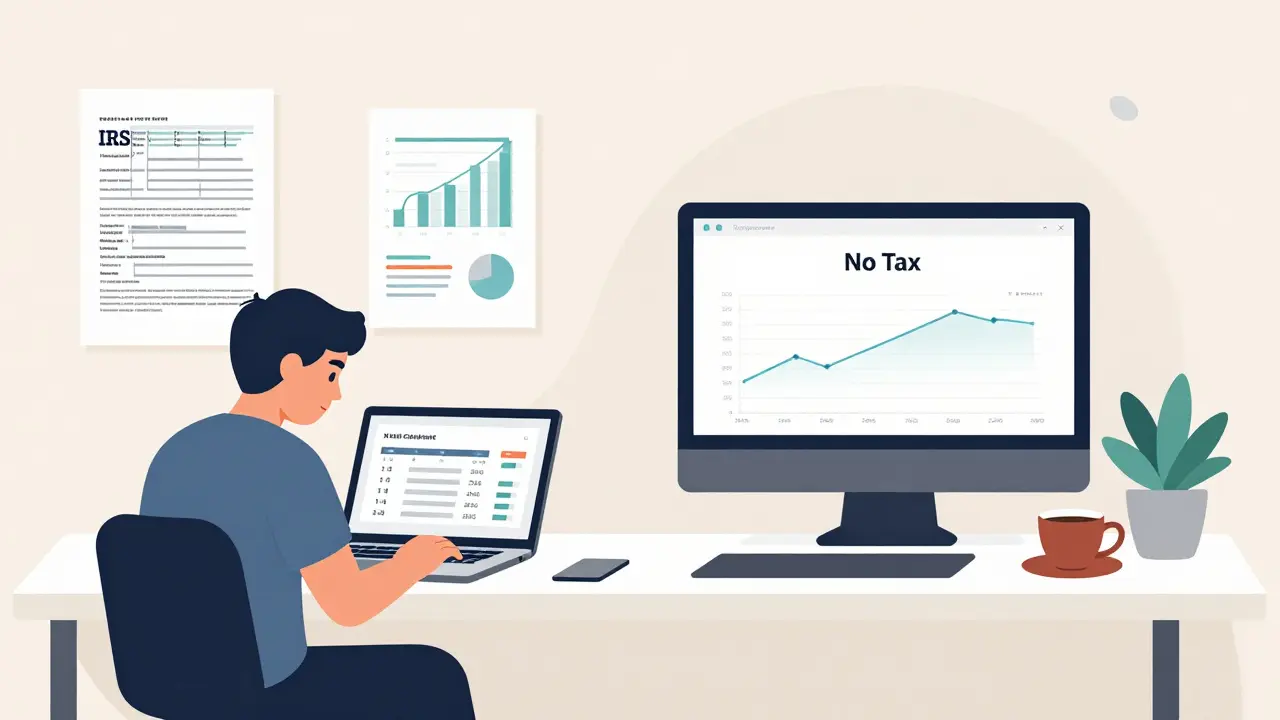
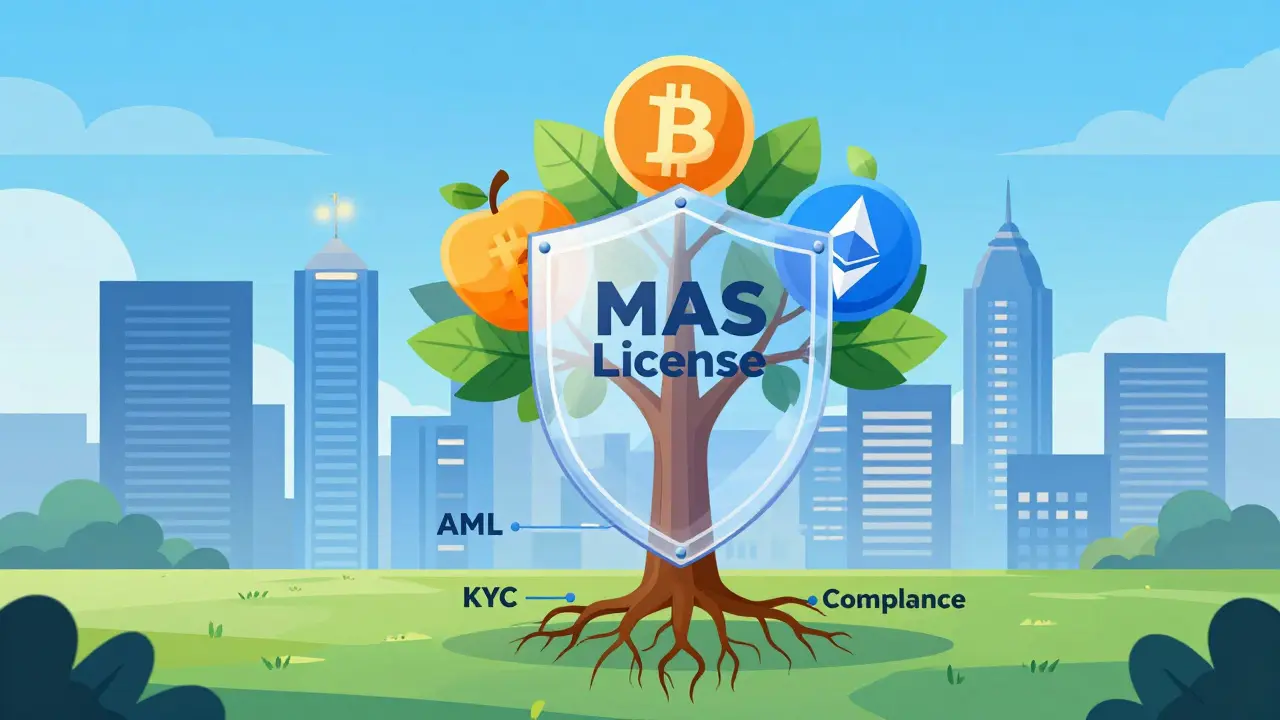
Think about how complicated crypto taxes are elsewhere. In the U.S., every trade-even swapping Bitcoin for Ethereum-is a taxable event. You have to track cost basis, calculate gains, file forms, and deal with IRS audits. In Germany, you pay tax if you sell within a year. In Portugal, short-term gains are taxed at 28%. Singapore cuts through all that. No need to log every transaction. No complicated spreadsheets. No tax software subscriptions. Just buy, hold, sell. Profit. Keep it all.And it’s not just individuals benefiting. Crypto exchanges like Binance, Crypto.com, and Coinbase have set up major operations here. Why? Because Singapore gives them regulatory clarity alongside tax freedom. The MAS doesn’t just say “no tax”-it says, “Here’s how you operate legally.” All crypto businesses must be licensed under the Payment Services Act. That means strict AML and KYC rules. But it also means legitimacy. Investors trust platforms that are regulated. Traders feel safer. Exchanges can build real infrastructure without fear of sudden tax changes.
How Singapore Compares to Other Crypto Havens
You’ve probably heard of places like the Cayman Islands or Portugal as crypto tax havens. But here’s the thing: Singapore doesn’t just offer tax exemption. It offers stability.- Cayman Islands: No capital gains tax, no income tax. Sounds perfect. But it’s a tiny island with limited infrastructure. No major banks. No reliable legal system for businesses. Hard to live there long-term.
- Portugal: Long-term crypto gains are tax-free, but short-term trades? 28%. Also, you need to be a resident, and residency rules are strict.
- Germany: Only tax-free if you hold crypto for over a year. And if you sell within 12 months? Taxed as ordinary income.
- Thailand: Just announced a five-year exemption. But what happens after 2031? Unclear.
Singapore? No expiration date. No conditions. No hidden catches. The zero capital gains rule has been in place for over a decade. It’s not a temporary perk. It’s baked into the system. And with over 600 fintech companies operating in the country as of 2024, the infrastructure is there-banks, legal firms, payment processors-all ready to support crypto businesses.
What You Need to Do to Benefit
If you’re not a Singapore resident, you can’t just show up and claim tax-free crypto gains. The rule only applies if you’re a tax resident. That means one of two things:- You live in Singapore for at least 183 days in a calendar year.
- You have strong economic ties to Singapore-like a job, a business, or a home-and the tax authority accepts you as a resident.
There’s no golden visa for crypto investors. But there is a work pass. Many people move here for jobs in fintech, blockchain startups, or tech firms. Once you’re a resident, your crypto gains are tax-free. Period.
For businesses? It’s a different story. Setting up a licensed crypto operation takes time. The MAS licensing process can take 6 to 12 months. You need a local director, a compliance officer, a solid AML system, and proof you can handle customer due diligence. Costs range from SGD 50,000 to over SGD 200,000. It’s not for hobbyists. But for serious players? It’s worth it.
The Catch? Compliance Is Everything
Let’s be clear: Singapore’s system isn’t “tax-free and no rules.” It’s “tax-free if you follow the rules.”If you’re a business, you must report suspicious transactions. You must verify every customer’s identity. You must keep records for at least five years. If you fail, your license gets pulled. Fines can be heavy. And in 2025, the MAS added new rules requiring crypto wallets to block scam transactions. If your platform lets a user send crypto to a known scam address? You’re liable.
For individuals? You’re mostly free. But if you’re trading at scale-say, running a crypto arbitrage operation-you might be seen as running a business. And that changes everything. The MAS doesn’t care how much you make. They care about how you operate. If you’re acting like a company, you’ll be treated like one.
Real-World Impact: Who’s Winning?
In 2024, crypto trading volumes in Singapore jumped over 300% from 2020. Why? Because traders from the U.S., UK, and Australia are relocating. Reddit threads are full of people saying, “I moved to Singapore just to avoid crypto taxes.” LinkedIn is flooded with job posts for blockchain engineers and compliance officers. Venture capital firms are opening offices here. The city-state has become a magnet for crypto talent-not because it’s cheap to live, but because it’s smart to operate.Even Henley & Partners, a top citizenship advisory firm, lists Singapore as one of the top destinations for high-net-worth crypto investors. Why? Because it’s not just about avoiding tax. It’s about access. Access to global banks. Access to legal systems that enforce contracts. Access to a government that doesn’t panic every time Bitcoin moves.
What About GST? Yes, It Applies
One thing people forget: Singapore has an 8% Goods and Services Tax (GST). If you use crypto to buy a laptop, a flight, or a meal, that transaction is subject to GST. The merchant has to charge it. But here’s the twist: the crypto you used to pay? No tax on the gain. You’re not taxed on the value of the crypto you spent. You’re not taxed on the profit you made by holding it. You just pay GST on the item you bought. That’s it.This makes crypto spending more attractive than cash in some cases. No capital gains tax on the appreciation. Just a flat 8% on the purchase. Compare that to the U.S., where spending crypto triggers a taxable event and you pay capital gains tax on the profit.
Looking Ahead: Will This Last?
There’s no sign this will change. Singapore’s government has consistently said it wants to be a global hub for digital finance. Banning crypto taxes would go against that. The MAS has signaled it’s open to innovation-blockchain-based bonds, tokenized assets, CBDCs-but it won’t tolerate risk. That’s why the rules are strict for businesses. But for individuals? The message is clear: trade freely. Invest wisely. Keep your profits.With Thailand’s five-year exemption set to expire in 2031 and the Cayman Islands rolling out new regulations in 2025, Singapore is doubling down. It’s not just the tax policy. It’s the combination: low corporate tax, strong legal system, global connectivity, and now, zero capital gains on crypto. That’s a rare mix. And it’s not going away.
Is there any tax on selling Bitcoin in Singapore?
No. If you’re an individual investor, selling Bitcoin or any other cryptocurrency in Singapore is not subject to capital gains tax, regardless of the profit amount or how long you held it. This applies to all crypto assets, including Ethereum, Solana, and NFTs.
Do I need to be a Singapore resident to avoid crypto taxes?
Yes. The zero capital gains tax rule only applies to tax residents. To qualify, you must either live in Singapore for at least 183 days in a calendar year or demonstrate strong economic ties, such as owning property, having a job, or running a business there. Non-residents are not covered by this exemption.
What if I run a crypto trading business in Singapore?
If your business’s main activity is trading crypto, you must pay corporate income tax on profits-typically at 17%. You also need a license from the Monetary Authority of Singapore (MAS) under the Payment Services Act. While you won’t pay capital gains tax, your profits are treated as business income and are taxable.
Are crypto-to-crypto trades taxed in Singapore?
No. Swapping Bitcoin for Ethereum, or any other crypto-to-crypto trade, is not a taxable event in Singapore. Since there’s no capital gains tax on individuals, these trades are treated like exchanging one asset for another, with no tax triggered.
Do I have to report crypto transactions to the tax authorities?
Individuals are not required to report crypto transactions to the Inland Revenue Authority of Singapore (IRAS) unless they’re running a business or earning income from crypto. However, if you’re audited or questioned, you must be able to prove your transactions. Businesses must report all crypto income and maintain records for five years.
Can I use crypto to pay for goods without paying tax?
Yes. When you use crypto to buy something, you don’t pay capital gains tax on the profit from that crypto. However, the seller must charge 8% GST on the value of the goods or services. Your crypto gain remains untaxed, but the purchase itself is subject to GST.
Why do exchanges like Binance operate in Singapore?
Exchanges choose Singapore because it offers both tax freedom and regulatory clarity. With no capital gains tax on individuals and a clear licensing system under the MAS, companies can operate legally while attracting global users. The country’s stable government, strong legal system, and fintech infrastructure make it ideal for long-term operations.
Is Singapore safer than the Cayman Islands for crypto investors?
For most people, yes. While the Cayman Islands also have no capital gains tax, Singapore offers better infrastructure: international banks, reliable legal systems, political stability, and a large ecosystem of crypto firms. Cayman lacks the same level of services and accessibility, making Singapore a more practical and sustainable choice for long-term residency and business.


Author
Ronan Caverly
I'm a blockchain analyst and market strategist bridging crypto and equities. I research protocols, decode tokenomics, and track exchange flows to spot risk and opportunity. I invest privately and advise fintech teams on go-to-market and compliance-aware growth. I also publish weekly insights to help retail and funds navigate digital asset cycles.