
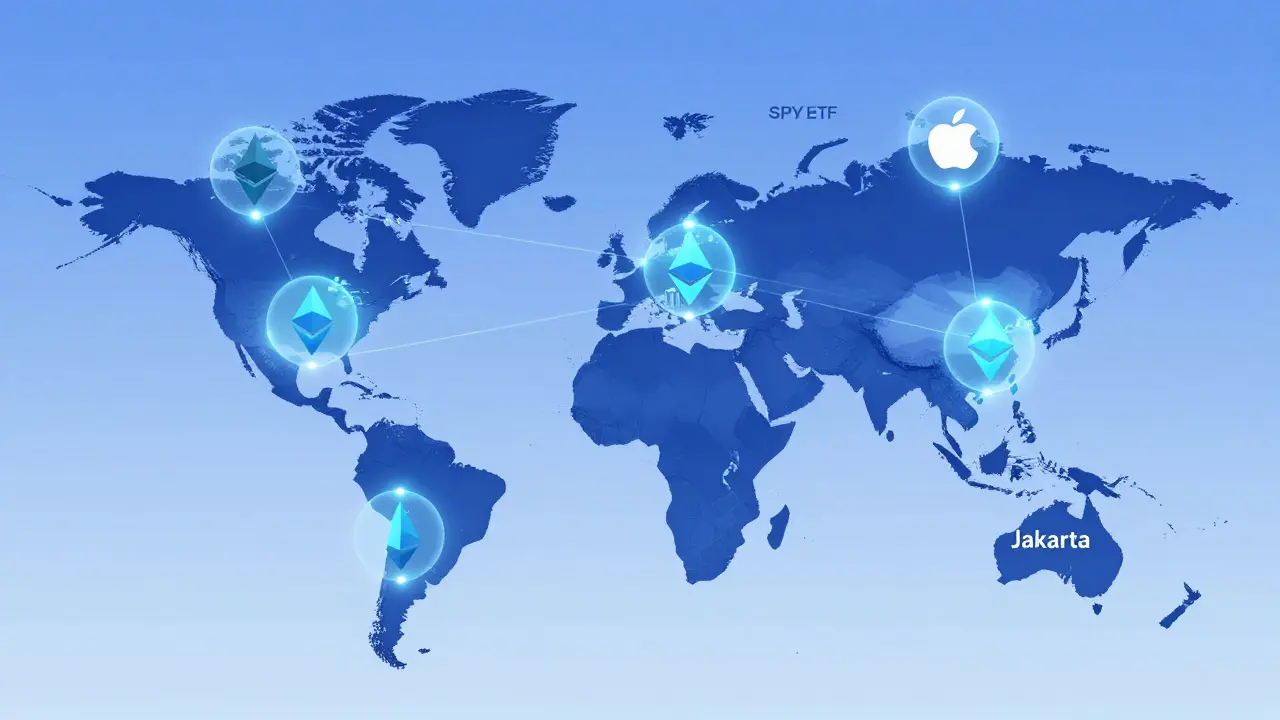
Most crypto exchanges let you trade Bitcoin, Ethereum, or memecoins. But what if you could trade actual Apple, Tesla, or Nvidia stock-on a blockchain, 24/7, from anywhere outside the US? That’s what Ondo Global Markets does. Launched on September 3, 2025, it’s not another altcoin exchange. It’s a bridge between Wall Street and blockchain, built for global investors who want real ownership of US equities without the hassle of international brokerage accounts.
What Exactly Is Ondo Global Markets?
Ondo Global Markets isn’t a typical crypto exchange. It doesn’t list tokens created from thin air. Instead, it tokenizes real, regulated US stocks and ETFs. Think of it like this: you buy a digital token that represents one share of Apple. That token is backed 1:1 by an actual Apple share held in a US-registered broker-dealer. The token trades on Ethereum. You can send it to your wallet, use it in DeFi protocols, or sell it anytime-even when US markets are closed. This isn’t speculation. It’s asset-backed finance. Every token has real-world collateral. The platform is a joint project between Ondo Finance and Alpaca, a US-regulated broker-dealer. Alpaca handles custody, compliance, and order execution. Ondo handles the blockchain layer. Together, they’ve built a system that mirrors the liquidity of the NYSE and NASDAQ, but without the 9:30 AM to 4 PM time zone lock-in.How It Works: Mint, Transfer, Redeem
Here’s the flow:- Mint: You deposit cash (USD) or a supported stablecoin (like USDC or DAI) and request tokens. The system buys the real stock on your behalf and mints an equivalent token on Ethereum. Minimums are low-no $10,000 account requirements like some traditional brokers.
- Transfer: Once minted, your token is yours. You can send it to any Ethereum wallet. No permission needed. You can lend it on Aave, use it as collateral on Compound, or trade it on decentralized exchanges like Uniswap. No platform lock-in.
- Redeem: Want your money back? Send the token back. The system sells the underlying stock and returns cash to your wallet. Redemption is instant during market hours and queued outside them.
What Assets Are Available?
When it launched, Ondo Global Markets offered over 100 US stocks and ETFs. By December 2025, that number will grow to more than 1,000. That includes:- Large-cap stocks: Apple (AAPL), Microsoft (MSFT), Tesla (TSLA), NVIDIA (NVDA)
- ETFs: SPDR S&P 500 ETF (SPY), Invesco QQQ Trust (QQQ), Vanguard Total Stock Market ETF (VTI)
- Fixed-income ETFs: iShares Core U.S. Aggregate Bond ETF (AGG), Vanguard Short-Term Treasury ETF (VGSH)
Who Can Use It?
This is critical: Ondo Global Markets is not available to US or UK residents. It’s built for everyone else. If you’re in Canada, Australia, Brazil, India, Nigeria, or Indonesia-you’re covered. The platform is optimized for the Asia-Pacific, Europe, Africa, and Latin America markets. Why the restriction? US regulations make it legally complex to offer direct access to US securities to American retail investors via crypto rails. By excluding the US and UK, Ondo avoids the regulatory minefield and focuses on the 85% of the world’s population that can’t easily access these assets otherwise.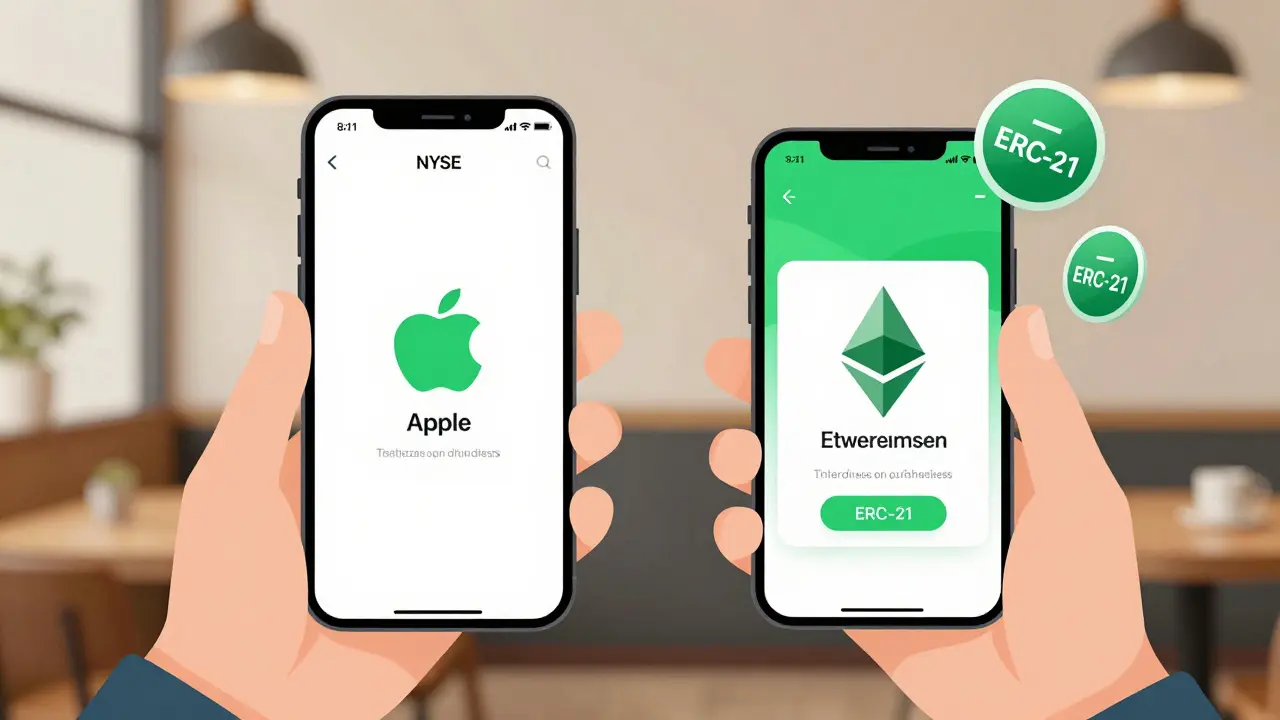
Why It’s Different from Other DeFi Platforms
Most DeFi projects chase yield by lending unstable tokens or offering high-risk liquidity mining. Ondo does the opposite. It offers low-risk, income-generating exposure to blue-chip assets. You’re not betting on a token’s price going up. You’re earning from the actual performance of Apple or the S&P 500. Compare it to:- Maple Finance: Lends to crypto firms-high risk, uncollateralized.
- Goldfinch: Offers unsecured loans to Web3 startups.
- Ondo Global Markets: Backed by real stocks held in regulated US custody.
Security and Transparency
All underlying assets are held in bankruptcy-remote entities. That means even if Ondo Finance goes under, your Apple shares are still safe. A third-party Security Agent holds a first-priority claim on those assets-just like a mortgage lender holds a lien on your house. Reserves are verified daily by independent auditors. No hidden leverage. No rehypothecation. The platform doesn’t lend out your shares to short sellers unless you opt in-and even then, any income from lending goes back to you. The Ethereum blockchain ensures full transparency. Every mint, redemption, and transfer is on-chain. You can verify your holdings using any Ethereum block explorer.Margin and Leverage
One of the most powerful features is built-in margin. You can borrow against your tokenized holdings to buy more stocks. Interest rates are competitive-often lower than traditional margin accounts. And because the platform connects to both DeFi lending pools and traditional capital sources, you can choose the best rate available at any time. For example: You own $10,000 worth of SPY tokens. You can borrow up to 50% of that value (depending on risk settings) to buy Tesla. You still earn dividends on your full position. The borrowed funds are held in stablecoin form and can be used immediately.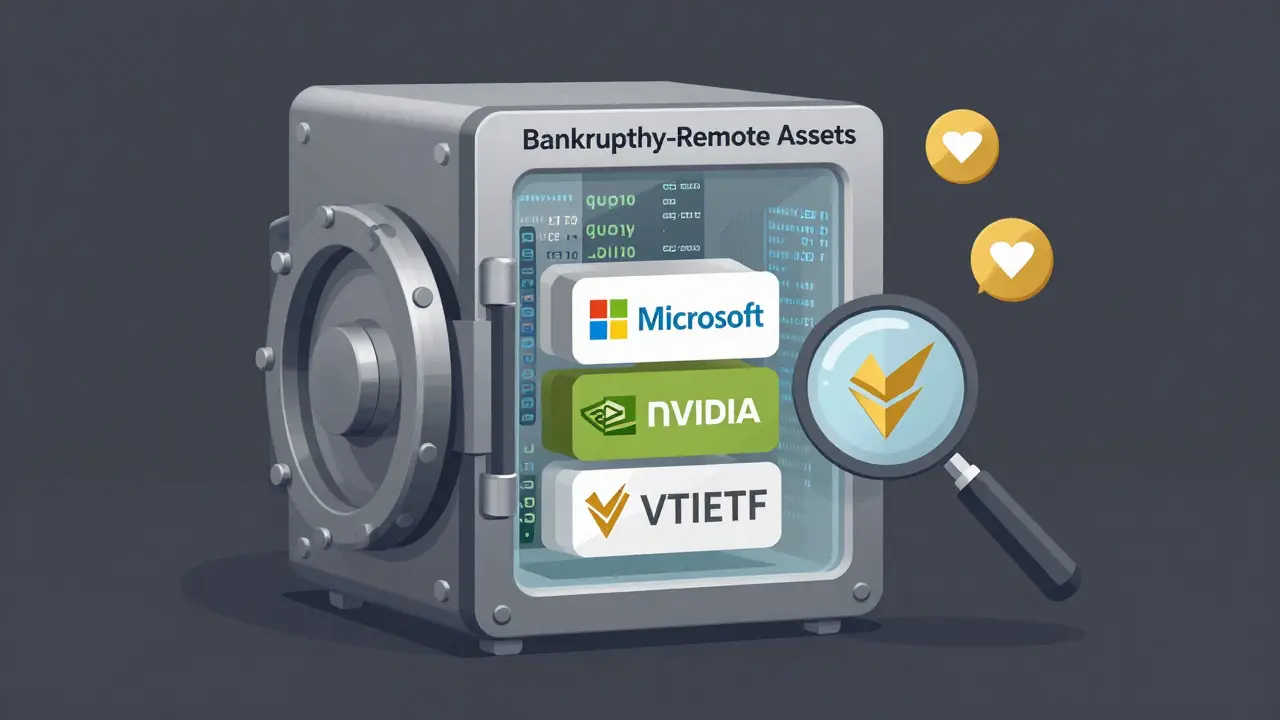
Developer Access and Integration
Ondo doesn’t just serve retail investors. It offers open APIs for developers. Wallets, robo-advisors, and DeFi apps can integrate Ondo’s tokenized assets directly. Imagine a mobile app that lets you buy US stocks with one tap, or a DeFi dashboard that shows your Apple holdings alongside your ETH and USDC. This openness is what makes Ondo different from traditional fintech apps. It’s not a walled garden. It’s a building block for the next generation of global finance.Limitations and Risks
No system is perfect. Here’s what you should know:- Centralization: Ondo relies on Alpaca and US broker-dealers. If those entities fail, there’s risk-even though assets are held in bankruptcy-remote structures.
- Regulatory uncertainty: While Ondo avoids the US, regulators in your country might still view tokenized stocks as securities. Check local laws before investing.
- Counterparty risk: You’re trusting Ondo to correctly mint and redeem tokens. So far, their track record is clean, but it’s still a centralized operator.
- US exclusion: If you’re in the US or UK, you’re locked out. No workaround exists.
Why This Matters
McKinsey estimates the tokenized real-world asset market could hit $2 trillion by 2030. Ondo Global Markets is one of the first platforms to make this real for everyday investors. It’s not about speculation. It’s about access. For someone in Nairobi, buying Apple stock used to mean: finding a broker that accepts international clients, paying high fees, waiting days for settlement, and dealing with currency conversion. Now? It takes five minutes. You use your phone. You pay a fraction of the cost. And you own it outright. This is financial inclusion-powered by blockchain.Final Thoughts
Ondo Global Markets doesn’t try to replace traditional finance. It improves it. It takes the most stable, liquid assets in the world-US stocks and ETFs-and makes them globally accessible, instantly tradable, and fully programmable. If you’re outside the US and want exposure to the world’s largest companies without the old-school brokerage mess, this is the cleanest option available today. It’s not flashy. It doesn’t promise 100x returns. But it delivers something rarer: reliable, transparent, real-world value on a blockchain. The future of investing isn’t just crypto. It’s crypto that holds real assets. Ondo is leading that shift.Is Ondo Global Markets a crypto exchange?
It’s not a traditional crypto exchange. You can’t trade Bitcoin or Dogecoin on it. Instead, it’s a tokenization platform that lets you buy, sell, and transfer digital tokens representing real US stocks and ETFs. It operates on Ethereum and integrates with DeFi, so it has crypto-like features-but the underlying assets are traditional securities.
Can I use Ondo Global Markets if I’m in the United States?
No. Ondo Global Markets explicitly blocks users from the United States and the United Kingdom due to regulatory restrictions. The platform is designed for international investors who face barriers accessing US markets through traditional channels.
Are my assets safe on Ondo Global Markets?
Yes, with important caveats. Your tokenized stocks are fully backed by real shares held in US-registered broker-dealers. These assets are kept in bankruptcy-remote entities, meaning they’re legally separated from Ondo’s corporate finances. A Security Agent holds a first-priority claim on them. Daily audits verify reserves. But you’re still trusting a centralized operator to manage the minting and redemption process.
Can I use Ondo tokens in DeFi protocols?
Absolutely. Once you mint a tokenized stock, it’s an ERC-20 asset on Ethereum. You can send it to any wallet, lend it on Aave, use it as collateral on Compound, or trade it on Uniswap. The platform doesn’t lock your assets. This interoperability is one of its biggest advantages over traditional brokerages.
Do I earn dividends on tokenized stocks?
Yes. Dividends from the underlying stocks are collected and distributed to token holders automatically. You can choose to receive them as additional tokens or as cash, depending on your settings. There’s no delay or hidden clawback.
How does margin trading work on Ondo?
You can borrow up to 50% of your tokenized stock value (subject to risk settings) to buy more assets. Interest rates are competitive and sourced from both traditional lenders and DeFi pools. You keep full ownership of your position while borrowing. Repayment is flexible, and the system automatically adjusts collateral requirements.
What’s the difference between Ondo and a traditional brokerage like Interactive Brokers?
Ondo gives you 24/7 access, instant settlement, and full DeFi integration. Traditional brokers like Interactive Brokers are limited to market hours, take days to settle trades, and don’t let you use your stocks as collateral in DeFi. Ondo is faster and more flexible, but it’s not available in the US or UK, and you rely on a single platform for custody and execution.
Is Ondo Global Markets regulated?
Ondo operates through Alpaca, a US-registered broker-dealer regulated by the SEC and FINRA. The underlying assets are held in compliance with US securities law. However, the platform itself is not licensed in every country. Users are responsible for ensuring compliance with their own local regulations.


Author
Ronan Caverly
I'm a blockchain analyst and market strategist bridging crypto and equities. I research protocols, decode tokenomics, and track exchange flows to spot risk and opportunity. I invest privately and advise fintech teams on go-to-market and compliance-aware growth. I also publish weekly insights to help retail and funds navigate digital asset cycles.