
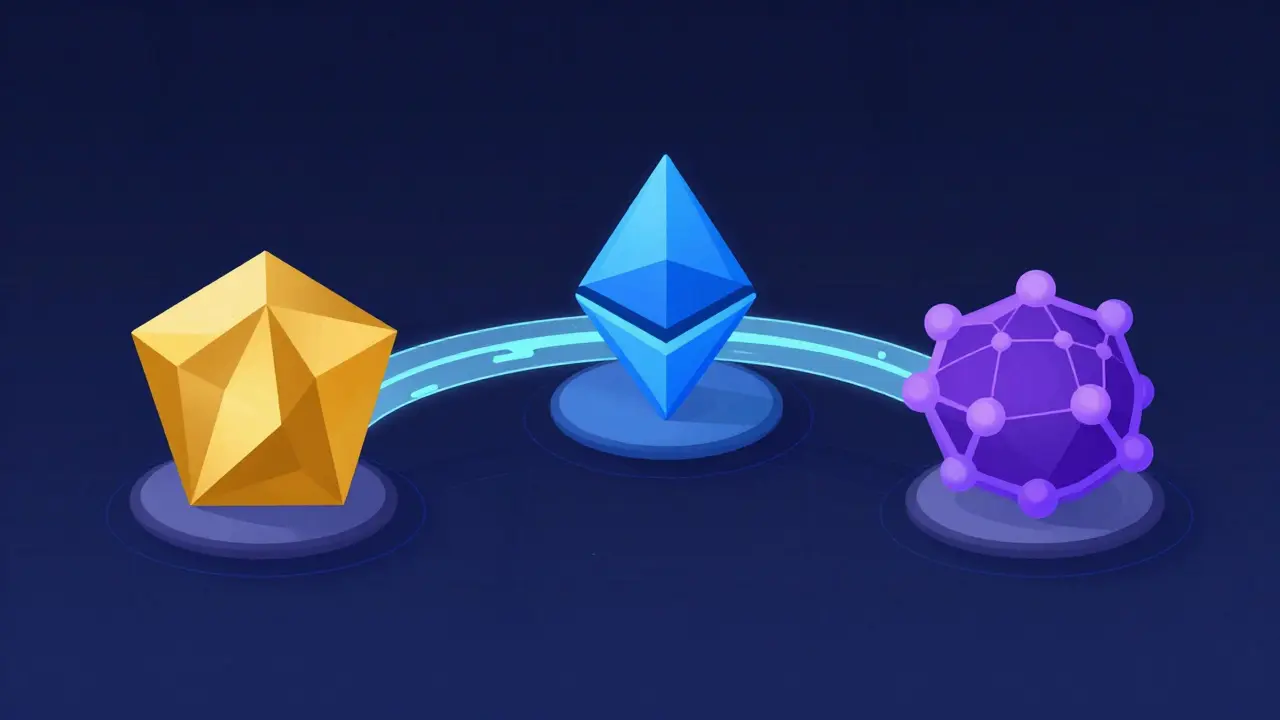
Have you ever tried to trade a token on one blockchain for an asset on another, only to get stuck in a messy web of bridges and fees? That’s the problem Paybswap is a decentralized protocol designed to solve by acting as a cross-chain automated market maker. It promises to let you trade seamlessly between major networks like Binance Smart Chain, Ethereum, and Polkadot. But does it actually work, or is it just another ambitious project with little real-world traction?
In this review, we’re cutting through the hype. We’ll look at how Paybswap functions technically, what the current market data says about its value, and whether it’s safe enough for your funds. The short answer? It’s a niche tool with significant technical promise but very low market visibility right now.
What Is Paybswap Exactly?
Paybswap isn’t a traditional centralized exchange like Coinbase or Kraken where you hand over your private keys. Instead, it’s a Decentralized Exchange (DEX). Most DEXs are confined to a single blockchain-for example, Uniswap mostly operates on Ethereum. Paybswap tries to break that wall.
It uses Polkadot’s cross-chain infrastructure to connect different ecosystems. Imagine you have BNB on Binance Smart Chain and want ETH on Ethereum. Normally, you’d need to bridge the BNB to a neutral chain, swap it, then bridge it again. Each step costs gas fees and carries risk. Paybswap attempts to streamline this by using Polkadot modules to facilitate these transactions directly within their protocol.
- Type: Decentralized Automated Market Maker (AMM)
- Supported Chains: Binance Smart Chain (BSC), Ethereum, Polkadot
- Core Function: Cross-chain swapping without manual bridging
- User Control: Non-custodial (you keep your keys)
This architecture makes it interesting for tech-savvy users who hate dealing with multiple wallets and bridge interfaces. However, complexity often comes with hidden risks, which we’ll explore next.
The Price Problem: What Does Paybswap Token Cost?
If you’re looking here because you bought PAYB tokens and want to know their value, the news might be disappointing. As of May 2026, major tracking platforms like CoinMarketCap and Investing.com show the price of the Paybswap token as effectively zero or unavailable in major fiat currencies like CAD or RUB.
This doesn’t necessarily mean the project is dead, but it does signal extremely low liquidity. When a token has no clear market price, it means there are very few buyers and sellers. This creates two big problems for users:
- High Slippage: If you try to sell even a small amount, the price could drop drastically because there’s no depth in the order book.
- Lack of Trust: Investors usually avoid projects with no transparent pricing history. Without volume, it’s hard to verify if the exchange itself is being used.
For context, leading exchanges in 2026 like Crypto.com or Kraken have billions in daily volume. Paybswap’s lack of visible trading data suggests it’s still in early adoption or perhaps struggling to gain user traction. Always check live charts before depositing funds into any platform with unclear tokenomics.

How Paybswap Compares to Industry Leaders
To understand where Paybswap stands, we need to compare it against the giants dominating the 2026 landscape. The crypto exchange market is "heating up like crazy," with innovation focused on AI integration, regulatory compliance, and seamless multi-chain support.
| Feature | Paybswap | Uniswap (DEX Leader) | Kraken (CEX Leader) | Crypto.com |
|---|---|---|---|---|
| Type | Decentralized (Cross-chain) | Decentralized (Multi-chain) | Centralized | Centralized |
| Fees | Not clearly published | 0.3% standard tier | Tiered (maker/taker) | Low staking yields + Visa rewards |
| KYC Required? | No (Non-custodial) | No | Yes (Strict) | Yes |
| Cross-Chain Ease | Built-in via Polkadot | Requires separate bridges | Internal transfers only | Internal transfers only |
| Market Liquidity | Very Low / Unclear | Extremely High | Extremely High | High |
| Best For | Niche cross-chain experiments | General DeFi trading | Safety & large volumes | Rewards & beginners |
As you can see, Paybswap’s unique selling point is its built-in cross-chain capability. Uniswap is the king of DEXs, but moving assets between chains on Uniswap still requires using third-party bridges. Paybswap integrates this. However, Uniswap has massive liquidity, meaning you can swap millions of dollars instantly with minimal price impact. Paybswap cannot offer that yet.
Kraken and Crypto.com represent the centralized alternative. They handle KYC (Know Your Customer) checks, offer customer support, and provide insurance-like protections. If you lose your password on Paybswap, no one can help you. On Kraken, they can reset it. This trade-off-control vs. convenience-is central to choosing a platform.
Security Risks: What You Need to Watch Out For
When reviewing any decentralized protocol, especially one involving cross-chain transactions, security is the top priority. Here’s the hard truth about Paybswap: there is a significant lack of public information regarding security audits.
Major protocols publish audit reports from firms like CertiK or Hacken. These reports highlight vulnerabilities so developers can fix them. For Paybswap, such documentation is missing from public sources. This raises red flags for several reasons:
- Cross-Chain Complexity: Moving assets between blockchains involves complex smart contracts. A bug in one module could lock your funds permanently or allow hackers to drain liquidity pools.
- Smart Contract Risk: Since Paybswap is non-custodial, you interact directly with its code. If the code hasn’t been audited, you’re betting on the developers’ competence alone.
- Regulatory Gray Area: In 2026, regulators in the EU and US are cracking down on unregistered exchanges. While DEXs operate in a gray area, lack of compliance documentation can lead to sudden shutdowns or delistings from other platforms.
If you decide to use Paybswap, treat it as a high-risk experiment. Never deposit more than you can afford to lose. Use a burner wallet-a separate hardware or software wallet not linked to your main holdings-to minimize exposure.
User Experience and Community Feedback
A healthy crypto project thrives on community engagement. You should see active discussions on Reddit, Discord, and Twitter. For Paybswap, the silence is deafening. There are virtually no user reviews on major platforms like Trustpilot, G2, or Capterra. No expert analyses from reputable crypto publications mention it either.
This absence of feedback isn’t proof of fraud, but it is proof of irrelevance-at least for now. Compare this to Pioneex.US, which actively promotes its low 0.1% fees and liquidity aggregation strategies, building a following among fee-sensitive traders. Or look at Crypto.com, which leverages its VISA card rewards (offering up to 6% cashback in CRO tokens) to attract mainstream users.
Paybswap lacks a clear marketing narrative or user base. Without a community, there’s less pressure on developers to improve the interface or fix bugs quickly. If you’re looking for a polished, user-friendly experience with responsive support, Paybswap currently falls short. The interface may be functional, but the ecosystem around it is empty.
Is Paybswap Worth Using in 2026?
So, should you add Paybswap to your toolkit? It depends entirely on your goals.
Do NOT use Paybswap if:
- You are a beginner new to cryptocurrency.
- You need to move large amounts of capital safely.
- You want customer support if something goes wrong.
- You care about immediate liquidity and tight spreads.
You MIGHT consider Paybswap if:
- You are an advanced DeFi user comfortable with high risk.
- You specifically need to swap assets between BSC and Ethereum via Polkadot without using separate bridges.
- You are willing to test beta-stage technology for potential early gains (understanding the token value is currently negligible).
In the broader 2026 market, innovation is tied to technological advancement, not just scale. Paybswap has the tech concept right-cross-chain AMMs are the future. But execution matters more than ideas. Until we see audit reports, consistent trading volume, and a growing community, Paybswap remains a speculative play rather than a reliable exchange.
For most people, sticking with established leaders like Uniswap for DeFi or Kraken for centralized trading is the safer bet. Keep an eye on Paybswap’s GitHub repository and official announcements. If they release a whitepaper update or partner with a major audit firm, that might be the signal to revisit this review.
Is Paybswap a scam?
There is no definitive evidence labeling Paybswap as a scam, but there are significant warning signs. The lack of security audits, zero visible market liquidity, and absence of user reviews make it highly risky. It may simply be an inactive or failed project rather than a malicious scheme. Treat it with extreme caution.
What is the current price of Paybswap token?
As of May 2026, the Paybswap token shows no meaningful value on major trackers like CoinMarketCap, often listed as $0.00 or unavailable. This indicates extremely low liquidity and trading volume.
Can I use Paybswap to trade Bitcoin?
Paybswap primarily supports assets on Binance Smart Chain, Ethereum, and Polkadot. It does not natively support Bitcoin (which runs on its own blockchain) unless wrapped versions (like WBTC) are available on the supported chains. Check their specific pair listings for availability.
Does Paybswap require KYC verification?
No. As a decentralized exchange (DEX), Paybswap is non-custodial and does not require Know Your Customer (KYC) verification. You connect your wallet directly and trade anonymously. However, this also means you have no recourse if you lose access to your wallet.
How does Paybswap compare to Uniswap?
Uniswap is a much larger, more liquid DEX with widespread adoption. Paybswap’s main advantage is its integrated cross-chain functionality via Polkadot, allowing swaps between BSC and Ethereum without external bridges. However, Uniswap offers far better liquidity, lower slippage, and a proven track record.


Author
Ronan Caverly
I'm a blockchain analyst and market strategist bridging crypto and equities. I research protocols, decode tokenomics, and track exchange flows to spot risk and opportunity. I invest privately and advise fintech teams on go-to-market and compliance-aware growth. I also publish weekly insights to help retail and funds navigate digital asset cycles.