
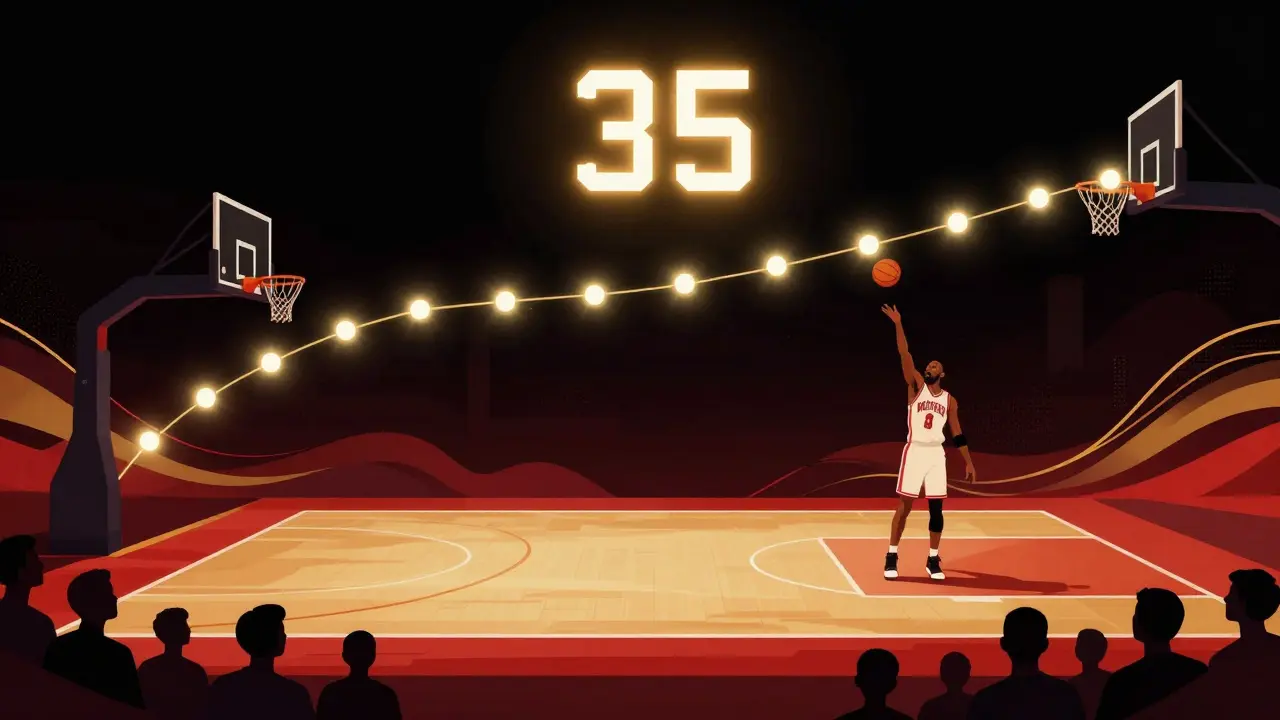
On November 7, 2021, over 3,513 people received something rare: a digital piece of basketball history. Not just any moment - the exact play where Tracy McGrady dropped 13 points in 35 seconds against the San Antonio Spurs. That sequence, one of the most electric comebacks in NBA history, became the foundation for the ARCHE Network x Tracy McGrady NFT airdrop. This wasn’t a flashy celebrity token. It was a carefully crafted digital collectible, built on real sports legacy, not hype.
Why This Airdrop Was Different
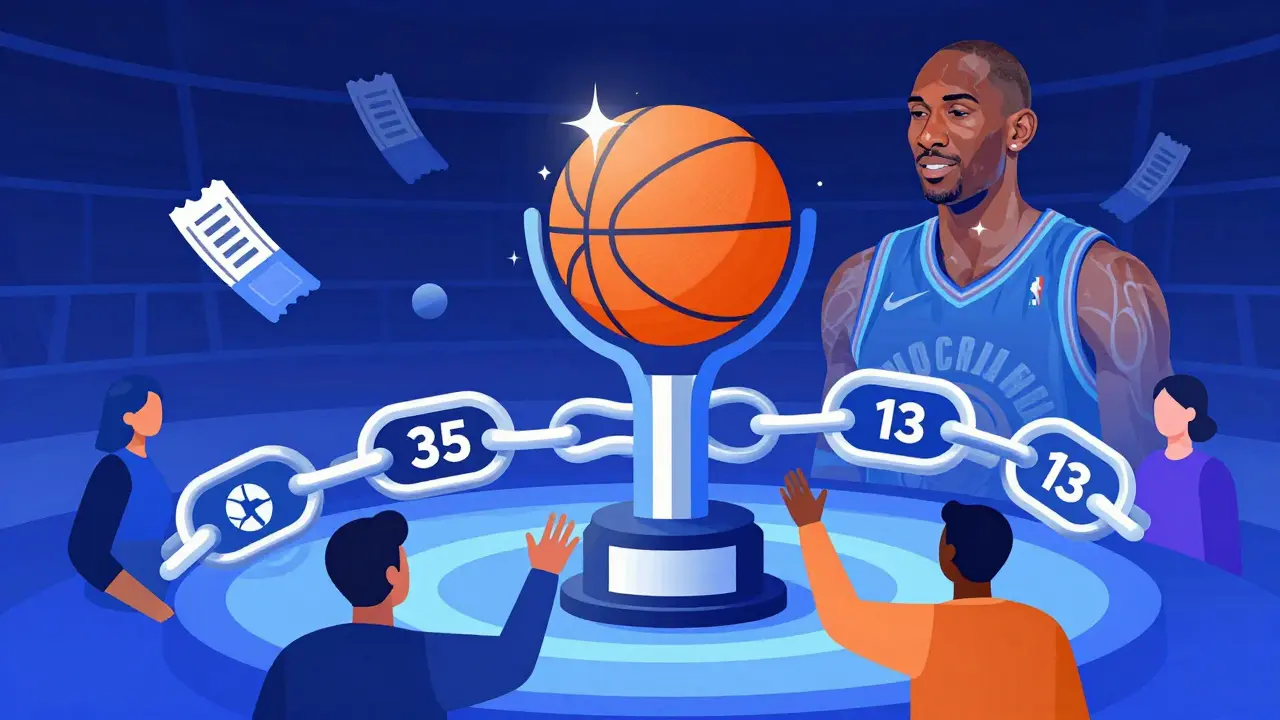
Most athlete NFT drops in 2021 were about name recognition. A player puts their face on a digital card and calls it a day. This one was different. ARCHE Network didn’t just license McGrady’s image. They secured exclusive rights to the moment - the 35 seconds, the 13 points, the sequence of shots, the crowd going wild. That’s why the airdrop dropped exactly 3,513 mystery boxes. 35 seconds. 13 points. The number wasn’t random. It was a direct code to the play itself.The collection was titled Time 13 Points in 35 Seconds. Each box contained a T-MAC Time Collector’s Edition NFT, minted on Binance NFT, one of the biggest NFT marketplaces at the time. But it wasn’t just an image. Each box also came with a special ticket - not just for future drops, but for real-world events, fan experiences, and ARCHE’s growing Metaverse ecosystem. This wasn’t just collecting. It was access.
How the Airdrop Was Structured
The airdrop didn’t go to everyone. It was targeted. ARCHE partnered with CoinMarketCap to distribute these boxes to users who met specific criteria - likely holding certain tokens, participating in community events, or being active on their platform. Exact rules weren’t published, but the selection process was strict. Only those already deep in the crypto space got the chance.The mystery box model was intentional. You didn’t know what version of the NFT you’d get until you opened it. Some were common. Some were rare. A few had animated elements or special audio clips from the actual game broadcast. The rarity tiers were tied to how many points McGrady scored in each sequence of the play - the final three-pointer? That was the ultra-rare version. The first step? The base one.
ARCHE’s tech backbone made this possible. Their DPaaS (Decentralized Protocol as a Service) platform handled the smart contracts for the mystery boxes, ensuring each NFT was unique, verifiable, and tamper-proof. The whole thing was built to scale - not just for this drop, but for future athlete collaborations. This was ARCHE’s V2.0 launch, and McGrady was their flagship.
Why Tracy McGrady Said Yes
McGrady didn’t just lend his name. He was involved. In his official statement, he called it a way to "relive those moments" with fans. That’s key. He wasn’t selling memorabilia. He was sharing memories. And he understood the tech: "NFT has definitely made the process much easier and memorable for everyone."His involvement gave the project legitimacy. Unlike other athlete NFTs where the player barely shows up, McGrady was quoted in press releases, appeared in promotional videos, and helped shape the narrative. He didn’t just endorse it - he believed in it.
ARCHE’s COO, Eliora ZY, put it plainly: "We hope to convey a message to people. ARCHE will help more people to make NFTs of their life’s highlight." This wasn’t just about basketball. It was about turning personal milestones - a first goal, a graduation, a wedding - into tokenized memories. McGrady’s moment was the proof of concept.
Where It Lived: Binance NFT
The NFTs weren’t on some obscure marketplace. They launched on Binance NFT - the same platform that hosted NBA Top Shot moments and other major sports collections. That meant instant visibility. Buyers could trade them immediately. Royalties were set. Auctions were live. The infrastructure was already there.Binance was running a whole sports NFT push in late 2021. Allen Iverson had his own collection. This was part of a bigger play: turning legendary sports moments into digital assets with real trading value. ARCHE didn’t build the marketplace. They leveraged it. Smart move.
What Happened After the Airdrop
After the initial drop, the NFTs entered the secondary market. Floor prices hovered around 0.3-0.8 ETH in early 2022, depending on rarity. The ultra-rare versions - the ones tied to the final buzzer-beater - sold for over 3 ETH. But the real value wasn’t just in resale. The special event tickets started being redeemed in 2022 for virtual watch parties, exclusive AMAs with McGrady, and even limited-edition physical merchandise.By mid-2023, trading volume slowed. The broader NFT market cooled. But the collection never disappeared. It became a collector’s item - not because it was trendy, but because it was authentic. No fake stats. No AI-generated highlights. Just one of the most unforgettable moments in basketball, locked into blockchain history.
Why This Still Matters
This airdrop set a template. It showed that for NFTs to last, they need more than a celebrity name. They need a story. A moment. A number that means something. ARCHE didn’t sell a JPEG. They sold a memory, encoded in code.Other athletes have tried since. But few have matched the precision of this drop. The 3,513 boxes. The 35-second window. The 13 points. Everything tied back to the play. That’s why, even in 2026, collectors still reference this as one of the cleanest athlete NFT collaborations ever done.
If you’re thinking about launching your own NFT project - whether it’s for sports, music, or personal milestones - remember this: People don’t buy pixels. They buy meaning. And the best way to give them meaning is to anchor it in something real.
What You Can Learn From This
- Don’t just use a celebrity’s name. Use their most iconic moment.
- Let the number of NFTs reflect the story (3,513 = 35 seconds, 13 points).
- Partner with established platforms (Binance NFT) for trust and liquidity.
- Add utility beyond the image - tickets, access, experiences.
- Get the athlete personally involved. Their voice adds credibility.
This airdrop didn’t make ARCHE a household name. But it gave them a legacy. And for anyone building in Web3, that’s more valuable than a quick sale.
Was the ARCHE Network x Tracy McGrady NFT airdrop open to everyone?
No. The airdrop was limited to users who met eligibility criteria set by CoinMarketCap and ARCHE Network. These likely included holding specific tokens, participating in community events, or being active on ARCHE’s platform. It wasn’t a public mint - only qualified participants received mystery boxes.
How many NFTs were distributed in the airdrop?
Exactly 3,513 mystery boxes were distributed. This number directly corresponded to the "35 seconds, 13 points" moment from Tracy McGrady’s legendary NBA play. Each box contained one unique T-MAC Time Collector’s Edition NFT and a special event ticket.
Where could you buy or trade these NFTs after the airdrop?
After the airdrop, the NFTs were listed and traded on Binance NFT, one of the largest NFT marketplaces at the time. Buyers could view listings, place bids, or buy at fixed prices. Royalty fees were set by ARCHE Network and applied to all secondary sales.
Did Tracy McGrady have any role in creating the NFTs?
Yes. Unlike many celebrity NFT projects, McGrady was personally involved. He endorsed the collaboration, provided official statements, and helped shape the narrative around the "13 points in 35 seconds" moment. He called it a way to "relive those moments" with fans, showing genuine engagement with the project.
What made this NFT collection different from other athlete NFT drops?
This collection was based on a specific, historic basketball moment - not just a photo or generic highlight. The number of NFTs (3,513) matched the timing and scoring of the play. It included utility (event tickets), was hosted on Binance NFT for credibility, and had direct athlete involvement. Most other athlete NFTs lacked this level of detail, authenticity, and technical alignment.
Is the ARCHE Network x Tracy McGrady NFT collection still active today?
The original airdrop ended in 2021, and new mints are no longer available. However, the NFTs are still tradable on secondary markets, and some holders continue to redeem event tickets. The collection remains a respected example of a well-executed, story-driven NFT project in the sports space.


Author
Ronan Caverly
I'm a blockchain analyst and market strategist bridging crypto and equities. I research protocols, decode tokenomics, and track exchange flows to spot risk and opportunity. I invest privately and advise fintech teams on go-to-market and compliance-aware growth. I also publish weekly insights to help retail and funds navigate digital asset cycles.