
Portugal used to be the wild west of crypto taxation - completely tax-free. No capital gains, no staking income, no reporting. That changed in 2023. But here’s the twist: even after the reforms, Portugal still offers some of the best crypto tax benefits in Europe for Bitcoin investors who know how to play the game.
What Changed in Portugal’s Crypto Tax Rules?
Before 2023, if you bought Bitcoin in Lisbon and sold it five years later, you paid zero tax. That was it. No questions asked. But in January 2023, Portugal’s government passed its State Budget (Orçamento de Estado) and finally brought crypto under the tax code. Not to punish investors, but to separate the amateurs from the pros. The new system doesn’t tax everyone. It targets three types of activity:- Category G (Capital Gains) - This is for regular investors who buy and sell Bitcoin. If you hold for less than a year, you pay 28% on profits. Hold it longer? Zero tax.
- Category E (Capital Income) - Passive income like staking, lending, or airdrops. All taxed at 28%. No deductions. No complexity.
- Category B (Self-Employment Income) - If you’re mining, running a trading bot 24/7, or validating transactions as a business, you’re taxed at progressive rates: 14.5% to 53%.
Why This Beats Germany, France, and the Rest of Europe
Let’s compare Portugal to other crypto-friendly countries. In Germany, you can also avoid tax on crypto held over one year. But if you sell within 12 months? You’re hit with your personal income tax rate - up to 45%. Portugal? Flat 28%. No brackets. No surprises. France? All crypto gains - short or long-term - get hit with a 30% flat tax, plus social contributions. That’s effectively 34-38% total. Staking? Taxed as income, up to 45%. Portugal’s 28% flat rate on staking looks like a gift. Even Switzerland, often praised for crypto, taxes capital gains for residents if the activity is considered professional. Portugal doesn’t care if you’re rich - it only cares if you’re trading like a business. The real hidden advantage? Crypto-to-crypto trades are not taxable events. In the U.S., swapping Bitcoin for Ethereum triggers a taxable sale. In Portugal? You can rebalance your portfolio all year without touching a tax form. That’s huge for investors who want to adjust strategies without penalties.Who Really Benefits? (And Who Gets Hit Hard)
If you’re a casual Bitcoin investor - bought in 2021, held through the bear market, and plan to sell in 2027? You’ll pay nothing. Portugal rewards patience. Digital nomads love this. Combine Portugal’s crypto tax rules with the Non-Habitual Residence (NHR) program, and you can live in Lisbon, earn foreign income (including crypto gains), and pay 0% on it - as long as you meet the residency rules. Even if you make $500,000 in Bitcoin profits from a New Zealand exchange, Portugal won’t tax it. But if you’re running a crypto trading firm, running a mining rig out of your garage, or making 100+ trades a month? You’re in Category B. That’s where it gets expensive. The top rate is 53%. That’s higher than the U.S. federal rate for top earners. Portugal doesn’t want to be a tax haven for professional traders - it wants to be a home for long-term investors.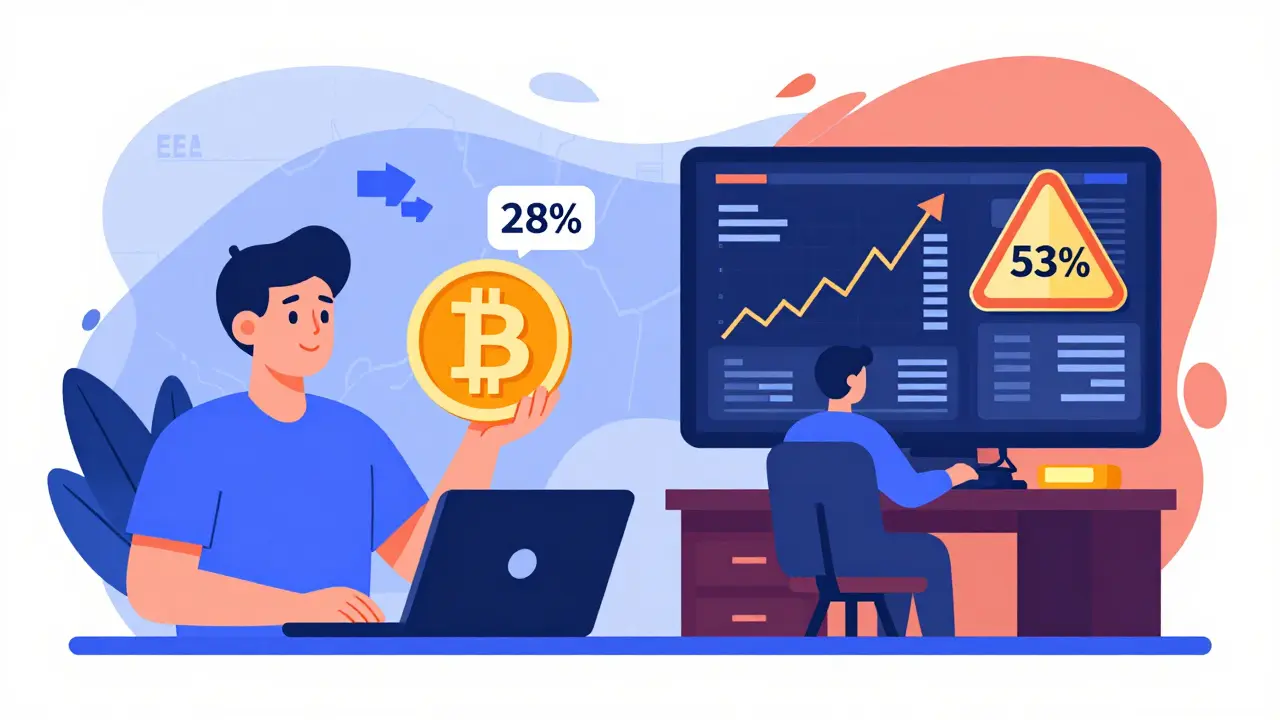
How to Prove You Held Bitcoin for Over a Year
The tax-free benefit only applies if you can prove you held Bitcoin for 365+ days. That means you need records. You need to track:- Exact purchase date and price (in EUR or equivalent)
- Wallet addresses used
- Sale date and price
- Whether the sale was to fiat or another crypto
What the Portuguese Tax Authority Actually Knows
Right now, Portugal’s tax agency doesn’t have the tech to track every crypto transaction. They’re building it. In 2025, they started requiring exchanges operating in Portugal to report user data. But if you’re using a non-EU exchange like Kraken or Bybit, and you never declared anything? The chance of getting caught is still low. That doesn’t mean you should ignore reporting. Portugal has a voluntary disclosure program. If you come clean before they come for you, penalties are minimal. But if you’re caught hiding income? Fines can hit 150% of the unpaid tax. Most smart investors file their returns anyway. Why? Because the system is simple. You report your gains under Category G or E. You declare your business income under Category B. No audits. No drama. Just clean paperwork.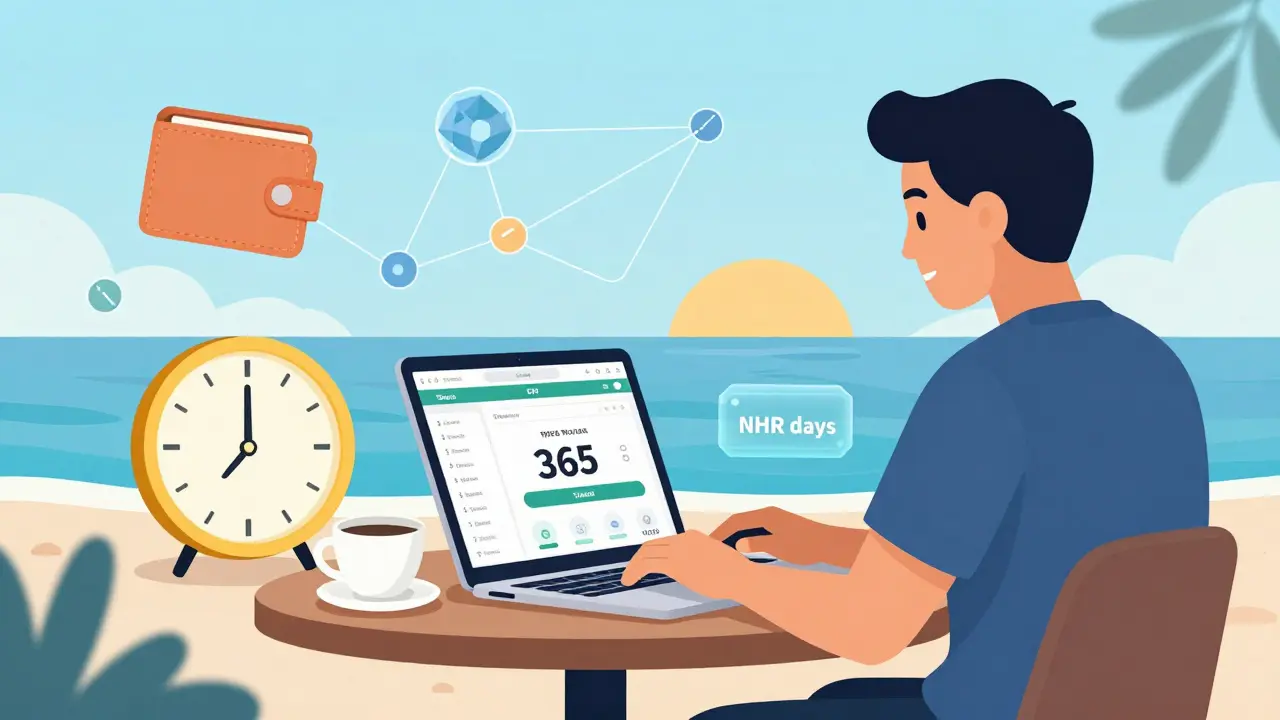
Portugal’s Crypto Future: Stable or Shifting?
There’s no sign Portugal will reverse course. The country is actively trying to attract digital nomads and crypto businesses. The Golden Visa program now accepts crypto investments in real estate funds. The NHR program, though slightly tightened in 2024, still offers massive benefits for foreign income. Industry analysts from CoinTracking and Global Citizens Solutions agree: Portugal’s framework is still one of the most transparent and favorable in Europe. The 28% flat rate is easy to understand. The one-year exemption is clear. The crypto-to-crypto exemption is rare. The only risk? Future changes to the EEA classification. If Portugal starts treating Bitcoin held outside the EEA as taxable (like some other EU countries), that could hurt investors using non-EU wallets. But as of 2026, that hasn’t happened.What You Should Do Right Now
If you’re a Bitcoin investor thinking about moving to Portugal:- Hold your Bitcoin for at least 365 days before selling. Don’t rush.
- Use a crypto tax tool to track every transaction. Date matters more than profit.
- Don’t trade like a business unless you’re ready to pay up to 53%.
- If you’re a digital nomad, check if you qualify for the NHR program. It doubles your tax savings.
- File your annual tax return. Even if you owe nothing, filing keeps you compliant.
Is Bitcoin completely tax-free in Portugal?
No, not anymore. Bitcoin is tax-free only if you hold it for more than one year (365+ days) and sell it for fiat or another crypto. Short-term gains (under 365 days) are taxed at 28%. Passive income like staking is also taxed at 28%. Only professional trading (Category B) is taxed at progressive rates up to 53%.
Do I need to report crypto-to-crypto trades in Portugal?
No. Swapping Bitcoin for Ethereum or any other crypto is not a taxable event in Portugal. You only report gains when you convert crypto to fiat (EUR) or if you’re a professional trader. This makes portfolio rebalancing much easier than in countries like the U.S. or Canada.
What if I bought Bitcoin on Binance and moved it to a Ledger?
You still need to track the original purchase date and price. Moving Bitcoin between wallets doesn’t reset the clock. The 365-day holding period starts from when you first bought it - not when you moved it. Use a tax tool to import all your transactions, including internal transfers, to keep accurate records.
Can I use Portugal’s crypto tax rules if I’m not a resident?
Only if you’re a tax resident. Non-residents pay tax in their home country. Portugal’s tax benefits apply only to individuals who are officially tax residents - meaning you live there for more than 183 days a year or have your center of vital interests in Portugal. You can’t just fly in, sell Bitcoin, and leave tax-free.
Are staking rewards taxed in Portugal?
Yes. Staking rewards, lending interest, and airdrops are treated as capital income (Category E) and taxed at a flat 28%. You pay tax when you receive them, not when you sell. Even if you immediately restake the rewards, you still owe tax on the value at the time of receipt.
Is the Non-Habitual Residence (NHR) program still available for crypto investors?
Yes, but with restrictions. The NHR program was reformed in 2024. New applicants must apply before March 31, 2026, and meet specific income thresholds. If you qualify, you pay 20% on Portuguese-sourced income and get tax exemptions on most foreign income - including crypto gains earned outside Portugal. This makes it one of the most powerful combinations for global Bitcoin investors.


Author
Ronan Caverly
I'm a blockchain analyst and market strategist bridging crypto and equities. I research protocols, decode tokenomics, and track exchange flows to spot risk and opportunity. I invest privately and advise fintech teams on go-to-market and compliance-aware growth. I also publish weekly insights to help retail and funds navigate digital asset cycles.