
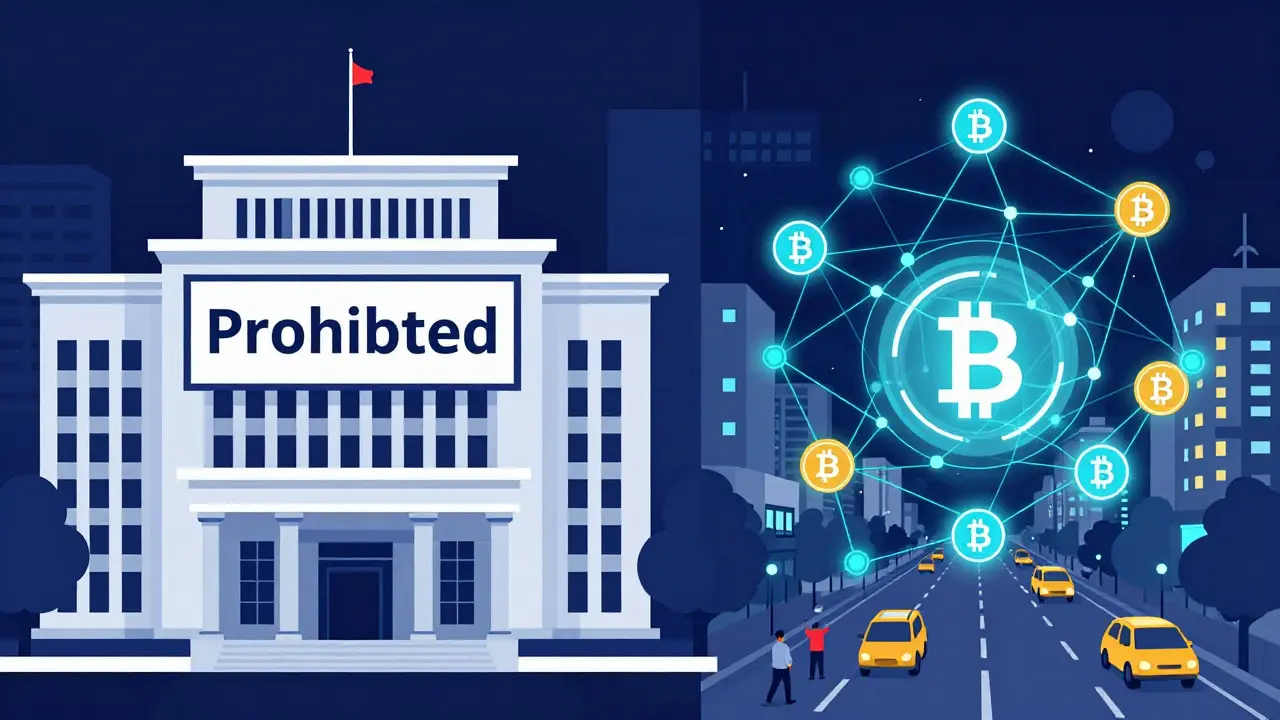
Imagine a country where owning or trading digital coins is officially against the law, yet millions of people do it anyway. That is the current reality in Bangladesh. While the government has maintained a strict, complete ban on cryptocurrency, the actual numbers tell a different story. People aren't just dabbling; they are integrating digital assets into their financial lives to solve real-world problems that traditional banks simply can't fix.
This isn't about overnight millionaires or speculative gambling on the next big coin. In Bangladesh, Bangladesh crypto adoption is driven by a desperate need for efficiency, especially when it comes to moving money across borders. When the official rules say "no" but the economic utility says "yes," people find a way. This creates a fascinating paradox where a nation ranks significantly in global adoption indices while remaining legally off-limits.
The Gap Between Law and Reality
On paper, the Bangladeshi government is clear: cryptocurrency is prohibited. However, data from 2025 shows a massive underground economy. CoinLaw is a cryptocurrency research and statistics provider reported that Bangladesh now has roughly 3.1 million verified crypto users. How is that possible under a total ban?
The answer lies in the difference between legislation and enforcement. Most users operate through international platforms, using Virtual Private Networks (VPNs) to mask their location and peer-to-peer (P2P) networks to swap local currency for digital assets. Because these transactions happen in the digital shadows, the government struggles to stop the flow. This has led to Bangladesh maintaining a consistent presence in global rankings, with CoinLedger, a crypto tax and analytics firm placing the country at rank 35 in its May 2025 global adoption index.
Why People Risk It: The Remittance Driver
Most people don't risk legal trouble just for a hobby. In Bangladesh, the primary motivator is the remittance system. Bangladesh relies heavily on money sent home by workers abroad, but traditional banking channels are often slow and expensive, eating away at the funds through high fees and poor exchange rates.
This is where Stablecoins come in. Stablecoins are cryptocurrencies pegged to a stable asset, like the US Dollar, to minimize price volatility. Instead of volatile assets like Bitcoin, Bangladeshi users prefer stablecoins to move money quickly and cheaply. A worker in the Middle East can send a stablecoin to a family member in Dhaka almost instantly, bypassing the bureaucratic nightmare of traditional wire transfers.
| Country | Adoption Status | Primary Driver | Estimated User Base |
|---|---|---|---|
| India | High (Index 1.000) | Investment & Tech | Massive/Mixed |
| Pakistan | Very High (Index 0.619) | Freelancing & Remittance | 18.2 Million |
| Bangladesh | Moderate (Rank 35) | Remittance & Utility | 3.1 Million |
Necessity-Driven Adoption vs. Speculation
There is a big difference between how someone in New York uses crypto and how someone in Bangladesh uses it. In wealthier nations, crypto is often a speculative investment-a way to grow wealth. In emerging markets, it is often a tool for survival or financial inclusion.
This is known as "necessity-driven adoption." When you have a banking system that is inaccessible or inefficient, digital assets provide a workaround. For many in Bangladesh, Digital Assets any cryptocurrency or tokenized asset that exists on a blockchain are not luxury items; they are practical tools. This mirrors trends in other lower-to-middle-income countries where users prioritize utility over the hope of a "moon shot" price increase.
The Regional Pressure Cooker
Bangladesh doesn't exist in a vacuum. Its neighbors are leaning heavily into the blockchain space. India and Pakistan have both seen explosive growth in crypto usage. In Pakistan, for example, over 5.4 million new users joined in 2025 alone, driven largely by freelancers receiving payments from overseas clients.
As more people in the region realize that they can manage their money without a traditional bank, the pressure on the Bangladeshi government to modernize its stance grows. The Asia Pacific region has seen a staggering 69% growth in crypto activity, and Bangladesh is riding that wave, even if it's doing so quietly.
Risks of the Underground Market
While the utility is clear, the "shadow" nature of this adoption comes with serious risks. Since there is no legal framework, users have zero protection. If a P2P trader scams a user or a non-custodial wallet is hacked, there is no authority to turn to for help. Reporting a crime to the police could lead to the user being arrested for violating the crypto ban.
Furthermore, the reliance on VPNs (Virtual Private Networks) and international exchanges adds a layer of technical complexity. Users must be careful about their digital footprints to avoid detection by financial regulators who monitor suspicious bank transfers that often accompany P2P trades.
What This Means for the Future
Will the ban ever be lifted? History suggests that when a technology becomes too integrated into the economy to ignore, governments eventually pivot from prohibition to regulation. The fact that 3.1 million people are already using these services suggests that the demand is structural, not temporary.
If the government continues to ignore the underlying issues-such as high remittance costs and limited financial access-the underground market will only grow. The transition from a total ban to a regulated framework could potentially bring these users into the light, allowing the state to tax transactions and protect consumers while still benefiting from the efficiency of blockchain technology.
Is cryptocurrency completely illegal in Bangladesh?
Yes, the government maintains a complete ban on the use, trade, and possession of cryptocurrency. However, enforcement is challenging because most transactions happen on international platforms or through peer-to-peer networks that are difficult to track.
Why are people in Bangladesh using crypto if it is banned?
The primary driver is the need for cheaper and faster remittance services. Stablecoins allow users to send and receive money from abroad without the high fees and long wait times associated with traditional banks.
How many crypto users are there in Bangladesh?
According to 2025 data from CoinLaw, there are approximately 3.1 million verified cryptocurrency users in the country.
What are stablecoins and why are they popular there?
Stablecoins are digital assets pegged to a stable currency, like the US Dollar. They are popular in Bangladesh because they avoid the extreme price swings of Bitcoin, making them ideal for sending money and preserving value.
How does Bangladesh rank globally in crypto adoption?
While rankings vary by provider, CoinLedger positioned Bangladesh at rank 35 globally in May 2025. Other indices have historically placed them even higher, often between 13 and 15 depending on the specific metrics used.


Author
Ronan Caverly
I'm a blockchain analyst and market strategist bridging crypto and equities. I research protocols, decode tokenomics, and track exchange flows to spot risk and opportunity. I invest privately and advise fintech teams on go-to-market and compliance-aware growth. I also publish weekly insights to help retail and funds navigate digital asset cycles.