
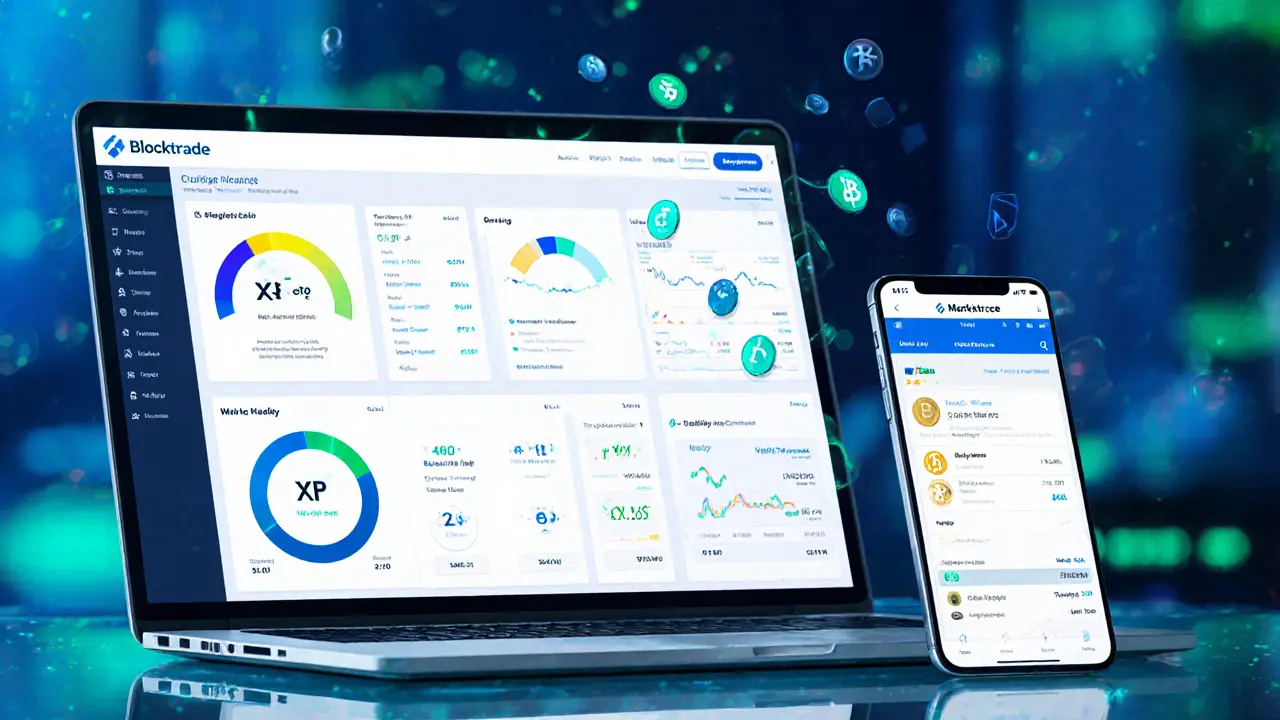
Blocktrade Fee Calculator
Your Trading Cost Breakdown
Enter your trade details and click Calculate to see your cost breakdown
Marketplace
Zero commission trading on 50+ cryptocurrencies
Model Trading
Traditional spot trading with 0.3% fee
Blocktrade crypto exchange review gives you the low‑down on Europe’s gamified trading platform - from licensing and fees to security and who should actually use it.
- Zero‑fee Marketplace trading, 0.3% Model Trading fee
- Licensed in Luxembourg, Italy, Slovenia and overseen by the Estonian FIU
- Minimum trade: €10, 1x leverage only
- Supported payments: cards, ApplePay, GooglePay, e‑wallets, crypto
- Best for beginners and traders who like gamified earn‑as‑you‑learn features
What is Blocktrade?
Blocktrade is a Luxembourg‑based cryptocurrency exchange launched in 2018. It markets itself as Europe’s first gamified crypto trading platform, blending traditional spot trading with a points‑based XP system that rewards users for completing verification steps and engaging with the marketplace.
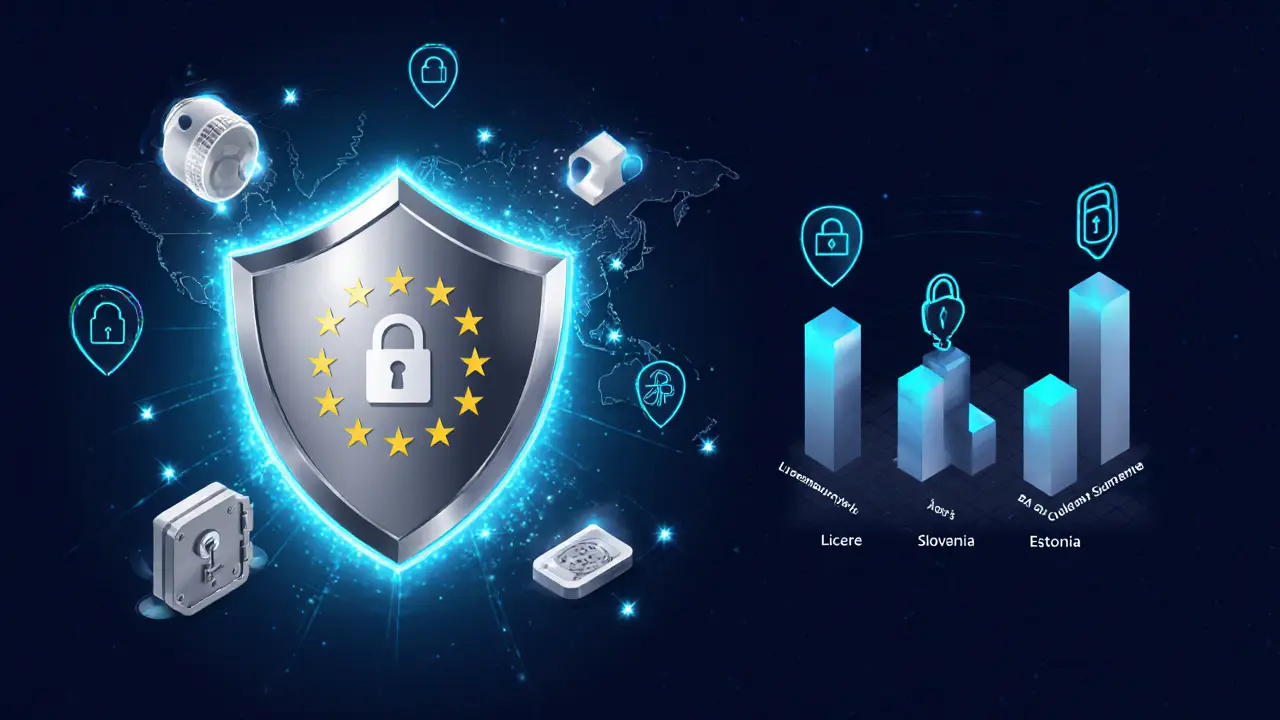
Regulatory oversight comes from several Tier‑1 European authorities: an Italian financial license, a Slovenian license, and authorization from the Financial Intelligence Unit (FIU) in Estonia. These licences place Blocktrade among the few exchanges that can claim full Tier‑1 compliance in the EU.
Core Features and How They Work
The platform revolves around two main trading modes:
- Marketplace - a zero‑fee, spot‑only market where users can trade any of the 50+ listed cryptocurrencies without paying a commission.
- Model Trading - a conventional spot market that charges a flat 0.3% fee on each executed trade.
Both modes share the same intuitive UI, but the fee structure differs, so savvy traders keep an eye on which tab they’re using.
Blocktrade also issued its own native token, BTEX, which can be staked for rewards and used to unlock occasional promotional bonuses within the gamified ecosystem.
Payment options are broad: Visa/Mastercard, ApplePay, GooglePay, popular e‑wallets, and direct crypto deposits. Fiat withdrawals incur a flat €3 fee, while crypto withdrawals have variable network fees.
Fees and Trading Costs
Understanding the cost structure is key to keeping your returns healthy:
- Marketplace trades - 0% commission (network fees only)
- Model Trading - 0.3% per trade (e.g., a €1,000 trade costs €3)
- Minimum order size - €10 (or equivalent in the chosen crypto)
- Fiat withdrawal - €3 per transaction
- Crypto withdrawal - variable, based on blockchain congestion
Compared with giants like Bybit (0.075% maker/taker fees) or MEXC (0.2% maker/0.6% taker), Blocktrade’s zero‑fee Marketplace is attractive for low‑volume traders, while the 0.3% Model fee sits in the mid‑range of the market.
Security and Regulation
Security scores are where Blocktrade really shines. Independent rating sites give the exchange a 9.75/10 for regulation and safety, reflecting its multi‑jurisdiction licences and robust internal controls.
Key security measures include:
- Two‑factor authentication (2FA) for every login and withdrawal
- Cold‑wallet storage for the majority of user assets
- Regular internal audits and compliance checks mandated by its European licences
Unlike some peers, Blocktrade has never reported a successful hack. However, the platform does not offer an investor protection fund - a feature that Bybit provides via its insurance pool.
User Experience: What Traders Like and Dislike
The UI is deliberately clean, with a dashboard that shows balances, recent trades, and XP progress in a single view. New users can finish the account‑creation process in under a minute, provided they submit the required ID for verification.
Pros reported by beginners:
- Fast onboarding and simple KYC flow
- Zero‑fee Marketplace lowers entry barriers
- Gamified XP points keep the experience engaging
Common complaints from more experienced traders:
- No futures, margin, or advanced order types beyond limit/market
- Customer support limited to email tickets Monday‑Friday 08:00‑20:00 CET, no live chat
- Gamification feels gimmicky for those focused solely on profit
How Blocktrade Stacks Up Against Competitors
| Feature | Blocktrade | Bybit | MEXC | Coinbase |
|---|---|---|---|---|
| Regulation (EU Tier‑1) | ✓ (Italy, Slovenia, Estonia, Luxembourg) | ✓ (Malta, UK FCA) | ✗ (Unregulated) | ✓ (US, EU licences) |
| Zero‑fee Trading Option | Marketplace (spot only) | No | No | No |
| Standard Spot Fee | 0.3% (Model) | 0.075% maker / 0.075% taker | 0.2% maker / 0.6% taker | 0.5% taker |
| Leverage | 1x only | Up to 100x | Up to 30x | None (spot only) |
| Advanced Orders (Futures, Options) | No | Yes (Derivatives) | Yes (Derivatives) | No |
| Investor Protection Fund | No | Yes | No | Yes (US SIPC) |
| Customer Support Hours | Mon‑Fri 08:00‑20:00 CET (email) | 24/7 live chat | 24/7 live chat | 24/7 live chat + phone |
Who Should Consider Using Blocktrade?
If you fit one of these profiles, Blocktrade might be a good match:
- Beginner traders who want a simple spot‑only interface and appreciate a quick KYC process.
- European residents who value a fully regulated platform under multiple EU licences.
- Gamified‑experience seekers who enjoy earning XP points and occasional token rewards.
- Low‑volume investors who trade modest amounts and want to avoid commission fees on the Marketplace.
Potential Drawbacks to Keep in Mind
Every exchange has trade‑offs, and Blocktrade is no exception:
- No futures, perpetual swaps, or margin trading - limits growth for advanced strategies.
- Support limited to email tickets during business hours, which can be frustrating during urgent issues.
- Lack of an investor protection fund means users bear full risk if a major incident ever occurs.
- Gamification features, while fun, do not improve liquidity or price discovery.
Future Outlook: Where Is Blocktrade Headed?
Blocktrade is actively expanding beyond pure trading. Recent announcements highlight integration with SKAi2 payment terminals, allowing merchants worldwide to accept crypto payments directly from the exchange’s ecosystem. The roadmap also mentions deeper gamified services - such as staking BTEX for higher XP tiers and potential NFT‑based rewards - though concrete timelines remain vague.
Regulatory compliance is likely to stay its cornerstone. As the EU moves toward stricter crypto‑asset regulations (MiCA), Blocktrade’s multi‑license approach positions it well to adapt quickly, potentially attracting institutional clients seeking a compliant gateway.
However, competition from exchanges that already bundle advanced derivatives, higher leverage, and extensive support will keep pressure on Blocktrade to broaden its feature set if it wants to capture a larger market share.
Frequently Asked Questions
Is Blocktrade safe for storing my crypto?
Yes. Blocktrade holds the majority of user funds in cold‑wallet storage, employs 2FA on all accounts, and is regulated by several Tier‑1 European authorities, earning a 9.75/10 safety rating from independent reviewers.
What is the difference between Marketplace and Model Trading?
Marketplace offers zero‑commission spot trades on a limited set of pairs, while Model Trading charges a flat 0.3% fee per trade and provides a more traditional order‑book experience.
Can I use Blocktrade on a mobile device?
Blocktrade provides responsive web access and native iOS/Android apps that support all core features, including Marketplace trading and BTEX staking.
What payment methods are supported for deposits?
You can fund your account with Visa/Mastercard, ApplePay, GooglePay, popular e‑wallets, or by sending crypto directly to your Blocktrade wallet.
Does Blocktrade offer any insurance or protection fund?
No, Blocktrade does not currently operate an investor protection fund. Users rely on the platform’s regulatory compliance and security practices for safety.


Author
Ronan Caverly
I'm a blockchain analyst and market strategist bridging crypto and equities. I research protocols, decode tokenomics, and track exchange flows to spot risk and opportunity. I invest privately and advise fintech teams on go-to-market and compliance-aware growth. I also publish weekly insights to help retail and funds navigate digital asset cycles.