
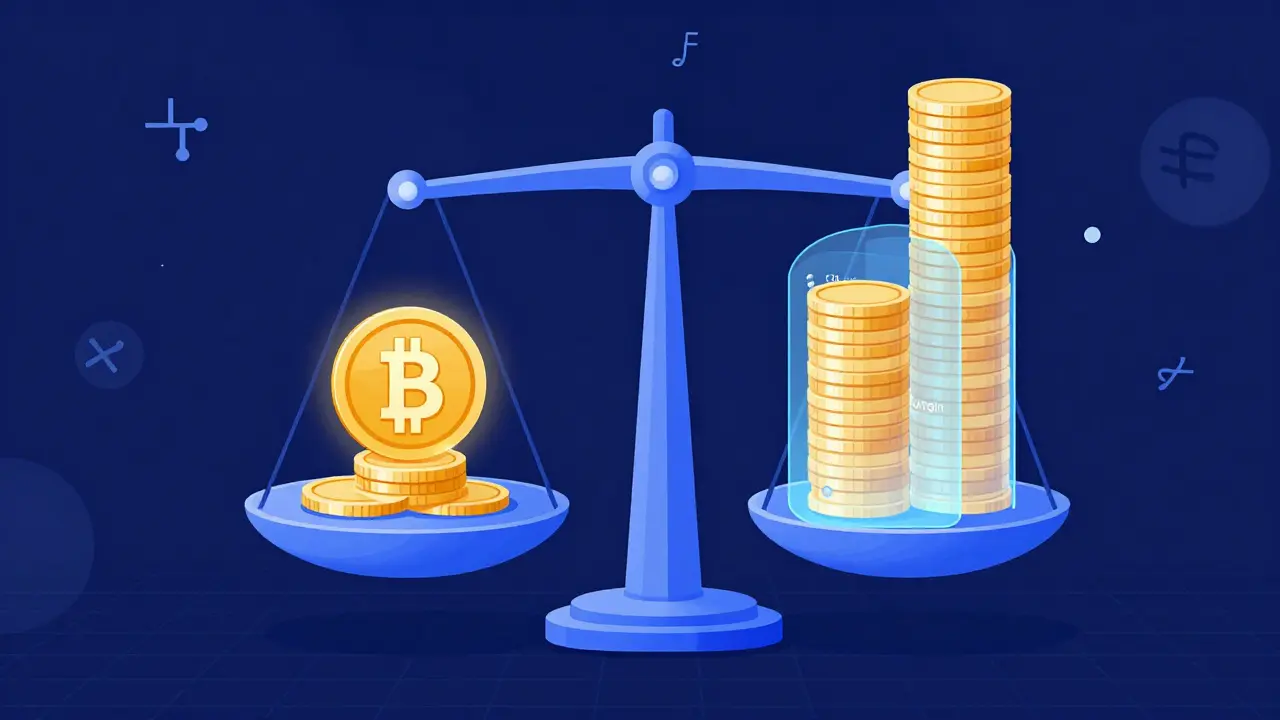
Imagine you have $1,000, but you want to make a move on a trade that requires $10,000 to see significant gains. In the world of cryptocurrency leverage is a financial tool that allows traders to open positions larger than their actual account balance by borrowing funds from an exchange. It’s essentially a double-edged sword: it can turn a small price movement into a massive payday, or it can wipe out your entire account in seconds. If you've seen terms like 10x, 50x, or 100x on a trading screen, you're looking at the multiplier effect on your capital.
The Basics: How Leverage Actually Works
At its core, leverage is a ratio. When you see 10x, it means for every $1 you put up, the exchange lets you trade as if you have $10. The money you provide is called Margin, which acts as collateral for the loan the exchange is giving you. If you want to control a $10,000 position at 10x leverage, you only need to provide $1,000 in margin.
The magic (and the danger) is in the multiplier. Leverage doesn't change the price of the asset, but it amplifies your returns and losses relative to your initial investment. If the price of Bitcoin moves up by 1%, a trader with no leverage makes 1%. But a trader using 100x leverage sees a 100% return on their margin. Sounds great, right? The catch is that if the price drops by 1%, that same 100x trader loses everything.
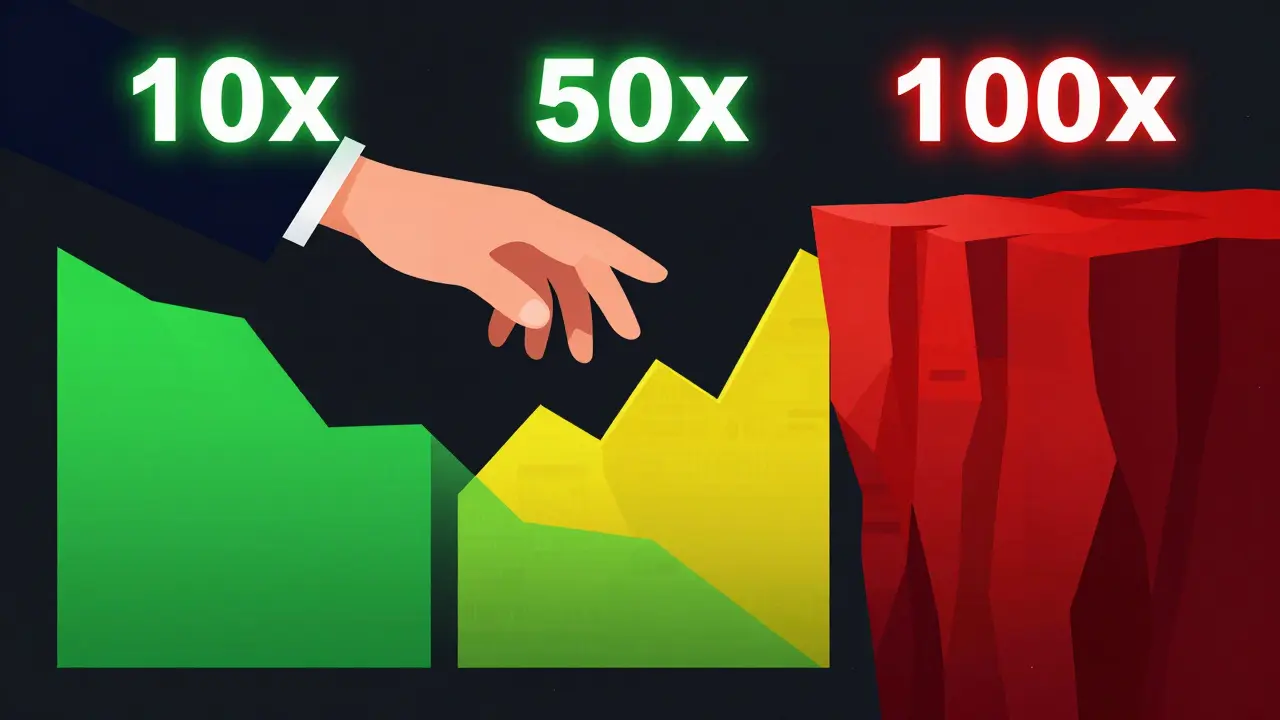
Breaking Down the Ratios: 10x vs 50x vs 100x
Choosing a leverage level is a direct decision about how much risk you can stomach. Most platforms, including Binance or Kraken, offer a range of options to fit different strategies.
10x Leverage: The "Intermediate" Approach
With 10x leverage, you are putting up 10% of the total trade value. This is often seen as a more sustainable level for those who understand the basics of technical analysis. A 5% move in your favor results in a 50% gain on your margin. While still risky, it gives you some breathing room before your position is threatened.
50x Leverage: The High-Stakes Zone
At 50x, the margin requirement drops to 2%. Here, the volatility of the crypto market becomes a monster. A tiny 2% move against you will lead to a total loss of your margin. This is where trading starts to feel less like investing and more like a high-speed game of chance.
100x Leverage: The Edge of the Cliff
100x leverage requires only 1% margin. This means $300 can control a $30,000 position. However, the margin for error is virtually zero. A 1% price dip-which can happen in minutes or even seconds in crypto-results in immediate Liquidation, where the exchange closes your position to ensure they don't lose their borrowed money.
| Leverage Ratio | Margin Required | Price Move for 100% Gain | Price Move for Total Loss (Liquidation) | Risk Level |
|---|---|---|---|---|
| 10x | 10% | 10% | 10% | Moderate/High |
| 50x | 2% | 2% | 2% | Extreme |
| 100x | 1% | 1% | 1% | Suicidal/Gambling |
Isolated vs Cross Margin: Which One Should You Use?
When you open a leveraged trade, you'll usually have to choose between two modes: Isolated Margin and Cross Margin. This choice determines how your funds are used to protect your position from liquidation.
In Isolated Margin, the risk is limited to the specific amount of money you allocated to that one trade. If you put $100 into a 50x trade and it hits the liquidation price, you lose that $100 and nothing more. It's a way of "boxing in" your risk.
On the other hand, Cross Margin uses your entire account balance as collateral. If one trade starts going south, the system will pull money from your other balances to keep the position open. While this can prevent a quick liquidation, it introduces a catastrophic risk: a single bad trade can wipe out every single cent in your entire account.
The Danger of the Liquidation Price
The most critical number in leverage trading isn't your potential profit, but your liquidation price. This is the price point at which your margin is no longer sufficient to cover the losses of the position. Because cryptocurrency is famously volatile, "flash crashes" are common. You might be right about the long-term direction of a coin, but a brief, 2% dip can trigger a liquidation, erasing your position before the price bounces back up.
This is why professional traders rarely use the maximum leverage offered. They prioritize survival over maximum gains. If you are using 100x leverage, you aren't trading the trend; you are betting that the price won't move against you by a fraction of a percent for a few minutes.
How to Manage Risk Without Losing Everything
If you're determined to try leverage, you need a system. Going in without a plan is simply gambling. Here are the tools the pros use to keep their accounts alive:
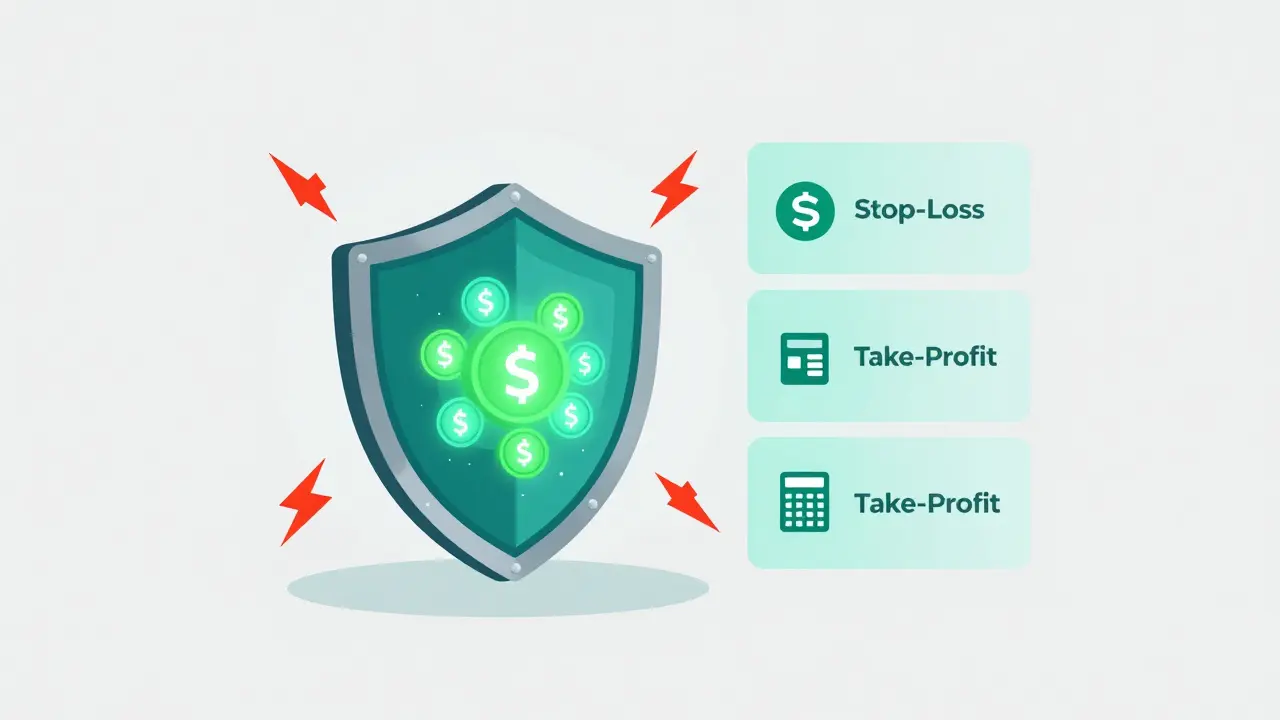
- Stop-Loss Orders: This is a non-negotiable tool. A stop-loss automatically closes your trade at a predetermined price, ensuring you lose only a small percentage of your capital rather than the whole lot.
- Take-Profit Orders: Don't get greedy. Set a target where you'll exit the trade and lock in gains before the market reverses.
- Leverage Calculators: Before clicking "Buy" or "Sell," use a calculator to find your exact liquidation price. Know exactly where the "danger zone" is.
- Start Small: Most successful traders recommend starting with 2x to 5x leverage. Only increase your multiplier after you've proven you can be profitable consistently over several months.
The Reality Check: Trading vs. Gambling
There is a huge divide in the crypto community regarding high leverage. On forums like Reddit, you'll see stories of people turning $100 into $10,000 using 100x leverage. These stories are the "lottery winners" of the trading world. For every one of those posts, there are thousands of traders who liquidated their accounts in silence.
True trading is about probability and risk management. When you move into 50x or 100x territory, the probability of a random price spike wiping you out becomes higher than the probability of your analysis being correct. At that point, you've stopped trading the market and started gambling on noise.
Does higher leverage increase my potential profit?
Not necessarily. If your position size remains the same, increasing leverage only reduces the amount of capital (margin) you need to open that position. However, it significantly increases your risk because the liquidation price moves closer to your entry price.
What is the safest leverage ratio for beginners?
For those just starting, 2x to 5x is generally considered the safest entry point. This allows you to experience the effects of leverage without the extreme risk of immediate liquidation that comes with 10x or higher ratios.
What happens during a liquidation?
Liquidation occurs when your margin falls below the maintenance requirement set by the exchange. The exchange automatically closes your position to pay back the borrowed funds, and you lose the margin you deposited for that trade.
Can I use leverage on any cryptocurrency?
Most major exchanges offer leverage for high-liquidity assets like Bitcoin and Ethereum. However, smaller "altcoins" may have much lower maximum leverage limits because their extreme volatility makes high leverage too risky for the exchange to support.
Is leverage trading legal?
It depends on your region. Many jurisdictions allow it, but some, like the European Union, have implemented strict caps on leverage for retail traders (sometimes as low as 2:1) to protect them from devastating losses.
Next Steps for New Traders
If you're feeling tempted to try leverage, don't jump into the deep end. Start with "paper trading" (simulated trading with fake money) to see how a 10x position behaves during a volatile market shift. Once you're comfortable, move to a small amount of real capital using 2x or 3x leverage. The goal isn't to get rich overnight-it's to stay in the game long enough to actually learn how to trade.


Author
Ronan Caverly
I'm a blockchain analyst and market strategist bridging crypto and equities. I research protocols, decode tokenomics, and track exchange flows to spot risk and opportunity. I invest privately and advise fintech teams on go-to-market and compliance-aware growth. I also publish weekly insights to help retail and funds navigate digital asset cycles.