

When you hear the name FUBT, you might think it’s just another crypto exchange offering low fees and a wide range of coins. But the truth is far more concerning. FUBT isn’t just underperforming-it’s flagged as suspicious by one of the world’s most respected financial regulators. If you’re considering using this platform, you need to know what’s really going on before you deposit a single dollar.
What Is FUBT, Really?
FUBT is a cryptocurrency exchange that launched several years ago with a promise: trade spot and futures markets across both centralized and decentralized networks. At its peak in 2019, it listed 212 cryptocurrencies, which was impressive for a smaller platform. It also had its own utility token, FUC (FUBT Token), meant to give users discounts on trading fees and access to special features. But numbers don’t tell the whole story. What matters more is whether the platform is safe, legal, and trustworthy. And here’s where FUBT falls apart.The Hong Kong SFC Warning: A Major Red Flag
On official public records, the Securities and Futures Commission of Hong Kong (SFC) is a government body responsible for regulating financial markets in Hong Kong, including virtual asset trading platforms has listed FUBT as a “suspicious virtual asset trading platform.” That’s not a minor footnote-it’s a full-blown warning. The SFC doesn’t issue these lightly. They only do it when there’s strong evidence of potential fraud, lack of licensing, poor asset protection, or failure to follow anti-money laundering rules. This means if you use FUBT, you’re trading on a platform that regulators have already said: “Don’t trust this.” No other top exchange-Binance, Coinbase, Kraken-has ever received this label. Even platforms with past issues have worked to fix them. FUBT hasn’t. And as of 2026, there’s no public sign they’ve changed anything.No Transparency, No Trust
Leading exchanges publish their security practices openly. Coinbase says 98% of user funds are stored offline in cold storage. Kraken shares quarterly audits from Big Four accounting firms. OKX and Bybit let users verify their reserves in real time. These aren’t marketing claims-they’re verifiable facts. FUBT? Nothing. No published cold storage percentages. No proof-of-reserves reports. No insurance coverage details. No third-party security audits. If you don’t know how your money is protected, you’re essentially gambling that the company won’t vanish overnight. And it’s not just security. Customer support? Unavailable in public records. Help desk hours? Unknown. Live chat? No evidence it exists. Compare that to Binance, which has 24/7 multilingual support, or Coinbase, which answers questions within minutes on Twitter and Discord. FUBT leaves users in the dark.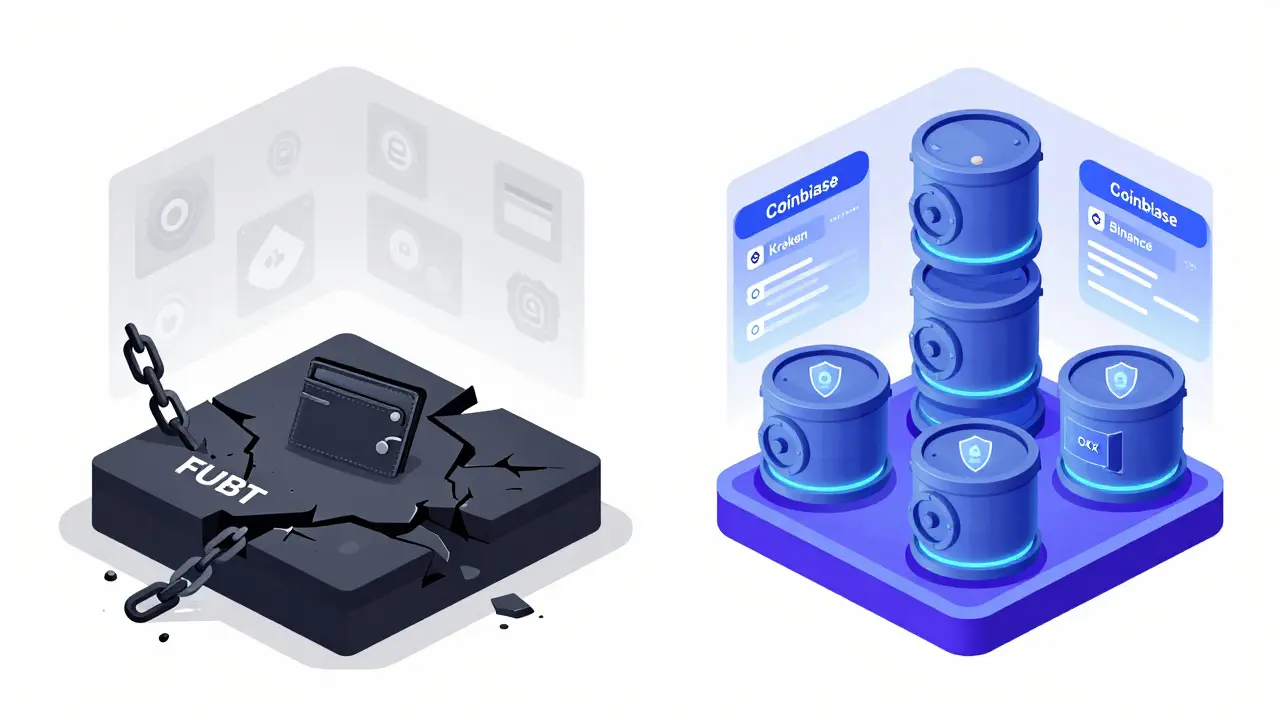
Why No One Talks About FUBT Anymore
Look at any crypto forum, Reddit thread, or Trustpilot review page today. You’ll find hundreds of discussions about Binance, Kraken, and Bybit. You’ll see users debating fees, withdrawal times, and new coin listings. You’ll find complaints, yes-but also solutions and warnings that help people stay safe. Now search for FUBT. What do you get? Outdated blog posts from 2020. A few forum mentions from 2021. Zero recent user reviews. No active community. No trading volume data. No press releases. No updates. That’s not a quiet platform. That’s a dead one-or worse, a hidden one.Trading Features: Outdated and Unreliable
FUBT claims to offer spot trading and perpetual futures. That sounds good on paper. But if you try to trade Bitcoin or Ethereum on FUBT today, you’ll likely find thin order books, wide spreads, and slow order execution. Liquidity matters. If there aren’t enough buyers and sellers, your trades get slippage-or worse, they don’t fill at all. Compare that to Binance a global cryptocurrency exchange offering over 500 trading pairs, with spot and futures markets, and a 0.1% base trading fee, which handles billions in daily volume. Or OKX a crypto exchange known for advanced trading tools, transparent proof-of-reserves, and competitive fee structures, which lets you see live reserve audits. FUBT doesn’t offer anything comparable. Even if you held FUC tokens for fee discounts, the entire system collapses if the exchange isn’t operating reliably. A discount on fees means nothing if you can’t withdraw your money.
What You’re Really Risking
Using FUBT isn’t just a bad choice-it’s a dangerous one. Here’s what could go wrong:- Your funds could be frozen with no explanation.
- There’s no insurance if the exchange gets hacked.
- You have zero legal recourse if they disappear.
- Your personal data could be sold or leaked without accountability.
- You might be unknowingly involved in money laundering activities.
Better Alternatives That Actually Work
If you’re looking for a crypto exchange that’s safe, reliable, and regulated, you have plenty of options:- Coinbase a publicly traded U.S. cryptocurrency exchange with SEC oversight, 98%+ cold storage, and insurance coverage - Best for beginners and those who want legal protection.
- Kraken a U.S.-based exchange with Big Four audits, 95% cold storage, and clear fee tiers for professional traders - Best for security-focused users.
- Binance a global exchange with 500+ assets, low fees, and deep liquidity across spot and derivatives markets - Best for active traders.
- OKX a crypto exchange offering transparent proof-of-reserves, advanced trading tools, and competitive fees - Best for users who want to verify reserves themselves.
Final Verdict: Avoid FUBT
FUBT isn’t just another crypto exchange. It’s a warning sign. The Hong Kong SFC didn’t label it suspicious by accident. The lack of updates, community, security disclosures, and support isn’t an oversight-it’s a pattern. There’s no reason to risk your money on a platform that regulators have already flagged. No discount on fees, no rare altcoins, no “hidden gem” benefits outweigh the danger. If you’re new to crypto, stick with the big names. If you’re experienced, you already know: never trade where you can’t verify safety. FUBT fails both tests.Walk away. Save yourself the stress, the risk, and the potential loss.
Is FUBT a legitimate crypto exchange?
No, FUBT is not considered legitimate by financial regulators. The Securities and Futures Commission of Hong Kong has explicitly listed it as a suspicious virtual asset trading platform. This means it likely lacks proper licensing, fails to meet anti-money laundering standards, and does not provide transparent asset protection. Using FUBT carries high legal and financial risk.
Can I withdraw my money from FUBT?
There is no reliable public information confirming whether withdrawals still work on FUBT. Many users report delays or complete withdrawal failures. Without verified customer support or operational updates since 2021, there’s no guarantee your funds can be accessed. If you have money on FUBT, treat it as potentially locked.
What happened to the FUBT Token (FUC)?
The FUBT Token (FUC) was designed to give users fee discounts and trading privileges on the exchange. But since FUBT’s operational status is unclear and regulatory warnings have mounted, the token has lost all utility. Trading volume for FUC has dropped to near zero, and major exchanges no longer list it. Holding FUC today offers no practical value.
Why don’t I see FUBT in crypto reviews anymore?
FUBT has disappeared from modern exchange comparisons because it no longer meets basic industry standards. Leading platforms like Binance, Kraken, and Coinbase now dominate rankings due to their transparency, liquidity, and regulatory compliance. FUBT lacks these traits and hasn’t updated its platform or services in years, making it irrelevant in today’s market.
Should I use FUBT if I’m looking for low fees?
No. Even if FUBT offered low fees-which is unverified-the risks far outweigh any potential savings. Platforms like Binance and OKX offer fees as low as 0.08% with transparent pricing, plus insurance and regulatory oversight. Paying slightly more on a trusted exchange is far safer than saving a few cents on a platform flagged by regulators.


Author
Ronan Caverly
I'm a blockchain analyst and market strategist bridging crypto and equities. I research protocols, decode tokenomics, and track exchange flows to spot risk and opportunity. I invest privately and advise fintech teams on go-to-market and compliance-aware growth. I also publish weekly insights to help retail and funds navigate digital asset cycles.