
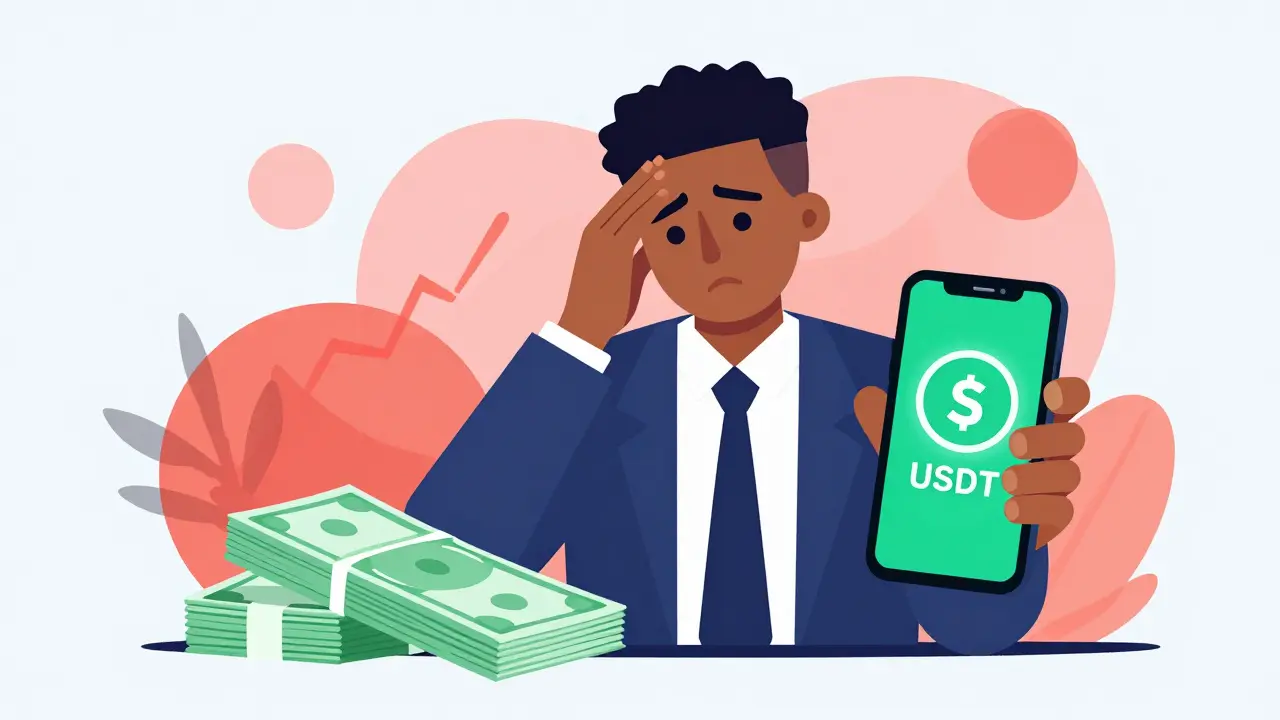
Imagine living in a country where your savings lose half their value every year. You try to send money to family abroad, but the bank takes a huge cut and delays the transfer for weeks. Now imagine the government says you can’t use digital currencies to solve this problem. What do you do? In many parts of the world, people don’t just follow the rules-they find workarounds. This is the reality of grassroots crypto adoption. It happens not because people love technology for its own sake, but because they need it to survive.
Government bans on cryptocurrency often sound absolute in press releases, but on the ground, they rarely stop usage. Instead, they push activity underground, into peer-to-peer networks and informal markets. The result is a financial system that operates parallel to the official one. To understand why bans fail, we have to look at the economic pressure cookers that create them and the human ingenuity that keeps the lights on.
The Economic Engine Behind the Hype
Crypto doesn’t take off in stable economies like Switzerland or Canada because of a lack of interest. It takes off in places where the traditional system is broken. Take Nigeria as the primary case study. As of 2024, Nigeria ranked second globally in cryptocurrency adoption, despite facing significant regulatory headwinds from its central bank. Why? Because the alternative was financial suffocation.
Nigeria’s economy has faced chronic instability. Inflation surged past 24 percent in 2023, eroding purchasing power daily. The Nigerian naira lost more than three-quarters of its value against the US dollar between 2016 and 2024. For a young professional earning a local salary, saving money meant watching it vanish. Cryptocurrency offered a way out. By converting earnings into stablecoins-digital tokens pegged to the US dollar-citizens could preserve their wealth outside the collapsing national currency.
This isn’t just about speculation. It’s about survival. When inflation runs rampant, holding cash is a losing strategy. Grassroots adoption fills the gap left by failing monetary policy. People aren’t buying Bitcoin to get rich quick; they are using it to keep their rent money from disappearing overnight. This distinction is crucial. In developed markets, crypto is an asset class. In emerging markets with high inflation, it is a utility.
Why does Nigeria rank so high in crypto adoption?
Nigeria ranks second globally due to severe macroeconomic instability, including high inflation (over 24% in 2023) and currency devaluation. Citizens use crypto as a hedge against the falling value of the naira and to access global markets despite capital controls.
How Peer-to-Peer Networks Bypass Bans
When governments ban banks from processing crypto transactions, they assume the tap is turned off. But water finds another path. In restrictive environments, the plumbing changes from institutional pipes to peer-to-peer (P2P) networks. These are decentralized marketplaces where individuals trade directly with each other, often using local payment methods like mobile money or bank transfers, while settling in crypto.
In Nigeria, approximately 36 percent of adults remain unbanked. Even those with bank accounts face strict capital controls that limit how much foreign currency they can buy or send abroad. Traditional remittances carry fees up to 8 percent per transaction. Crypto offers a cheaper, faster alternative. A worker in Lagos can sell USDT (Tether) to a buyer in London via a P2P platform, receiving naira in their local account within minutes, bypassing the formal banking sector entirely.
This grassroots infrastructure is built on trust and community. Education spreads through WhatsApp groups, Twitter threads, and neighborhood networks rather than corporate seminars. Users learn to verify counterparties, use escrow services provided by platforms, and navigate the risks of fraud. It is organic, messy, and incredibly resilient. You cannot ban a network that exists primarily in chat apps and personal relationships.

The Stablecoin Solution for Volatile Markets
While Bitcoin captures headlines, stablecoins are the workhorse of grassroots adoption in banned regions. Stablecoins like Tether (USDT) and USD Coin (USDC) are designed to maintain a 1:1 value with the US dollar. For someone living in a country with hyperinflation, volatility is the enemy. They don’t want a coin that swings 10 percent a day; they want a digital dollar that holds steady.
The rise of stablecoins addresses a specific job-to-be-done: preserving value. In countries like Argentina, Turkey, and Nigeria, citizens convert their local income into stablecoins immediately upon receipt. This creates a shadow dollarization of the economy. It allows small businesses to price goods in stable terms and enables cross-border trade without relying on expensive correspondent banking networks.
This shift has forced governments to reconsider their stance. Banning Bitcoin might be politically popular, but banning the tool people use to pay for groceries is harder to enforce. As stablecoin usage grows, regulators realize they are fighting a losing battle against market demand. The focus shifts from prohibition to regulation, seeking to capture tax revenue and ensure consumer protection rather than stopping usage altogether.
Regulatory Evolution: From Ban to Acceptance
History shows that outright bans on useful technologies rarely last. Governments eventually move from resistance to accommodation. We saw this trajectory clearly in the United States leading up to 2026. For years, agencies like the SEC pursued aggressive litigation against crypto companies. However, as adoption grew and political winds shifted, the approach changed.
In July 2025, the US passed the GENIUS Act, creating a federal framework for payment stablecoins. This bipartisan legislation required issuers to back tokens 1:1 with US currency or short-term liquid assets. It signaled a major pivot: instead of trying to stop stablecoins, the government decided to regulate them to ensure safety and liquidity. Similarly, the Trump administration issued orders supporting the responsible growth of digital assets, recognizing their role in innovation and financial competition.
This pattern mirrors what happens in emerging markets. When grassroots adoption reaches critical mass, it becomes too big to ignore. Regulators realize that bringing these activities into the light allows for oversight, taxation, and consumer safeguards. The genie cannot be put back in the bottle. The goal shifts to managing the risk rather than eliminating the tool.
| Factor | Emerging Markets (e.g., Nigeria) | Developed Markets (e.g., USA) |
|---|---|---|
| Primary Driver | Economic necessity, inflation hedge | Investment opportunity, tech innovation |
| Key Asset Class | Stablecoins (USDT, USDC) | Bitcoin, Ethereum, Altcoins |
| Adoption Channel | P2P networks, social media | Exchanges, institutional funds |
| Regulatory Response | Bans followed by grudging acceptance | Litigation followed by framework creation |

Risks and Realities for Everyday Users
Grassroots adoption is not without danger. Operating in a gray area means users lack the protections afforded by traditional banking. There is no FDIC insurance if a P2P counterparty scams you. There is no chargeback process if a smart contract fails. The burden of security falls entirely on the individual.
Fraud is a significant concern. Phishing attacks, fake exchanges, and rug pulls target inexperienced users who are eager to participate. In communities where financial literacy regarding blockchain is still developing, these risks are amplified. Users must learn to manage private keys, verify wallet addresses, and recognize social engineering tactics. This steep learning curve is a barrier, but it is also a filter. Those who stay are often highly knowledgeable and cautious.
Furthermore, regulatory uncertainty can lead to sudden shocks. A government might freeze bank accounts linked to crypto traders, as seen in various crackdowns over the past few years. This forces users to constantly adapt, moving funds between wallets and platforms to avoid detection. It is a stressful existence, but for many, the cost of compliance is higher than the risk of non-compliance.
The Future of Financial Freedom
The trend suggests that grassroots crypto adoption will continue to grow in regions with economic instability. Smartphones and internet access provide the necessary infrastructure. As long as inflation remains high and banking systems are exclusionary, people will seek alternatives. Governments may impose restrictions, but they cannot eliminate the underlying demand for financial sovereignty.
We are likely to see a hybrid future. Official channels may begin to integrate regulated crypto solutions, while informal P2P networks continue to serve those excluded from the formal system. The lesson from Nigeria and similar markets is clear: when people are given a better tool, they will find a way to use it. Bans delay adoption, but they do not stop it. The real question for policymakers is not how to ban crypto, but how to harness its potential for financial inclusion while protecting vulnerable users.
Can governments effectively ban cryptocurrency?
Outright bans are difficult to enforce long-term. While they can restrict institutional access and raise costs, grassroots adoption continues through P2P networks and decentralized applications. Bans often push activity underground rather than eliminating it.
What is the role of stablecoins in banned regions?
Stablecoins act as a hedge against local currency inflation. They allow users to store value in a stable asset (like the US dollar) and facilitate low-cost cross-border transfers, bypassing expensive traditional remittance channels.
Why is Nigeria a key example of grassroots adoption?
Nigeria faces high inflation, currency devaluation, and limited banking access. These conditions created a strong demand for crypto as a survival tool, leading to high adoption rates despite regulatory resistance.
What are the risks of using crypto in restricted areas?
Users face risks such as fraud, phishing, lack of consumer protection, and potential legal penalties. Without institutional backing, recovering lost funds is often impossible, placing the burden of security on the user.
How does P2P trading work around bans?
P2P platforms connect buyers and sellers directly. Transactions are settled using local payment methods (mobile money, bank transfers) while the crypto asset is transferred on-chain. This bypasses direct exchange integrations with banks.
Author
Ronan Caverly
I'm a blockchain analyst and market strategist bridging crypto and equities. I research protocols, decode tokenomics, and track exchange flows to spot risk and opportunity. I invest privately and advise fintech teams on go-to-market and compliance-aware growth. I also publish weekly insights to help retail and funds navigate digital asset cycles.