
The Reality of Crypto Bans
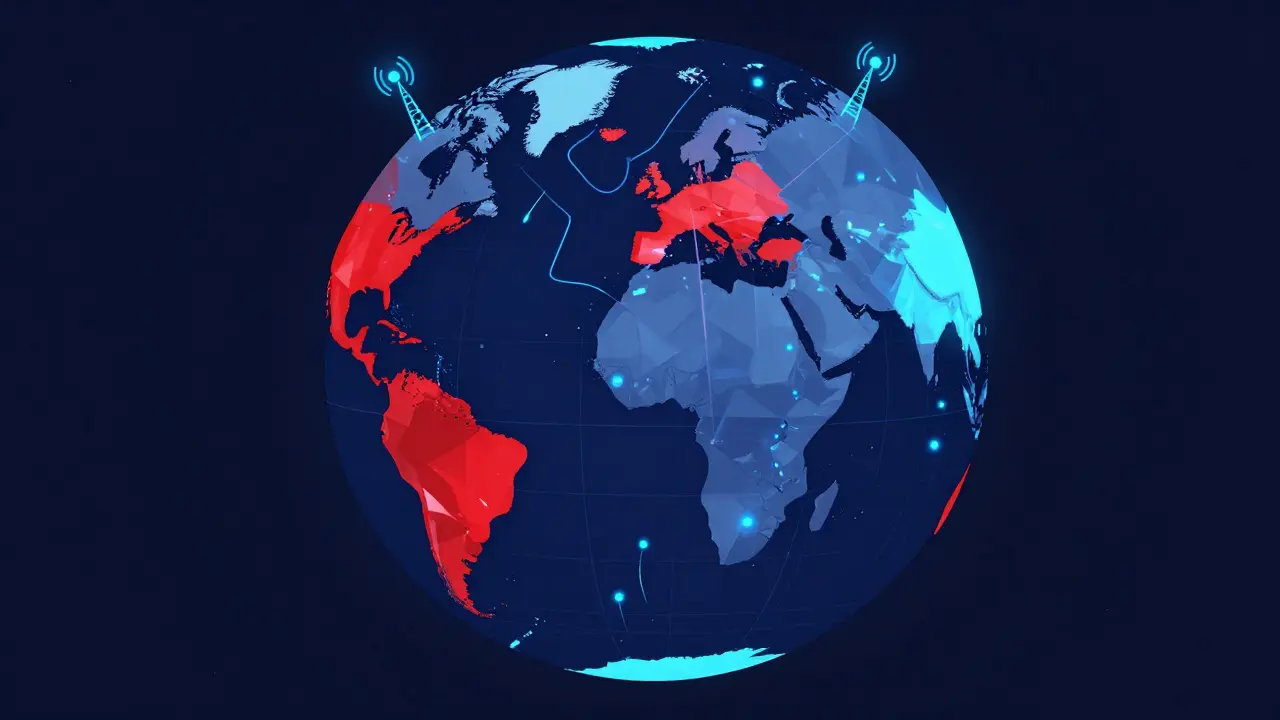
It sounds like science fiction, but right now, millions of people live in nations where holding Bitcoin isn't just frowned upon-it's illegal. We're talking about places like Afghanistan, Algeria, and Bangladesh where the penalties can include prison time. Yet, if you look at the numbers, these same regions often rank at the top for grassroots adoption. How does that happen?
Crypto Bans are government prohibitions that restrict citizens from using digital assets for payments or trading. In 2025 alone, nine countries enforced total bans. But here is the kicker: bans rarely stop demand. They just push it underground.
I've been following the landscape closely from here in New Zealand. What I see is a fascinating cat-and-mouse game. Governments tighten restrictions, and the community invents smarter ways around them. It's a complex ecosystem involving everything from virtual cards to ancient money transfer systems. Let's break down exactly how this works without getting too bogged down in the legalese.
Why People Risk Everything
You might wonder why anyone would risk a fine or jail time for a token. For many, it's survival. In Nigeria, the central bank banned financial institutions from processing crypto back in 2017, yet the country consistently ranks high in global adoption. When your local currency loses value rapidly, people don't care about the laws; they care about preserving their savings.
This isn't a theoretical issue anymore. In Turkey, President Erdoğan's government banned crypto for payments in 2021 after the lira crashed hard. Yet, adoption didn't stall; it went dark mode. Vietnam faces heavy fines up to $8,790 USD for violations, and still, over 5 million citizens use these assets. This creates a massive market for alternative access methods. When traditional banks say "no," the market builds its own rails.
The Digital Camouflage: Masking Your Location
The most basic step for anyone in a restricted zone is hiding their location. You cannot simply click through to Binance or Coinbase and expect to sign up if your IP address screams "Nigeria" or "China." These platforms adhere to strict compliance rules. If they know where you are, they won't let you in.
That is where Virtual Private Networks (VPNs) come into play. A VPN encrypts internet traffic and masks the user's real geographic location, making it appear as though they are browsing from a permitted region. NordVPN reported a staggering spike in users from China and Nigeria last year-up by over 200% in some cases. It's not just about streaming shows; it's about accessing financial tools.
However, relying on a free VPN is a bad idea. Cheap ones leak IP addresses and get blacklisted quickly by exchanges. Serious users pay for premium services like ExpressVPN or NordVPN, costing around $12 a month. Even then, it's risky. Exchanges have become better at detecting suspicious login patterns. Sometimes, a static IP mask isn't enough; users also switch to the Tor browser to anonymize their connection completely.
Peer-to-Peer Trading: The Human Element
If masking your identity feels too technical, the next layer up is finding someone who will take your local cash. This is known as P2P (Peer-to-Peer) trading. You aren't trading with a centralized platform in this scenario; you are trading with another human being.
Peer-to-Peer (P2P) Trading involves direct transactions between buyers and sellers without a central authority holding the funds. Platforms like Paxful and LocalBitcoins act as the middleman, ensuring that once the payment is made, the crypto is released. In Q1 2025, over 1.2 million active users from restricted regions were on Paxful alone.
How does it actually work? Say you are in Bangladesh. You find a seller on the platform offering USDT (Tether). The terms are a direct bank transfer to their local account. You send the taka via standard mobile banking, upload the proof, and the platform releases the stablecoin. It bypasses the crypto-banking ban because, technically, you are just sending regular fiat currency to another person's bank account.
There is a catch, though. Scams happen. If you send money and the seller ghosts you, you might not get your funds back even with dispute resolution. Trustpilot reviews show frustration regarding long delays and frozen accounts when users try to verify with local IDs. It requires a lot of due diligence to choose reputable traders with thousands of completed deals.
Decentralized Exchanges: Total Anonymity
For those who don't want to deal with strangers or trust an intermediary, there is the world of DEXs. This is where the technology really shines. Unlike Binance or Coinbase, Decentralized Exchanges (DEX) are automated platforms built on blockchain networks that allow users to trade directly from their own wallets without KYC verification.
Think of Uniswap or PancakeSwap. You connect a wallet like MetaMask or Trust Wallet, and you swap tokens instantly. There is no name attached, no passport scan required. Koinly's analysis from late 2025 found over 20 exchanges operating this way, including Bisq and Hodl Hodl. For someone under a ban, this is the holy grail.
The downside? Liquidity. While giants like Coinbase process billions daily, a typical DEX might only handle millions. Prices can slippage more easily, and the interface is clunky for beginners. Plus, you still need to solve the "on-ramp" problem: how did you get that first bit of crypto into your wallet to start swapping? That brings us back to P2P or other grey-market entry points.
Gift Cards and Traditional Workarounds
Not everyone has access to the complex tech stack. Many users rely on older, analog methods adapted for the digital age. One surprisingly popular method is gift card arbitrage. Users buy Steam, iTunes, or Amazon gift cards with local currency. Then, they sell these cards for crypto on niche platforms.
In 2024, Chainalysis documented over $427 million in crypto transactions coming from restricted countries via gift cards. It sounds weird, but it works because companies like Apple or Google don't always flag bulk purchases as money laundering immediately. It's messy and expensive, losing about 5-10% in fees, but it gets the job done when direct payment rails are cut off.
Another method draws from centuries-old tradition: the Hawala system. Originally used in the Middle East and South Asia, Hawala is an informal value transfer network based on trust. Modern users have digitized this. They move value through UAE-based compliant exchanges connected to Dubai's regulatory framework. This allows someone in a restricted zone to effectively "buy" crypto using cash that moves through a different jurisdiction entirely.
Risks: Why This Path Is Dangerous
I need to be honest here. None of these methods are 100% safe. Professor David Yermack warned in early 2025 that two-thirds of users in restricted countries had faced security incidents. We aren't talking about minor glitches; we are talking about lost funds.
No-KYC exchanges are prime targets for hacks. Because they hold less money than regulated giants, their security posture is sometimes lower. Scammers love targeting these communities because they know the victims can't report it to their local police without admitting to breaking the law themselves. If you deposit $1,000 into a sketchy platform and it disappears, you have nowhere to go.
There is also the legal risk. Governments monitor traffic. Using a VPN can be a violation in itself. Some nations track IP logs to identify users on sanctioned sites. In Algeria, Anti-Money Laundering laws mean prison sentences for violations. If you get caught buying a gift card to trade, you might be looking at court dates.
The Future of Restricted Market Access
By 2026, the situation is likely to get more complicated. The U.S. Financial Crimes Enforcement Network (FinCEN) proposed new rules requiring stricter KYC for any transaction over $300. If that applies globally, it could choke off the US-based infrastructure that many of these workarounds rely on.
However, technology is moving faster. Gartner predicts zero-knowledge proofs will explode in adoption in restricted markets. This means you'll soon be able to prove you are eligible to trade without revealing your identity or location. It's a huge leap forward.
We are seeing a split in the industry. Big exchanges are pulling back from risky jurisdictions, but smaller, decentralized options are growing. For the average citizen in a restricted country, the learning curve is steep, but the motivation to escape inflation or censorship is stronger. They build their own resilience every day.


Author
Ronan Caverly
I'm a blockchain analyst and market strategist bridging crypto and equities. I research protocols, decode tokenomics, and track exchange flows to spot risk and opportunity. I invest privately and advise fintech teams on go-to-market and compliance-aware growth. I also publish weekly insights to help retail and funds navigate digital asset cycles.