
You’ve probably heard the old debate in crypto: Centralized exchanges (CEXs) like Binance are fast and easy to use, but you don’t really own your keys. Decentralized exchanges (DEXs) like Uniswap let you keep control of your funds, but they can be slow, expensive, and frustratingly clunky. What if you didn’t have to choose? That’s exactly what IDEX promises. It bills itself as a "hybrid" exchange, trying to give you the speed of a centralized platform with the security of a decentralized one.
I’ve spent time looking at how IDEX works under the hood, who it’s actually for, and whether its claims hold up against the current market reality in 2026. If you’re tired of high gas fees on Ethereum or worried about leaving your assets on a centralized server, this review breaks down the good, the bad, and the technical details you need to know before connecting your wallet.
What Is IDEX and How Does It Work?
IDEX is a hybrid liquidity decentralized exchange that combines an order book model with an automated market maker (AMM). Most DEXs rely entirely on AMMs, which means you trade against a pool of tokens. This often leads to "slippage," where the price changes while your transaction is processing, costing you money. Most CEXs use an order book, matching buyers and sellers directly. This is faster and more precise, but requires a central server to manage the matches.
IDEX tries to have its cake and eat it too. Here is the simple breakdown of their architecture:
- Off-Chain Matching: When you place an order, it isn’t immediately broadcast to the blockchain. Instead, it goes to IDEX’s off-chain engine. This engine matches your buy order with someone else’s sell order instantly. Because this happens off-chain, it’s lightning-fast-latency is reported to be under 1 millisecond.
- On-Chain Settlement: Once the trade is matched, the actual transfer of assets happens on the blockchain. This ensures that no central authority holds your funds during the process. You maintain non-custodial ownership.
- Layer-2 Scaling: To make this work on networks like Ethereum without paying insane gas fees, IDEX uses Layer-2 Optimistic Rollups. This bundles many transactions together and processes them off-chain before posting a single proof to the main Ethereum network.
The result is supposed to be guaranteed execution. In traditional DEXs, miners or validators might reorder transactions to front-run you (a tactic known as sandwich attacks). Because IDEX sequences orders based on when they were placed in their system, not when they hit the mempool, it protects you from these manipulations.
Key Features: Why Traders Choose IDEX
If you are an active trader, features matter more than philosophy. Here is what IDEX brings to the table compared to standard options.
| Feature | IDEX (Hybrid) | Uniswap (Pure DEX) | Binance (Centralized) |
|---|---|---|---|
| Custody of Funds | User-controlled (Non-custodial) | User-controlled | Exchange-controlled |
| Order Types | Limit, Market, Stop-Loss | Market only (mostly) | All advanced types |
| Speed/Latency | < 1ms (Off-chain matching) | Depends on network congestion | Very Fast |
| Fees | Low (Layer-2 optimized) | High (on L1 Ethereum) | Variable (Maker/Taker) |
| Supported Chains | Ethereum, BSC, Polkadot (planned) | Ethereum, Polygon, Arbitrum, etc. | Proprietary internal ledger |
The standout feature here is the ability to use limit orders on a decentralized platform. On most DEXs, if you want to buy Bitcoin at a specific lower price, you have to wait for the market to come to you, or you pay a premium for immediate execution. IDEX allows you to set those limits, which opens up arbitrage opportunities and better risk management strategies that were previously impossible on pure DEXs.
Security and Safety: Do You Trust Your Wallet?
Security is the biggest selling point for any DEX. The mantra is "not your keys, not your coins." With IDEX, this holds true. Your assets never leave your wallet until the moment of settlement, and even then, they move directly to the counterparty or back to you. They do not sit in an IDEX hot wallet.
However, "hybrid" introduces some nuance. While the settlement is on-chain, the matching engine is off-chain. This means you are trusting IDEX’s servers to accurately report the match to the blockchain. If their servers go down, you can’t trade. But crucially, if their servers get hacked, your funds are still safe in your wallet because the hackers don’t have custody.
IDEX also utilizes a distributed node network. Holders of the IDEX token can run lightweight nodes to support the network. This decentralizes the infrastructure slightly, reducing the risk of a single point of failure compared to a fully centralized exchange like Coinbase or Kraken.
IDEX Token Utility and Economics
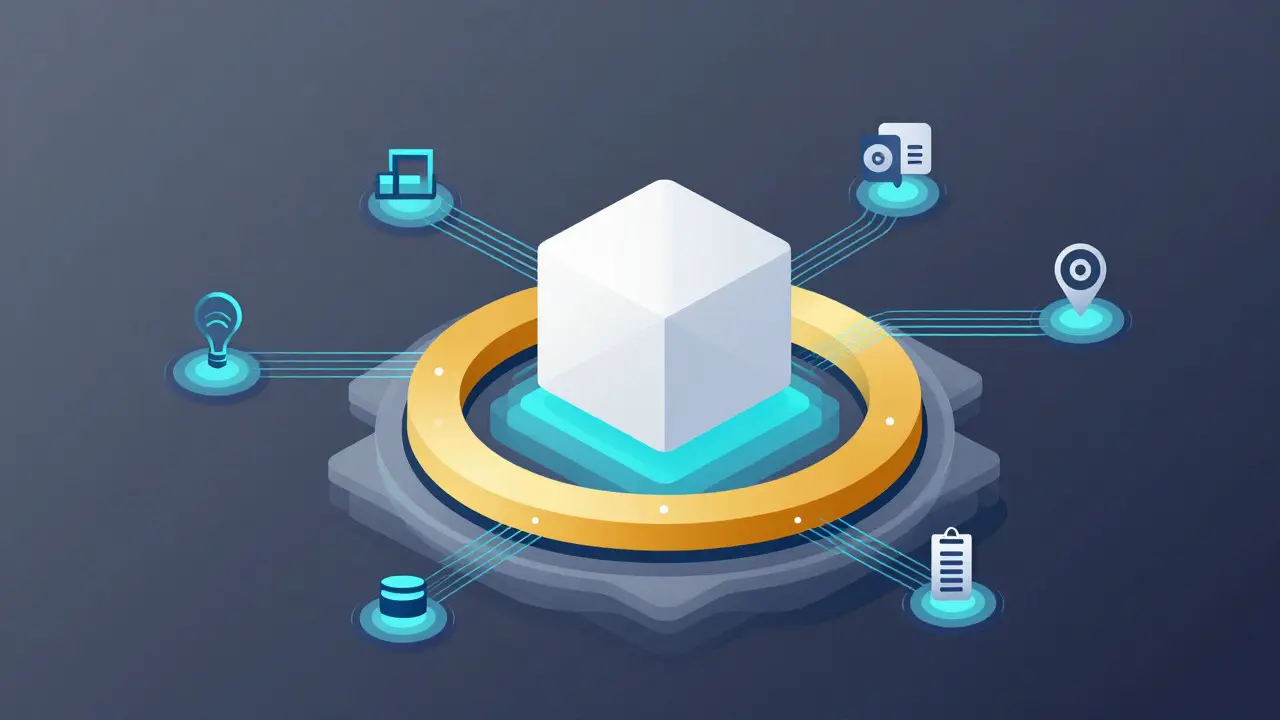
Every major exchange has a native token, and IDEX is no exception. The IDEX token isn’t just for speculation; it has functional utility within the ecosystem.
- Staking and Rewards: Users can stake IDEX tokens to earn rewards. This incentivizes long-term holding rather than quick flipping.
- Node Operation: If you hold at least 10,000 IDEX tokens, you can operate a lightweight node. This helps secure the network’s data integrity and earns you additional incentives.
- Governance: Token holders can participate in decisions regarding the platform’s future development, fee structures, and new chain integrations.
As of mid-2026, the token has seen significant volatility. Recent data shows a market cap around $26 million with a circulating supply nearing 981 million tokens out of a max supply of 1 billion. Price predictions vary wildly, with some analysts suggesting potential highs in the distant future (2030s), while short-term technical analysis suggests continued fluctuation in the low cent range. Always remember that token value is driven by adoption-if more people trade on IDEX, the demand for the token for staking and governance rises.
Pros and Cons: The Honest Verdict
No platform is perfect. Before you connect your MetaMask or Ledger, weigh these factors.
Pros:
- Best of Both Worlds: You get the speed of a CEX with the security of a DEX.
- Advanced Trading Tools: Limit orders and stop-losses are available, which are rare in DeFi.
- Lower Fees: By using Layer-2 rollups, gas costs are significantly reduced compared to trading directly on Ethereum Mainnet.
- Non-Custodial: You retain full control of your private keys and assets.
Cons:
- Limited Liquidity Depth: Compared to giants like Binance or even Uniswap, the total volume on IDEX is smaller. This can lead to wider spreads on less popular pairs.
- Complexity: Understanding the hybrid model requires a bit more learning than just clicking "Buy" on Coinbase.
- Chain Support: Currently focused on Ethereum and BSC. While Polkadot integration is planned, it lacks the multi-chain ubiquity of competitors like PancakeSwap or dYdX.
- Token Volatility: Like all altcoins, the IDEX token price can swing dramatically based on broader market sentiment.
Who Should Use IDEX?
IDEX isn’t for everyone. If you are a complete beginner who just wants to buy Bitcoin and forget about it, a centralized exchange like Coinbase or Kraken is easier. If you are a degenerate trader looking for the newest meme coins on Solana, you’ll likely find better liquidity elsewhere.
IDEX is ideal for:
- Experienced DeFi Users: People who understand wallets, gas fees, and slippage but want a smoother interface.
- Arbitrage Traders: Those who look for price differences between exchanges and need limit orders to execute strategies efficiently.
- Security-Conscious Investors: Users who are paranoid about centralized exchange hacks (like FTX) but find pure DEXs too slow or expensive.
Final Thoughts
IDEX represents a mature evolution in the crypto exchange space. It acknowledges that the early days of DeFi were plagued by poor user experience and high costs, and it attempts to fix those issues without sacrificing the core principle of self-custody. The hybrid model is not new in concept, but IDEX’s execution with Layer-2 scaling and off-chain matching engines makes it competitive in 2026.
Is it perfect? No. The liquidity isn’t as deep as the top-tier centralized exchanges, and the learning curve exists. But for traders who value having their own keys and want professional-grade tools, IDEX is a strong contender worth adding to your toolkit. Just remember to start small, verify your wallet connections, and always do your own research before committing significant capital.
Is IDEX a centralized or decentralized exchange?
IDEX is a hybrid exchange. It uses a decentralized model for asset custody (you keep your keys) and settlement (on-chain), but uses centralized-style off-chain engines for order matching to ensure speed and efficiency.
How does IDEX prevent front-running?
IDEX prevents front-running by matching orders off-chain in the exact sequence they are received. Since the trades are settled in batches via Layer-2 rollups, malicious actors cannot insert transactions ahead of yours in the public mempool.
What blockchains does IDEX support?
Currently, IDEX operates primarily on Ethereum and Binance Smart Chain (BSC). There are confirmed plans to expand to other networks, including Polkadot, to increase cross-chain compatibility.
Do I need IDEX tokens to trade?
No, you do not need to hold IDEX tokens to trade basic pairs. However, holding and staking IDEX tokens allows you to run nodes, earn rewards, and participate in governance, potentially reducing fees or increasing benefits.
Is my money safe on IDEX?
Your funds are safer than on a centralized exchange because IDEX is non-custodial. Your assets remain in your personal wallet until the moment of trade settlement. Even if IDEX’s servers were hacked, your funds would not be accessible to attackers unless they also compromised your private keys.
Can I use limit orders on IDEX?
Yes, unlike many pure DEXs that only offer market orders, IDEX supports limit orders, stop-losses, and other advanced order types due to its off-chain order book matching engine.
Author
Ronan Caverly
I'm a blockchain analyst and market strategist bridging crypto and equities. I research protocols, decode tokenomics, and track exchange flows to spot risk and opportunity. I invest privately and advise fintech teams on go-to-market and compliance-aware growth. I also publish weekly insights to help retail and funds navigate digital asset cycles.