
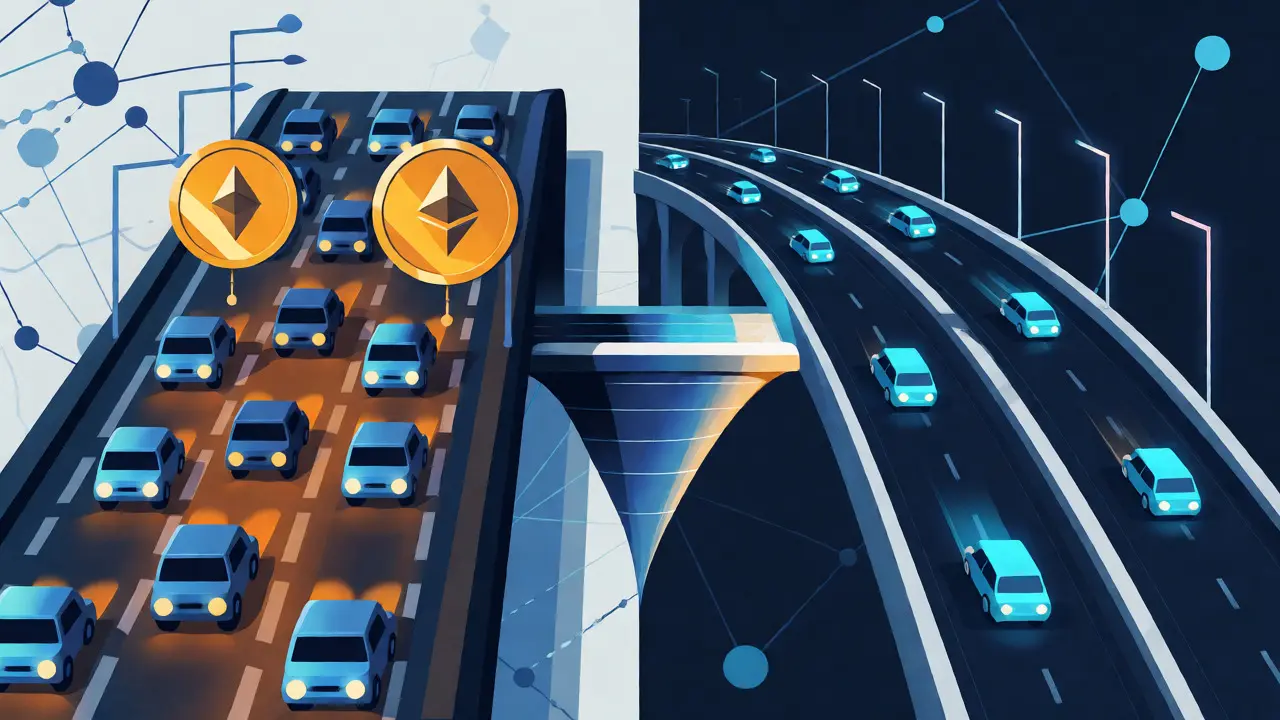
You just tried to swap tokens on Ethereum and the gas fee hit $40. Your heart sank. You wanted to move $50 worth of ETH, but the network demanded a third of your capital just to process the transaction. This isn't a glitch; it's the bottleneck of Layer 1 blockchains. Enter Optimistic Rollups. Think of them as express lanes for Ethereum traffic. They bundle hundreds of transactions off-chain, process them quickly, and then post a compressed summary back to the main chain. The result? Fees drop from dollars to cents, and speed skyrockets.
But how do they keep your money safe if the work happens off-chain? And why are they called "optimistic"? If you're confused by the jargon or worried about losing funds in a bridge, you're not alone. This guide breaks down exactly how optimistic rollups work, why they dominate the market today, and what the trade-offs really look like for users and developers.
The Core Concept: Why We Need Rollups
Ethereum is secure because thousands of computers validate every single transaction. But that security comes at a cost: speed. During peak times in early 2021, fees exceeded $15 per transaction. For small trades, this made Ethereum unusable. Optimistic rollups solve this by moving computation off-chain while keeping data on-chain.
Here’s the simple logic: instead of having every node execute every transaction, a specialized computer (called a sequencer) executes them. It then posts the transaction data to Ethereum. Since the data is there, anyone can re-execute the transactions if needed. This means we get Ethereum's security without paying for every calculation on the expensive mainnet.
How Optimistic Rollups Actually Work
The architecture relies on three main components working together:
- The Sequencer: This entity orders transactions and executes them on the Layer 2 network. Currently, most major rollups use a centralized sequencer for speed, though decentralization efforts are underway.
- The Data Availability Layer: Compressed transaction data is posted to Ethereum L1. This ensures that even if the sequencer goes offline, anyone can reconstruct the state of the network.
- The Dispute Mechanism: This is where the "optimistic" part comes in.
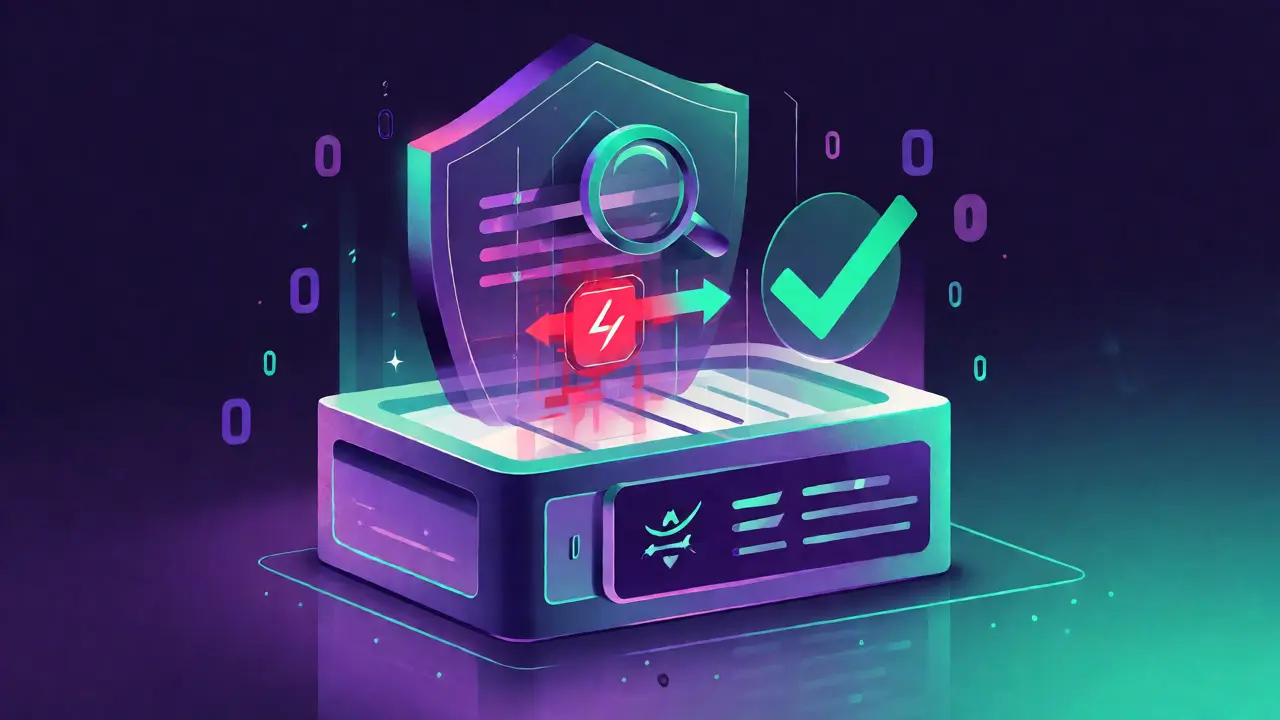
Unlike ZK-Rollups, which mathematically prove every batch is valid before posting it, optimistic rollups assume all transactions are valid by default. They don't check everything immediately. Instead, they open a challenge window-typically seven days. During this time, any validator can submit a Fraud Proof if they spot an error. If a fraud proof is verified, the invalid transaction is reversed, and the dishonest sequencer loses their bond. If no one challenges within seven days, the state is finalized.
Key Players: Arbitrum and Optimism
Two projects dominate the landscape: Arbitrum One, launched in August 2021, and Optimism, which went live in December 2021. Together, they handle over 5 million transactions daily.
Why did these two win? EVM compatibility. Developers love Ethereum because tools like Solidity and Hardhat work seamlessly. Arbitrum supports 99.8% of existing smart contracts with minimal changes. Optimism is close behind. This allowed DeFi giants like Uniswap and Aave to deploy instantly, bringing billions in Total Value Locked (TVL) with them.
| Feature | Optimistic Rollups | ZK-Rollups | Sidechains |
|---|---|---|---|
| Security Model | Inherits Ethereum Security | Inherits Ethereum Security | Own Validator Set |
| Withdrawal Time | ~7 Days | Near Instant | Variable (Bridge dependent) |
| EVM Compatibility | High (99%+) | Moderate (Improving) | High |
| Transaction Cost | $0.02 - $0.15 | $0.05 - $0.35 | $0.01 - $0.05 |
| Complexity | Lower Engineering Overhead | High Cryptographic Complexity | Low |
The Trade-Offs: What You Lose for Speed
Nothing is free. The biggest pain point for users is the withdrawal delay. Because of the seven-day challenge period, moving funds back to Ethereum mainnet takes nearly a week. Imagine needing cash urgently but being locked out of your portfolio for six days. That’s the reality unless you use third-party bridges that offer instant withdrawals for a fee (often around 0.3%).
Another concern is centralization. Today’s sequencers are often run by single entities. If Arbitrum’s sequencer goes down, the network halts until it restarts. While this rarely happens, it’s a single point of failure. Projects like Espresso Systems are working on decentralized sequencer networks to fix this, but we aren’t fully there yet.
Then there’s the risk of censorship. A centralized sequencer could theoretically choose not to include your transaction. However, since the data is public on Ethereum, you can force-include your transaction directly into the L1 contract if you’re willing to wait for the next batch. It’s a safety valve, but it’s slow.
Why Developers Choose Them
If you’re a developer, the learning curve is shallow. Most Ethereum dApps deploy to Arbitrum or Optimism with zero code changes. The tooling is mature. Documentation quality is high-Arbitrum scores 4.5/5 in developer surveys. Community support is robust, with thousands of active Discord members ready to help.
For businesses, the cost savings are massive. Processing costs drop by 10-100x compared to mainnet. This makes micro-transactions viable. Gaming applications, social media platforms, and high-frequency trading bots thrive here. For example, an arbitrage bot might save $2,300 in gas fees over three months just by switching from mainnet to Arbitrum.

The Future: Are They Transitional?
Vitalik Buterin has suggested that optimistic rollups might be a bridge technology rather than the endgame. The argument is that ZK-Rollups, which use cryptographic proofs instead of fraud windows, offer better user experience (instant withdrawals). As ZK-prover technology matures, it becomes cheaper and easier to implement.
However, optimistic rollups aren’t dying soon. They hold 62% of the L2 market share by TVL. Recent upgrades are addressing their weaknesses. Arbitrum Nova introduced shorter challenge periods for certain apps. Optimism’s Bedrock upgrade aims to improve efficiency and decentralize sequencing further. Hybrid models combining optimistic assumptions with occasional ZK-proofs may emerge, extending the relevance of this tech well into the late 2020s.
Practical Tips for Users
If you’re planning to use an optimistic rollup, keep these points in mind:
- Plan Withdrawals Ahead: Don’t try to withdraw right before a market crash. Remember the 7-day lockup.
- Use Reputable Bridges: Stick to official bridges or established aggregators like Synapse Protocol to avoid scam risks.
- Check Gas Prices: Even on L2, fees spike during congestion. Use tools like L2Beat to monitor real-time costs.
- Keep Some ETH on Mainnet: Always maintain a buffer on Layer 1 for emergencies or interactions with protocols that haven’t migrated.
Are optimistic rollups safe?
Yes, they inherit Ethereum's security. Transaction data is stored on Ethereum L1, meaning if the rollup fails, you can still recover funds using the original data. The risk lies mostly in software bugs or sequencer downtime, not in the fundamental security model.
Why does withdrawing take 7 days?
This is the challenge period. It allows validators time to detect and prove any fraudulent transactions included in a batch. Once the period ends without dispute, the transaction is considered final and can be withdrawn to Ethereum mainnet.
Can I lose my money if the sequencer goes offline?
No. Even if the sequencer stops processing new transactions, your existing funds are safe. You can force-include transactions directly onto Ethereum L1 to exit the system, though this process is slower than normal usage.
Which is better: Arbitrum or Optimism?
Both are highly compatible with Ethereum. Arbitrum currently holds more TVL and offers slightly higher throughput. Optimism focuses heavily on governance and community incentives via its Superchain vision. For most users, the choice depends on which specific dApps or tokens they want to access.
Do I need separate wallets for rollups?
No. Your same MetaMask address works on Ethereum mainnet, Arbitrum, and Optimism. You just need to add the network to your wallet and fund it with native ETH bridged from Layer 1.
Author
Ronan Caverly
I'm a blockchain analyst and market strategist bridging crypto and equities. I research protocols, decode tokenomics, and track exchange flows to spot risk and opportunity. I invest privately and advise fintech teams on go-to-market and compliance-aware growth. I also publish weekly insights to help retail and funds navigate digital asset cycles.