

Whether you are a casual swapper or someone looking to earn yield by providing liquidity, moving to the Base network changes the game. It's faster, cheaper, and handles the volume better than the old Ethereum mainnet. But is it actually the best choice for your portfolio in 2026? Let's break down how it works and where the pitfalls are.
The Magic of Concentrated Liquidity
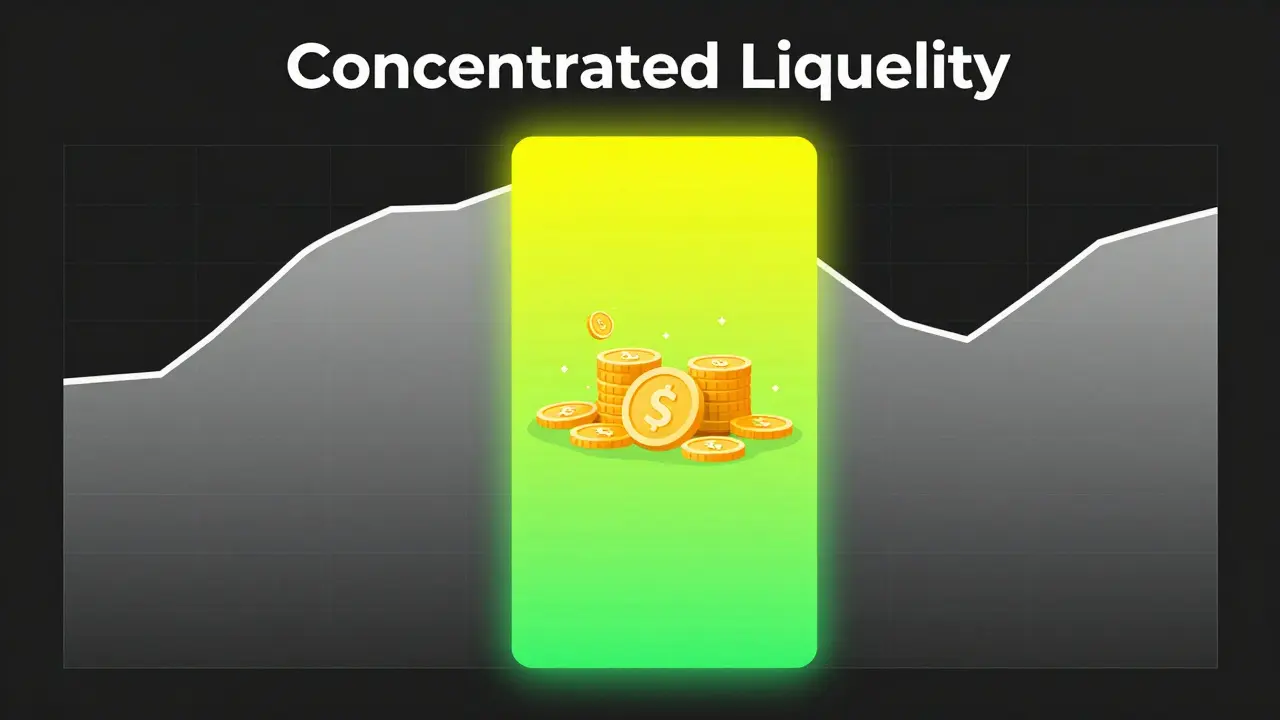
In the old days of V2, if you provided liquidity for a pair like WETH/USDC, your money was spread from a price of zero to infinity. That's a waste. Most trading happens in a tight window. PancakeSwap V3 introduces Concentrated Liquidity is a mechanism allowing liquidity providers to allocate their capital to specific price ranges, maximizing fee collection within those bounds.
Imagine you think Ethereum will stay between $2,500 and $3,000. Instead of spreading your funds across every possible price, you put all your capital exactly in that range. Because your liquidity is more concentrated, you earn a much larger share of the trading fees whenever the price stays in that zone. It's like owning a high-traffic storefront on a main street instead of a tiny plot of land in the middle of the desert.
However, there is a catch. If the price of the asset moves outside your chosen range, your position becomes 100% composed of the less valuable asset, and you stop earning fees entirely. This makes V3 a tool for active managers, not a "set it and forget it" investment.
Trading Experience and Costs on Base
One of the biggest draws here is the cost. While centralized exchanges often eat into your profits with maker and taker fees, PancakeSwap V3 (Base) reports 0.00% fees for both, making it a powerhouse for high-frequency traders. The Base blockchain, an Ethereum Layer 2 network developed by Coinbase, provides the infrastructure that keeps gas fees negligible compared to Layer 1.
To keep trades efficient, the platform uses Smart Order Routing is an algorithm that automatically scans multiple liquidity pools to find the path with the lowest slippage and best price execution. This means you don't have to manually check different pools to see where you'll get more tokens for your money; the system does the heavy lifting for you.
| Feature | PancakeSwap V3 (Base) | Standard AMM (V2) |
|---|---|---|
| Capital Efficiency | High (Concentrated) | Low (Full Curve) |
| Fee Potential | Higher for active ranges | Lower/Diluted |
| Complexity | Moderate to High | Very Low |
| Management | Requires active monitoring | Passive |
Advanced Tools for Serious Traders
If you're tired of staring at charts all day, V3 offers a few quality-of-life features that bring it closer to the experience of a centralized exchange. First, there are limit orders. You can set a specific price at which you want to buy or sell, and the system triggers the trade automatically once that target is hit. Just be aware that if a token has built-in transfer taxes, limit orders won't work.
Then there's the TWAP (Time-Weighted Average Price) is an order type that breaks a large trade into smaller pieces and executes them over a set period to reduce market impact. If you're trying to move a massive amount of USDC into WETH, doing it all at once would likely spike the price and cost you more. TWAP smooths that out, making your entry or exit much stealthier.
The Ecosystem Beyond Swapping
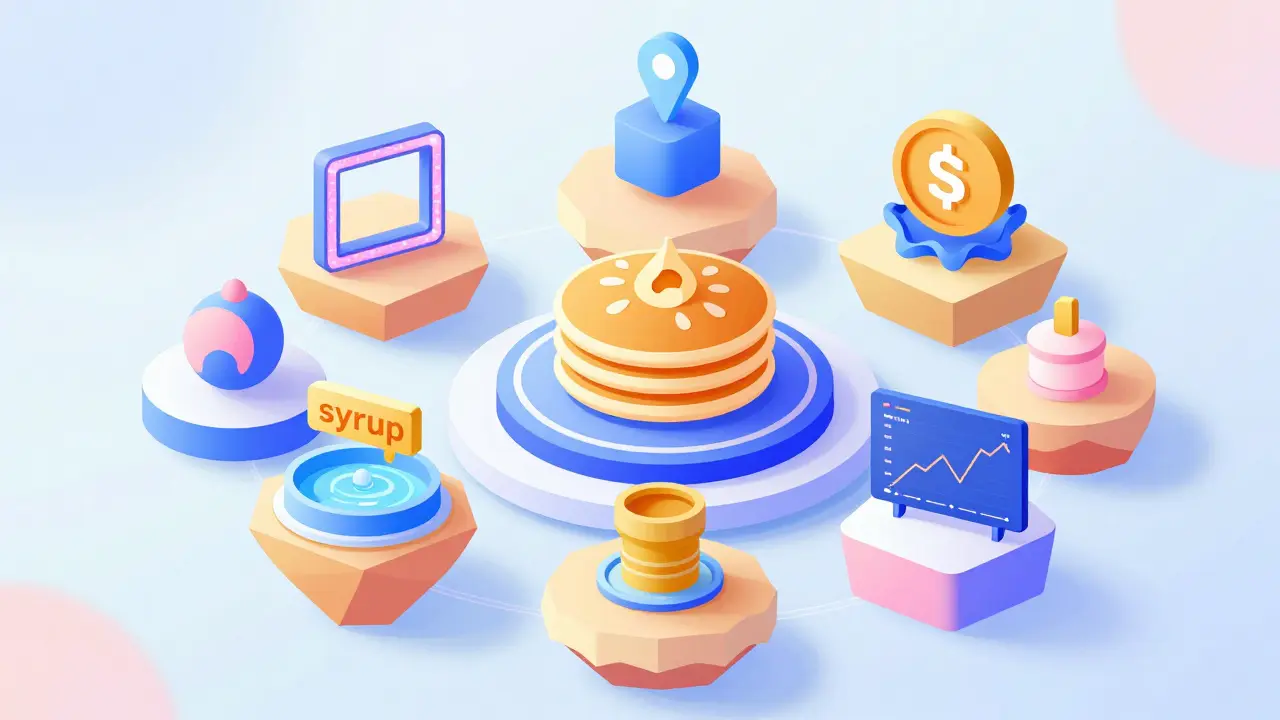
PancakeSwap isn't just a place to trade. It's a full-blown DeFi hub. For those who want to put their assets to work, the platform offers syrup pools for staking and yield farming opportunities. If you're into the speculative side of crypto, there are prediction markets and even a lottery system.
The integration of an NFT marketplace and perpetual futures trading means you can hedge your positions or collect digital art without leaving the ecosystem. This multi-chain strategy-operating across Base, BNB Chain, and Solana-means you aren't locked into one ecosystem. You can bridge your assets and chase the best yields wherever they appear.
The Risks: What They Don't Tell You in the Promo
It's not all passive income and low fees. The biggest red flag for institutional players is the lack of government regulation. Because it's a decentralized protocol, there is no "company" in the traditional sense to hold accountable if something goes wrong with the smart contract. You are your own custodian, which means if you lose your keys or get phished, your funds are gone.
Moreover, the learning curve for concentrated liquidity is steep. Many newcomers jump in, set a narrow range to maximize fees, and then get caught in a price swing that leaves them holding a bag of a crashing asset. Mastering range selection takes hours of practice and a deep understanding of market volatility. It is not a beginner's game.
Practical Guide: Getting Started on Base
If you're ready to try it out, the process is straightforward. You don't need to create an account or provide your ID; you just need a compatible wallet like MetaMask is a popular software cryptocurrency wallet used to interact with the Ethereum blockchain and other EVM-compatible networks.
- Connect Your Wallet: Head to the official site and link your wallet. Ensure you have switched your network to Base.
- Fund Your Account: Move some ETH or USDC to your Base wallet address.
- Select a Pair: Choose the tokens you want to swap. WETH/USDC is the most liquid pair on the platform, which usually means the lowest slippage.
- Execute the Swap: Set your slippage tolerance (usually 0.5% is fine) and confirm the transaction in your wallet.
If you want to provide liquidity, remember to start with a wide range. As you get more comfortable with how the price fluctuates, you can narrow that range to squeeze out more fees.
Is PancakeSwap V3 (Base) safer than a centralized exchange?
It depends on your definition of safety. In a DEX, you have total control over your private keys, so you aren't at risk of an exchange-wide bankruptcy (like FTX). However, you are exposed to smart contract bugs and the risk of losing your own keys. There is no customer support to reset your password.
What is the best way to avoid impermanent loss in V3?
The best way is to provide liquidity for stablecoin pairs (like USDC/USDT) or highly correlated assets. If you use volatile assets, set a wider price range. While this lowers your fee earnings, it significantly reduces the chance of your position being pushed out of range during a price swing.
Why are some tokens not available for limit orders?
Some tokens have "tax on transfer" built into their smart contracts. Because the limit order requires an exact amount of tokens to be moved to execute the trade, these taxes interfere with the math of the order, making it impossible for the protocol to guarantee execution.
How does Base blockchain impact the trading experience?
Base is a Layer 2 network, which means it processes transactions off the main Ethereum chain and then bundles them together. This results in transaction speeds that are nearly instant and fees that are a fraction of what you would pay on Ethereum Mainnet.
Do I need a lot of money to be a liquidity provider?
No. Thanks to concentrated liquidity, you can earn a respectable amount of fees with much less capital than in V2. However, the more capital you provide within a tight, high-volume range, the higher your returns will be.
Final Word on Strategy
If you're just swapping tokens occasionally, PancakeSwap V3 on Base is a no-brainer because of the low fees and speed. If you're looking to provide liquidity, treat it like a job. Monitor your ranges, adjust for market volatility, and never put in more than you can afford to lose to impermanent loss. The tools are professional-grade, but they require a professional mindset to use effectively.


Author
Ronan Caverly
I'm a blockchain analyst and market strategist bridging crypto and equities. I research protocols, decode tokenomics, and track exchange flows to spot risk and opportunity. I invest privately and advise fintech teams on go-to-market and compliance-aware growth. I also publish weekly insights to help retail and funds navigate digital asset cycles.