
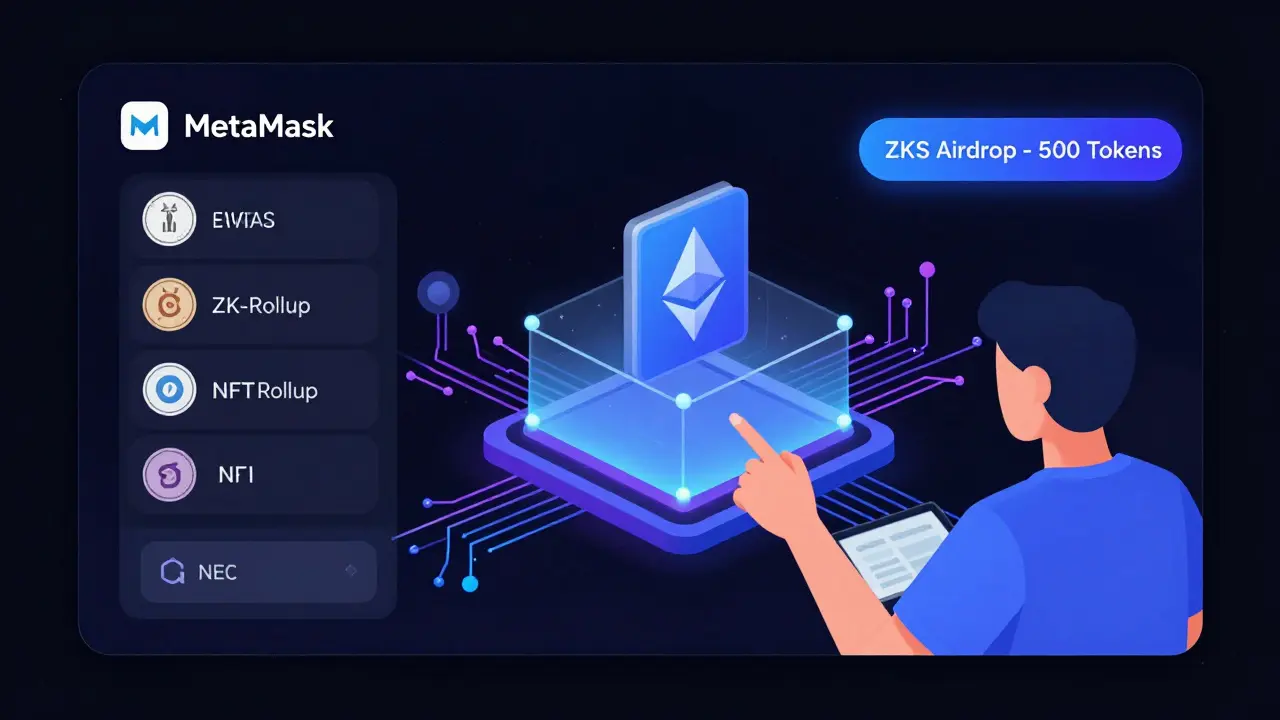
The ZKSwap V3 airdrop in late 2021 wasn’t just another token giveaway - it was a carefully designed test drive for one of the most promising Layer 2 DeFi platforms at the time. If you’re looking for details on how users earned ZKS tokens during that campaign, you’re not alone. Many confuse ZKSwap’s ZKS token with ZKBase’s ZKB token, but they’re separate projects with different goals. This article cuts through the noise and gives you the real breakdown of how the ZKSwap V3 testnet airdrop worked - who got paid, what they had to do, and why it mattered.
What Was ZKSwap V3?
ZKSwap wasn’t building another copycat DEX. It was trying to solve Ethereum’s biggest problems: slow transactions and sky-high gas fees. Using ZK-Rollup technology, ZKSwap let users trade tokens with near-instant confirmations and zero gas costs. The V3 upgrade added something new: full NFT support. That meant you could swap, mint, and trade NFTs directly on the platform without leaving the Ethereum mainnet. But before launching to everyone, the team needed real users to test it. That’s where the airdrop came in.
The ZKSwap V3 Testnet Airdrop: How It Worked
The airdrop ran from December 1 to December 14, 2021. It wasn’t automatic. You didn’t just hold a token and get paid. You had to prove you understood the platform. The total reward pool was 50,000 ZKS tokens - roughly $30,000 at the time - split between two groups.
- Best Contribution Award: 60 winners got 500 ZKS each.
- Honorable Mention Award: 200 participants got 100 ZKS each.
To qualify, you needed to do three things:
- Connect your MetaMask wallet to the Ethereum Rinkeby test network.
- Use the ZKSwap V3 testnet platform - trade tokens, try NFT features, test the interface.
- Write a detailed review of at least 300 words on the ZKSwap forum and share it on Twitter with the hashtag #V3TestnetFeedback# and your wallet address.
The team didn’t care if you had 10,000 followers. They cared if your review explained what worked, what broke, and how it could be better. A vague comment like “it’s cool” got ignored. A detailed bug report with screenshots and steps to reproduce? That got rewarded.
Who Got Paid and How
Only one wallet per IP address could claim a reward. If you had five wallets linked to the same home network, only the one with the highest-quality review got paid. This stopped people from spamming multiple accounts.
Winners were announced by December 23, 2021. Tokens were distributed directly to the Ethereum wallet address listed in the forum post. No third-party claims. No waiting for exchange listings. If you did the work, you got paid in ZKS - the same token used on the main ZKSwap platform.

ZKBase vs ZKSwap: The Confusion Explained
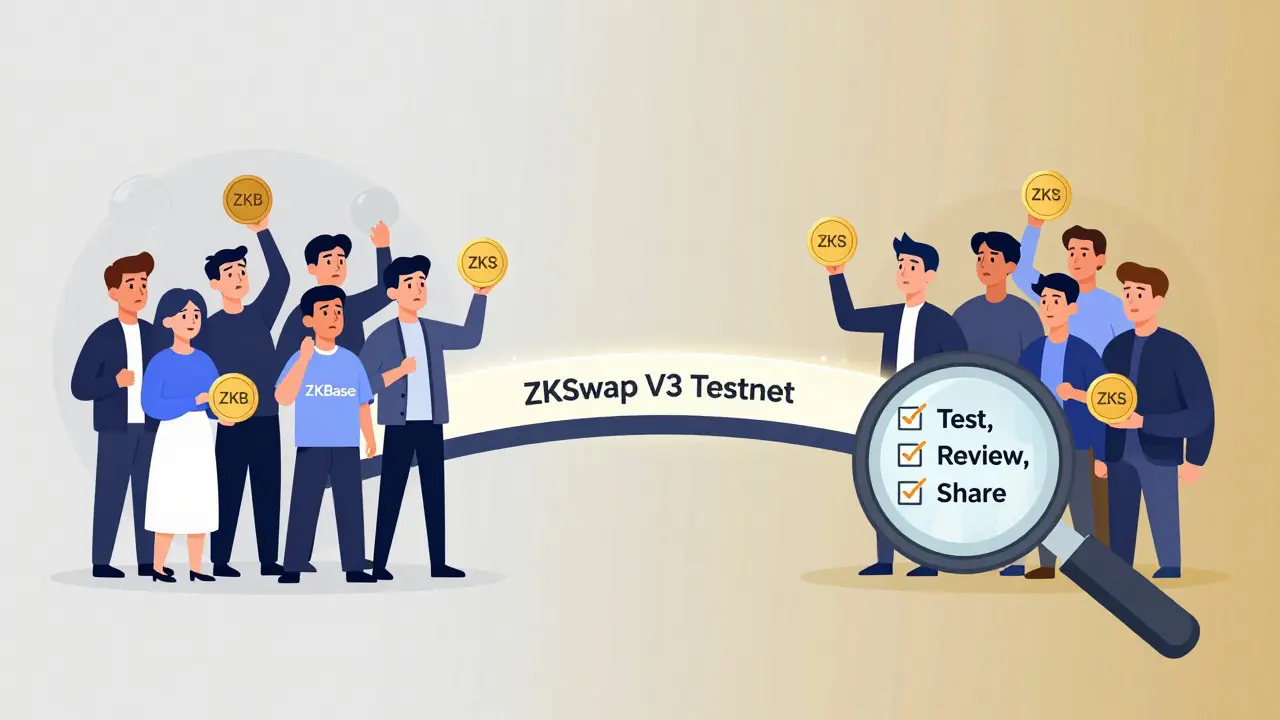
Here’s where things get messy. Many people think ZKBase is the same as ZKSwap. It’s not. ZKBase is a broader ecosystem that includes ZKSwap as one of its components, along with ZKSquare (a payment service) and other infrastructure tools. ZKBase has its own token: ZKB. ZKSwap has its own token: ZKS.
The ZKSwap V3 airdrop distributed ZKS tokens - not ZKB. There is no public record of ZKBase ever running a ZKB airdrop. If you see someone claiming “ZKBase V3 airdrop,” they’re either confused or misleading you. The only official airdrop tied to V3 was ZKSwap’s ZKS giveaway.
Why This Airdrop Mattered
This wasn’t just about free tokens. It was a smart way to build trust. By asking users to test the platform and report bugs, ZKSwap turned participants into co-developers. People who wrote detailed reviews were more likely to stick around after the testnet ended. They became early adopters, liquidity providers, and community advocates.
The reward structure also filtered out casual users. Writing a 300-word review takes time. Sharing it publicly on Twitter means you’re putting your name on it. That created a higher-quality feedback loop than most projects ever get.
What Happened After the Airdrop?
The testnet closed. The bugs were fixed. The NFT features were polished. ZKSwap V3 went live on mainnet in early 2022. The ZKS token continued to be used for governance and fee discounts. The airdrop participants who stuck around helped grow the platform’s liquidity and user base.
Today, ZKSwap remains one of the few DEXs that combine ZK-Rollup scalability with full NFT support. Its success started with this small, focused test. The 260 people who wrote reviews didn’t just get tokens - they helped shape a better DeFi experience for everyone.
Key Takeaways
- ZKSwap V3’s airdrop was for ZKS tokens, not ZKB.
- You had to actively test the platform and write a detailed review - no passive claiming.
- Only one wallet per IP address could receive a reward.
- The campaign ended in December 2021. No active ZKSwap V3 airdrop exists today.
- ZKBase and ZKSwap are related but separate - don’t mix up ZKB and ZKS.
Frequently Asked Questions
Was the ZKSwap V3 airdrop for ZKB or ZKS tokens?
It was for ZKS tokens. ZKS is the native token of ZKSwap, used for trading, liquidity provision, and governance on the platform. ZKB is the token of ZKBase, a separate ecosystem that includes ZKSwap as one of its tools. There was no ZKB airdrop tied to ZKSwap V3.
Can I still claim ZKS tokens from the V3 airdrop?
No. The ZKSwap V3 testnet airdrop ended on December 23, 2021. All rewards were distributed by that date. There are no ongoing claims or extensions. Any website or social media post claiming otherwise is likely a scam.
Do I need to use MetaMask to participate in future airdrops?
For ZKSwap-style airdrops, yes - but only if they happen. Future airdrops, if any, would likely require a compatible wallet like MetaMask or WalletConnect, and would require active participation, not just holding tokens. Always check official ZKSwap channels before engaging.
Why did ZKSwap require a 300-word review?
To ensure meaningful feedback. A short comment like "it works" doesn’t help developers. A 300-word review forces users to explore features deeply, document bugs accurately, and explain usability issues. This gave ZKSwap high-quality data to improve the platform before launch.
Was the ZKSwap V3 airdrop taxable?
In most jurisdictions, receiving crypto from an airdrop is considered taxable income at the time you receive it. The value was based on the ZKS price on December 23, 2021. Users should keep records of the wallet address, amount received, and the USD value at receipt for tax reporting purposes.


Author
Ronan Caverly
I'm a blockchain analyst and market strategist bridging crypto and equities. I research protocols, decode tokenomics, and track exchange flows to spot risk and opportunity. I invest privately and advise fintech teams on go-to-market and compliance-aware growth. I also publish weekly insights to help retail and funds navigate digital asset cycles.