

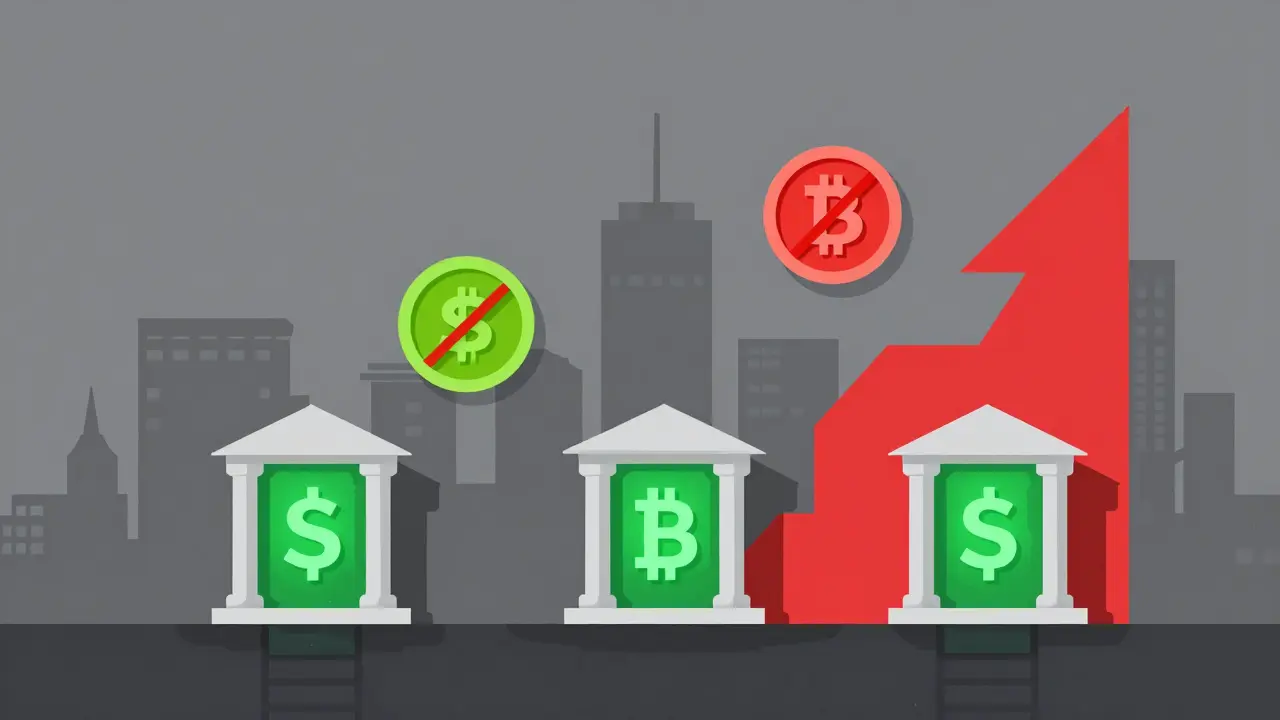
Send your hard-earned cash home, but leave the Cryptocurrency is a form of digital currency that uses cryptography for security and operates independently of a central bank out. That is the stark reality for millions of Bangladeshi expatriates looking to support their families back home. As of March 2026, Bangladesh sits at a fascinating economic paradox. On one hand, remittance inflows just smashed records, hitting $30 billion in fiscal year 2025. On the other hand, the government maintains an ironclad ban on digital currencies for these very transfers. If you are trying to send money via Bitcoin or USDT, you aren't just breaking a rule-you're risking severe legal consequences in a regulatory environment that simply does not allow it.
The Boom Behind Remittance Inflows
First, we have to look at the scale of the game. When you talk about Remittances money transfers by foreign workers to their home country, Bangladesh isn't just a participant; it is a powerhouse. Recent data confirms that inflows grew by 27 percent year-on-year in FY2025 alone. Think about the momentum behind that. In March 2025, the monthly flow reached $3.29 billion-a jump of nearly 65 percent compared to the same month last year. This isn't noise. This signals a massive shift in how expats are getting money home.
Metric Value Total Annual Inflow $30 Billion Growth Rate (YoY) 27% Share of GDP 5.8% Dominant Channel Mobile Financial Services
This surge hasn't come from nowhere. The authorities credit two main drivers. First, competitive exchange rates have made sending money through official routes more attractive than before. Second, there was a concerted crackdown on the informal hundi system. Historically, people avoided banks because they were slow or expensive. But now? The formal system actually works faster. In fact, the Balance of Payments flipped from a deficit to a surplus of $3.3 billion largely because these dollars started flowing through proper banking rails instead of underground networks.
The Ironclad Regulatory Wall
Here is where many get confused. With the world shifting toward digital finance, you might assume Bangladesh is catching up with Stablecoins a type of cryptocurrency designed to maintain a stable value relative to a specific asset like the US dollar or payment apps. You would be wrong. The stance remains unchanged since 2017. Under Section 33 of the Foreign Exchange Regulation Act 1947, dealing in digital currencies is prohibited. It doesn't matter if you are buying a small amount for personal use or trying to send it to Dhaka. The law treats it the same way: strictly off-limits.
Why is the ban so persistent? The Bangladesh Bank the central monetary authority of Bangladesh responsible for regulating the banking sector argues that crypto poses unacceptable risks to monetary sovereignty. Deputy Governor Mr. Ahmed Munas stated plainly in September 2025 that prohibiting crypto is necessary for financial stability. While neighboring countries explore frameworks, Bangladesh keeps its door shut. Even international bodies like the IMF acknowledge that before any relaxation could happen, the local regulatory framework needs serious strengthening-which is still underway.
The logic extends beyond fear of volatility. There is a practical angle regarding taxation and anti-money laundering (AML) standards. If money moves on the blockchain anonymously, the central bank cannot track capital flight. They want every dollar visible to ensure compliance with FATF recommendations. Consequently, issuing Warning Notice No. BB/CC/2025/17 explicitly forbade entities from facilitating crypto transactions for remittance purposes. Violating this leads to license revocation and criminal prosecution.
The Ecosystem That Actually Works
If you can't use Bitcoin, how do you actually move money efficiently? The infrastructure has matured significantly. We see a multi-channel approach that covers almost every corner of the country. Roughly 87 percent of remittances are now accessible through mobile financial services. This makes sense given that smartphone penetration is high among migrant worker populations who often return to rural areas where bank branches are scarce.
You have two primary players dominating the space:
- bKash: Leading the market with a share around 15.2%, holding a 4.2 rating on Google Play with over a million reviews. Users report processing times as fast as 12 hours for funds from the UAE.
- Nagad: Government-backed, offering similar speed but sometimes with variable exchange rates depending on the originating partner.
Then there are the traditional banks like Sonali Bank (holding 18.7% market share) and BRAC Bank. These are crucial for larger amounts. For example, a study by BRAC Bank showed a 40 percent reduction in processing time for Middle Eastern transfers using their digital platforms. This is a massive leap from the days when a transfer took weeks to clear.
Currency, Costs, and Hidden Fees
While the system is better, it isn't perfect. One of the biggest complaints remains the cost. World Bank data from 2024 shows transaction costs average around 6.5 percent. That is double the Sustainable Development Goal target of 3 percent. Imagine sending $1,000 and losing $65 in fees immediately. For low-income earners, that cuts deep into the family budget.
You also face the "exchange rate spread." Different banks offer slightly different rates. Mystery shopping exercises revealed discrepancies of about 1.2 percent between institutions. If you are sending money frequently, picking the right provider matters just as much as the platform itself. Some users complain of paying 7% for UK transfers even when the advertised rate suggests lower costs. Always verify the total landed amount, not just the conversion rate.

Why the Underground Option Still Exists
Despite the tech improvements, some people still try to find loopholes. The informal hundi system, which involves carrying cash across borders or using unregulated agents, technically still exists but has declined substantially. Why did it drop? Because the political transition and stricter oversight made it riskier and less profitable. However, the temptation to use crypto as a substitute for hundi persists.
Some diaspora members express frustration on forums. Facebook groups with hundreds of thousands of members show roughly 63 percent expressing dissatisfaction with traditional channels due to fees. However, only 12 percent reported attempting crypto-based transfers. The hesitation is logical: the risk of permanent loss or account freezing is too high. Unlike a bank transfer error which can be reversed or investigated, sending crypto to a black-market exchange in Dhaka offers zero recourse if the receiver disappears with the private keys.
Roadmap: What Comes Next?
Looking ahead to late 2026, the focus is purely on digitizing the traditional system. The Bangladesh Bank has introduced a Real-Time Gross Settlement system expansion. This reduces processing times for most transactions to under 4 hours. A new app called 'Remittance Direct' launched in August 2025 has already processed $1.2 billion, with fees hovering around 3.8 percent-beating the market average.
More interestingly, there are talks of integrating with India's Unified Payments Interface (UPI). Since over a million Bangladeshis work in India, this connection could streamline those cross-border flows completely without needing currency conversion intermediaries. This path is expected by Q2 2026. It is a significant step for regional trade, yet it reinforces the exclusion of decentralized assets.
Will the crypto ban lift anytime soon? Not likely. Dr. Ahsan H. Mansur declared in October 2025 that cryptocurrency has "no place" in the remittance ecosystem for the foreseeable future. The strategy prioritizes Central Bank Digital Currencies (CBDCs), which are state-controlled and traceable, rather than private tokens like Ethereum or Tether.
Is it legal to send money via crypto to Bangladesh?
No, it is illegal. The Bangladesh Bank prohibits cryptocurrency transactions under the Foreign Exchange Regulation Act 1947. Using crypto for remittances carries penalties including potential criminal prosecution.
What is the fastest way to receive remittances?
Mobile Financial Services like bKash or Nagad are currently the fastest, often clearing funds within 12 to 24 hours. Traditional bank transfers usually take 1 to 3 business days.
How much do fees typically cost?
Average transaction costs sit around 6.5 percent, though newer government apps like 'Remittance Direct' offer rates closer to 3.8 percent. Always check the final payout amount to include hidden spreads.
Are there any plans to legalize crypto remittances?
There are no concrete plans to legalize it. Central Bank officials have stated repeatedly that crypto has no role in the national remittance strategy and that the ban will remain for the foreseeable future.
Can I send money via the Indian UPI system?
Integration is expected by Q2 2026 following a recent MOU. Once live, this will allow seamless transfers between India and Bangladesh specifically for workers crossing that border.


Author
Ronan Caverly
I'm a blockchain analyst and market strategist bridging crypto and equities. I research protocols, decode tokenomics, and track exchange flows to spot risk and opportunity. I invest privately and advise fintech teams on go-to-market and compliance-aware growth. I also publish weekly insights to help retail and funds navigate digital asset cycles.