

Most people think of stablecoins as just another way to trade Bitcoin or Ethereum. But that’s like saying cash is only for buying coffee. Stablecoins - digital coins pegged to stable assets like the US dollar - are now quietly powering real financial systems around the world. They’re not just sitting in wallets waiting to be traded. They’re being used to pay workers, move money across borders, run businesses, and even give unbanked people access to money for the first time.
Stablecoins as a Global Payment Network
Imagine sending money from Mexico to the Philippines. Traditional wire transfers can take 3-5 days and cost over 6% in fees. With stablecoins, that same transfer can happen in under 10 minutes for less than $0.10. That’s not theory - it’s happening every day. Businesses in Nigeria, Kenya, and Vietnam are using USDC and USDT to pay suppliers, settle invoices, and move cash between countries without relying on banks that charge high fees or delay payments.
Why does this matter? Because millions of small businesses can’t afford to wait weeks for payments to clear. A farmer in Guatemala selling coffee to a buyer in Germany doesn’t have a corporate treasury team. With stablecoins, they get paid instantly, and the buyer knows exactly how much they’re paying - no surprise exchange rate swings. This is real efficiency, not crypto hype.
DeFi Isn’t Just for Speculators
Decentralized Finance (DeFi) gets a bad rap for being full of risky bets. But behind the noise, stablecoins are the backbone of actual financial services. Over 60% of all DeFi lending and borrowing happens in stablecoins. Why? Because you can’t lend someone $10,000 if the value of your collateral could drop 30% by tomorrow.
Platforms like Aave and Compound let users deposit stablecoins to earn interest, or borrow against them without a credit check. People in Argentina, Turkey, and Brazil use these systems to protect their savings from inflation. They’re not gambling - they’re preserving value. Stablecoins make this possible. They’re the only part of DeFi that behaves like money instead of a lottery ticket.
How Businesses Are Using Stablecoins for Payroll
Companies with remote teams across 10+ countries used to struggle with payroll. Wire transfers were slow. Currency conversion ate into budgets. Payoneer and Wise helped, but they still took days and charged fees.
Now, startups like BitPay and Mercury let businesses pay employees directly in USDC. A developer in Ukraine, a designer in Indonesia, and a marketer in Colombia all get paid in the same digital dollar. No bank account needed. No waiting. No hidden fees. One payroll run, one currency, one blockchain transaction.
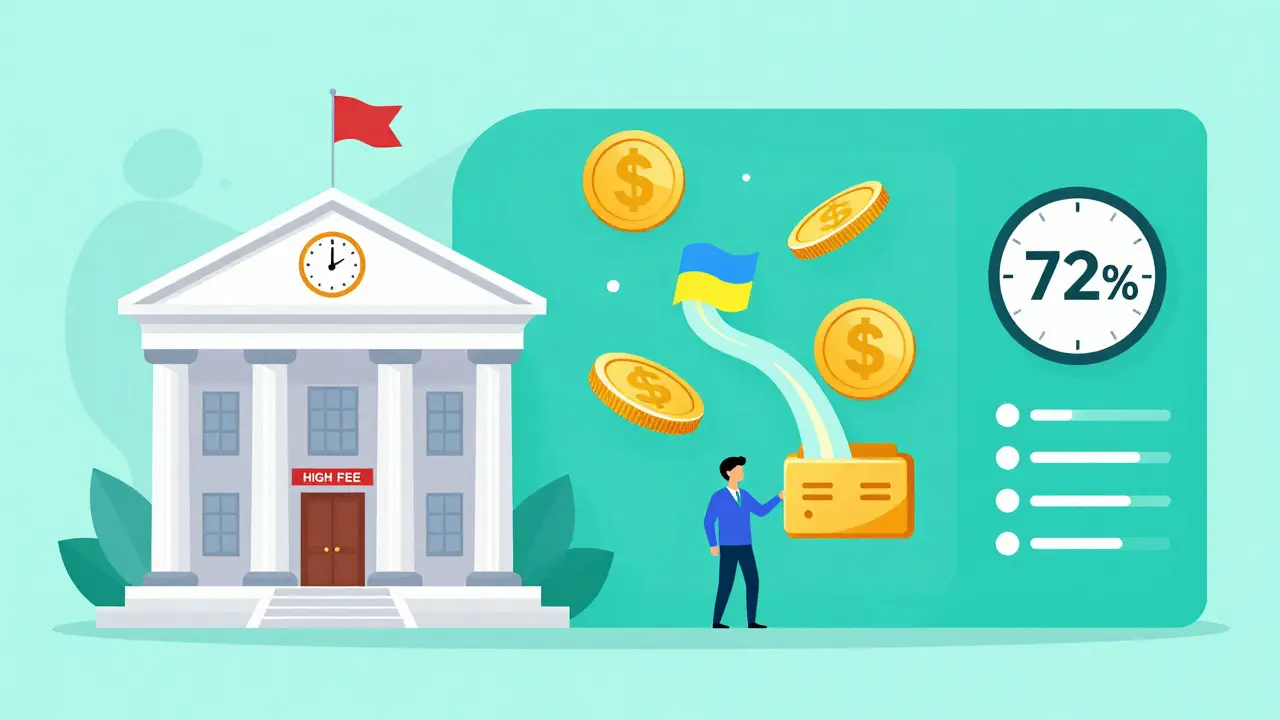
And it’s not just startups. A mid-sized SaaS company in Canada reported cutting its international payroll costs by 72% after switching to stablecoin payments. They now pay 27 contractors in 14 countries every Friday - all in under 90 seconds.
Programmable Money: Paying as You Work
What if you got paid every second you worked? Not at the end of the week. Not monthly. But continuously, like water flowing from a tap?
That’s what programmable stablecoins make possible. Platforms like Superfluid let employers stream payments in real time. A freelance writer gets paid as they type. A musician earns a few cents every time their song plays. An app developer earns while their code runs in the cloud.
Audius, a decentralized music platform, now pays artists directly in USDC every time someone listens. No record label. No delay. No 70% cut. The artist gets 90% of the revenue - instantly. This isn’t a future idea. It’s live right now, and it’s changing how creators earn.
Financial Inclusion in the Real World
In Venezuela, where inflation hit 200% in 2024, people stopped trusting the peso. They started using USDC. Not because they loved crypto. Because their savings weren’t disappearing overnight.
Same in Lebanon, Nigeria, and Argentina. People without bank accounts are using stablecoins as digital cash. They buy groceries with USDT on mobile wallets. They send money to family using Telegram bots. They save in stablecoins because it’s the only way to keep value stable.
This isn’t about technology. It’s about survival. Stablecoins are becoming the default money for people who can’t rely on their national currency. And it’s happening without government approval - because the people chose it.
Supply Chains and SME Financing
Small businesses in emerging markets often can’t get loans. Banks demand collateral they don’t have. But with stablecoins, things are changing.
Platforms like Ribbon Finance and Clearpool let suppliers get paid immediately when they ship goods. Instead of waiting 60 days for payment, they get paid in USDC the moment the delivery is confirmed on-chain. That cash flow lets them buy more materials, hire workers, and grow.
One textile factory in Bangladesh started using this system. Within three months, they doubled their output. Why? Because they weren’t stuck waiting for payments. They had cash on hand - instantly.
Corporate Treasury and Cash Management
Big companies are starting to treat stablecoins like cash reserves. Tesla, MicroStrategy, and Square have held Bitcoin for years. But now, companies like Block and Stripe are holding USDC as part of their treasury.
Why? Because USDC can be moved 24/7, settled in seconds, and doesn’t need a bank intermediary. It’s safer than holding cash in a vault - you can’t lose it to a hack if you manage keys properly. And it earns yield. A company can hold $5 million in USDC and earn 4-5% annually just by lending it out on DeFi protocols.
According to PwC’s Global Digital Assets Lead, institutions see stablecoins as the future of interbank settlement. Imagine banks settling trillions in seconds instead of days. That’s not science fiction. It’s being tested right now.
Loyalty Programs That Actually Work
Traditional loyalty points? Useless. You can’t trade them. You can’t move them. They expire. And if you leave the store, they vanish.
Stablecoin loyalty programs fix that. A coffee chain in California now gives customers USDC for every purchase. You can use it at any partner store. Sell it. Send it. Save it. Or spend it on a ride-share app that accepts it.
One user collected $120 in USDC rewards over six months. They used half to pay rent, sent $30 to their sister in Colombia, and saved the rest. That’s flexibility. That’s real value.
Peer-to-Peer Payments: The Real Remittance Revolution
Western Union charges $20 to send $200 to the Philippines. PayPal takes 5% and 3 days. But with a stablecoin, you send $200 to a phone number - and it arrives in 8 seconds for 12 cents.
Migrant workers in the U.S., UAE, and Saudi Arabia are switching. Apps like StormX and Wirex let them send USDC directly to family wallets. No ID. No bank. No middleman.
A study from the World Bank found that stablecoin remittances could save $16 billion a year globally. That’s money back in the hands of people who need it most.
The Bigger Picture
Stablecoins aren’t replacing banks. They’re fixing what banks broke. They’re giving people control over their money. They’re cutting out delays, fees, and middlemen. They’re enabling financial access where none existed before.
This isn’t about speculation. It’s about utility. Stablecoins are now the plumbing of global finance - invisible, essential, and everywhere.
Are stablecoins safe to use for everyday payments?
Yes - if you use regulated ones like USDC or USDT. These are backed 1:1 by cash and short-term U.S. Treasuries, and their reserves are audited monthly by third parties like Grant Thornton. They’re safer than holding cash in a local bank in countries with unstable currencies. Just avoid unbacked or algorithmic stablecoins - stick to the big two.
Can I use stablecoins if I don’t have a crypto wallet?
Absolutely. Apps like PayPal, Cash App, and Revolut now let you buy, hold, and send USDC without ever touching a blockchain wallet. You can send stablecoins to a friend’s email or phone number just like Venmo. You don’t need to understand private keys to use them.
Do I need to pay taxes on stablecoin transactions?
In most countries, yes - but only if you sell or trade them for profit. Sending USDC to pay someone, or using it to buy groceries, is usually treated like sending cash. No tax. No reporting. Always check your local rules, but everyday spending with stablecoins rarely triggers taxes.
Why not just use bank transfers instead?
Bank transfers are slow, expensive, and often unavailable internationally. A wire from India to Kenya might take 5 days and cost $45. A stablecoin transfer takes 12 seconds and costs $0.08. For businesses and individuals who move money often, the difference isn’t just convenient - it’s life-changing.
Is the stablecoin market regulated?
Yes - and it’s getting stricter. The U.S. and EU now require stablecoin issuers to hold reserves, submit monthly audits, and get licensed. The European Union’s MiCA law, effective in 2025, will require all major stablecoins to be fully backed and transparent. This isn’t the Wild West anymore - it’s becoming regulated infrastructure.
Stablecoins are no longer a side project of crypto traders. They’re the quiet engine behind a new financial layer - faster, cheaper, and more inclusive than anything before. Whether you’re paying a freelancer, sending money home, or managing corporate cash, stablecoins are already doing the job better than the old system. And they’re just getting started.


Author
Ronan Caverly
I'm a blockchain analyst and market strategist bridging crypto and equities. I research protocols, decode tokenomics, and track exchange flows to spot risk and opportunity. I invest privately and advise fintech teams on go-to-market and compliance-aware growth. I also publish weekly insights to help retail and funds navigate digital asset cycles.