
EDRC crypto: What it is, why it's missing, and what to look for instead
When you search for EDRC crypto, a token that appears in scam lists and ghost websites with no blockchain presence. Also known as EDRC token, it's one of hundreds of fake crypto projects designed to trick new investors into buying nothing. There’s no official website, no whitepaper, no team, and no trading volume. If you see EDRC listed on any exchange, it’s either a pump-and-dump scheme or a bot-generated listing meant to lure clicks.
EDRC crypto belongs to a larger group of dead coins, crypto tokens that vanish after an airdrop or fake launch, leaving holders with worthless assets. Think of them like abandoned websites—no updates, no users, no future. They show up in Google searches because scammers buy ads and spam forums with fake news. You’ll find them on sketchy coin trackers, Telegram groups pushing ‘limited-time buys,’ and YouTube videos with stock footage of people celebrating profits that never existed.
These fake tokens thrive on confusion. They copy names from real projects—like EDRC sounding like EDR or ERC—and use similar logos. They rely on people not checking the basics: Is there a blockchain explorer link? Is the contract address verified? Are there real trading pairs on Binance, KuCoin, or Bybit? If the answer is no, it’s dead. And if someone tells you EDRC is ‘upcoming’ or ‘coming to a major exchange soon,’ they’re selling you a dream.
What you should care about instead are the patterns behind these scams. Look at GEO token, a once-promised airdrop that now trades for pennies with zero liquidity. Or CMP tokens, from a metaverse project that never launched. These aren’t outliers—they’re textbook examples of how crypto scams evolve. They start with hype, vanish after the money flows in, and leave behind confused investors asking, ‘Where did it go?’
The same pattern shows up in Iran, North Macedonia, Nigeria, and China—places where people turn to crypto because traditional finance fails them. But in those same markets, fake tokens like EDRC spread faster because trust is low and information is scarce. People aren’t stupid—they’re desperate. And scammers know that.
So what do you do when you see EDRC crypto pop up? Don’t click. Don’t buy. Don’t even research it. Instead, learn how to spot the red flags: no team names, no GitHub, no real social media, and a token name that sounds like a typo. Use tools like Etherscan or BscScan to check contract addresses. If the token has zero transactions over 30 days, it’s gone. And if a project claims to be ‘the next Bitcoin’ but has no whitepaper, walk away.
The real crypto world moves fast, but it doesn’t hide. Legit projects have public teams, clear roadmaps, and active communities. You’ll find them in our posts—like the breakdown of DEGA crypto, another token with no volume and no future. Or the deep dive into WLFI, a project with real market cap but serious controversy. These aren’t just stories—they’re lessons in how to protect your money.
Below, you’ll find real analyses of tokens that actually exist, scams that were exposed, and markets where crypto is thriving despite bans and pressure. No EDRC. No fake hype. Just facts, data, and the kind of clarity you won’t get from a YouTube ad.
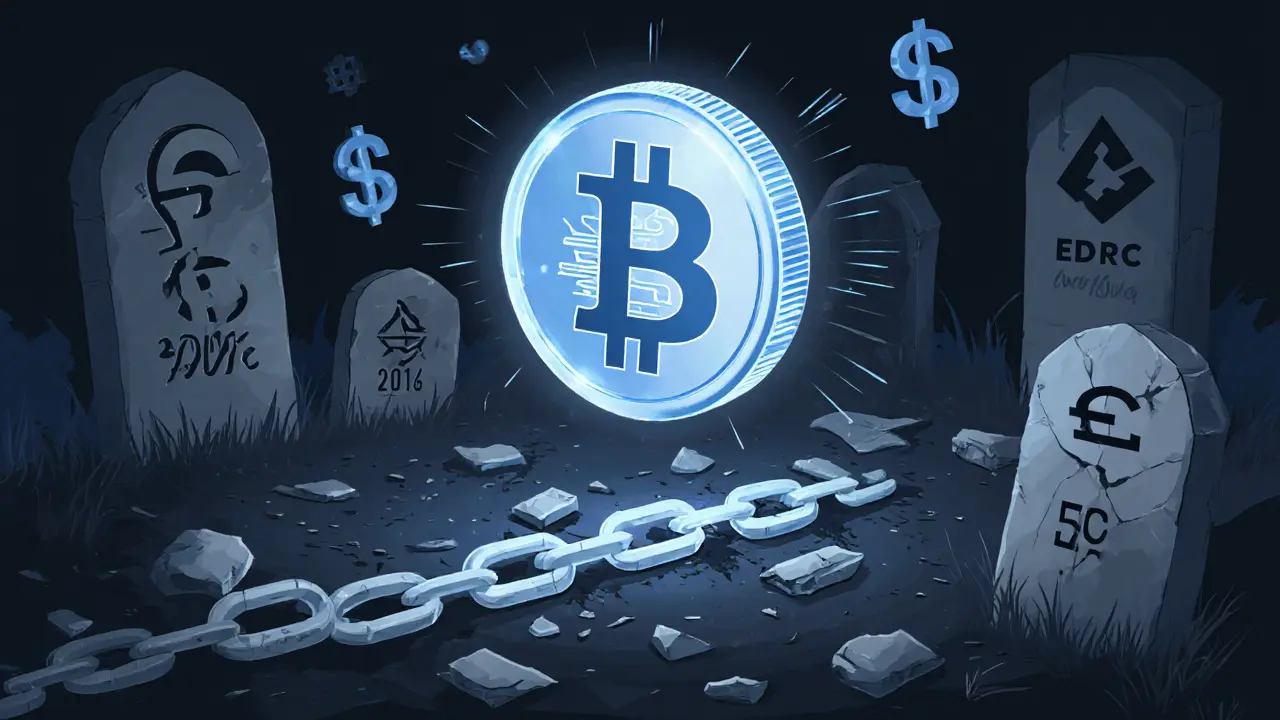
What is EDRCoin (EDRC) Crypto Coin? The Truth Behind a Dead Cryptocurrency
Nov 7, 2025, Posted by Ronan Caverly
EDRCoin (EDRC) is a dead cryptocurrency with no trading volume, broken infrastructure, and impossible reward claims. Once promoted as sustainable and profitable, it now exists only as a ghost on crypto tracking sites.
MORESEARCH HERE
Categories
TAGS
- decentralized exchange
- crypto exchange review
- crypto exchange
- cryptocurrency
- crypto coin
- crypto airdrop
- CoinMarketCap airdrop
- smart contracts
- MiCA
- cryptocurrency trading
- tokenomics
- DeFi
- cryptocurrency exchange safety
- crypto airdrop 2025
- cryptocurrency airdrop
- cryptocurrency exchange
- meme coin
- blockchain security
- blockchain gaming
- crypto airdrop guide