
MiCA – the EU’s Markets in Crypto‑Assets Regulation
When working with MiCA, the European Union’s Markets in Crypto‑Assets Regulation that sets rules for crypto‑assets, service providers and issuers. Also known as Markets in Crypto‑Assets, it aims to create a single market, protect investors and enforce AML standards. In plain terms, MiCA is the EU’s answer to the global scramble for crypto regulation, covering everything from stablecoins to token‑service‑providers. EU crypto regulation covers the broader legislative framework that supports MiCA, including directives on anti‑money‑laundering and market integrity works hand‑in‑hand with MiCA, while crypto licensing refers to the formal permission needed for firms to operate crypto‑related services in the EU. Together they form the backbone of a compliant crypto ecosystem. MiCA encompasses crypto licensing, requires AML compliance, and forces token classification – three core semantic triples that shape the industry today.
How MiCA Connects to Licensing, Compliance and Token Classification
MiCA’s reach goes beyond simple registration. It dictates that any crypto‑asset service provider must obtain a license from the national competent authority, aligning the process with existing crypto licensing regimes across EU member states. This means your exchange, wallet app, or token‑issuer needs to prove robust governance, capital adequacy and consumer protection measures before you can launch. The regulation also insists on strict AML/KYC procedures – any breach can trigger heavy fines or license revocation. Token classification under MiCA splits assets into three buckets: “asset‑referenced tokens”, “e‑money tokens” and “other crypto‑assets”. Each bucket carries a different set of compliance obligations, so understanding which category your token falls into is crucial for meeting the law.
For businesses, the practical impact of MiCA is clear: you get a single set of rules instead of a patchwork of national laws, but you also face a detailed compliance checklist. Our post collection below walks you through the exact steps – from filing the initial license application to implementing AML software, from navigating token‑classification FAQs to preparing for supervisory audits. You’ll also find real‑world case studies of exchanges that have adapted to MiCA, insights on how the European Securities and Markets Authority (ESMA) will enforce the rules, and actionable tips for aligning your tokenomics with the new standards. Whether you’re a startup looking to launch a stablecoin or an established exchange assessing your EU footprint, the guides here give you the tools to stay ahead of the regulatory curve.
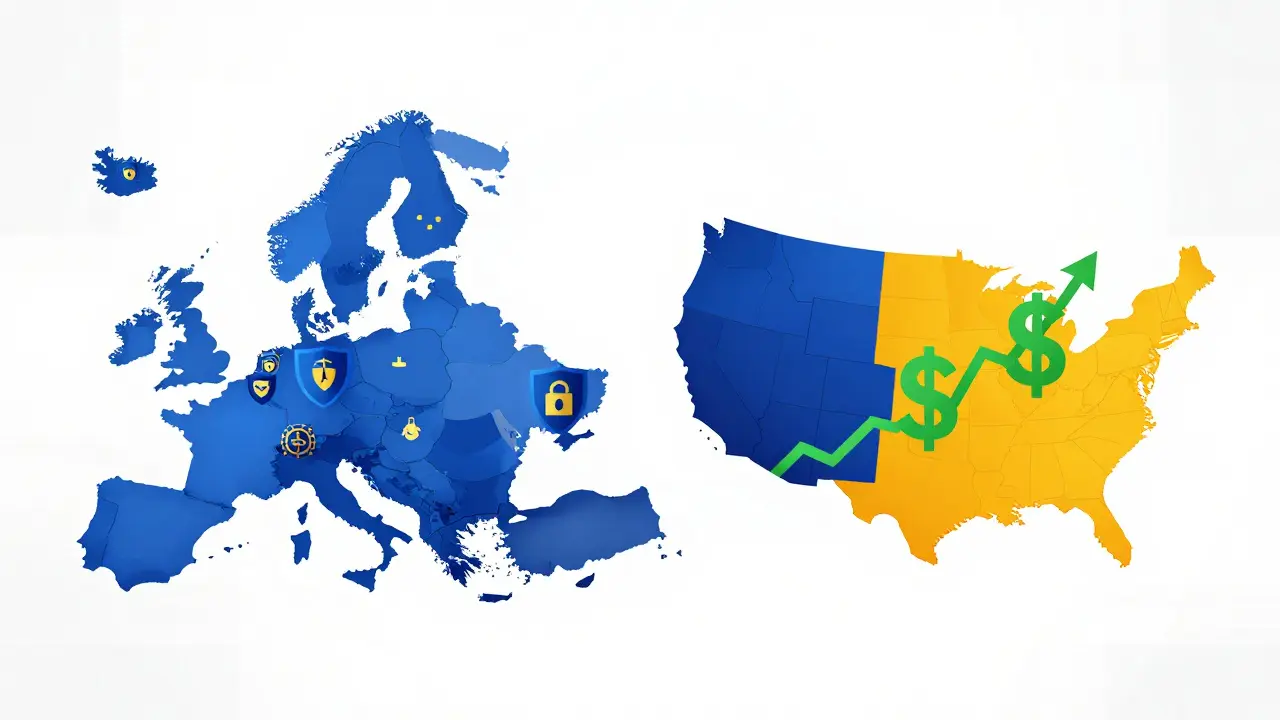
MiCA vs US Federal Framework: How Stablecoin Regulations Are Reshaping Crypto
May 29, 2026, Posted by Ronan Caverly
Compare MiCA and the US Federal Stablecoin Framework. Learn how these regulations impact reserve requirements, algorithmic bans, and your crypto holdings in 2025-2026.
MORE
AML Compliance for Crypto Businesses: What You Need to Know in 2026
Mar 12, 2026, Posted by Ronan Caverly
AML compliance for crypto businesses in 2026 is mandatory, not optional. From FinCEN to MiCA, global regulators demand strict identity checks, transaction monitoring, and reporting. Learn what's required, how much it costs, and what happens if you ignore it.
MORE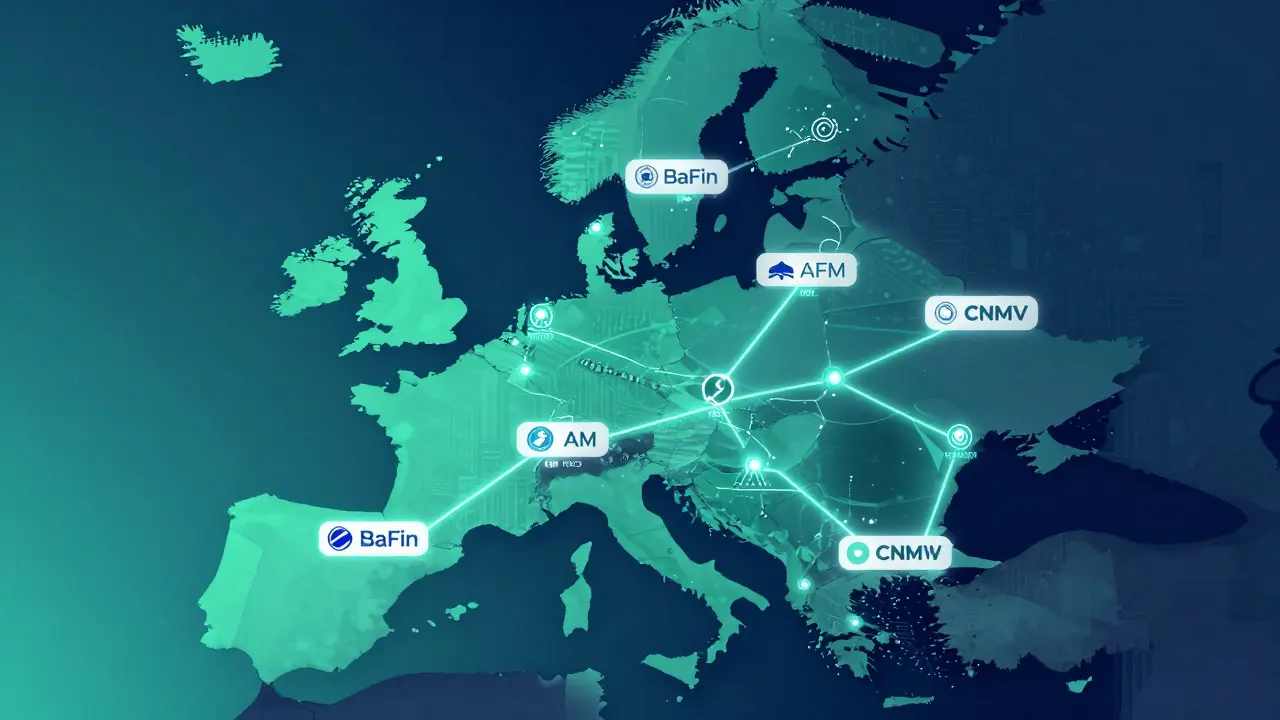
National Competent Authorities for Crypto in EU: Who Regulates What and Where
Jan 29, 2026, Posted by Ronan Caverly
Under MiCA, each EU country has a National Competent Authority that licenses and supervises crypto firms. Learn who they are, what they do, and how the system is changing in 2025-2026.
MORE
Crypto Regulatory Sandbox Programs: Global Guide & How to Join
Oct 6, 2025, Posted by Ronan Caverly
Learn how crypto regulatory sandboxes work, compare global programs, and get a step‑by‑step guide to apply and graduate your blockchain project.
MORE
Cross‑border Crypto Services in the EU: How MiCA’s Passport Works
May 1, 2025, Posted by Ronan Caverly
Learn how the EU's MiCA passport lets crypto service providers operate across 27 member states, the licensing steps, requirements for EU and non‑EU firms, and practical compliance tips.
MORESEARCH HERE
Categories
TAGS
- decentralized exchange
- crypto exchange review
- crypto exchange
- blockchain security
- crypto coin
- CoinMarketCap airdrop
- crypto airdrop guide
- crypto airdrop
- smart contracts
- cryptocurrency
- Binance Smart Chain
- tokenomics
- MiCA
- crypto compliance
- DeFi
- cryptocurrency exchange safety
- crypto exchange scam
- cryptocurrency exchange
- meme coin
- micro-cap cryptocurrency