
Zombie Cryptocurrency: Dead Coins That Still Trick Investors
When a cryptocurrency loses its team, its purpose, and its trading volume—but keeps trading—it becomes a zombie cryptocurrency, a token with no active development, no real users, and no future, yet still listed on exchanges. Also known as a dead coin, it’s not dead enough to disappear. It’s just dead enough to fool you into thinking it’s alive. These aren’t just forgotten projects. They’re financial ghosts—tokens that still show up on price charts, still get mentioned in shady Telegram groups, and still trick people into buying them with the hope of a miracle rebound.
Zombie cryptocurrencies thrive on three things: low liquidity, fake hype, and emotional trading. Look at GEO, a token from a 2020 location-sharing airdrop that now trades for fractions of a cent with almost zero volume. Or CMP, the Caduceus token tied to a metaverse project that never launched. Neither has a working product. Neither has a team. But you can still buy them on small exchanges. Why? Because someone always believes the next buyer will pay more. That’s the zombie loop.
These tokens often come from airdrops, pump-and-dump schemes, or projects that vanished after raising funds. They’re not scams in the traditional sense—they’re often launched with real code. But without ongoing work, they rot. Their wallets sit empty. Their social media goes silent. Their whitepapers become museum pieces. Yet, bots keep trading them. Reddit threads keep reviving them. And new investors keep falling for the illusion of value.
What makes a zombie different from a failed coin? A failed coin fades away. A zombie lingers. It’s the difference between a dead tree and a haunted one—still standing, still swaying, still scaring people into thinking it might bloom again. You’ll find these in the same posts that expose DEGA, a token with no trading volume, conflicting details, and zero verifiable history, or VLXPAD, a so-called "grand airdrop" that turned out to be a trading promotion with no real token. These aren’t anomalies. They’re patterns.
If you’re seeing a coin with a market cap over $1 million but under 100 trades a day, it’s probably a zombie. If the team hasn’t posted in a year, the GitHub is empty, and the Discord is full of bots, it’s a zombie. And if someone’s telling you it’s "undervalued" or "about to explode," they’re either lying or lost.
The real danger isn’t losing money on a dead coin. It’s thinking you’re smart for catching it before the rebound. There’s no rebound. Only more zombies. The posts below show you exactly how these things form, who’s behind them, and how to spot them before you buy. You won’t find hype here. Just facts, patterns, and the quiet truth: if it’s not moving forward, it’s already dead.
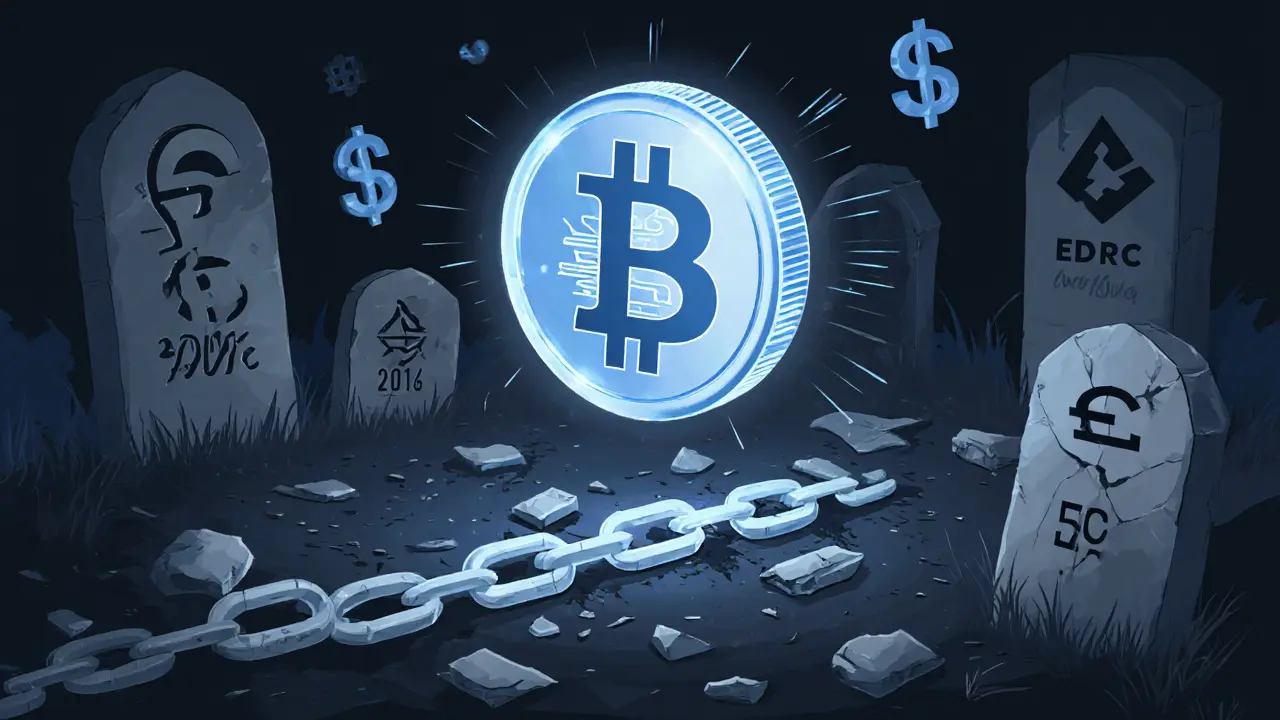
What is EDRCoin (EDRC) Crypto Coin? The Truth Behind a Dead Cryptocurrency
Nov 7, 2025, Posted by Ronan Caverly
EDRCoin (EDRC) is a dead cryptocurrency with no trading volume, broken infrastructure, and impossible reward claims. Once promoted as sustainable and profitable, it now exists only as a ghost on crypto tracking sites.
MORESEARCH HERE
Categories
TAGS
- decentralized exchange
- crypto exchange review
- crypto exchange
- cryptocurrency
- crypto coin
- crypto airdrop
- CoinMarketCap airdrop
- smart contracts
- MiCA
- cryptocurrency trading
- tokenomics
- DeFi
- cryptocurrency exchange safety
- crypto airdrop 2025
- cryptocurrency airdrop
- cryptocurrency exchange
- meme coin
- blockchain security
- blockchain gaming
- crypto airdrop guide