
You’ve probably seen it pop up in your feed or heard whispers in crypto Discord servers. It’s got a weird name, a connection to one of the world’s biggest rappers, and a ticker symbol that screams "get rich quick." That token is Anita Max Wynn (WYNN), a speculative memecoin built on the Solana blockchain that leverages internet culture and Drake’s alter ego for trading momentum.
If you are wondering what this coin actually does, why it exists, and whether it’s worth your attention, you aren’t alone. In the chaotic world of Solana memecoins, new tokens launch daily. Some vanish overnight; others become cultural phenomena. WYNN falls into the latter category, at least initially. But here is the reality check: as of mid-2026, it is a high-risk, low-utility asset driven entirely by community hype and speculative trading.
The Origin Story: Why "Anita Max Wynn"?
To understand WYNN, you have to look past the code and look at the culture. The name comes from Drake, the Canadian rapper who frequently uses an alter ego named Anita Max Wynn in his music and social media posts. The phrase is a phonetic play on words: "Anita Max Wynn" sounds like "I Need a Max Win."
In crypto slang, a "max win" means hitting the jackpot-buying a token early and watching it multiply your money by 10x, 100x, or more. By naming the token after this alter ego, the creators tapped directly into the collective desire of traders for massive profits. It isn’t just a joke; it’s a psychological hook. When people buy WYNN, they aren’t buying technology. They are buying the hope of a "max win."
This branding strategy is common in the memecoin sector. Unlike utility tokens that power decentralized applications or governance tokens that give you voting rights in a protocol, WYNN has no inherent function. Its value is derived purely from supply and demand dynamics fueled by memes, social media trends, and the sheer number of people talking about it.
Technical Basics: How WYNN Works on Solana
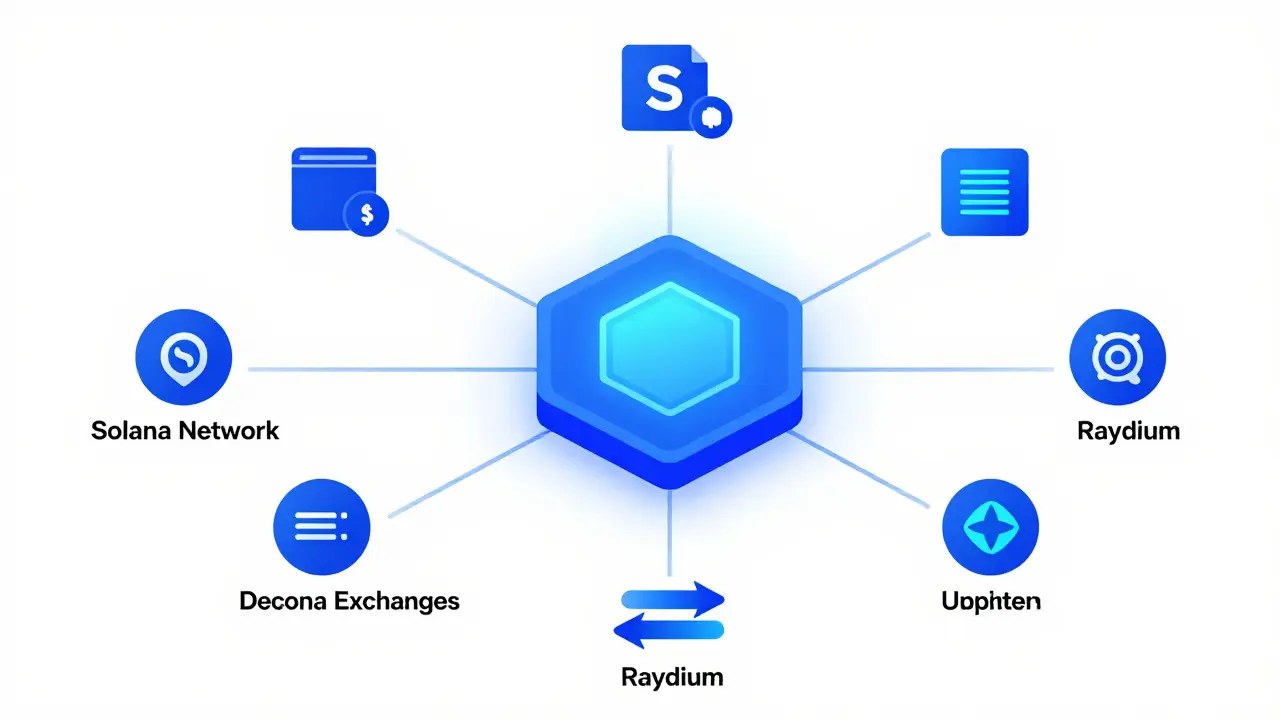
While the idea behind WYNN is rooted in pop culture, the execution is technical. The token operates on the Solana blockchain, a high-speed, low-cost network known for hosting thousands of memecoins. This choice is strategic. Solana allows for near-instant transactions with fractions of a cent in fees, which is essential for retail traders who want to swap small amounts of money quickly without paying high gas fees.
Here are the core technical attributes of the WYNN token:
- Contract Address: 4vqYQTjmKjxrWGtbL2tVkbAU1EVAz9JwcYtd2VE3PbVU. This is the unique identifier on the Solana ledger. Always verify this address before buying, as there are other tokens using similar names.
- Total Supply: Approximately 1 billion (999,999,999) tokens. Nearly all of these are already in circulation, meaning there is no hidden reserve of tokens waiting to be dumped on the market later.
- Token Type: SPL Token. This is the standard format for fungible assets on Solana, similar to ERC-20 on Ethereum.
- Utility: None. There is no staking, no revenue sharing, and no governance mechanism documented by major data aggregators.
Because the entire supply is circulating, the price movement depends entirely on how many people want to buy versus sell at any given moment. With no locked funds or vesting schedules for developers, the risk of a "rug pull" (where creators drain liquidity and disappear) is lower than in some newer projects, but the risk of price volatility remains extremely high.
Price History: From Hype to Reality
The journey of WYNN’s price tells the classic story of a memecoin boom and bust. The token launched in early 2024, riding the wave of renewed interest in Solana-based speculation. During its peak in January 2024, WYNN reached an all-time high of approximately $0.084 USD. At that moment, it felt like the next big thing. Social media was ablaze with predictions of a 100x surge, and the project reportedly attracted over 6,700 holders within its first week.
However, memecoin markets are notoriously fickle. As attention shifted to other trending tokens, WYNN’s price began a long decline. By March 2026, the token hit an all-time low of roughly $0.00005 USD. This represents a drop of nearly 99.9% from its peak. As of June 2026, the price hovers between $0.00007 and $0.00046 USD, depending on the exchange and liquidity pool you check.
| Metric | Value | Date/Context |
|---|---|---|
| All-Time High | $0.08439 | January 21, 2024 |
| All-Time Low | $0.00005094 | March 12, 2026 |
| Current Price Range | $0.00007 - $0.00046 | June 2026 |
| Market Cap | $68k - $430k | Varies by source |
| Circulating Supply | ~999.9 Million | Fully emitted |
This drastic drawdown highlights the extreme risk involved. If you bought at the top, you lost almost everything. If you bought at the bottom, you might see modest gains during sudden spikes, but the overall trend has been downward. This pattern is typical for memecoins that fail to evolve beyond their initial viral moment.
Trading WYNN: Where and How
You won’t find WYNN listed on major centralized exchanges like Coinbase or Binance for direct spot trading. Instead, it lives in the decentralized finance (DeFi) ecosystem on Solana. To trade it, you need a few things:
- A Solana Wallet: Apps like Phantom, Solflare, or Atomic Wallet allow you to hold SOL and SPL tokens. You must secure your 12-word seed phrase; if you lose it, your WYNN is gone forever.
- SOL Tokens: You will need Solana’s native currency to pay for transaction fees and to swap for WYNN.
- A Decentralized Exchange (DEX): The primary venues for trading WYNN are Raydium and Jupiter. Jupiter is an aggregator that finds the best prices across multiple pools, while Raydium hosts specific liquidity pairs like WYNN/SOL.
When you connect your wallet to these platforms, you can swap SOL for WYNN instantly. However, be aware of slippage. Because WYNN is a micro-cap asset with limited liquidity (often just tens of thousands of dollars in total pool reserves), large trades can significantly impact the price. A $1,000 buy order might push the price up sharply, only for it to drop back down once other traders sell.

The Risk Factor: What You Need to Know
Let’s be blunt: investing in WYNN is not investing in the traditional sense. It is gambling with a digital ticket. Here are the specific risks you face:
Extreme Volatility: WYNN can swing 50% or more in a single day based on a tweet or a rumor. One day it might jump 140%; the next, it could crash. This makes it unsuitable for anyone who needs stability or cannot afford to lose their entire principal.
Liquidity Risks: While you can always buy WYNN, selling can be harder. If the liquidity pools dry up, you might not be able to exit your position without taking a massive loss. The market cap fluctuates wildly between sources, sometimes showing $68k and other times $430k, indicating inconsistent data and thin trading depth.
No Fundamental Value: Unlike stocks that represent ownership in a company or bonds that pay interest, WYNN pays nothing. It generates no revenue. Its value is zero unless someone else is willing to pay more for it than you did. This is known as the Greater Fool Theory, and it works until it doesn’t.
Ticker Confusion: Be careful. There are other tokens on Solana with the ticker "WYNN" or similar names, such as "James Wynn Real" or "WynnForge." Always double-check the contract address. Buying the wrong token because you mistyped the address is a common mistake that costs real money.
Is WYNN Still Relevant in 2026?
As we move through 2026, WYNN has transitioned from a hot new launch to a "zombie" or "long-tail" memecoin. It still has a community of around 12,000 holders, which is respectable for a niche token, but it lacks the momentum to challenge top-tier coins like Dogecoin or Shiba Inu. The narrative around Drake’s alter ego has faded from mainstream crypto discourse, replaced by newer memes and trends.
For most investors, WYNN offers little incentive beyond pure speculation. Without updates, new features, or marketing campaigns, it relies on residual brand recognition. If you are curious about the mechanics of Solana DeFi, holding a small amount of WYNN can be a learning experience. But if you are looking for financial growth, the odds are stacked against you. The historical data shows a 99.9% loss from peak to trough-a statistic that should give anyone pause.
In the end, Anita Max Wynn is a fascinating case study in how internet culture intersects with blockchain technology. It proves that a name and a meme can create temporary value, but without substance, that value evaporates quickly. Treat it as entertainment, not an investment, and always do your own due diligence before connecting your wallet.
What is the purpose of the Anita Max Wynn (WYNN) token?
WYNN is a memecoin with no technical utility, governance rights, or revenue-sharing mechanisms. Its primary purpose is speculative trading, driven by the cultural meme associated with Drake’s alter ego and the phrase "I Need a Max Win."
Where can I buy WYNN crypto?
You cannot buy WYNN on major centralized exchanges like Coinbase or Binance. You must use a Solana-compatible wallet (like Phantom or Atomic Wallet) and trade on decentralized exchanges such as Raydium or Jupiter using the contract address 4vqYQTjmKjxrWGtbL2tVkbAU1EVAz9JwcYtd2VE3PbVU.
Why is the WYNN price so low compared to its all-time high?
Like many memecoins, WYNN experienced a massive hype-driven surge in early 2024, reaching $0.084. As interest waned and liquidity decreased, the price dropped by over 99%. Current low prices reflect its status as a low-volume, speculative asset with limited fundamental backing.
Is there a difference between WYNN and other "Wynn" tokens?
Yes. There are multiple tokens on Solana with the ticker WYNN or similar names, such as James Wynn Coin or WynnForge. Always verify the specific contract address for Anita Max Wynn to avoid purchasing the wrong asset.
Does Anita Max Wynn have a whitepaper or team?
No major data aggregators list a formal whitepaper, audited smart contracts, or a public development team for WYNN. It operates as a community-driven meme token without structured corporate or technical documentation.
Author
Ronan Caverly
I'm a blockchain analyst and market strategist bridging crypto and equities. I research protocols, decode tokenomics, and track exchange flows to spot risk and opportunity. I invest privately and advise fintech teams on go-to-market and compliance-aware growth. I also publish weekly insights to help retail and funds navigate digital asset cycles.