
You probably know that buying Bitcoin is easy. You click a button, send some cash, and you own a piece of the pie. But what if you want to bet on where the price is going without actually holding the coin? Or what if you want to insure your portfolio against a crash? That’s where Deribit comes in. It is the world's leading cryptocurrency derivatives exchange, specializing in options and futures contracts. Launched in 2016 by former traditional finance traders, it has become the go-to place for professional traders who understand complex financial instruments.
If you are looking for a simple app to buy and hold Ethereum, Deribit is not for you. In fact, it might be frustrating. But if you are a trader who wants deep liquidity, sophisticated tools, and the ability to execute complex strategies like iron condors or straddles, this platform is unmatched. This review breaks down exactly what Deribit offers, who it is for, and whether the risks are worth the rewards in 2026.
What Exactly Is Deribit?
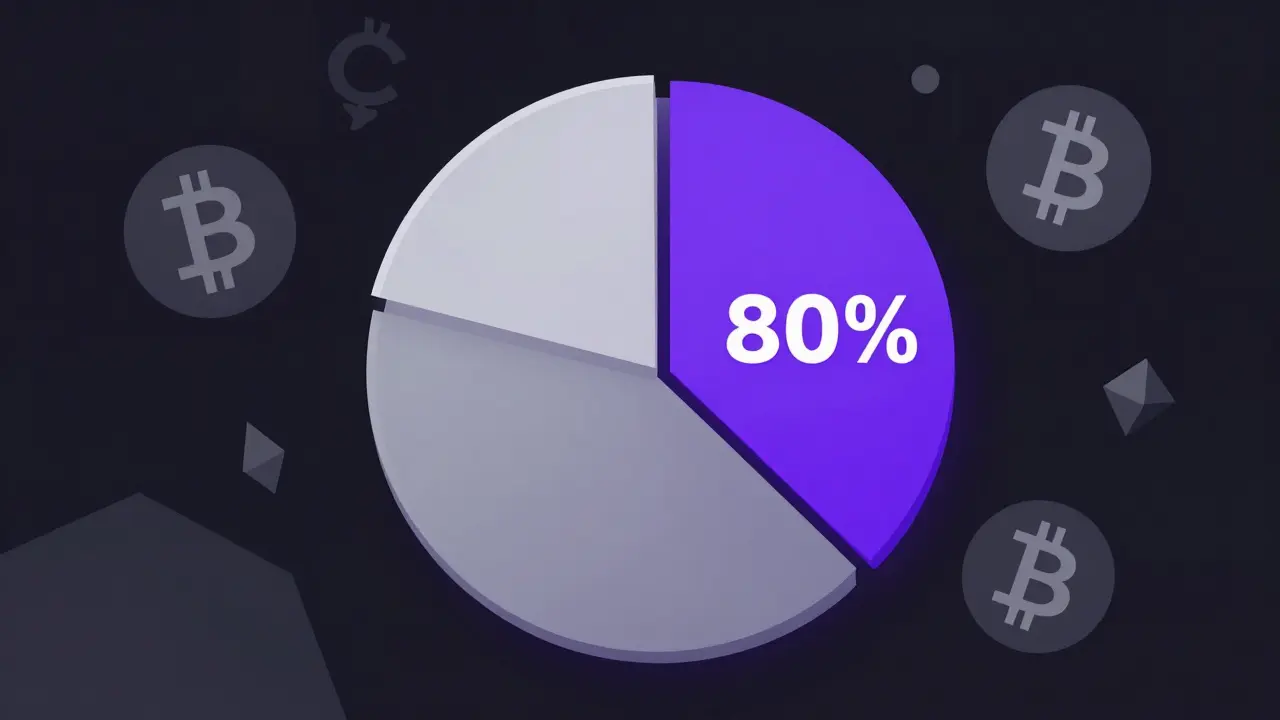
Deribit is not a standard spot exchange like Coinbase or Kraken. You cannot just deposit dollars and buy Bitcoin to store in a wallet. Instead, Deribit focuses entirely on derivatives. These are financial contracts whose value is derived from an underlying asset, such as Bitcoin or Ethereum. Specifically, Deribit dominates the market for crypto options. As of early 2025, it controlled approximately 80% of the global cryptocurrency options market volume.
The platform was founded by John Jansen, Sebastian Smyczyński, Marius Jansen, and Andrew Yanovsky. They built it because they saw a gap in the market: traditional finance had robust options markets, but crypto did not. Today, Deribit operates under Deribit B.V., headquartered in Ermelo, Netherlands. While it started with only Bitcoin options, it has expanded to include Ethereum, Solana, XRP, and Avalanche derivatives. However, its core identity remains tied to being the deepest, most liquid venue for BTC and ETH options.
Who Should Use Deribit (And Who Should Avoid It)
Let’s be blunt about the audience. Deribit is designed for experienced traders. If you have never heard of "Greeks" (Delta, Gamma, Theta, Vega), you will find this platform overwhelming. A user on Reddit noted in January 2025 that the interface is "overwhelming for anyone without prior options experience." This is accurate. The learning curve is steep.
- Use Deribit if: You are a professional trader, a market maker, or an institution needing deep liquidity for large orders. You understand options strategies and want minimal slippage.
- Avoid Deribit if: You are a beginner looking to buy crypto for long-term holding. You prefer simple interfaces, fiat deposits, or copy-trading features. Deribit lacks these basic retail-friendly tools.
According to a 2025 survey by CryptoCompare, 68% of professional crypto options traders use Deribit as their primary platform. However, only 12% of retail traders use it. This split highlights its specialized nature. It is a tool for experts, not a gateway for newcomers.
Trading Features: Options and Futures
The crown jewel of Deribit is its options trading. Unlike American-style options which can be exercised at any time before expiration, Deribit primarily offers European-style options, which can only be exercised at expiration. This structure simplifies the mechanics for institutional hedging. Standard contract sizes are 0.1 BTC and 1 ETH per option. The strike prices are structured logically: 25-point increments for Bitcoin and 10-point for Ethereum, making it easier to navigate the volatility smile.
Beyond options, Deribit offers perpetual futures. You can trade leverage up to 1:50 on these contracts. While Binance and Bybit dominate the futures market with dozens of assets, Deribit keeps its focus tight. For a long time, it only offered BTC and ETH futures. However, in February 2025, Deribit expanded by launching SOL and XRP perpetual futures. Initial 24-hour volume hit $87.3 million, showing strong demand for broader asset coverage.
| Feature | Deribit | Binance | Bybit |
|---|---|---|---|
| Primary Focus | Crypto Options | Spot & Futures | Futures |
| Options Market Share | ~80% | <5% | <5% |
| Futures Assets | Limited (BTC, ETH, SOL, XRP, AVAX) | 15+ | 10+ |
| Fiat Deposits | No | Yes | Yes |
| Beginner Friendly | No | Moderate | Moderate |
Fees and Costs
Cost matters when you are trading frequently. Deribit uses a maker-taker fee model. Makers (those who add liquidity to the order book) pay less than takers (those who remove liquidity). Fees range from 0.03% to 0.05% depending on the order type and your monthly trading volume. There are no hidden withdrawal fees for most major cryptocurrencies, but network costs apply.
One critical point: Deribit does not accept fiat deposits. You must deposit cryptocurrency (BTC, ETH, USDC, SOL, XRP, or AVAX) to start trading. This means you need another exchange to convert your local currency into crypto first. Minimum deposit requirements are non-existent, allowing both small retail traders and large institutions to participate. However, the minimum order size starts from 0 contracts, which helps with precision but requires careful risk management.
Safety, Regulation, and Risks
This is the most controversial part of the Deribit review. Deribit operates without formal regulatory approval from major financial authorities like the SEC in the US or MiFID II in Europe. Traders Union gave it a low score of 2.94 out of 10 in 2024, citing these regulatory concerns. It is unavailable in the United States due to strict local laws.
Does this mean it is unsafe? Not necessarily. Deribit has operated since 2016 without a major hack. Its technical infrastructure is robust, using a TradingView web terminal that supports high-frequency trading. Latency averages 187ms for order execution, which is competitive. However, the lack of regulation means fewer consumer protections. If something goes wrong, there is no insurance fund like FDIC in traditional banking.
In Q4 2024, Deribit established a Singapore entity, Deribit Asia Pte Ltd, to pursue licensing from the Monetary Authority of Singapore (MAS). Approval is expected by Q3 2025. This move signals an intent to legitimize further, but until then, users operate in a gray area. Always remember: you are responsible for your own security. Never deposit more than you can afford to lose, and use strong two-factor authentication.
User Experience and Tools
The interface is clean but dense. Professional traders love it because it allows for complex strategy building. The Position Builder tool lets you visualize how different options combinations affect your profit and loss. Greek calculators are integrated directly into the charting area. For those new to the platform, Deribit offers a testnet at test.deribit.com. You can practice with fake funds, though liquidity is limited to about 15% of live market depth to simulate realistic conditions.
Customer support receives mixed reviews. On Trustpilot, Deribit holds a 3.8/5 rating based on 217 reviews as of March 2025. Positive reviews praise the clean interface and minimal slippage. Negative reviews often cite slow response times, sometimes exceeding 72 hours for support tickets. KYC verification can also be cumbersome, requiring government ID, proof of address, and occasionally video verification. The process takes an average of 3.2 business days.
Is Deribit Right for You?
Deribit is a specialist tool. If you are a serious trader looking to hedge risk or speculate on volatility with deep liquidity, it is the best choice available. No other exchange matches its options depth. However, if you are a casual investor, stick to simpler platforms. The complexity and regulatory ambiguity make it unsuitable for beginners. Before diving in, spend at least 20-30 hours studying options concepts. The official documentation and community Discord are valuable resources, but expect to do much of the heavy lifting yourself.
Is Deribit safe to use?
Deribit has a strong track record since 2016 with no major hacks. However, it is unregulated in many jurisdictions, including the US and EU. This means fewer consumer protections compared to regulated brokers. Users should exercise caution and never invest money they cannot afford to lose.
Can I deposit USD or EUR on Deribit?
No, Deribit does not accept fiat currency deposits. You must deposit cryptocurrencies such as BTC, ETH, USDC, SOL, XRP, or AVAX. You will need to use another exchange to convert fiat to crypto first.
What is the difference between Deribit and Binance?
Binance is a general-purpose exchange offering spot trading, futures, and various services for all skill levels. Deribit specializes exclusively in derivatives, particularly options. Deribit has deeper liquidity for options, while Binance has a wider range of assets and better support for beginners.
Is Deribit available in the United States?
No, Deribit is not available to users in the United States due to regulatory constraints imposed by the CFTC and SEC. It is also restricted in several other jurisdictions.
How much does it cost to trade on Deribit?
Fees range from 0.03% to 0.05% depending on whether you are a maker or taker. There are no deposit fees, but network transaction fees apply when moving crypto in and out. Withdrawal fees vary by cryptocurrency.
Author
Ronan Caverly
I'm a blockchain analyst and market strategist bridging crypto and equities. I research protocols, decode tokenomics, and track exchange flows to spot risk and opportunity. I invest privately and advise fintech teams on go-to-market and compliance-aware growth. I also publish weekly insights to help retail and funds navigate digital asset cycles.