
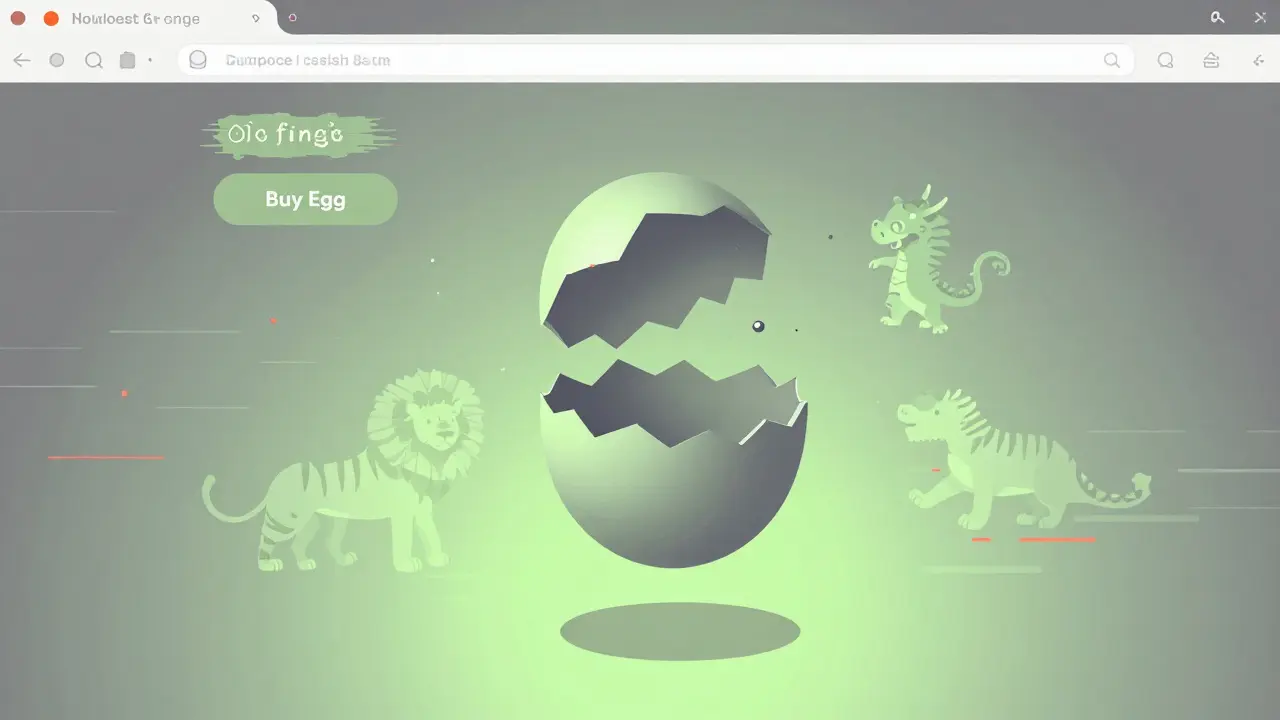
CryptoZoo Token Legitimacy Checker
Check CryptoZoo Token Legitimacy
Scam Warning
Based on the article content about CryptoZoo's history, all tokens currently trading under the name CryptoZoo (ZOO) are highly likely to be scams.
There are at least four different tokens called CryptoZoo (ZOO) trading right now - and none of them have anything to do with the original project that promised a game where you breed cartoon animals. The original CryptoZoo, launched in 2021 by YouTuber Logan Paul, raised millions from people who believed they were buying into a fun, playable NFT game. But no game ever launched. No animals hatched. No hybrids were bred. Just empty promises and a growing pile of complaints.
Today, the name CryptoZoo is being reused by random developers on different blockchains, selling tokens with no connection to the original team, no whitepaper, and no roadmap. The price of these tokens varies wildly - one trades at around $0.06, another at $0.00000072. That’s not a typo. One version is worth less than a fraction of a penny. And yet, people are still buying them, hoping for a miracle.
What was the original CryptoZoo supposed to be?
The original CryptoZoo was pitched as an "autonomous ecosystem" where users could buy NFT animal eggs with $ZOO tokens or Ethereum. These eggs would hatch into cartoon animals - lions, tigers, dragons - that you could breed to create hybrids. You could then "burn" those hybrids to get $ZOO tokens back. It sounded like a mix between Pokémon and a crypto lottery.
Logan Paul, who had over 20 million YouTube subscribers at the time, promoted it heavily. He claimed he invested $1 million of his own money into the project. Thousands of people bought in, drawn in by his fame and the promise of quick profits. The project raised tens of millions in just a few months.
But here’s the catch: none of the promised features ever worked. No game was built. No animals hatched. No breeding system launched. By early 2022, the project was dead. Logan Paul stopped posting about it. The website went silent. The team vanished.
Why did CryptoZoo collapse?
The project failed because it was never meant to be a real game. It was a marketing stunt wrapped in blockchain hype. The NFTs were just digital collectibles with no utility. The "ecosystem" was just a website with a button that said "Buy Egg" - and that was it.
Investigative YouTuber Coffeezilla exposed the truth in March 2023. He dug into the project’s finances, found no code for a game, and showed how the team had no developers, no roadmap, and no working product. He even questioned whether Logan Paul ever actually invested his own money - or if it was just a clever way to pump the token before cashing out.
The fallout was massive. Reddit threads filled with angry users who lost thousands. YouTube videos titled "How Logan Paul Scammed Me" got millions of views. The U.S. Securities and Exchange Commission (SEC) began watching celebrity-backed crypto projects more closely after this. CryptoZoo became a textbook example of a "celebrity crypto scam."
What are the "new" CryptoZoo tokens today?
After the original project died, someone else grabbed the name and started selling new versions of $ZOO on different blockchains. There are at least three major ones now:
- CryptoZoo (ZOO) - $0.066: This is the token that still trades on some exchanges with a small volume. It claims to be "the real ZOO," but it has no official team, no whitepaper, and no updates since 2022. Its market cap is under $10 million, and daily trading volume is often below $3,000.
- CryptoZoo (new) - $0.0000007273: This one is built on BNB Smart Chain. It has a supply of nearly 2 trillion tokens. That’s why the price is so low - there are way too many of them. This version has zero trading volume and no active community. It’s essentially a ghost token.
- ZOO - Crypto World - $0.000256: This version claims to be on Solana, but Solana’s blockchain explorer shows no official contract tied to this token. It’s likely just a copy-paste job from another scam.
Each version has a different contract address, different blockchain, and different price. None of them are connected to the original team. None of them have any working product. And none of them have customer support.

Are the price predictions real?
Some sites like CoinCodex claim CryptoZoo could surge 459% by October 2025. But here’s the problem: the predicted price ($0.053) is lower than the current price ($0.066). That’s not a prediction - that’s a math error. Other sites say it’ll rise 0.12%. That’s barely anything.
These predictions are made by algorithms that look at past price swings - not real-world use. Since no one is actually using CryptoZoo for anything, these models are meaningless. They’re just noise.
Even the "Fear & Greed Index" for CryptoZoo varies wildly between versions. One shows "Bullish," another "Bearish." That’s because the market is tiny. A single whale buying 10 million tokens can spike the price 20% in minutes. That’s not growth - that’s manipulation.
Why are people still buying it?
Because they’re chasing ghosts.
Some believe the original team will come back. Others think a new team will revive the game. A few just hope the price will go up so they can sell to someone else - the classic pump-and-dump strategy.
But here’s the reality: there’s no evidence of any development. No GitHub commits. No team announcements. No updates on Twitter or Telegram. The original website is offline. The Discord server is empty. The only activity is price charts on CoinGecko and CoinMarketCap - and even those are barely updated.
It’s like buying a ticket to a concert that was canceled five years ago - and hoping the band will show up next month.

What should you do if you’re considering buying ZOO?
If you’re thinking about buying any version of CryptoZoo, ask yourself these questions:
- Is there a working product? No.
- Is there a team behind it? No.
- Is there a whitepaper or technical documentation? No.
- Is there any community activity? No.
- Is this token listed on major exchanges like Binance or Coinbase? No.
If you still want to buy it, treat it like a lottery ticket - not an investment. You’re not buying a token. You’re buying a hope. And the odds are stacked against you.
Don’t invest money you can’t afford to lose. Don’t fall for the hype. Don’t trust YouTube influencers pushing it. And don’t believe the fake price predictions. CryptoZoo is a dead project with a ghost name.
What’s the bottom line?
CryptoZoo (ZOO) is not a cryptocurrency. It’s not a game. It’s not a project. It’s a cautionary tale.
The original version was a scam disguised as innovation. The "new" versions are just copies trying to cash in on the name. None of them have value. None of them have utility. And none of them have a future.
If you see someone promoting CryptoZoo today, they’re either misinformed - or they’re trying to sell you something that’s already worthless.
Walk away. Save your money. Look for projects with real teams, real code, and real users. CryptoZoo is just noise in the background of crypto history - and it’s not worth listening to.
Is CryptoZoo a real cryptocurrency?
No, CryptoZoo is not a real cryptocurrency in the sense of having a functioning ecosystem or utility. The original project was abandoned in 2022 after failing to deliver a playable game. The tokens still trading under the name ZOO are unrelated copies with no team, no development, and no roadmap. They exist only as speculative assets on low-volume exchanges.
Did Logan Paul steal money from CryptoZoo investors?
There’s no legal proof Logan Paul stole money, but he did promote a project that never delivered on its promises. He claimed to have invested $1 million, but investigations by Coffeezilla found no evidence of development work or funds being used to build a game. Thousands of investors lost money, and Logan Paul never returned to address the fallout. Many consider his actions deceptive, even if not criminally proven.
Can I still use CryptoZoo to play a game?
No. There is no playable CryptoZoo game. The original promise was to breed cartoon animals using NFTs, but the game was never built. All current versions of ZOO tokens are just digital assets with no functional use. The website, app, and game mechanics were never released.
Which blockchain is CryptoZoo on?
There are multiple versions on different blockchains. One version trades on Ethereum and is listed as ZOO at $0.066. Another is on BNB Smart Chain (BEP20) with a contract address ending in 6b57c669. A third claims to be on Solana, but its contract isn’t verified on Solana’s explorer. Each version is unrelated and has different prices and risks.
Is CryptoZoo a good investment?
No, CryptoZoo is not a good investment. It has no utility, no team, no development, and no future roadmap. The price movements are driven by speculation and low trading volume, making it easy to manipulate. Most experts and investigators classify it as a zombie project - a dead idea that keeps trading because people refuse to let go. Avoid it.
Why do price predictions for CryptoZoo contradict each other?
Price predictions for CryptoZoo are unreliable because they’re based on outdated or manipulated data. One site claims a 459% rise, but the predicted price is lower than the current price - which is mathematically impossible. These models don’t account for lack of real usage, team activity, or project progress. They’re just algorithms guessing based on past volatility - which doesn’t matter when there’s no actual value behind the token.
Are there any official CryptoZoo websites or support channels?
No. The original CryptoZoo website is offline. There are no official social media accounts, Telegram groups, or customer support channels. Any website claiming to be "CryptoZoo official" is a scam or a copy. The project has no leadership, no developers, and no communication - it’s been dead since 2022.


Author
Ronan Caverly
I'm a blockchain analyst and market strategist bridging crypto and equities. I research protocols, decode tokenomics, and track exchange flows to spot risk and opportunity. I invest privately and advise fintech teams on go-to-market and compliance-aware growth. I also publish weekly insights to help retail and funds navigate digital asset cycles.