
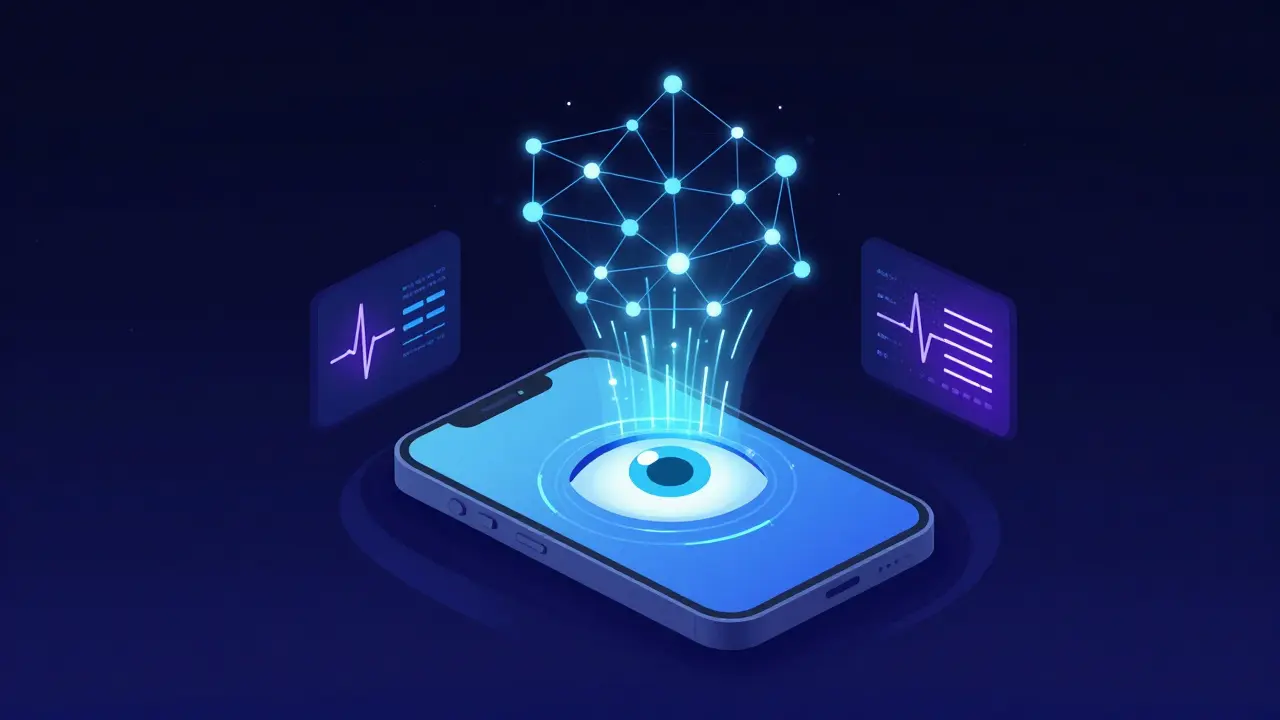
IRIS Chain (IRC) isn’t just another crypto coin. It claims to be something far more ambitious: a blockchain that uses your iris to manage your health data. Sounds futuristic? Maybe. But the reality is far more complicated - and far less promising.
What IRIS Chain actually does (on paper)
IRIS Chain says it lets you scan your eye with a smartphone or kiosk, get instant health insights from AI, and earn IRC tokens for doing it. The idea is simple: your iris holds unique biological patterns that could, theoretically, reveal early signs of diabetes, hypertension, or even neurological conditions. By locking that data on a blockchain, the project claims you keep full control - no corporations, no hospitals, no data breaches.
That’s the pitch. But here’s what’s missing: proof.
There’s no peer-reviewed study showing smartphone cameras can reliably detect medical conditions from iris scans. Medical-grade iris scanners cost thousands of dollars and need controlled lighting. Your iPhone’s front camera? It’s not a diagnostic tool. Reddit users and health tech experts have called out the project’s claims as unrealistic. One user tested a demo kiosk in Seoul and got back generic advice like "drink more water" - the kind you’d find on WebMD.
The IRC token: Supply, price, and the big red flag
IRIS Chain has a total supply of 2 billion IRC tokens. That’s a lot. But only 200 million are supposedly in circulation, according to CoinMarketCap. That means 90% of the tokens are locked up - or worse, never released. That’s not normal for a working product. It’s a red flag for speculative projects.
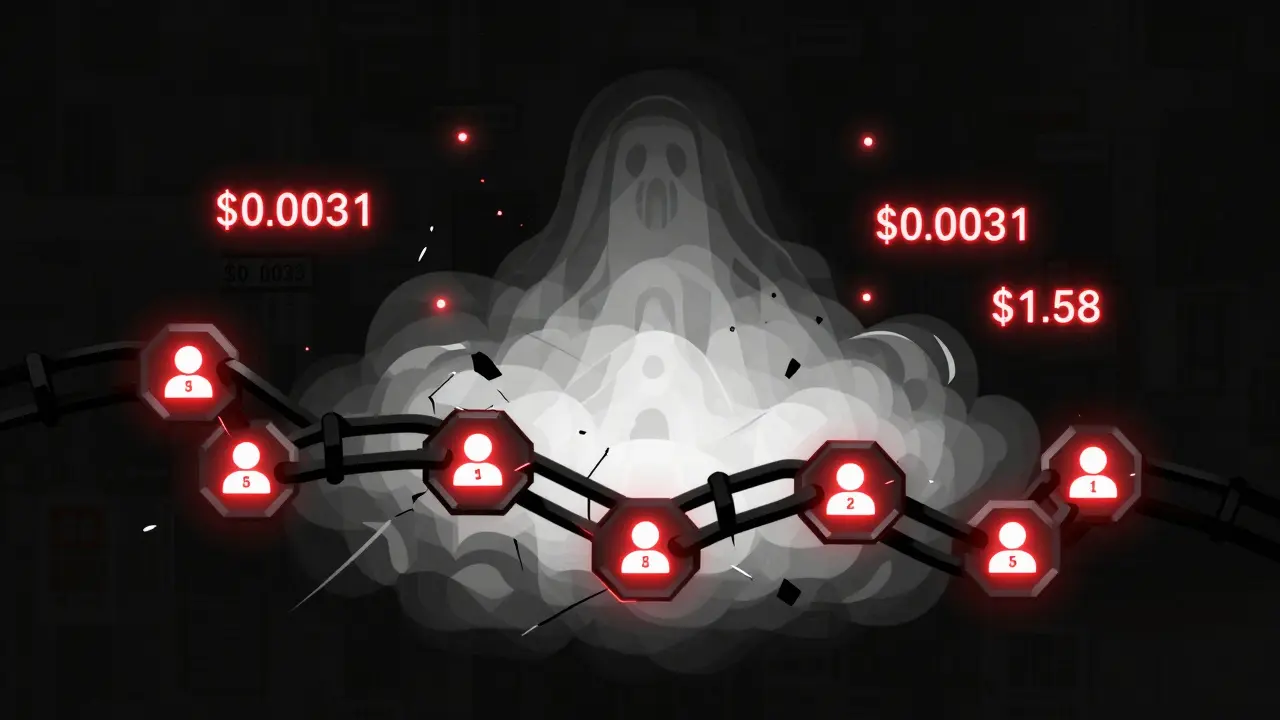
Price data is all over the place. CoinMarketCap says IRC is worth $0.0031. CoinGecko says it’s around $0.21. Bybit lists it at $0.0031. Why the difference? Because there’s almost no trading volume. With only 10 known token holders, this isn’t a market - it’s a ghost town.
The all-time high was $1.58 in July 2025. Today, it’s down over 85%. That’s not market correction. That’s a collapse. And the fully diluted valuation (FDV) of $480 million? That’s based on the full 2 billion tokens - meaning if every single one ever created was suddenly traded, the market cap would be 800 times bigger than it is now. That’s not a feature. It’s a warning.
Where you can trade IRC (and why you shouldn’t)
You can buy IRC on MEXC, Bybit, and HTX. But here’s the catch: no one’s buying it. The 24-hour trading volume is under $200,000 - less than what a single meme coin moves in an hour. You won’t find it on Coinbase, Binance, or Kraken. That’s not because they’re being conservative. It’s because they know the risks.
Even if you buy it, what do you do with it? The project promised you could use IRC to pay for health subscriptions, stake it for rewards, or use it for decentralized ID verification. But as of February 2026, none of those services are live. A Telegram user reported earning $0.50 in IRC after scanning their eyes at a pharmacy kiosk - then couldn’t spend it anywhere.

The tech doesn’t work - yet
IRIS Chain says it works with smartphones. But the reality? Most phones don’t have the hardware to capture iris data accurately. The project relies on third-party biometric scanners, and GitHub issues show constant API failures between those scanners and the blockchain. Developers admit they’re struggling with integration.
And even if the tech worked, there’s the legal wall. In the U.S., the FDA regulates any device that claims to diagnose medical conditions. In Europe, the new AI Act (effective February 2026) classifies biometric health systems as "high-risk." IRIS Chain has no FDA clearance. No EU certification. No public partnerships with hospitals or clinics. That’s not innovation. That’s ignoring the rules.
Who’s behind it? And why should you care?
No team is listed on the official website. No whitepaper has been updated since September 2025. The Wayback Machine shows the site hasn’t changed in months. No press releases. No interviews. No announcements from healthcare institutions. The only updates come from crypto exchanges promoting it as a "new opportunity."
Compare this to real healthcare blockchain projects like Medicalchain or Solve.Care. They’ve partnered with hospitals. They’ve published clinical trials. They’ve cleared regulatory hurdles. IRIS Chain has none of that.
It’s not a health project. It’s a crypto project dressed up as health tech. And that’s dangerous.
The bigger picture: Why this matters
The global blockchain healthcare market is worth over $1.6 billion and growing fast. But IRIS Chain’s market cap? Less than $600,000. That’s 0.04% of the entire sector. It’s not leading the charge. It’s barely visible.
Projects like this thrive on hype, not substance. They promise the impossible - real-time health monitoring via your phone - because they know people want to believe. But when the tech doesn’t work, and the data isn’t there, and the regulators aren’t fooled, what’s left?
A few hundred people holding tokens they can’t use, watching a price that bounces between $0.002 and $0.004, hoping someone else will buy it for more.
That’s not investing. That’s gambling.
Final verdict: Is IRIS Chain worth it?
No.
IRIS Chain isn’t a scam in the classic sense - there’s no outright theft, no Ponzi structure. But it’s a classic case of vaporware wrapped in blockchain buzzwords. The technology doesn’t work as claimed. The token has no utility. The team is invisible. The regulators are silent. The market is tiny.
If you’re looking for real blockchain health innovation, look at projects with hospital partnerships, peer-reviewed results, and clear regulatory paths. IRIS Chain doesn’t belong in that category.
It’s a speculative token with a flashy story. And stories don’t pay bills. Real health data does - and right now, IRIS Chain doesn’t have any of it.


Author
Ronan Caverly
I'm a blockchain analyst and market strategist bridging crypto and equities. I research protocols, decode tokenomics, and track exchange flows to spot risk and opportunity. I invest privately and advise fintech teams on go-to-market and compliance-aware growth. I also publish weekly insights to help retail and funds navigate digital asset cycles.