
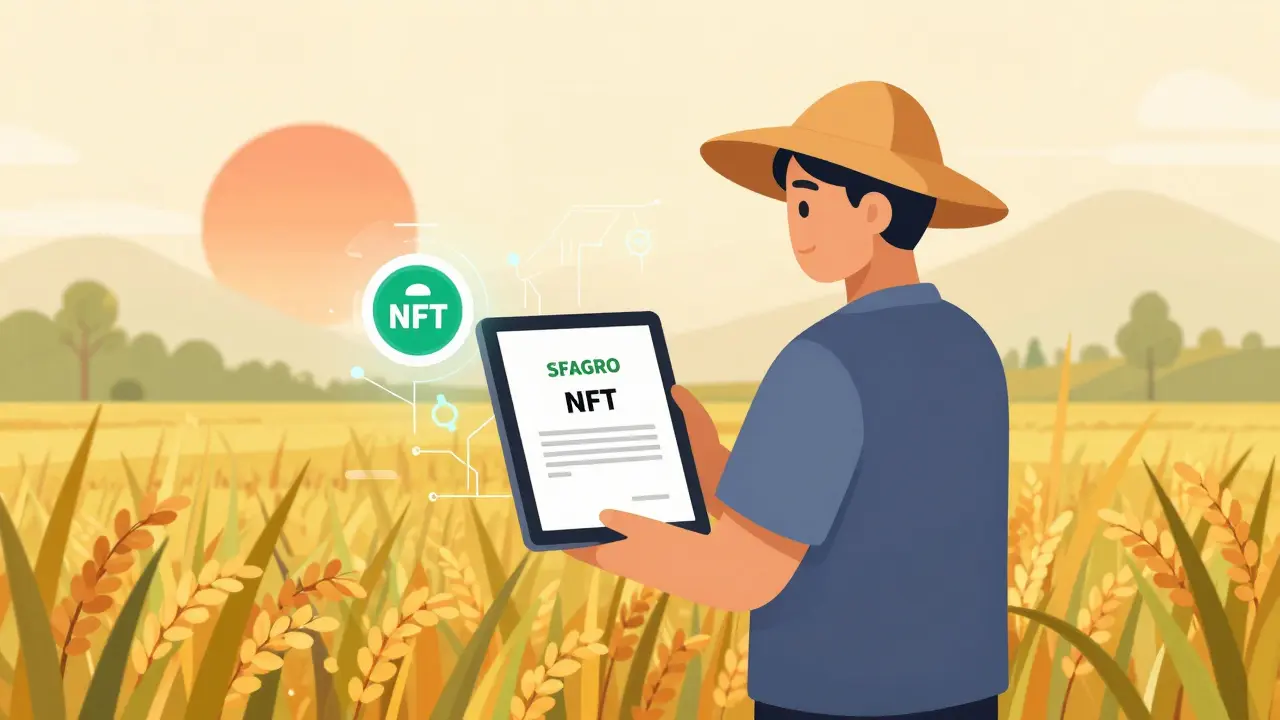
When you hear the word "crypto," you probably think of Bitcoin, Ethereum, or maybe meme coins like Dogecoin. But there’s a growing group of cryptocurrencies built for something far more specific - food. SFAGRO (SFAGRO) is one of them. It’s not just another digital coin floating in the void. It’s designed to change how farming, food supply chains, and rural economies work - using blockchain technology.
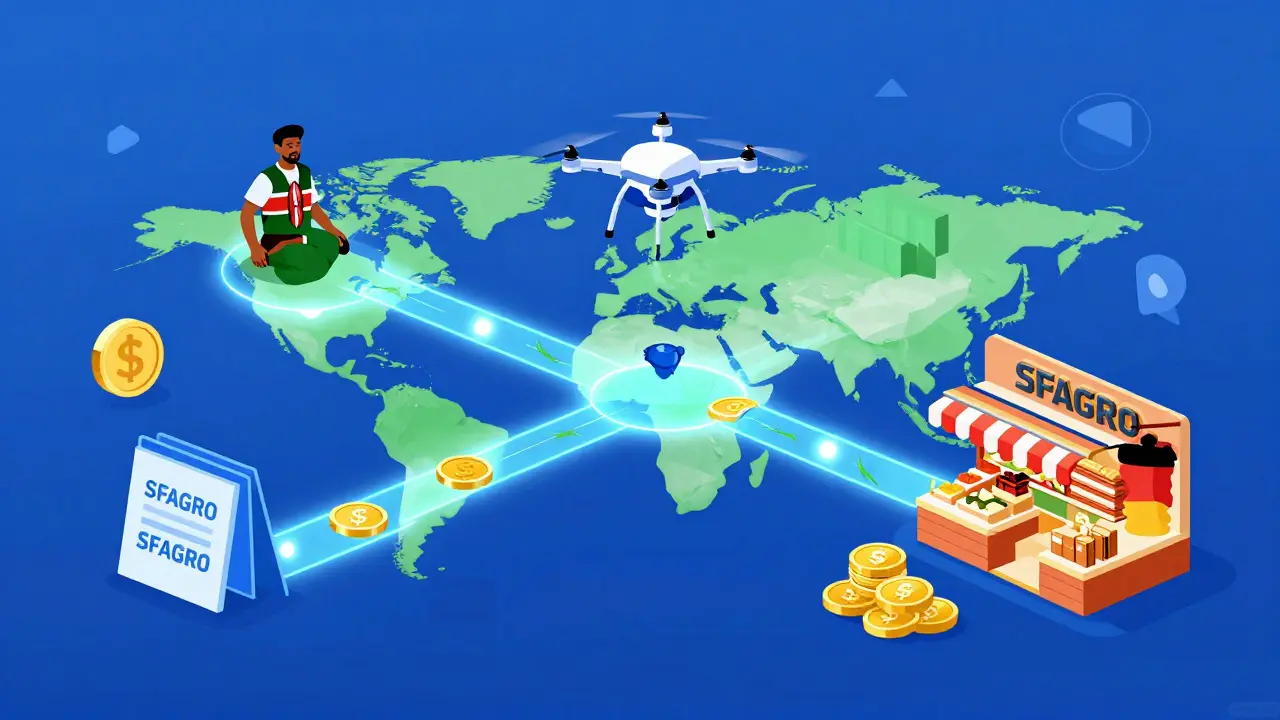
Launched in 2021, SFAGRO isn’t trying to replace banks or disrupt social media. It’s trying to cut out the middlemen who take a big slice of the profit when a farmer sells their crops. Imagine a farmer in Kenya or Brazil selling maize directly to a buyer in Germany - no brokers, no delayed payments, no hidden fees. That’s the promise of SFAGRO.
What Exactly Is SFAGRO?
SFAGRO is a cryptocurrency built to serve the agricultural industry. It runs on two blockchains: Ethereum and Binance Smart Chain (BSC). This means it’s compatible with most major wallets and exchanges. The token is classified as a BEP20 token on BSC, which keeps transaction fees low and speeds up transfers. On Ethereum, it benefits from the network’s security and wide adoption.
There are exactly 50 million SFAGRO tokens in total - and according to its team, all 50 million are already in circulation. That’s unusual. Most tokens have a portion locked up for team members, investors, or future development. SFAGRO claims none are reserved. Every single token is out in the market.
As of February 12, 2026, SFAGRO trades at around $0.001246. Its market cap sits at $3.86 million. For context, that’s less than 0.1% the size of Bitcoin’s market cap. It’s a tiny player. But size isn’t everything - especially when you’re targeting a niche.
The Limited Sell Mechanism: How SFAGRO Tries to Stay Stable
Most crypto coins crash when people panic-sell. SFAGRO tries to stop that with something called the Limited Sell Mechanism.
Here’s how it works: if you own SFAGRO, you can’t sell more than 1% of your total holdings every 10 days. So if you have 10,000 SFAGRO, you can only sell 100 tokens every 10 days. After that, you have to wait another 10 days to sell more.
This isn’t a typical lock-up period. It’s a slow drip. The idea is simple - prevent sudden dumps that crash the price. It forces holders to think long-term. If you’re buying SFAGRO, you’re not looking to flip it in a week. You’re betting on the future of farming.
On paper, it makes sense. In practice? It’s controversial. Some investors hate it. They say it traps their money. If the market crashes and you need cash fast, you’re stuck. Others see it as a smart way to reduce volatility in a space that’s usually wild.
How SFAGRO Works in Real Life
Here’s where SFAGRO moves beyond theory.
Let’s say a smallholder farmer in Indonesia grows organic rice. Traditionally, they sell to a local collector, who sells to a wholesaler, who sells to an exporter, who sells to a supermarket. Each step adds cost, delays payment, and takes profit.
With SFAGRO, the farmer can:
- List their harvest on the SFAGRO platform as an NFT (a digital certificate of ownership)
- Accept payment directly in SFAGRO tokens from buyers overseas
- Use smart contracts to automatically release payment once the rice is delivered and verified
- Stake their SFAGRO tokens to earn rewards - essentially getting paid just for holding the coin
No middlemen. No bank wires. No 60-day payment delays. The whole transaction is recorded on the blockchain - permanent, public, and tamper-proof.
That’s not just convenient. For farmers in underbanked regions, it’s life-changing.
Staking, Governance, and NFTs
SFAGRO isn’t just a payment tool. It’s a whole ecosystem.
Staking: You can lock your SFAGRO tokens in a wallet to help secure the network. In return, you earn more SFAGRO as rewards. The system uses Proof of Stake (PoS), which means it doesn’t burn electricity like Bitcoin mining. That fits its green, sustainable mission.
Governance: Token holders can vote on key decisions - like which new farming regions to expand into, what features to build next, or how to spend the project’s treasury. The more SFAGRO you hold, the more voting power you have. It’s not perfect, but it’s a step toward decentralization.
NFTs: Each batch of crops - say, 5 tons of coffee beans from a farm in Colombia - can be turned into a unique NFT. This NFT proves where the crop came from, how it was grown, and who owned it at every stage. Buyers (like organic food brands) can scan the NFT and see the full history. It’s like a blockchain-based food passport.
Price History and Predictions
SFAGRO’s price tells a wild story.
Its all-time high was $0.406633 - back in 2022. That’s over 79% below where it is now. In just two years, it lost more than 99% of its peak value. That’s not normal market correction. That’s a collapse.
Some blame rumors of a "rug pull" - where developers disappear with investor funds. While there’s no official proof, the project’s low trading volume and lack of transparent team info have fueled suspicion. CoinPaprika reports daily volume as low as $745. That’s less than a small Bitcoin trade.
But here’s the twist. Price predictions say SFAGRO could rebound. CoinCodex forecasts it could hit $0.002814 by the end of 2026 - a 136% increase from today. By 2040, some models suggest it could reach $0.006265. That’s a 425% gain.
Those numbers sound tempting. But they’re based on assumptions: adoption grows, liquidity improves, trust returns. None of that is guaranteed.
Where You Can Buy SFAGRO
Despite its small size, SFAGRO is listed on some major exchanges:
- Binance
- Crypto.com
- HTX (formerly Huobi)
- Coinbase international platforms
You can buy it with USDT, BNB, or ETH. But be warned: low trading volume means big price swings. Buying $100 worth might move the price 5% in one direction. Selling the same amount could crash it. It’s not for casual investors.
Is SFAGRO Safe?
There are two sides to this.
On the positive side: it uses a secure PoS system. Smart contracts are audited (according to their site). The blockchain itself is immutable - once a transaction is recorded, it can’t be erased.
On the negative side: the team is anonymous. No LinkedIn profiles. No public interviews. No clear roadmap updates since 2024. The website (sfagro.club) looks professional, but there’s no verifiable history of development activity.
And then there’s the regulatory risk. No country has officially approved SFAGRO. If the U.S. SEC or EU regulators decide it’s a security - not a utility token - it could be banned. That would kill its value overnight.
There’s also the risk of being forgotten. There are dozens of "agri-blockchain" projects. Most fade away. SFAGRO has survived four years. That’s longer than most. But survival doesn’t mean success.
Who Is SFAGRO For?
Not everyone. SFAGRO is for:
- Investors who believe in blockchain’s role in sustainable food systems
- Farmers or agribusinesses looking for direct digital payment options
- People who want to support eco-friendly tech with real-world impact
- Speculators who are okay with high risk and low liquidity
It’s NOT for:
- People looking for quick profits
- Those who want a stable, mainstream crypto
- Anyone who doesn’t understand blockchain basics
If you’re curious, start small. Buy $20 worth. See how the platform works. Watch the price. Don’t bet your rent on it.
What’s Next for SFAGRO?
The team says they’re working on a major upgrade for 2026 - aimed at making transactions faster and adding new NFT features for livestock tracking and carbon credits. They also plan to host more AMAs and partner with agricultural cooperatives in Southeast Asia and Latin America.
But without a public team, verified audits, or clear progress reports, it’s hard to know if these plans are real. Or just marketing.
The real test? Will a farmer in Ghana start using SFAGRO to sell her cocoa? Will a grocery chain in Germany pay for her beans in SFAGRO tokens? If yes - then this isn’t just crypto. It’s change.
For now, SFAGRO remains a bet - on technology, on farmers, and on the idea that food systems can be fairer. Whether that bet pays off? Only time - and adoption - will tell.
Is SFAGRO a scam?
There’s no confirmed evidence that SFAGRO is a scam, but there are serious red flags. The team is anonymous, trading volume is extremely low, and rumors of a rug pull have circulated since 2023. The Limited Sell Mechanism and blockchain use are technically sound, but without transparency or verified development updates, trust is hard to earn. Treat it as high-risk speculation, not a safe investment.
Can I use SFAGRO to pay for food or farming supplies?
Not directly - not yet. SFAGRO isn’t accepted at grocery stores or farm supply shops. But the platform allows farmers to sell crops directly to buyers using SFAGRO as payment. If you’re part of a cooperative or agri-business that uses the SFAGRO ecosystem, you can receive and spend it within that network. Broader adoption is still in early stages.
Why does SFAGRO have such a low trading volume?
Low trading volume means few people are actively buying or selling SFAGRO. This is common for niche tokens with limited awareness. The Limited Sell Mechanism also reduces liquidity - holders can’t sell large amounts quickly. Combined with low marketing and no major exchange listings (like Kraken or KuCoin), it’s hard for SFAGRO to attract serious traders.
Is SFAGRO better than other agricultural crypto projects?
SFAGRO is one of the few agricultural tokens with listings on major exchanges like Binance and Crypto.com. Its Limited Sell Mechanism is unique, and its NFT integration for crop tracking is well-designed. But projects like AgriChain and FarmCoin have stronger community backing and clearer roadmaps. SFAGRO leads in technical structure but lags in trust and adoption.
Can I stake SFAGRO to earn passive income?
Yes. SFAGRO uses a Proof of Stake system. You can stake your tokens through the official wallet or supported platforms to earn additional SFAGRO as rewards. Rates vary based on network activity, but typically range between 5% to 12% annually. However, remember that staking doesn’t protect you from price drops - if SFAGRO loses value, your rewards won’t make up for it.
What’s the difference between SFAGRO and Bitcoin?
Bitcoin is a general-purpose digital currency with no real-world use case beyond being a store of value or payment method. SFAGRO is built for one specific industry: agriculture. It uses smart contracts to automate farm payments, NFTs to track crops, and staking to reward sustainable practices. Bitcoin is global and decentralized. SFAGRO is niche and mission-driven.
Is SFAGRO environmentally friendly?
Yes, compared to Bitcoin. SFAGRO uses Proof of Stake (PoS), which consumes minimal energy - less than a home lightbulb per year. Bitcoin uses Proof of Work (PoW), which needs massive computing power and electricity. SFAGRO’s eco-friendly design aligns with its mission to support sustainable farming.
Can I buy SFAGRO on Coinbase?
Yes - but only on Coinbase’s international platforms, not the U.S. version. You’ll need to use Coinbase’s global exchange service, which may require a different account setup. Always verify the token symbol (SFAGRO) and contract address before buying to avoid scams.
What happens if SFAGRO’s team disappears?
The blockchain itself would keep running - smart contracts and token transfers would still work. But updates, new features, and exchange listings would stop. Without a team, the project would become a dead token. The Limited Sell Mechanism would still apply, but no one would maintain the website, wallet, or community. It would survive as a ledger, not a living project.
Should I invest in SFAGRO?
Only if you understand the risks. SFAGRO has potential - it solves real problems in farming. But it’s extremely speculative. Market cap is tiny, liquidity is low, and trust is fragile. If you’re okay with losing your entire investment, and you believe in agri-blockchain, then a small position might be worth exploring. Never invest more than you can afford to lose.


Author
Ronan Caverly
I'm a blockchain analyst and market strategist bridging crypto and equities. I research protocols, decode tokenomics, and track exchange flows to spot risk and opportunity. I invest privately and advise fintech teams on go-to-market and compliance-aware growth. I also publish weekly insights to help retail and funds navigate digital asset cycles.