

When you hear about a new crypto coin, especially one tied to gaming, it’s easy to wonder: is this just another hype cycle, or does it actually solve a real problem? Sonic SVM (SONIC) isn’t just another token trying to ride the blockchain gaming wave-it’s built from the ground up to fix how games and apps run on blockchains. Launched in early 2024, it’s the first ever Sonic SVM a blockchain platform built on Solana’s Virtual Machine (SVM) designed specifically for high-speed, low-cost decentralized gaming and social applications. Unlike other tokens that tack on a game or a wallet, Sonic SVM rewrites the rules of what a blockchain can do for interactive experiences.
How Sonic SVM Works: More Than Just Another Layer
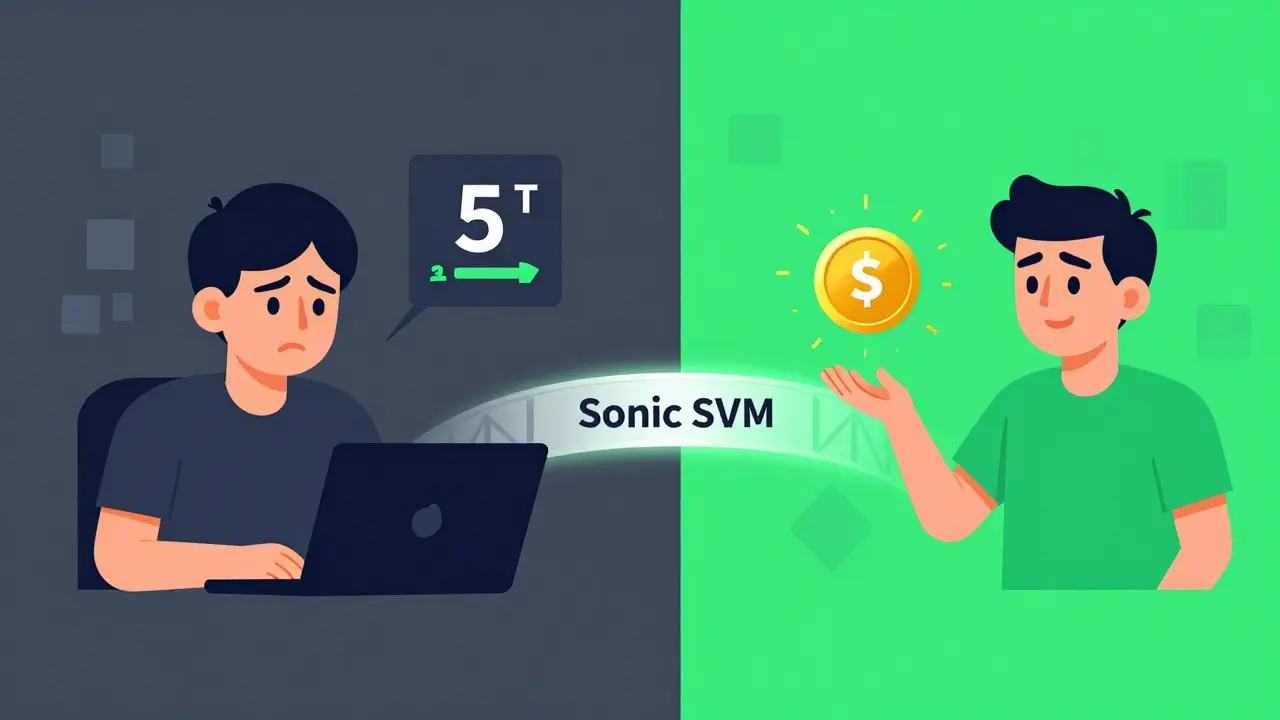
Most blockchain games struggle with slow transactions, high fees, and clunky user experiences. Sonic SVM cuts through that noise by running directly on Solana’s existing infrastructure-but with a twist. It uses something called Sonic HyperGrid a proprietary optimistic rollup framework that boosts Solana’s native speed while keeping its security intact. Think of it like adding a turbocharger to a race car without changing the engine. Solana already handles 65,000 transactions per second. Sonic HyperGrid makes gaming apps on top of it even faster, with near-instant confirmations and fees so low they’re practically free.
This isn’t theoretical. Real games built on Sonic SVM are already live, letting players buy, sell, and trade in-game items without waiting minutes for a transaction to clear. In traditional blockchains, a simple NFT trade might cost $5 and take 30 seconds. On Sonic SVM, it costs less than a penny and happens in under a second. That’s not an improvement-it’s a revolution for gameplay.
Why SONIC Token Matters
The SONIC token isn’t just a currency. It’s the fuel for the whole system. You need it to pay for transactions, stake to earn rewards, and even vote on future upgrades. As of October 2025, there are 6,101,614 SONIC tokens in circulation, with a market cap around $64.8 million. That might sound small compared to Bitcoin or Ethereum, but in the niche world of blockchain gaming, it’s a strong position. SONIC trades at roughly $0.1798, and over the last 24 hours, it rose 3.02%-outpacing the broader crypto market.
What sets SONIC apart is its dual utility. First, you can stake your tokens and earn up to 4% APY. That’s competitive with top DeFi platforms and far better than most gaming tokens, which offer little to no yield. Second, SONIC is used to power SonicX the world’s first Web3 TikTok-style social platform built into the Sonic SVM ecosystem. Imagine posting a clip of your in-game win, earning tokens from views, and tipping players directly-all without leaving the app. That’s SonicX. No centralized platform. No ads. Just pure blockchain-powered social interaction.

Where You Can Buy and Use SONIC
You can buy SONIC on 38 exchanges, including major ones like Bitget, ByBit, BigONE, and KCEX. The most traded pair is SONIC/USDT, which accounts for over 97% of all trading volume. On October 3, 2025, that pair alone hit $23.4 million in daily volume. That’s not a flash in the pan-it’s consistent liquidity. But here’s the catch: if you’re used to trading on user-friendly apps like Coinbase or Coins.ph, you won’t find SONIC there yet. That’s a real barrier for casual investors. The team knows this and is actively working to get listed on more retail-friendly platforms.
For users, the process is straightforward: get a Solana-compatible wallet like Phantom or Solflare, buy USDT on an exchange, swap it for SONIC, and start staking or using apps. Developers can build on Sonic SVM using open-source tools from Mirror World Universe’s GitHub repo. The documentation is clear, and the community is active. No need to learn a new programming language-just use the same tools you’d use on Solana, but with better performance for games.
What Makes Sonic SVM Different
There are dozens of blockchain gaming projects out there. So why does Sonic SVM stand out? Three things:
- It’s the first SVM chain on Solana. No other project has built a full rollup optimized for gaming on Solana’s VM. That gives it a technical edge.
- SonicX is a game-changer. Integrating social media natively into a blockchain ecosystem is something even Ethereum-based projects haven’t pulled off at scale. SonicX could bring in millions of non-crypto users who just want to share clips and earn rewards.
- It’s backed by real funding. In 2025, the community approved a $150 million token issuance to expand into the U.S. market. That’s not a rumor-it’s a vote. And it shows serious institutional confidence.
Compare that to other gaming tokens. Many rely on hype, fake volume, or one-off partnerships. Sonic SVM has real infrastructure, real users, and real revenue from transaction fees and staking. It’s not perfect-there’s still a learning curve for newcomers-but it’s the only one built to last.
Challenges and Risks
No project is without flaws. Sonic SVM’s biggest hurdle is accessibility. If you’re not already deep into crypto, finding where to buy SONIC can be frustrating. The lack of support on platforms like Coins.ph or Coinbase means it’s still mostly for crypto-savvy users. That limits its growth potential in the short term.
Also, the complexity of Sonic HyperGrid might scare off smaller developers. Building on it requires a solid grasp of Solana’s architecture. While the tools are there, the barrier to entry isn’t zero. The team is working on simplified SDKs, but it’s still early.
And then there’s regulation. SonicX, with its social features, could attract scrutiny from financial regulators, especially if user-generated content leads to token rewards. That’s a long-term risk, but one the team is clearly monitoring.
What’s Next for Sonic SVM
The roadmap is clear: expand SonicX, onboard more game studios, and push into mainstream gaming markets. By late 2026, they aim to have at least 10 major game titles live on the platform. They’re also planning to integrate with mobile wallets, making it easier to use SONIC on phones without needing a desktop wallet.
Their goal isn’t just to be another blockchain. It’s to become the default platform for Web3 gaming and social interaction. If they pull it off, Sonic SVM could be the bridge between casual gamers and decentralized apps.
Is Sonic SVM (SONIC) a good investment?
Whether SONIC is a good investment depends on your goals. If you’re looking for short-term gains, it’s volatile like most crypto assets. But if you believe in blockchain gaming growing into a mainstream industry, SONIC has strong fundamentals: real usage, low fees, staking rewards, and a $150 million expansion fund. It’s not a guaranteed win, but it’s one of the few gaming tokens with both technology and funding to back its vision.
Can I stake SONIC tokens?
Yes. Staking SONIC is one of its key features. You can earn up to 4% annual percentage yield (APY) by locking your tokens in the official staking portal. Rewards are distributed automatically every few days. The process is simple: connect your Solana wallet, select how much to stake, and confirm. No technical skills needed. It’s one of the highest yields in the blockchain gaming space.
What is SonicX?
SonicX is the world’s first Web3 social media layer built into the Sonic SVM ecosystem. Think of it like TikTok or Instagram, but powered entirely by blockchain. Users can post videos of their gameplay, earn SONIC tokens for views and likes, tip other creators, and even monetize their content without any middlemen. It’s designed to onboard non-crypto users by making blockchain interaction feel natural and fun.
Where can I buy SONIC tokens?
You can buy SONIC on 38 exchanges, including Bitget, ByBit, BigONE, and KCEX. The most popular trading pair is SONIC/USDT. To buy, you’ll need a Solana-compatible wallet like Phantom or Solflare. First, purchase USDT on a major exchange, then transfer it to one of the supported platforms and swap for SONIC. It’s not available on Coinbase, Kraken, or Coins.ph yet, which limits accessibility for beginners.
How does Sonic SVM compare to Ethereum-based gaming chains?
Sonic SVM is faster and cheaper than most Ethereum-based gaming chains. Ethereum Layer 2s like Polygon or Arbitrum still have transaction fees between $0.10 and $2.00. Sonic SVM’s fees are under $0.001. Transaction speed is also much better: Sonic SVM confirms in under a second, while Ethereum L2s can take 3-10 seconds. For gaming, where timing matters, that difference is huge. Sonic SVM is built for performance, not just compatibility.


Author
Ronan Caverly
I'm a blockchain analyst and market strategist bridging crypto and equities. I research protocols, decode tokenomics, and track exchange flows to spot risk and opportunity. I invest privately and advise fintech teams on go-to-market and compliance-aware growth. I also publish weekly insights to help retail and funds navigate digital asset cycles.