
Have you ever wondered why a blockchain needs two versions of its own token? It’s a common question in the world of decentralized finance, and Wrapped Bera (WBERA) is a cryptocurrency token that operates on the Berachain blockchain platform, representing a wrapped or tokenized version of the native BERA token ecosystem. If you’ve been tracking the rise of Berachain, you’ve likely seen WBERA popping up on exchanges and dashboards. But what exactly does it do, and why should you care?
To understand WBERA, we first need to look at the engine driving it: Berachain. This isn’t your standard Ethereum clone. Berachain bills itself as the first blockchain powered by Proof-of-Liquidity (PoL). Instead of just staking coins to secure the network like Bitcoin or Ethereum, PoL rewards users for providing liquidity to the ecosystem. This creates a unique economic loop where the health of the network depends directly on how much capital is locked into its decentralized applications.
The Difference Between BERA and WBERA
Here is where things get interesting. You might be thinking, “If I have BERA, why do I need WBERA?” The short answer is utility versus compatibility. The native $BERA token serves as the gas token for transaction fees on the Berachain network. When you pay for a transaction, that BERA is burned-permanently removed from circulation. It also acts as the primary staking token for validators.
Wrapped Bera (WBERA), on the other hand, is an ERC-20 compatible representation of BERA. Think of it like putting cash in a safety deposit box and getting a receipt. You can trade that receipt easily without moving the actual cash. WBERA allows BERA to interact seamlessly with decentralized finance (DeFi) protocols, lending platforms, and automated market makers (AMMs) within the Berachain ecosystem. Without wrapping, using BERA in complex financial smart contracts would be clunky and inefficient.
Tokenomics and Supply Mechanics
Let’s talk numbers, because in crypto, supply dynamics dictate value. As of mid-2026, the circulating supply of WBERA sits at approximately 20.51 to 20.52 million tokens. This figure is crucial because it indicates a relatively fixed or semi-fixed supply structure compared to some inflationary assets.
The total supply tracked by platforms like CoinTracker is roughly 20,516,695 tokens. What makes this tokenomics model attractive to many investors is the deflationary pressure built into the Berachain architecture. Since native BERA is burned when used for gas fees, and WBERA represents claims on this underlying asset, the overall demand for liquidity drives up the scarcity of the remaining tokens. There are no massive unlocks scheduled that would suddenly flood the market with millions of new tokens, which helps stabilize price expectations for long-term holders.
| Metric | Value / Detail |
|---|---|
| Circulating Supply | ~20.51 Million WBERA |
| Underlying Blockchain | Berachain (Proof-of-Liquidity) |
| Primary Function | DeFi Integration & Liquidity Provision |
| Holder Count | ~50,040 Addresses |
| All-Time High (ATH) | $9.13 (Recorded on Binance) |
Price Volatility and Market Data Discrepancies
If you check the price of WBERA right now, you might see something confusing. On one screen, it says $2.80. On another, it says $0.68. Which one is right? Both, and neither. This fragmentation is a hallmark of emerging Layer 1 ecosystems.
Data from early 2026 shows significant variance across aggregators. Binance reported WBERA trading around $2.80 with a market cap near $57.5 million. Meanwhile, aggregators like CoinMarketCap and CoinGecko showed prices closer to $0.68 and $0.67 respectively. Why the gap?
This usually happens due to three factors:
- Exchange Segmentation: Different exchanges may be listing different pairs or derivatives under the same ticker symbol.
- Liquidity Depth: Smaller decentralized exchanges (DEXs) within the Berachain ecosystem, such as Beraswap or Kodiak V3, may have lower liquidity, causing wider spreads and different pricing algorithms.
- Data Latency: Aggregators pull data at different intervals. In a volatile market, a 10-minute delay can mean a 10% price difference.
For traders, this means you must verify the price on the specific exchange where you intend to buy or sell. Relying solely on an aggregator can lead to slippage surprises. The all-time high of $9.13 demonstrates the token’s potential upside, but also its volatility. A drop from ATH to current levels suggests that while the technology is promising, market sentiment shifts rapidly.
Where Can You Trade WBERA?
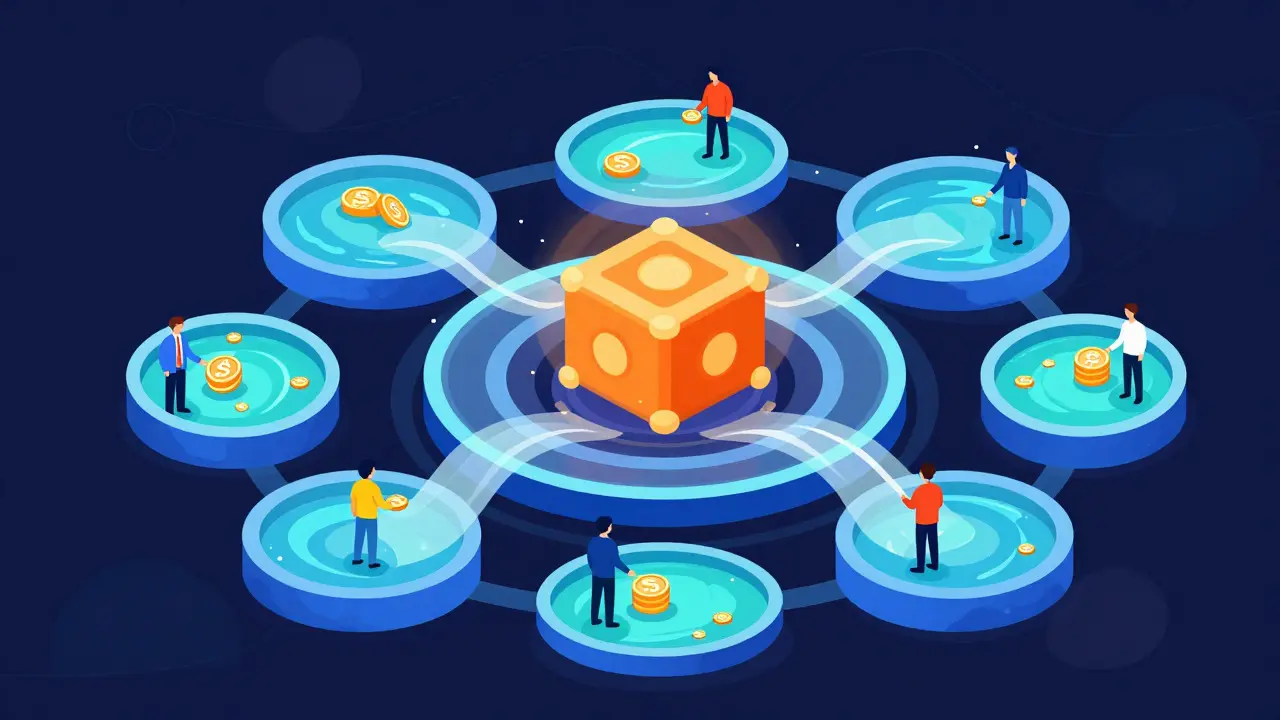
Accessing WBERA requires navigating both centralized and decentralized venues. Because Berachain is a newer ecosystem, not every major exchange supports it natively yet. However, activity is concentrated on a few key platforms:
- Binance: Offers high liquidity and volume, making it suitable for larger trades with minimal slippage.
- Beraswap: The native decentralized exchange on Berachain. Ideal for swapping WBERA for other Berachain-native tokens.
- Kodiak V3: An advanced AMM on the network known for efficient routing and lower fees for large swaps.
- Crypto.com: Provides retail access, though volumes may be lower compared to specialized crypto exchanges.
When trading on DEXs like Beraswap, remember that you are interacting directly with liquidity pools. This means you earn a portion of the trading fees if you provide liquidity, but you also face impermanent loss risks if the price of WBERA diverges significantly from its paired asset.
Why Proof-of-Liquidity Matters for WBERA Holders
The real value proposition of holding WBERA isn’t just speculation; it’s participation in the Proof-of-Liquidity consensus mechanism. In traditional Proof-of-Stake models, you lock up tokens to validate blocks. In PoL, you lock up tokens to provide liquidity to the ecosystem’s DeFi apps.
Stakers who deposit BERA (or use WBERA in compatible vaults) earn a share of the transaction fees generated by the network. This creates a yield-bearing asset. Unlike stablecoins that offer low yields, WBERA offers exposure to the growth of the entire Berachain economy. As more developers build on Berachain, more transactions occur, more fees are generated, and more rewards flow back to liquidity providers.
This model aligns incentives perfectly. Users want deep liquidity to trade efficiently. Developers want active markets to attract users. Validators want security. WBERA sits at the intersection of these needs, acting as the fuel that keeps the DeFi engine running smoothly.
Risks and Considerations Before Buying
No crypto investment is without risk. Here is what you need to watch out for with WBERA:
- Smart Contract Risk: WBERA is a smart contract token. While audits are standard, bugs can exist. Always check the latest audit reports from firms like CertiK or OpenZeppelin if available.
- Regulatory Uncertainty: As regulations evolve globally, tokens tied to specific blockchains may face scrutiny. Keep an eye on legal developments in your jurisdiction.
- Ecosystem Dependency: WBERA’s value is tightly coupled with Berachain’s success. If the broader ecosystem fails to attract developers or users, demand for WBERA will dry up.
- Price Fragmentation: As mentioned, price discrepancies between exchanges can lead to losses if you aren’t careful about where you execute trades.
Despite these risks, the distributed ownership base of over 50,000 holders suggests strong community interest. This level of distribution reduces the risk of a single whale manipulating the price drastically, although large players still hold significant influence.
Conclusion: Is WBERA Worth Your Attention?
Wrapped Bera is more than just a tradable asset; it is a critical component of the Berachain infrastructure. By enabling seamless interaction between the native BERA token and the broader DeFi landscape, WBERA facilitates the Proof-of-Liquidity model that sets Berachain apart from competitors.
If you believe in the future of liquidity-centric blockchains, WBERA offers a direct way to participate. Just remember to do your own research, verify prices on your chosen exchange, and understand the mechanics of staking and wrapping before committing funds. The crypto market moves fast, and staying informed is your best defense against volatility.
What is the main difference between BERA and WBERA?
BERA is the native gas token used for transaction fees and staking on the Berachain network. WBERA is a wrapped version of BERA designed for easier integration with decentralized finance (DeFi) protocols, lending platforms, and automated market makers. Think of BERA as cash and WBERA as a bank receipt that can be traded more easily in financial systems.
Why are WBERA prices different on various exchanges?
Price discrepancies arise due to varying liquidity depths, data collection timing, and exchange segmentation. Centralized exchanges like Binance may show different prices than decentralized aggregators like CoinGecko or DEXs like Beraswap. Always check the live price on the specific platform where you plan to trade to avoid slippage.
How does Proof-of-Liquidity benefit WBERA holders?
Proof-of-Liquidity rewards users for providing liquidity to the ecosystem rather than just validating blocks. Holders who stake or provide liquidity with WBERA/Bera can earn a share of the transaction fees generated by the network, creating a yield-bearing opportunity tied to the ecosystem's growth.
What is the circulating supply of WBERA?
As of mid-2026, the circulating supply of WBERA is approximately 20.51 to 20.52 million tokens. This relatively fixed supply, combined with the burning of native BERA for gas fees, creates deflationary pressure that can support token value over time.
Where can I buy or trade Wrapped Bera?
WBERA is traded on several platforms including Binance, Crypto.com, and decentralized exchanges native to the Berachain ecosystem such as Beraswap and Kodiak V3. Availability may vary by region, so check local exchange listings.
Author
Ronan Caverly
I'm a blockchain analyst and market strategist bridging crypto and equities. I research protocols, decode tokenomics, and track exchange flows to spot risk and opportunity. I invest privately and advise fintech teams on go-to-market and compliance-aware growth. I also publish weekly insights to help retail and funds navigate digital asset cycles.