
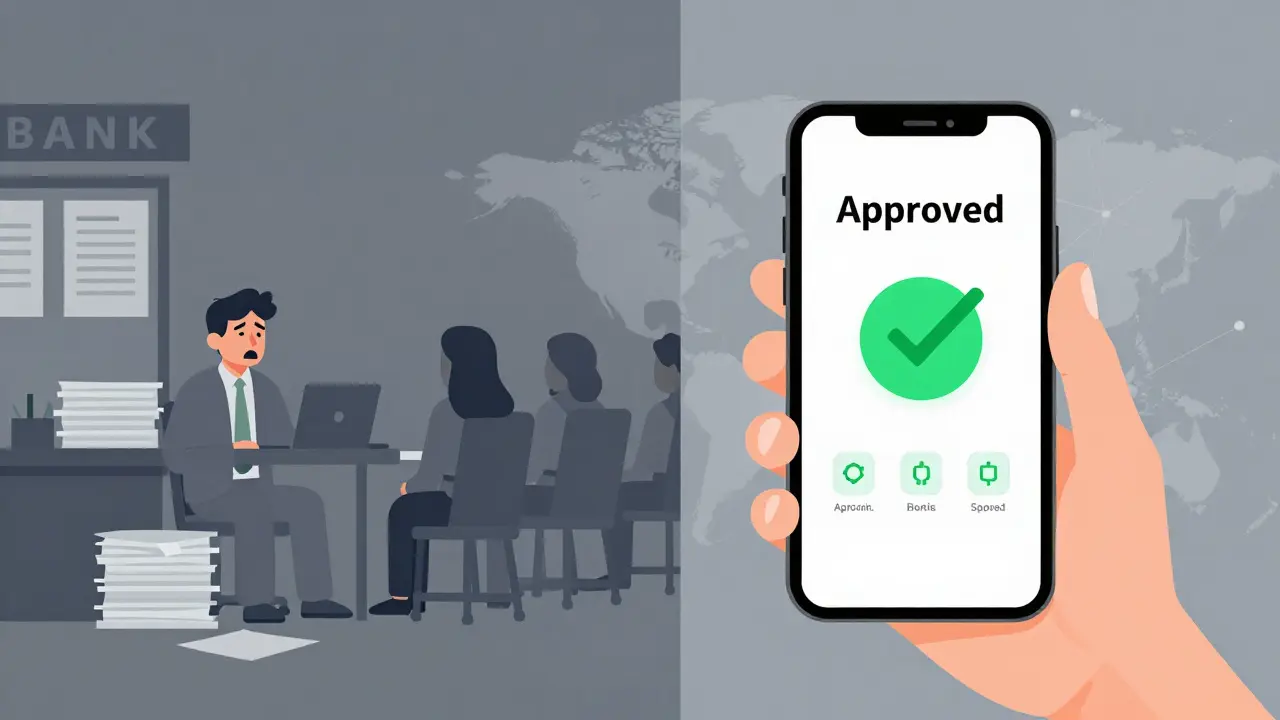
Imagine needing $50,000 for a business opportunity. In the old world, you’d fill out paperwork, wait weeks for a credit check, and hope a banker decides you’re worthy. Today, you can secure that capital in minutes, without ever speaking to a human. This isn’t science fiction; it’s the reality of DeFi lending, a decentralized financial system built on blockchain technology that allows users to borrow and lend assets without intermediaries like banks. As we move through 2026, the gap between these two worlds is widening, and understanding why matters more than ever.
The shift isn't just about speed. It's about control, access, and the very structure of how money moves. While traditional banking relies on trust in institutions, DeFi relies on trust in code. Let’s break down exactly what this means for your wallet, your time, and your financial freedom.
No More Gatekeepers: The Power of Permissionless Access
The most immediate difference you’ll notice when stepping into decentralized finance is the absence of gatekeepers. Traditional banks act as custodians. They hold your money, they decide who gets loans, and they set the rules. If you don’t have a credit score, or if you live in an underserved region, you are often locked out entirely.
In the DeFi ecosystem, the only requirement is an internet connection and a digital wallet. There are no branch hours, no loan officers, and no judgment based on your employment history. This concept is known as permissionless access, the ability for anyone to use a service without requiring approval from a central authority. Whether you are in Auckland, Nairobi, or Buenos Aires, the protocol treats you exactly the same. This level of inclusivity is something traditional finance has struggled to achieve despite decades of regulatory pressure.
However, this openness comes with a trade-off. Because there is no one to vouch for you, the system requires collateral. You cannot simply promise to pay back a loan; you must lock up assets that are worth more than the loan itself. This leads us to the core mechanic of DeFi risk management.
Collateral vs. Credit Scores: How Risk Is Managed
In traditional banking, your credit score is king. Banks assess your past behavior to predict your future reliability. In DeFi, credit scores do not exist. Instead, the system uses over-collateralization, a lending mechanism where borrowers must deposit assets worth significantly more than the loan amount to secure the debt.
Here is how it works in practice: If you want to borrow $1,000 worth of stablecoins, you might need to lock up $1,500 worth of Ethereum or Bitcoin as collateral. Smart contracts monitor the value of your collateral in real-time. If the price of your crypto drops too close to the loan value, the contract automatically liquidates your collateral to repay the loan. This process is automated, transparent, and instant.
This approach solves the problem of asymmetric information without needing a middleman. It shifts the risk from the lender (who could lose their money if you default) to the borrower (who loses their collateral if the market moves against them). For many users, this feels fairer. You are responsible for your own risk, rather than relying on a bank’s subjective assessment.
Speed and Automation: The Role of Smart Contracts
Time is money, and DeFi wins hands down on speed. Traditional loan approvals can take days or even weeks. DeFi transactions happen in seconds. This efficiency is driven by smart contracts, self-executing contracts with the terms of the agreement directly written into code on the blockchain.
Think of a smart contract as a vending machine. You put in the right input (collateral), and you get the output (loan) immediately. No negotiation, no paperwork, no delays. The code enforces the rules impartially. This automation reduces operational costs, which often translates to lower fees for users compared to the hidden costs and administrative fees of traditional banks.
Moreover, these contracts are open-source. Anyone can audit the code to see exactly how interest rates are calculated and how liquidations work. This transparency is a stark contrast to the opaque algorithms used by traditional lenders to determine your interest rate.
Yield Opportunities: Earning While You Wait
If you are looking at the supply side of lending, DeFi offers compelling incentives. In a traditional savings account, you might earn a fraction of a percent in interest. In DeFi, liquidity providers-the people who deposit funds into lending pools-can earn significantly higher yields. A study by the Bank for International Settlements highlighted that the "search for yield" is a primary driver for retail users entering DeFi lending pools.
These yields come from the interest paid by borrowers. But it doesn’t stop there. Many platforms offer additional rewards through governance tokens, allowing users to participate in the platform’s decision-making processes. This creates a flywheel effect where users are incentivized to keep their funds in the ecosystem, further stabilizing the lending markets.
| Feature | DeFi Lending | Traditional Loans |
|---|---|---|
| Access | Permissionless, global | Restricted, credit-score dependent |
| Speed | Seconds to minutes | Days to weeks |
| Collateral | Crypto assets (over-collateralized) | Real estate, income verification, or unsecured |
| Transparency | Public ledger, open-source code | Private records, proprietary algorithms |
| Control | User retains custody via wallet | Bank holds custody of funds |
| Interest Rates | Dynamic, market-driven | Fixed or variable, centrally set |
Interoperability: Money Legos
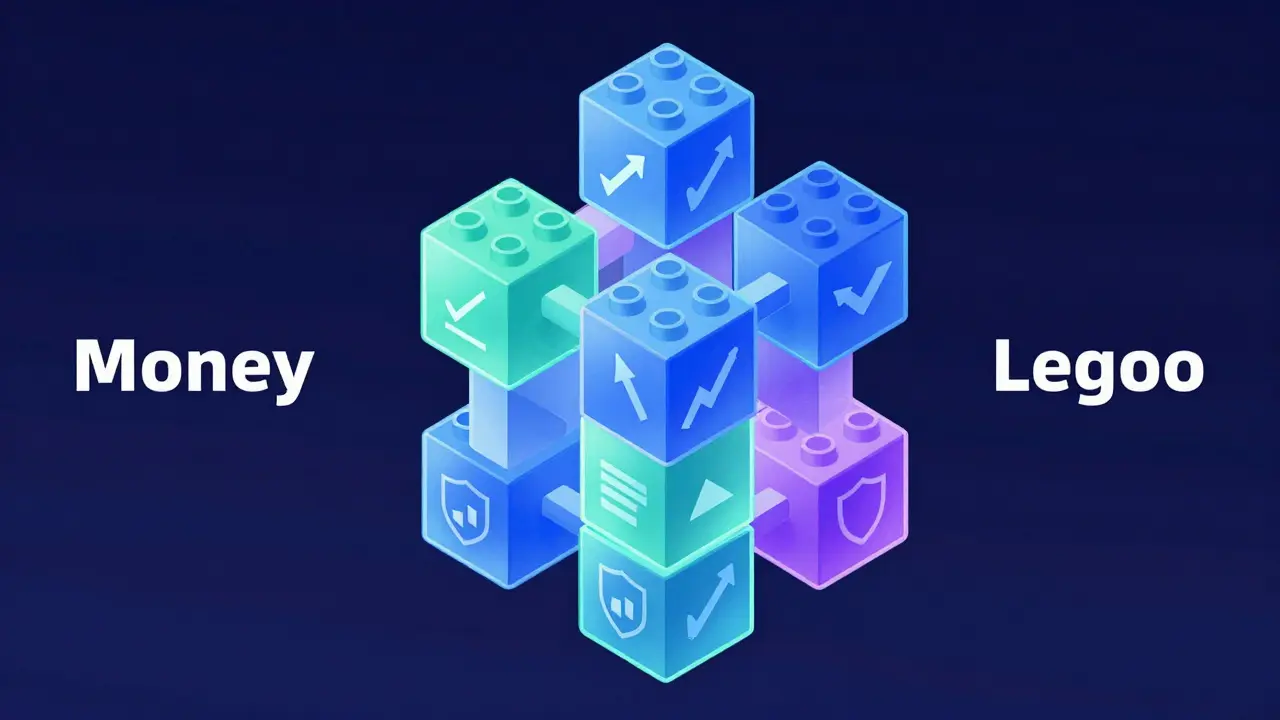
One of the most powerful aspects of DeFi is its composability, often referred to as "Money Legos." Different protocols can interact with each other seamlessly. For example, you can borrow assets from one platform and instantly use them as collateral on another, or provide liquidity to a trading pair. This flexibility allows for complex financial strategies that are impossible in the siloed environment of traditional banking.
Traditional banks operate in closed ecosystems. Your money in one bank rarely interacts directly with services from another without significant friction and fees. In DeFi, the infrastructure is shared. This innovation enables features like flash loans, which allow developers and traders to borrow millions of dollars without collateral, provided they repay the loan within the same transaction block. While advanced, these tools demonstrate the sheer versatility of the DeFi stack.

Risks and Considerations: It’s Not All Smooth Sailing
While the benefits are clear, DeFi is not without its challenges. The primary risk is volatility. Since loans are secured by crypto assets, a sudden drop in market prices can trigger liquidations, causing borrowers to lose their collateral quickly. This requires active monitoring or the use of insurance products, which are still emerging in the space.
Additionally, user error is a significant factor. In traditional banking, if you forget your password, you can call customer support. In DeFi, if you lose your private key or send funds to the wrong address, there is no recourse. The system is immutable. This places a high burden of responsibility on the user to manage security and understand the mechanics of the protocols they use.
Regulatory uncertainty also looms large. While traditional banks are heavily regulated and insured (e.g., FDIC coverage up to $250,000 in the US), DeFi operates in a legal gray area. Users do not have deposit insurance, meaning losses due to protocol hacks or exploits are borne entirely by the community. However, as the industry matures, regulatory frameworks are beginning to take shape, offering more clarity for institutional and retail participants alike.
Who Should Choose DeFi?
DeFi lending is ideal for individuals who prioritize autonomy, speed, and access to higher yields. It suits those who are comfortable managing their own keys and understanding basic blockchain concepts. If you are a tech-savvy investor looking to leverage your crypto holdings without selling them, or a borrower seeking quick, unopinionated capital, DeFi offers unparalleled advantages.
On the other hand, if you prefer simplicity, customer support, and protection against market volatility through insured deposits, traditional banking may still be the better fit. The key is to align your choice with your risk tolerance and technical comfort level. As we progress through 2026, hybrid models are emerging, bridging the gap between these two worlds, but for now, the distinction remains sharp.
Is DeFi lending safe?
DeFi lending carries different risks than traditional banking. While smart contracts reduce counterparty risk, users face smart contract bugs, hacking risks, and asset volatility. There is no deposit insurance, so you are responsible for securing your funds and understanding the protocol's mechanics.
Do I need a credit score for DeFi loans?
No, DeFi loans are non-custodial and permissionless. They rely on over-collateralization rather than credit checks. As long as you have sufficient crypto assets to lock as collateral, you can borrow regardless of your credit history.
What happens if my collateral value drops?
If the value of your collateral falls below a certain threshold (the liquidation price), the smart contract will automatically sell your collateral to repay the loan. To avoid this, you can add more collateral or repay part of the loan before reaching the liquidation point.
Are DeFi interest rates higher than bank rates?
Generally, yes. DeFi lending pools often offer higher yields for lenders due to the lack of intermediary overhead and the demand for liquidity. Borrowers may also find competitive rates, especially for short-term loans, though rates fluctuate dynamically based on market supply and demand.
Can I use DeFi for fiat currency loans?
Indirectly, yes. You can borrow stablecoins (crypto pegged to fiat currencies like the USD) from DeFi platforms. These can then be converted to fiat via exchanges or payment processors. However, you cannot typically borrow direct fiat from a pure DeFi protocol without involving off-ramp services.


Author
Ronan Caverly
I'm a blockchain analyst and market strategist bridging crypto and equities. I research protocols, decode tokenomics, and track exchange flows to spot risk and opportunity. I invest privately and advise fintech teams on go-to-market and compliance-aware growth. I also publish weekly insights to help retail and funds navigate digital asset cycles.