
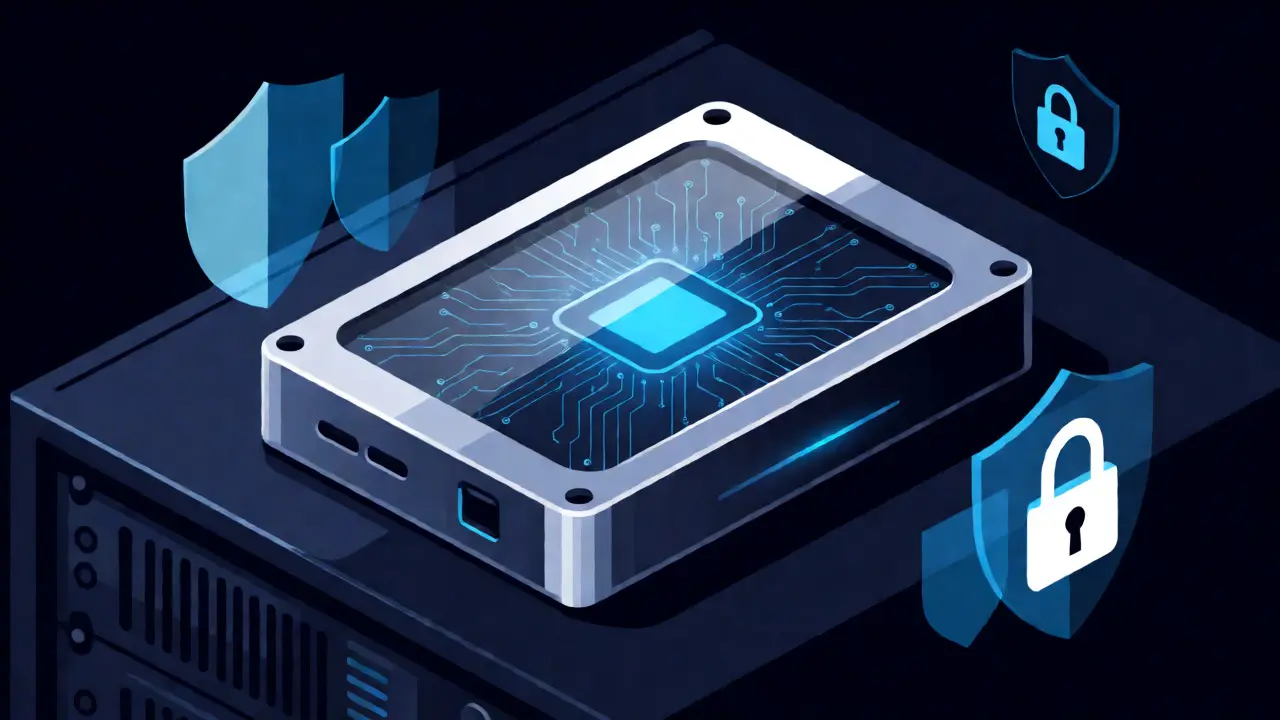
Imagine your company processes millions of card transactions daily. You have the best encryption algorithms, a secure data center, and rigorous access controls. But if your Hardware Security Module (a physical computing device that safeguards and manages digital keys for strong authentication and provides cryptoprocessing) lacks the right certifications, you might as well be storing credit card numbers in a shoebox under the bed. It’s not just about passing an audit; it’s about proving that your root of trust is unbreakable.
If you’re working in fintech, blockchain infrastructure, or enterprise IT, you’ve likely heard terms like PCI PTS, FIPS 140-2, and Common Criteria thrown around. They sound similar, but they serve different masters and protect against different threats. Confusing them can lead to failed audits, rejected vendor contracts, or worse, actual security breaches. This guide cuts through the jargon to explain exactly what these certifications mean, why they matter, and how to navigate the complex landscape of HSM compliance and certifications.
Why Certification Isn’t Just Paperwork
Think of an HSM certification like a UL listing on a fire extinguisher. The fact that it exists doesn’t help if the extinguisher is empty or broken. Similarly, an HSM certificate validates that the device meets specific physical and logical security standards at the time of testing. It assures buyers that the hardware won’t leak keys when someone tries to drill into it or probe its circuits with an electron microscope.
For organizations handling payment data, this isn’t optional. The Payment Card Industry (PCI) mandates that certain processes-like PIN translation, key generation, and tokenization-must occur within a certified environment. If you use a non-certified HSM for PIN processing, you are out of compliance with PCI PIN requirements, regardless of how "secure" your internal team thinks the setup is. This binary nature of compliance means there’s no partial credit. You’re either compliant, or you’re exposing your business to fines and liability.
The Big Two: PCI PTS HSM and FIPS Standards
Two standards dominate the conversation: PCI PTS HSM and NIST’s FIPS 140 series. While they overlap, their goals differ significantly.
PCI PTS HSM (Payment Card Industry PIN Transaction Security Hardware Security Module standard) is designed specifically for the payments industry. Published by the PCI Security Standards Council, version 3.0 remains the current benchmark. It focuses heavily on protecting sensitive authentication data, particularly PINs and cryptographic keys during transaction processing. If you handle cardholder data in a way that touches the PIN block, you need PCI PTS HSM approval.
On the other side, we have FIPS 140-2 and its successor FIPS 140-3 (Federal Information Processing Standards for cryptographic modules established by NIST). These are broader standards used by U.S. federal agencies and increasingly adopted by global enterprises. FIPS doesn’t care about your PIN blocks; it cares about the integrity of the cryptographic module itself. It tests whether the software and hardware correctly implement approved algorithms and resist attacks.
| Feature | PCI PTS HSM v3.0 | FIPS 140-2 / 140-3 | Common Criteria (EAL4+) |
|---|---|---|---|
| Primary Focus | Payment security & PIN protection | Cryptographic module integrity | Trust services & eIDAS compliance |
| Governing Body | PCI Security Standards Council | NIST (USA) | CCRA Signatories (Global) |
| Key Requirement | Tamper resistance for key storage | Approved algorithms & modes | Formal evaluation of design |
| Best For | ATMs, POS terminals, Acquirers | Govt, Defense, General Enterprise | Digital Signatures, EU Trust Services |
Understanding FIPS Levels: Why Level 3 Matters
FIPS isn’t a single pass/fail metric. It uses four levels of security assurance. Most enterprise-grade HSMs aim for Level 3 or higher because Level 1 and 2 offer minimal physical protection.
- Level 1: Basic software implementation. No physical security requirements. Think of this as a standard server running crypto software.
- Level 2: Requires tamper-evident packaging. If someone opens the case, you’ll see a sticker broken. Good for deterrence, bad for prevention.
- Level 3: Requires tamper-resistance. The device must actively resist penetration attempts. If someone tries to drill into it, the mechanism detects it and zeroizes (erases) the keys. This is the minimum bar for most financial institutions.
- Level 4: Environmental operation independence. The device protects keys even if exposed to extreme temperatures, humidity, or voltage fluctuations. Devices like the IBM 4769-001 achieve this highest tier.
Here’s the catch: many vendors claim "FIPS Certified," but don’t specify the level. Always check the NIST Cryptographic Module Validation Program (CMVP) list. A Level 2 module might be fine for signing emails, but it’s inadequate for protecting private keys worth millions in cryptocurrency custody.
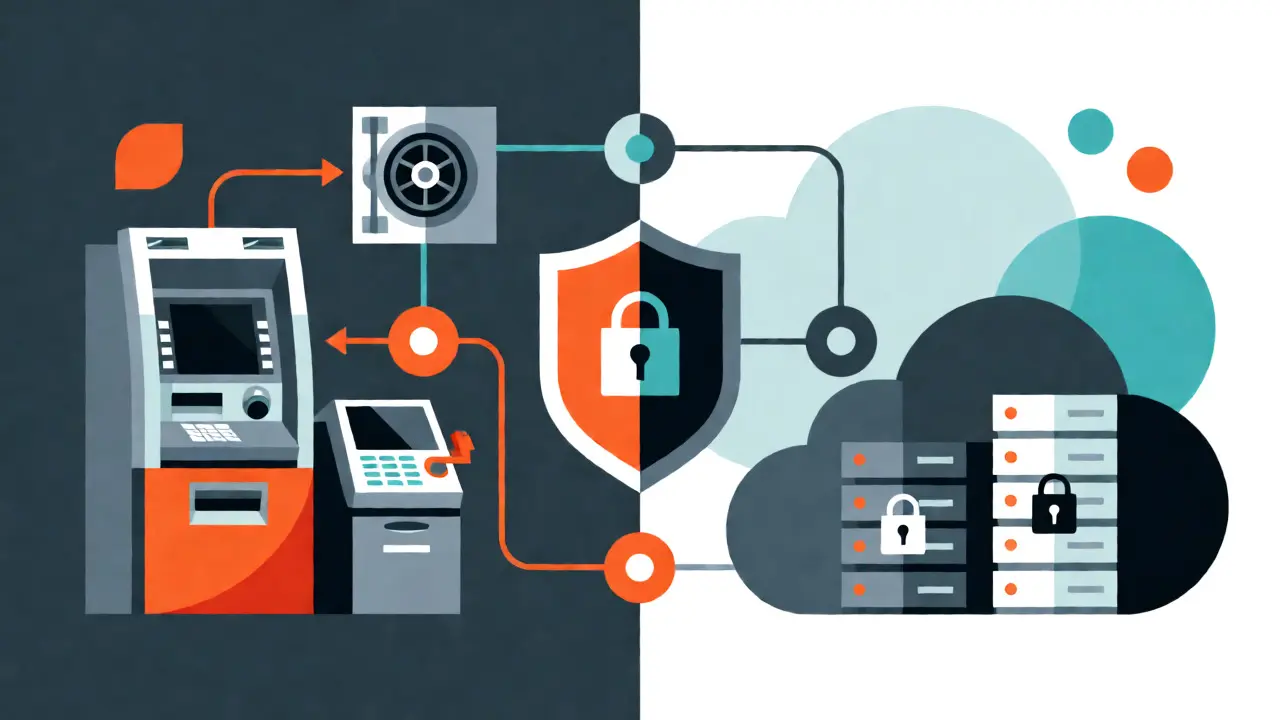
The Lifecycle Trap: Firmware and Customization
This is where things get messy for IT teams. Getting an HSM certified is one thing; keeping it certified is another. The moment you install unauthorized firmware or custom software, you risk breaking compliance.
According to PCI PTS guidelines, if you flash new firmware onto a certified HSM without verifying that the specific version is listed in the official approval database, your device is technically non-compliant. It doesn’t matter if the update fixed a critical bug. If that version number isn’t on the approved list, you’re offside until it gets validated.
Vendors often release urgent patches faster than the certification bodies can approve them. Bernard Foot, a strategy analyst in the field, points out that organizations have no choice here. You can’t say, "We know it’s not approved yet, but our engineers tested it." Auditors will reject that argument every time. To stay safe, you need a strict change management process. Before updating any HSM, check the online approval listing. If your custom application runs on the HSM, it must also go through the approval process, which can take months.
Cloud HSMs and Modern Compliance
A decade ago, buying an HSM meant racking up a $50,000 piece of hardware in your data center. Today, cloud providers like Microsoft Azure and AWS offer HSM-as-a-Service. Does this change the compliance picture? Yes, but not as much as you’d think.
Microsoft’s Azure Payment HSM, for example, holds multiple certifications simultaneously: PCI DSS, PCI PIN, PCI 3DS, CSA STAR, and ISO 20000-1. When you use a cloud HSM, you inherit some of these compliance benefits, but you also assume shared responsibility. The provider ensures the underlying hardware is certified. You ensure your usage patterns comply with the rules. For instance, if you use an Azure HSM for PIN processing, you still need to prove that your integration adheres to PCI PIN standards. The cloud doesn’t absolve you of your own architectural responsibilities.
Furthermore, multi-cloud strategies complicate things. If you move keys between an on-premises Thales payShield and an Azure HSM, you need to ensure both environments meet the same regulatory baseline. Key migration procedures themselves must be secure and auditable, often requiring dual-control ceremonies involving two authorized personnel.
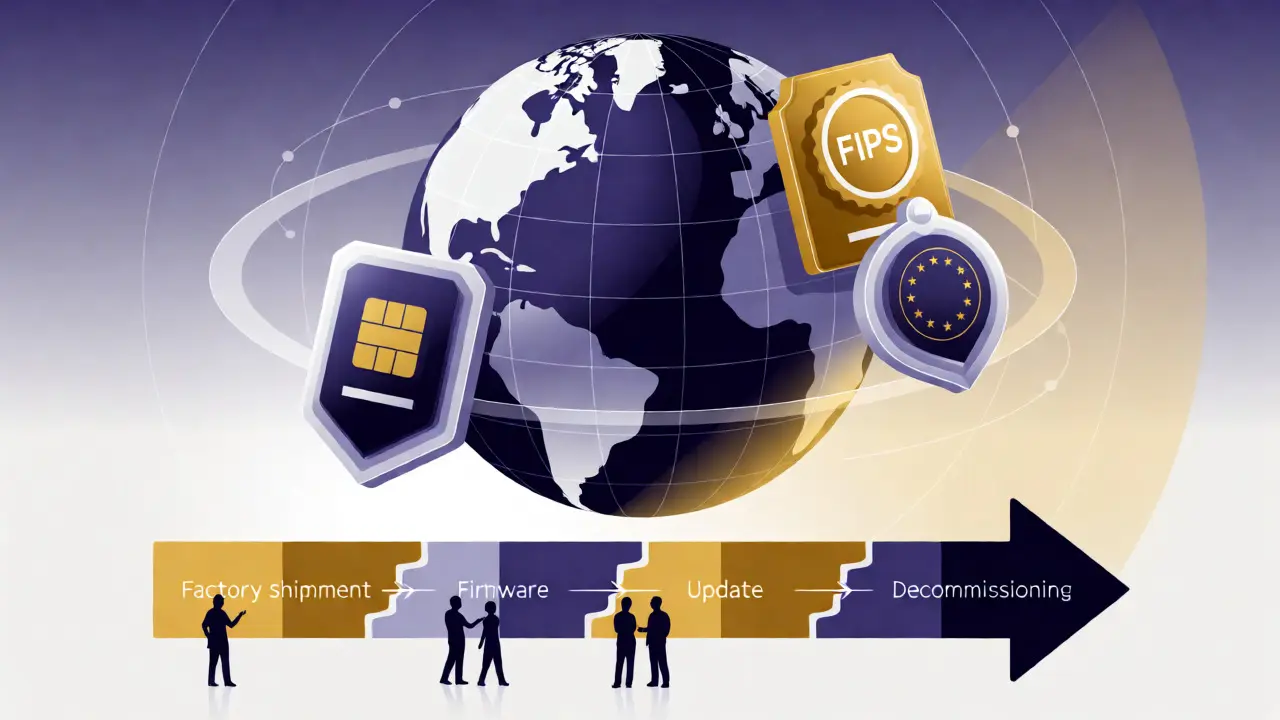
Common Criteria: The European Angle
If you operate in Europe or deal with qualified electronic signatures, you need to look beyond PCI and FIPS. Enter Common Criteria (CC), specifically the EAL4+ rating. This standard aligns with the EU’s eIDAS regulation, which governs trust services.
Devices like the Thales Trident HSM hold Common Criteria EAL4+ certification, meeting Protection Profiles like EN 419221-5 for Cryptographic Modules for Trust Services. This is crucial for banks issuing digital certificates or companies offering legally binding e-signatures. While PCI protects the money moving through the pipe, Common Criteria protects the identity and legal validity of the entities using the system. Many top-tier HSMs now pursue triple certification: PCI PTS, FIPS, and Common Criteria, to cover all bases for global clients.
Practical Checklist for Maintaining Compliance
Don’t wait for an audit to discover gaps. Here’s a proactive approach to managing HSM certifications:
- Verify Approval Status Regularly: Don’t rely on the box your HSM came in. Check the PCI HSM Approved Product List and the NIST CMVP list quarterly. Vendors update these databases frequently.
- Lock Down Firmware Updates: Establish a policy that no firmware changes occur without checking the approval status first. Automate this check if possible.
- Document Chain of Custody: From the moment the HSM arrives from the factory, track who touched it. PCI requires evidence that the device wasn’t tampered with during shipping and initial deployment.
- Separate Duties: Ensure that the person managing the HSM configuration isn’t the same person auditing it. This separation prevents conflicts of interest and strengthens control effectiveness.
- Plan for Decommissioning: When an HSM reaches end-of-life, simply throwing it away isn’t enough. You need a certified zeroization procedure to destroy the keys before disposal. Document this destruction thoroughly.
The Cost of Cutting Corners
Some startups try to save money by using general-purpose servers with software-based key management instead of dedicated HSMs. This works until they scale or face an audit. Once transaction volumes hit six figures annually, the cost of a compliant HSM becomes negligible compared to the potential fines for non-compliance.
Moreover, insurance policies often exclude claims related to data breaches if the underlying technology wasn’t certified. If your HSM fails and leaks keys, but it was running uncertified firmware, your insurer might deny the claim. That’s a risk no CFO wants to take lightly.
The landscape of HSM compliance and certifications is evolving. With the shift from FIPS 140-2 to 140-3, and ongoing updates to PCI standards, staying compliant requires vigilance. It’s not a one-time purchase decision; it’s a continuous operational discipline. By understanding the nuances of each standard and maintaining strict lifecycle controls, you turn compliance from a burden into a competitive advantage-a tangible proof point that your security architecture is built to last.
Can I use a non-certified HSM if my internal security team approves it?
No. For regulated industries like payments, external certification is mandatory. Internal approval does not satisfy PCI or FIPS requirements. Auditors require third-party validation from accredited labs.
What happens if I update my HSM firmware to an unapproved version?
Your HSM immediately loses its compliance status. It remains non-compliant until you either revert to an approved version or the new version receives official certification approval. During this gap, you are technically out of compliance.
Is FIPS 140-3 better than FIPS 140-2?
Yes, it addresses modern threats and includes stricter requirements for algorithm transitions and self-tests. However, many existing deployments still run on FIPS 140-2. Migration to 140-3 is recommended for future-proofing but may require hardware or significant software updates.
Do cloud HSMs automatically make me compliant?
No. Cloud providers certify the underlying infrastructure, but you are responsible for how you use it. Your architecture, key management practices, and access controls must also meet compliance standards. Shared responsibility applies.
What is the difference between PCI PTS and PCI DSS?
PCI DSS covers the entire environment where cardholder data is stored, processed, or transmitted. PCI PTS specifically certifies the hardware devices (like HSMs and PIN pads) that handle PINs and keys. You generally need both: DSS for your network/processes and PTS for your cryptographic hardware.
Author
Ronan Caverly
I'm a blockchain analyst and market strategist bridging crypto and equities. I research protocols, decode tokenomics, and track exchange flows to spot risk and opportunity. I invest privately and advise fintech teams on go-to-market and compliance-aware growth. I also publish weekly insights to help retail and funds navigate digital asset cycles.