

Imagine holding a digital coin that gets slightly more valuable every year simply because fewer of them exist. Now picture another coin where the supply keeps growing, but you earn rewards just for keeping it in your wallet. Which one would you pick? The answer depends entirely on what you want from your crypto portfolio. Understanding tokenomics is no longer just for hardcore blockchain engineers; it’s the difference between a smart long-term hold and a short-term gamble.
Tokenomics refers to the economic structure of a cryptocurrency. It dictates how many coins will ever exist, how new ones are created, and how old ones are removed. This framework directly impacts price stability, user behavior, and network security. If you’ve ever wondered why Bitcoin feels different from Dogecoin, or why Ethereum’s value proposition changed after 2021, you’re looking at the core differences between inflationary and deflationary models.
The Core Difference: Supply Growth vs. Supply Reduction
At its heart, the debate comes down to one variable: supply. An Inflationary Token is a cryptocurrency model where the total supply increases over time without a hard cap. New tokens are minted regularly, often to reward miners or validators. Think of it like printing money. The goal isn’t necessarily to devalue the currency, but to keep the network running by paying those who secure it.
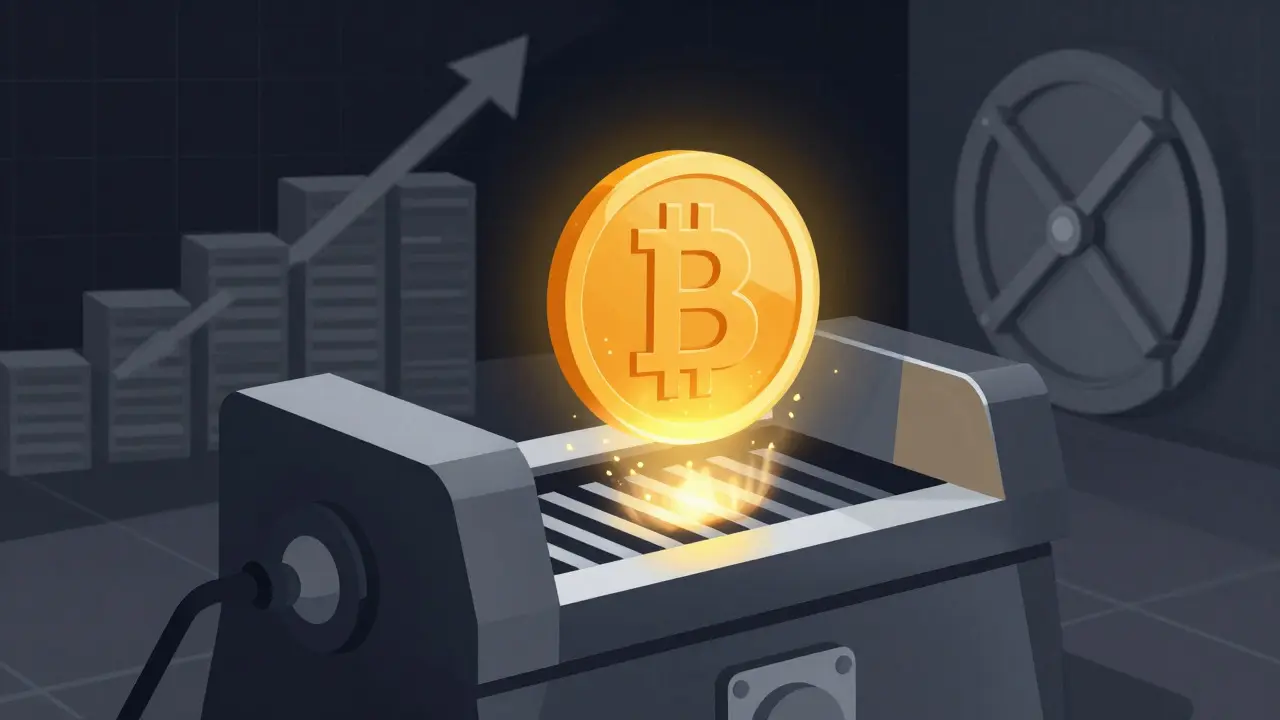
On the other side, a Deflationary Token is a cryptocurrency model designed to reduce or strictly limit the total supply over time. This happens through mechanisms like token burns (permanently destroying tokens) or hard caps (a maximum number of coins that can ever be issued). The logic here is scarcity. If supply goes down while demand stays the same or grows, the price should theoretically rise.
It’s not always black and white, though. Many modern projects use hybrid approaches. For instance, Ethereum used to be purely inflationary. But after the EIP-1559 upgrade in August 2021, it introduced a fee-burning mechanism. During high network activity, part of the transaction fee is destroyed, making ETH temporarily deflationary. This dynamic shift shows that tokenomics can evolve based on real-world usage.
How Inflationary Models Work in Practice
Inflationary tokens rely on continuous issuance to incentivize participation. The most famous example is Dogecoin, which eliminated its original supply cap in 2014. Today, it mints about 10,000 new DOGE per block, resulting in an annual inflation rate of roughly 3.8%. Why does this matter? Because it encourages spending. If you know the supply is growing, you might feel less pressure to hoard the asset, making it better suited for payments and daily transactions.
Stellar takes a more controlled approach with a fixed 1% annual inflation rate. New tokens are distributed through a voting mechanism among network participants. This low, predictable inflation helps maintain network security without causing rapid devaluation. For investors, inflationary models often offer higher liquidity and easier entry points for smaller traders, as seen in the robust trading volumes of assets like DOGE.
However, there’s a catch. If utility doesn’t grow alongside supply, the token loses value. Cardano’s ADA, for example, has seen significant supply growth since 2017. While its price appreciated, it lagged behind Bitcoin’s gains during the same period, highlighting the risk of dilution when adoption doesn’t match issuance rates.
The Mechanics of Deflationary Scarcity
Deflationary models aim to create artificial scarcity. Bitcoin is the gold standard here, technically operating as a disinflationary asset due to its hard cap of 21 million coins. Every four years, the block reward halves-a process known as the halving. The reward dropped from 50 BTC in 2009 to 6.25 BTC in May 2020, and it is scheduled to drop to 3.125 BTC in April 2024. This programmed reduction creates a predictable supply curve that approaches zero new issuance by the year 2140.
Beyond hard caps, some tokens use active burning. Binance Coin (BNB) executes quarterly burns based on 20% of its profits. As of late 2023, this reduced its circulating supply from nearly 200 million to around 153.8 million. Similarly, Shiba Inu sent 410 trillion tokens to a dead wallet address in 2021, effectively removing 41% of its initial supply from circulation in a single move.
The benefit is clear: scarcity drives value. Bitcoin’s purchasing power increased significantly between 2020 and 2023, outperforming the U.S. dollar during the same period. However, excessive deflation can lead to hoarding. If everyone holds their tokens waiting for the price to go up, transaction volume drops, and the network becomes less useful as a medium of exchange.
Comparing the Two Approaches
| Feature | Inflationary Model | Deflationary Model |
|---|---|---|
| Supply Behavior | Increases over time | Decreases or remains capped |
| Primary Goal | Network security & incentives | Scarcity & value preservation |
| User Behavior | Encourages spending & staking | Encourages holding & accumulation |
| Best Use Case | Payments & daily transactions | Store of value & long-term investment |
| Risk Factor | Dilution if utility lags supply | Liquidity crunch if hoarding is excessive |
| Example Assets | Dogecoin, Stellar | Bitcoin, Binance Coin |
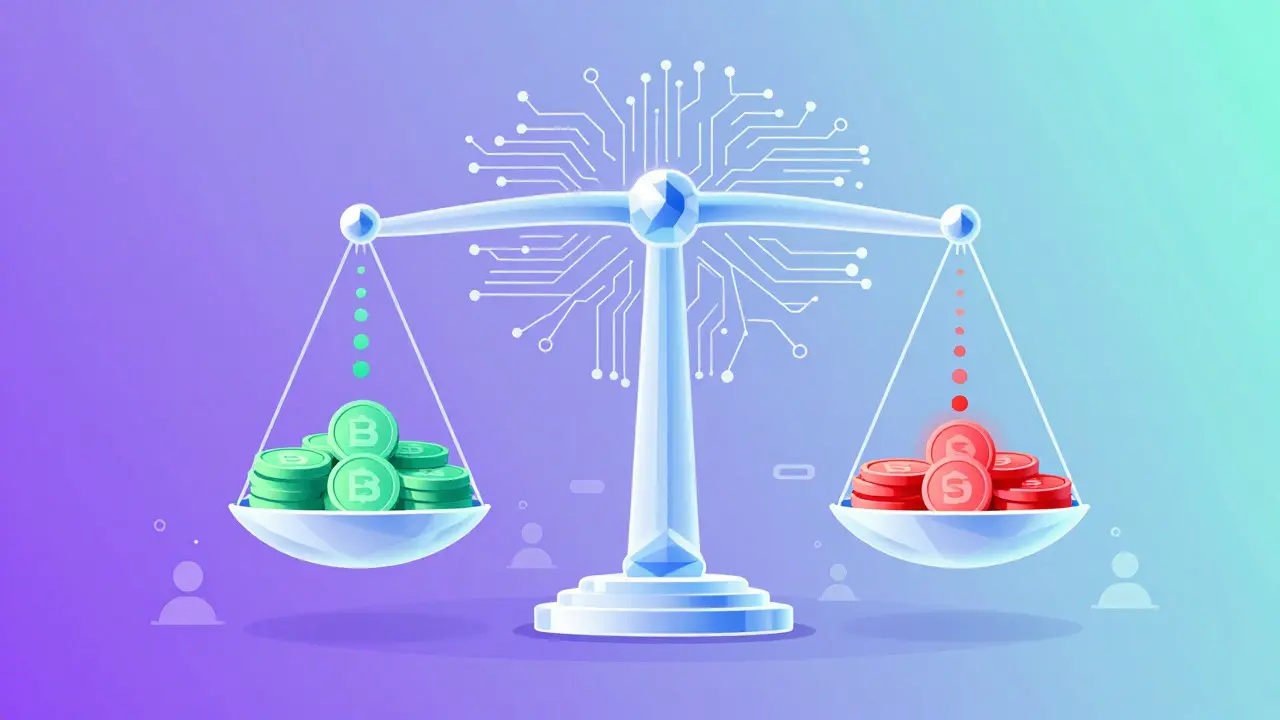
Notice how the goals diverge. Inflationary models prioritize keeping the engine running. They need people to transact and validate blocks. Deflationary models prioritize preserving wealth. They want people to believe the asset will be worth more later. Neither is inherently "better"; they serve different economic functions within the broader crypto ecosystem.
Why Hybrid Models Are Winning
Purely inflationary or deflationary structures are becoming rarer. The Blockchain Research Institute found that 68% of successful blockchain projects now implement hybrid models. These systems adjust supply dynamically based on network activity. Ethereum’s transition is the prime example. By burning fees during congestion, it balances the need to pay validators with the desire to reduce net issuance.
This approach addresses the biggest criticism of pure deflation: lack of security funding. As Bitcoin’s block rewards diminish, it will eventually rely solely on transaction fees to secure the network. If fees are too low, miners may leave, weakening security. Hybrid models allow for algorithmic adjustments that ensure enough incentive exists to keep nodes online, regardless of market conditions.
For investors, this means looking beyond simple labels. Ask yourself: Does the token have a mechanism to adjust supply based on actual usage? Is there a clear path to sustainability? A token that burns too aggressively might kill its own economy, while one that inflates too fast might lose trust. Balance is key.
Practical Implications for Your Portfolio
So, how does this affect your strategy? If you’re using crypto for daily purchases, look for inflationary tokens with high liquidity and low fees. You want an asset that merchants accept easily and that doesn’t suffer from deflationary hoarding. Dogecoin fits this profile well, given its widespread acceptance for merchandise and tips.
If you’re investing for the long term, deflationary or disinflationary assets like Bitcoin offer stronger store-of-value characteristics. Their limited supply provides a hedge against fiat currency debasement. However, be aware of volatility. BNB experienced significant price swings during burn events, showing that even deflationary assets can be turbulent in the short term.
Consider your risk tolerance. Experienced traders often prefer hybrid models because they offer flexibility. Novice investors might stick to established assets with proven track records, whether that’s Bitcoin’s fixed supply or Ethereum’s evolving fee-burn system. Always check the documentation. Understand how new tokens are created and how old ones are removed. Transparency in these mechanisms builds trust.
Frequently Asked Questions
Is Bitcoin inflationary or deflationary?
Bitcoin is technically disinflationary. It has a hard cap of 21 million coins, and the rate at which new coins are issued decreases over time due to halving events. It is not strictly deflationary because the total supply still increases until the cap is reached, but the growth rate slows down significantly.
What is a token burn?
A token burn is a process where a certain amount of cryptocurrency is permanently removed from circulation. This is usually done by sending tokens to a "dead" wallet address that no one can access. Burning reduces the total supply, which can increase the value of remaining tokens if demand stays constant.
Which is better for long-term investment: inflationary or deflationary tokens?
Generally, deflationary or disinflationary tokens are preferred for long-term investment because scarcity tends to support value appreciation over time. However, hybrid models that balance supply with utility growth are increasingly seen as the most sustainable option for long-term holders.
Does inflation always mean bad news for a crypto asset?
Not necessarily. Inflation is necessary to reward network participants like miners and validators. If the inflation rate is low and matches the growth in network usage, it can be healthy. The problem arises when supply grows much faster than utility, leading to dilution of value.
How do I check if a token is deflationary?
You can check the token’s whitepaper for details on its supply mechanism. Look for terms like "hard cap," "burn mechanism," or "halving." Additionally, use blockchain explorers or tracking sites to monitor the circulating supply over time. If the supply is decreasing or staying flat while demand grows, it is likely deflationary.
Author
Ronan Caverly
I'm a blockchain analyst and market strategist bridging crypto and equities. I research protocols, decode tokenomics, and track exchange flows to spot risk and opportunity. I invest privately and advise fintech teams on go-to-market and compliance-aware growth. I also publish weekly insights to help retail and funds navigate digital asset cycles.