
Russia cryptocurrency sanctions
When talking about Russia cryptocurrency sanctions, the set of restrictions imposed by Russian authorities and foreign regulators on crypto activities involving Russian entities. Also known as Russian crypto sanctions, they aim to curb capital flight, limit illicit finance, and pressure the government through economic tools.
One of the biggest players enforcing these rules is OFAC, the U.S. Treasury’s Office of Foreign Assets Control. OFAC issues secondary sanctions that target anyone doing business with sanctioned Russian crypto firms. This means a US‑based exchange can be punished even if the transaction never touches the US directly. Another critical entity is the crypto exchange, the platform where users buy, sell, or trade digital assets. Exchanges must now screen Russian IPs, freeze assets linked to sanctioned wallets, and update KYC procedures to stay clear of penalties.
Russia cryptocurrency sanctions have three clear effects: they limit cross‑border flows, force Russian traders onto offshore or peer‑to‑peer networks, and push compliance teams to adopt new blockchain monitoring tools. The first effect, flow restriction, is a direct result of the rule that “sanctions prohibit the provision of services to designated Russian entities.” The second effect creates a surge in P2P platforms that operate under the radar, similar to what happened in Nigeria and China. The third effect drives the rise of blockchain compliance, software and analytics that trace transactions, flag risky addresses, and generate audit trails for regulated actors.
How the sanctions reshape the crypto ecosystem
Sanctions target three core layers of the ecosystem. First, they restrict access to fiat gateways – banks and payment processors can no longer process crypto‑related deposits for Russian users. Second, they force exchanges to block Russian wallets or risk losing correspondent banking relationships. Third, they trigger secondary sanctions on foreign firms that continue to support Russian crypto operations.
These layers create a chain reaction: when fiat gateways close, traders move to decentralized exchanges (DEXs) that don’t need banks. When DEX volume spikes, compliance firms develop new on‑chain analytics to trace illicit flows. When analytics improve, regulators can identify more sanctioned addresses, tightening the net further. This feedback loop is what makes the sanctions so powerful.
For everyday traders, the practical takeaway is simple: expect more verification steps, possible account freezes, and higher fees on cross‑border transfers. For businesses, it means investing in AML/KYC solutions that can handle Russian sanctions lists, integrating watch‑lists from OFAC, and preparing to halt services at a moment’s notice.
If you’re building a crypto product aimed at the Russian market, you’ll need to answer three questions quickly: Is the user on a sanctions list? Does the transaction involve a sanctioned wallet? Can the activity be traced back to a prohibited entity? Answering “yes” to any of these triggers a compliance alert that could shut down a service.
On the bright side, the pressure also opens opportunities. Companies that specialize in privacy‑preserving analytics, secure off‑ramp solutions, and legal advisory for sanctions compliance are seeing rapid growth. Many of these firms offer APIs that let exchanges automatically flag risky addresses in real time, keeping the platform safe without slowing down user experience.
Below you’ll find a curated list of articles that break down each piece of this puzzle. From deep dives on how OFAC’s secondary sanctions work, to step‑by‑step guides on updating KYC processes, the collection gives you a clear view of the current landscape and what’s coming next.
Ready to see the full picture? Scroll down to explore detailed posts on the latest Russian crypto sanctions, practical compliance strategies, and real‑world case studies that illustrate how the market is adapting.
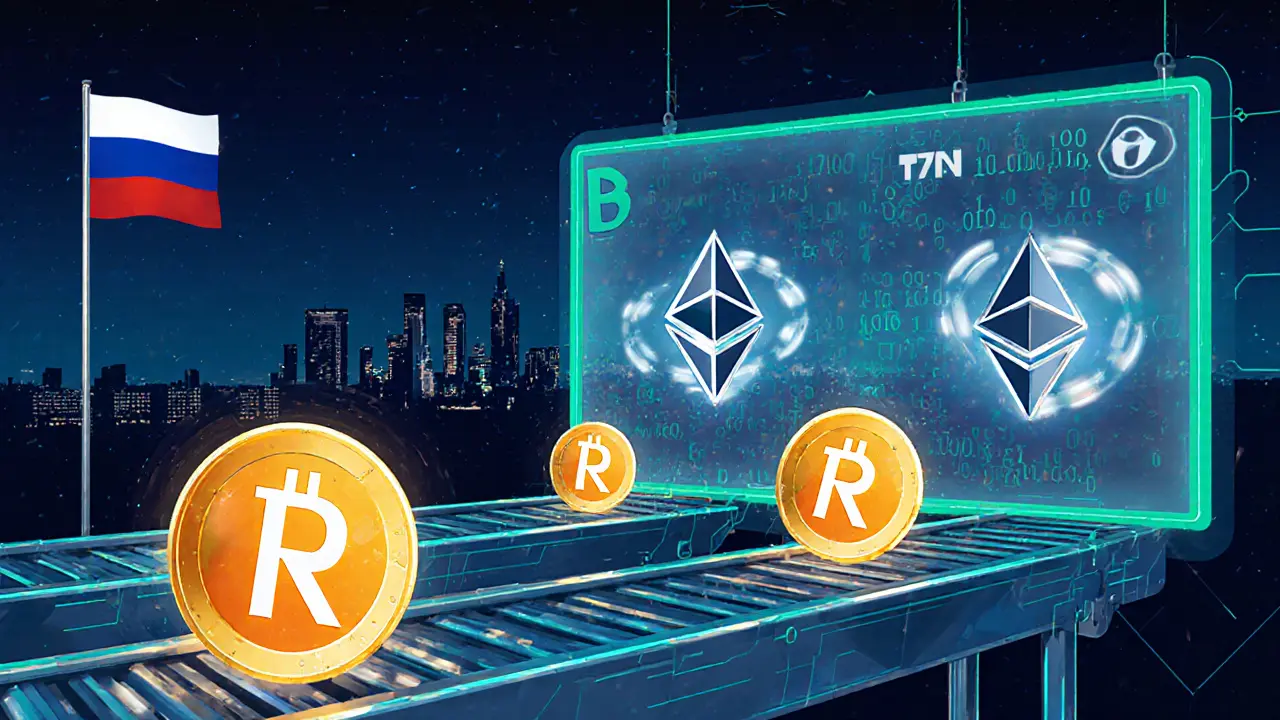
Russia's Crypto Tactics to Dodge Western Sanctions
Oct 15, 2025, Posted by Ronan Caverly
Explore how Russia leverages custom tokens, shady exchanges and Kyrgyz banks to sidestep Western sanctions, and see what regulators are doing to stop it.
MORESEARCH HERE
Categories
TAGS
- decentralized exchange
- crypto exchange
- crypto exchange review
- crypto coin
- crypto airdrop
- cryptocurrency
- CoinMarketCap airdrop
- cryptocurrency trading
- smart contracts
- tokenomics
- DeFi
- cryptocurrency exchange safety
- crypto airdrop 2025
- cryptocurrency airdrop
- cryptocurrency exchange
- meme coin
- MiCA
- crypto airdrop guide
- blockchain token distribution
- crypto token