
Zephyr Protocol: What It Is, Who Uses It, and Why It Matters in Crypto
When you hear Zephyr Protocol, a blockchain protocol built for scalable, private transactions across decentralized networks. It’s not just another Layer 2 solution—it’s a framework that lets developers build apps where speed, secrecy, and low fees all work together. Unlike older protocols that force users to choose between security and speed, Zephyr tries to do both without relying on centralized middlemen. Think of it like a private highway for crypto transactions, where only the sender and receiver know what’s being moved, and the system handles thousands of moves per second without slowing down.
It’s related to other blockchain protocol, a set of rules that govern how data is shared and verified across a distributed network systems like Zcash and Polygon, but Zephyr focuses on real-time use cases—think DeFi trading, private NFT marketplaces, or even secure voting systems. It doesn’t just encrypt data; it hides the entire transaction path. That’s why developers working on decentralized network, a peer-to-peer system where no single entity controls the infrastructure projects are starting to test it out. It’s not hype—it’s code that’s been audited and deployed in testnets by teams building privacy-first dApps.
What makes Zephyr Protocol stand out isn’t the marketing. It’s the fact that it works on low-power devices, doesn’t need massive gas fees, and doesn’t require users to hold a native token just to interact with it. That’s rare. Most protocols lock you into their ecosystem. Zephyr lets you plug it into existing chains—Ethereum, Arbitrum, even Solana—without rewriting your app. That flexibility is why it’s catching on with teams building tools for emerging markets, where data privacy isn’t a luxury, it’s a necessity.
You won’t find Zephyr Protocol on every exchange yet. You won’t see it trending on Twitter. But if you’re digging into the quiet builders behind the next wave of Web3—those fixing the broken parts no one talks about—you’ll find it. The posts below cover real projects, experiments, and failures tied to this kind of infrastructure. Some are direct integrations. Others are cautionary tales about what happens when privacy tech gets ignored. Either way, this isn’t about speculation. It’s about understanding the tools that make decentralized systems actually usable.
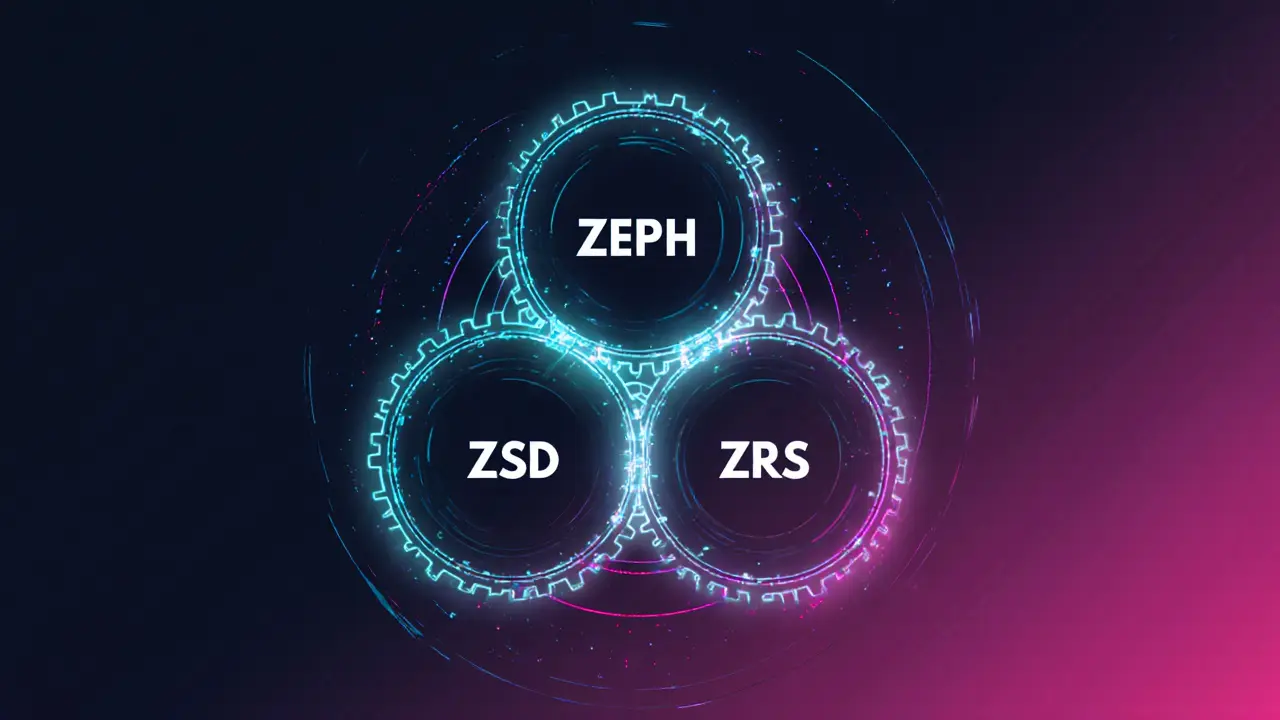
What is Zephyr Protocol (ZEPH) Crypto Coin? Privacy, Stability, and How It Works
Nov 20, 2025, Posted by Ronan Caverly
Zephyr Protocol (ZEPH) is a privacy-focused DeFi project that creates a crypto-backed stablecoin called ZSD. Unlike USDT or USDC, it’s fully anonymous, over-collateralized, and decentralized-no banks involved.
MORESEARCH HERE
Categories
TAGS
- decentralized exchange
- crypto exchange review
- crypto exchange
- cryptocurrency
- crypto coin
- crypto airdrop
- CoinMarketCap airdrop
- smart contracts
- MiCA
- cryptocurrency trading
- tokenomics
- DeFi
- cryptocurrency exchange safety
- crypto airdrop 2025
- cryptocurrency airdrop
- cryptocurrency exchange
- meme coin
- blockchain security
- blockchain gaming
- crypto airdrop guide