

The music industry is broken. Artists get paid fractions of a cent per stream, and fans have no real ownership over the culture they support. The HUSL is a blockchain-based NFT platform designed to reshape the music industry by connecting artists and fans through decentralized finance. It promises to fix this by letting creators sell beats with full commercial rights and rewarding listeners for their attention. But right now, the biggest buzz isn’t just about the tech-it’s about the money. Specifically, the massive airdrop campaign running on MEXC Exchange.
If you are looking to claim free HUSL tokens, you need to know exactly how the mechanics work, what it costs in terms of voting power, and whether the reward pool is worth your effort. This guide breaks down the current MEXC Kickstarter campaign, the technical backbone that makes these drops fair, and what happens after you vote.
Understanding The HUSL Ecosystem
Before diving into the airdrop specifics, it helps to understand what you are actually getting involved with. The HUSL launched on September 12, 2021, on the Ethereum network. Unlike general marketplaces like OpenSea or art-focused platforms like SuperRare, The HUSL is vertical-specific. It focuses entirely on music.
The core value proposition is simple: artists upload stems (the individual audio tracks that make up a beat) for free. Buyers don’t just get an image; they get the production elements and full commercial rights. This means if you buy a beat from a producer on The HUSL, you can use it in a song, release it on Spotify, and keep the revenue. For context, independent producers often charge $10,000 to $50,000 for exclusive rights to a single beat. The HUSL attempts to democratize this access.
As of October 2025, the project maintains a market capitalization of approximately $10,574 USD, ranking around #3445 on CoinMarketCap. While the market cap is modest compared to top-tier DeFi projects, the platform has survived the harsh post-2021 NFT winter by focusing on utility rather than speculation. The platform leverages high-profile partnerships, including collaborations with members of 808 Mafia (such as Pvlace and Gunboi), who have contributed to dozens of Billboard number-one hits. This lends credibility to the quality of assets being distributed.
The MEXC Kickstarter Airdrop: Mechanics and Rules
The primary way users are currently acquiring HUSL tokens is through the MEXC Exchange Kickstarter program. This is not a traditional "click-to-claim" airdrop. It is a competitive voting event where rewards are distributed proportionally based on your contribution.
Here are the hard numbers you need to know:
- Total Reward Pool: 50,000 HUSL tokens.
- Reference Price: $1.00 per HUSL token (total value ~$50,000).
- Voting Currency: MX tokens (native token of MEXC Exchange).
- Minimum Votes: 10 votes required to participate.
- Maximum Voting Cap: 500,000 MX tokens per user.
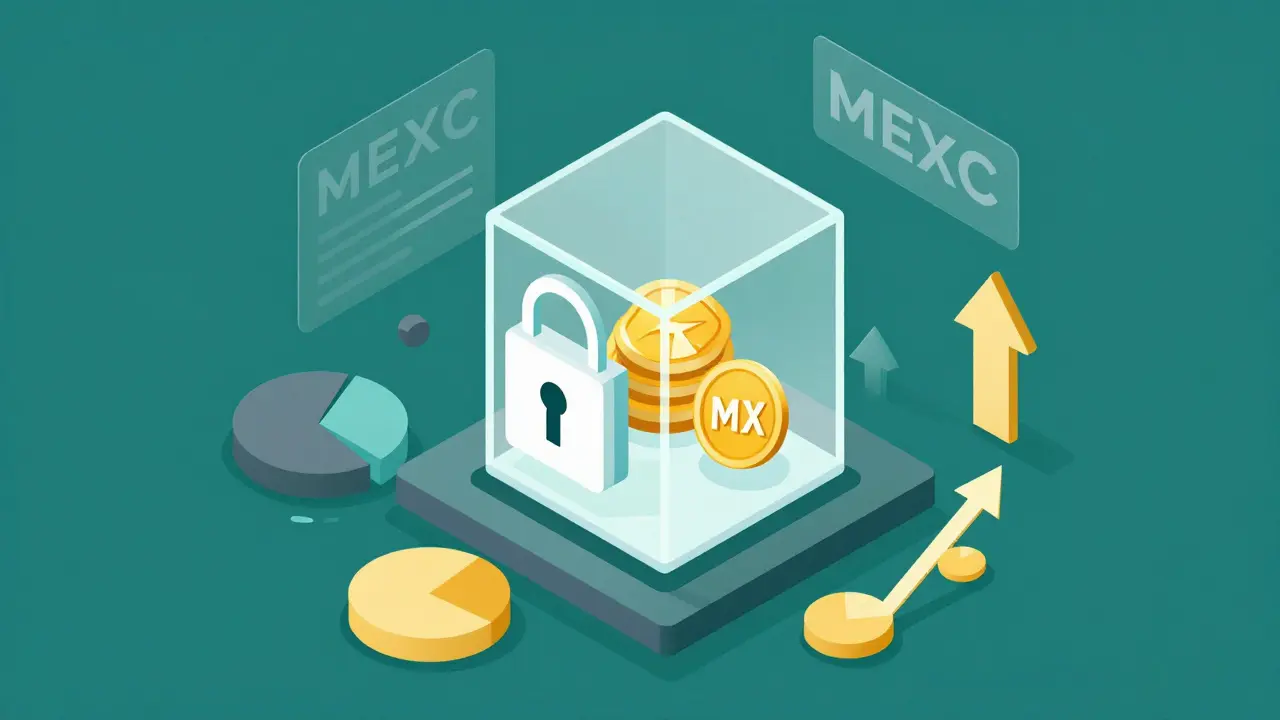
The mechanism works by temporarily locking your MX tokens during the event period. These tokens are not burned or sold; they are simply locked in the smart contract. Once the campaign concludes, your MX tokens are unlocked within one hour. However, while they are locked, you cannot trade them or use them for other leverage positions.
How Rewards Are Distributed
You might wonder why anyone would lock up their MX tokens for a relatively small-cap token like HUSL. The answer lies in the distribution formula and the bonus tiers.
Rewards are distributed proportionally. If you cast 1% of the total votes cast during the campaign, you receive 1% of the 50,000 HUSL token pool. This favors whales-users with large amounts of MX-but still allows smaller participants to earn something if they meet the minimum threshold.
There is also a secondary reward system designed to incentivize asset holding. MEXC selects 500 users randomly who maintain total assets exceeding 1,000 MX tokens on the exchange. These users receive a 10 USDT Futures Bonus. This bonus is distributed within seven working days after the event ends. This creates a dual incentive: vote for HUSL to get the token, but hold MX to potentially win cash bonuses.
| Parameter | Detail |
|---|---|
| Reward Pool | 50,000 HUSL Tokens |
| Token Value Estimate | $50,000 USD (at $1.00 reference) |
| Voting Asset | MX Token |
| Lock Duration | Duration of campaign + 1 hour unlock time |
| Bonus Eligibility | Hold >1,000 MX for chance at 10 USDT Bonus |
Fairness and Technology: Chainlink VRF Integration
In the world of crypto airdrops and NFT drops, trust is the scarcest resource. Users are often skeptical about whether random selections are truly random or manipulated by developers. The HUSL addresses this head-on by integrating Chainlink VRF (Verifiable Random Function).
Chainlink VRF generates cryptographically secure random numbers that are verifiable on-chain. When The HUSL conducts experiential rewards-based NFT drops or selects winners for specific campaigns, the randomness is not determined by a private server behind closed doors. Instead, it is generated by Chainlink’s oracle network. This means anyone can audit the process and verify that the outcome was fair and unbiased.
This integration is crucial for the platform’s long-term viability. As CEO Varun Bajaj noted in discussions with Chainlink, the goal is to build a peer-to-peer ecosystem where artists and fans trust the distribution mechanism. By using industry-standard infrastructure like Chainlink, The HUSL aligns itself with the broader DeFi security standards, reducing the risk of "rug pulls" or fraudulent reward distributions.

Strategic Considerations for Participants
Should you participate in this airdrop? It depends on your existing portfolio and risk tolerance. Here is a breakdown of the pros and cons.
The Pros:
- Low Barrier to Entry: You only need 10 votes to participate. If you already hold MX tokens, the cost is essentially zero beyond the opportunity cost of locked liquidity.
- Utility Focus: HUSL is not a meme coin. It has a working product, high-profile artist partnerships (like Styles P), and a clear use case in the music industry.
- Bonus Potential: If you hold over 1,000 MX, the potential for a 10 USDT futures bonus adds extra expected value to holding the token.
The Cons:
- Liquidity Lock: Your MX tokens are illiquid during the campaign. If the price of MX spikes significantly during the event, you miss out on trading profits.
- Proportional Dilution: If a few whale accounts vote with hundreds of thousands of MX, your share of the 50,000 HUSL pool could be negligible.
- Market Volatility: With a market cap under $11,000, HUSL is highly volatile. The reference price of $1.00 is not guaranteed upon listing. The actual market price will depend on supply and demand when trading begins.
To maximize your chances, check the current total votes cast on the MEXC dashboard before committing your tokens. If the pool is dominated by a few large wallets, the ROI for small voters may be minimal. Conversely, if participation is broad and fragmented, your proportional share increases.
Future Outlook and Listing Expectations
The success of the MEXC Kickstarter campaign determines the next steps for The HUSL. The campaign aims to achieve a target voting rate of 500%. If this target is met, listing details will be announced separately. This usually implies that the token will become tradable on the spot market shortly after the announcement.
Long-term viability hinges on mainstream adoption. The platform needs more artists to upload stems and more producers to join the network. The collaboration framework with producers commanding high fees suggests potential for significant value creation if the platform scales. However, until we see consistent volume and user growth, HUSL remains a speculative asset with strong utility fundamentals.
For now, the airdrop serves as a distribution mechanism to bootstrap the community. By giving tokens to active MEXC users, The HUSL ensures there is a base of holders interested in the ecosystem’s success. Whether those holders convert to active users on the platform remains to be seen.
Is the HUSL airdrop free?
No, it is not completely free. You must hold and vote with MX tokens on MEXC Exchange. While you do not lose the MX tokens permanently (they are unlocked after the event), you need a minimum of 10 MX to participate. Additionally, your tokens are locked during the campaign, which carries opportunity cost.
What is the value of the HUSL token?
The reference price used for the airdrop calculation is $1.00 per token. However, this is not a guarantee of the market price. The actual value will be determined by supply and demand once the token is listed for trading on exchanges.
How does Chainlink VRF ensure fairness?
Chainlink VRF provides cryptographically secure random numbers that are verifiable on the blockchain. This prevents platform operators from manipulating the selection process for rewards or NFT drops, ensuring that every participant has a fair chance based on the defined rules.
Can I withdraw my MX tokens during the voting period?
No. The MX tokens used for voting are temporarily locked in the smart contract for the duration of the campaign. They are automatically unlocked within one hour after the campaign concludes.
Who is eligible for the 10 USDT Futures Bonus?
500 users are randomly selected from those who maintain total assets exceeding 1,000 MX tokens on MEXC during the campaign period. The bonus is distributed within seven working days after the event ends.
What makes The HUSL different from OpenSea?
OpenSea is a general-purpose NFT marketplace for various digital assets. The HUSL is specialized for the music industry, allowing artists to sell stems with full commercial rights. It also integrates play-to-earn mechanics and uses Chainlink VRF for fair reward distribution, focusing on creator-fan relationships rather than just collectibles.
Author
Ronan Caverly
I'm a blockchain analyst and market strategist bridging crypto and equities. I research protocols, decode tokenomics, and track exchange flows to spot risk and opportunity. I invest privately and advise fintech teams on go-to-market and compliance-aware growth. I also publish weekly insights to help retail and funds navigate digital asset cycles.