
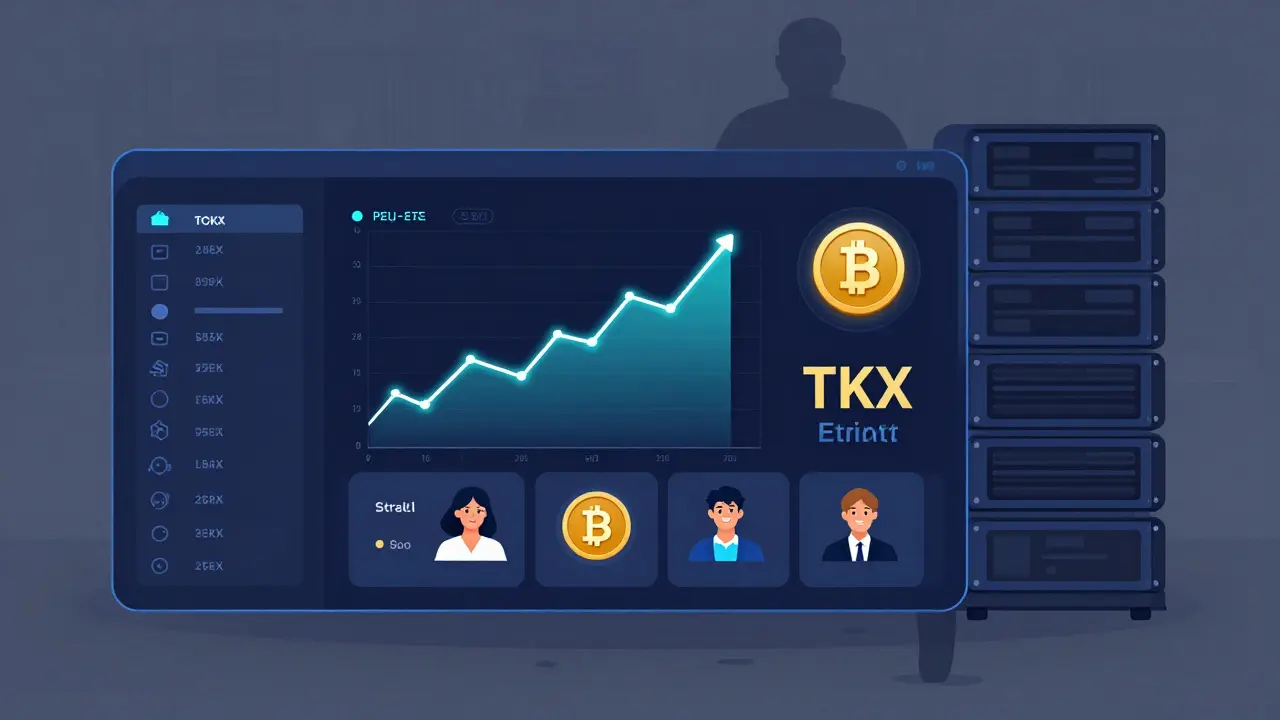
Tokenize Xchange wasn’t just another crypto exchange. For years, it presented itself as a safe, regulated, and user-friendly platform built for Southeast Asia’s growing crypto market. It offered fiat on-ramps in SGD, USD, and MYR, supported over 126 coins, and claimed top-tier security with BitGo insurance and passkey authentication. Its native token, TKX, was everywhere-used for fee discounts, staking rewards, governance, and even gifting through its Fortune Ingot feature. Developers flocked to its Titan Chain, backed by a $100 million grant program. Animoca Brands partnered with them. It looked like the real deal.
Then, on July 17, 2025, everything stopped.
No warning. No notice. Just a sudden email sent at 9:00 PM Singapore time: operations were winding down. Trading was frozen. Withdrawals were gone. Over 2,200 users woke up the next day to find S$266.3 million-nearly $200 million-trapped inside the platform they thought was secure.
The Rise: How Tokenize Xchange Grew So Fast
Founded in 2017 in Singapore by Hong Qi Yu, Tokenize Xchange didn’t start big. But it moved fast. While other exchanges struggled to get licensed, Tokenize operated under MAS exemptions, positioning itself as a compliant alternative to offshore platforms. It targeted Southeast Asia’s unbanked and underbanked populations-people who wanted to trade crypto without jumping through hoops.
Its interface was clean. Its features were advanced. You could set up dollar-cost averaging (DCA) to buy BTC weekly. You could stake your assets through Hyperion and earn yield. You could use TKX to pay for gas on Titan Chain, a custom EVM-compatible blockchain with low fees. The Solitaire loyalty program gave users tiered rewards based on TKX holdings. It even had a social feed, Tokenize Y, where traders shared strategies.
By early 2025, TKX hit a peak of $47.97. The exchange claimed over 150,000 registered users. It wasn’t just a trading platform-it was a full ecosystem. The team spoke at conferences. They partnered with influencers. They even hosted hackathons. Investors believed in the vision: a hybrid CeDeFi model that blended centralized convenience with decentralized innovation.
The Warning Signs: TKX’s Collapse Was the First Red Flag
But behind the polished website and marketing campaigns, cracks were forming.
By January 2025, TKX was already showing signs of instability. The token price began slipping. By June 30, it had dropped to $24.85-a 48% fall in just six months. That’s a red flag for any exchange that relies on its native token for revenue, staking rewards, and user incentives.
Then came the freefall.
In early July 2025, TKX crashed to $6. That’s an 87.5% drop from its peak. For users holding TKX as part of their portfolio, this wasn’t just a loss-it was a sign the entire system was failing. One user, Mr. Tan, tried to withdraw his funds on July 17 after noticing the crash. He managed to pull out S$500 before the platform locked everything down.
That’s the critical moment. When a crypto exchange’s token collapses, it’s rarely just a market correction. It’s usually a liquidity crisis. TKX wasn’t just a utility token-it was the glue holding the entire platform together. When its value evaporated, so did the exchange’s ability to cover withdrawals, pay developers, or even maintain server costs.
The Shutdown: No Warning, No Exit
On July 17, 2025, Tokenize Xchange didn’t announce a temporary maintenance. It didn’t say it was undergoing an audit. It didn’t ask users to be patient. It simply turned off the lights.
Withdrawals were disabled. Trading halted. Customer support emails went unanswered. The website went dark. The mobile app stopped working. The team vanished.
The Monetary Authority of Singapore (MAS) received multiple complaints that same week. Users reported being unable to access funds for weeks before the shutdown. Some had tried to withdraw as early as June, only to be told their requests were "under review." Others had their KYC documents rejected without explanation.
By the time the interim judicial managers were appointed in August, over 2,200 claims had been filed. The total amount? S$266.3 million. That’s more than the entire market cap of many mid-tier crypto projects.
What Happened to the Money?
There’s no public answer yet. But the signs point to one thing: mismanagement, if not fraud.
Tokenize Xchange claimed to use BitGo for cold storage and insurance. But if users’ funds were truly secured, why couldn’t they be withdrawn? Why did the platform collapse so suddenly? Why did the TKX token-supposedly backed by real usage and developer activity-plummet so hard?
One theory: TKX was being used to prop up the exchange’s balance sheet. Users bought TKX to get fee discounts. The exchange then used those funds to cover operational costs or pay out staking rewards. When new buyers stopped coming in, the model collapsed. It was a classic Ponzi structure disguised as a DeFi platform.
Another possibility: the $100 million Titan Lab Grant never existed as advertised. The grants may have been used to pay insiders or fund unrelated ventures. The partnership with Animoca Brands? It was likely a branding exercise-no real funds or tech integration followed.
What we know for sure: the exchange never obtained its digital token payment license from MAS. It operated in a gray zone. That’s not illegal-but it’s dangerous. And when things went wrong, there was no regulatory safety net for users.
The Aftermath: Who’s Still Trying to Get Their Money Back?
As of October 2025, Tokenize Xchange remains defunct. The interim judicial managers are sorting through bank records, smart contracts, and internal communications. But recovery is slim. Most assets are likely gone.
Some users are trying to trace TKX tokens on the Titan Chain. Others are filing claims with Singapore’s Commercial Affairs Department. A few have hired lawyers. But without a clear trail of where the money went, the chances of full recovery are near zero.
For those who held TKX, the loss is personal. One user lost S$80,000 in TKX and BTC combined. Another had saved for three years to buy a home-and used Tokenize Xchange to convert part of that savings into crypto. Now, it’s gone.
What This Means for Crypto Users in 2026
Tokenize Xchange wasn’t a rogue offshore exchange. It was based in Singapore. It claimed to be regulated. It had a fancy website, partnerships, and a native blockchain. And yet, it still collapsed.
This isn’t just a story about one bad exchange. It’s a warning for everyone using centralized platforms-even the ones that look legitimate.
Here’s what you need to remember:
- If an exchange’s native token is falling fast, get out. That’s not a market dip-it’s a death rattle.
- Don’t trust "regulated" labels alone. Operating under an exemption is not the same as being licensed.
- Keep your funds off exchanges when possible. Use hardware wallets. Self-custody isn’t optional anymore-it’s essential.
- If you’re staking or earning yield, ask: Who’s paying you? If it’s coming from new user deposits, not real revenue, it’s unsustainable.
- Never put more into a platform than you can afford to lose. Especially if you don’t fully understand how it works.
Tokenize Xchange promised safety. It delivered silence.
The lesson isn’t that crypto is risky. The lesson is that centralized platforms-even the ones with good marketing-are still vulnerable to mismanagement, fraud, and collapse. If you don’t control your keys, you don’t control your money. And in 2026, that’s not a suggestion. It’s a rule.
What You Should Do Now
If you were a Tokenize Xchange user:
- Check your email for official notices from the interim judicial managers.
- File a claim through the official portal (if still active).
- Document everything: screenshots of deposits, withdrawal attempts, TKX holdings, emails sent.
- Join user groups on Telegram or Discord-collective pressure can sometimes force transparency.
- Don’t fall for recovery scams. Anyone offering to get your funds back for a fee is likely another scam.
If you’re still using centralized exchanges:
- Withdraw your funds to a wallet you control.
- Check if the exchange is licensed-not just registered or exempted.
- Look at their on-chain reserves. Are they transparent? Do they publish proof of reserves regularly?
- Avoid platforms that push their own tokens as the main way to save money.
Tokenize Xchange is gone. But the risks it exposed are still very much alive.
Was Tokenize Xchange regulated?
Tokenize Xchange operated under exemptions granted by Singapore’s Monetary Authority of Singapore (MAS), but it never obtained its full digital token payment license before collapsing in July 2025. This meant it was not fully licensed, even though it presented itself as a compliant platform. Operating under exemptions is not the same as being regulated, and it left users without legal protections when the exchange failed.
How much money did users lose in the Tokenize Xchange collapse?
Over 2,200 users filed claims totaling S$266.3 million (approximately US$197 million) after the exchange shut down on July 17, 2025. These funds included both cryptocurrency and fiat deposits, all of which became inaccessible when trading and withdrawal functions were disabled without warning.
What happened to the TKX token after the collapse?
The TKX token crashed from a peak of $47.97 in January 2025 to around $6 by mid-July 2025-a drop of 87.5%. After the exchange shut down, TKX became essentially worthless. Trading ceased on all major exchanges, and the underlying Titan Chain network became inactive. The token had no utility left, and its value was tied entirely to the now-defunct platform.
Can users recover their funds from Tokenize Xchange?
Recovery is possible but unlikely. An interim judicial manager has been appointed to oversee asset tracing and claims. However, most funds appear to have been spent, moved, or lost. As of October 2025, no significant recovery has been reported. Users are encouraged to file claims officially, but they should prepare for partial or no reimbursement.
Is Tokenize Xchange still operational?
No. Tokenize Xchange ceased all operations on July 17, 2025. Its website, app, and customer support channels are offline. The company, AmazingTech Pte Ltd, is under judicial management, and its assets are being liquidated. There is no plan to relaunch the exchange.
What should I look for to avoid a similar exchange collapse?
Avoid exchanges that rely heavily on their own native tokens for revenue. Check if they publish regular proof of reserves. Look for full licensing-not just exemptions. Read user reviews about withdrawal delays. If the token price is falling fast, or customer support is unresponsive, get your funds out immediately. The safest crypto exchange is the one you don’t need to trust.


Author
Ronan Caverly
I'm a blockchain analyst and market strategist bridging crypto and equities. I research protocols, decode tokenomics, and track exchange flows to spot risk and opportunity. I invest privately and advise fintech teams on go-to-market and compliance-aware growth. I also publish weekly insights to help retail and funds navigate digital asset cycles.