
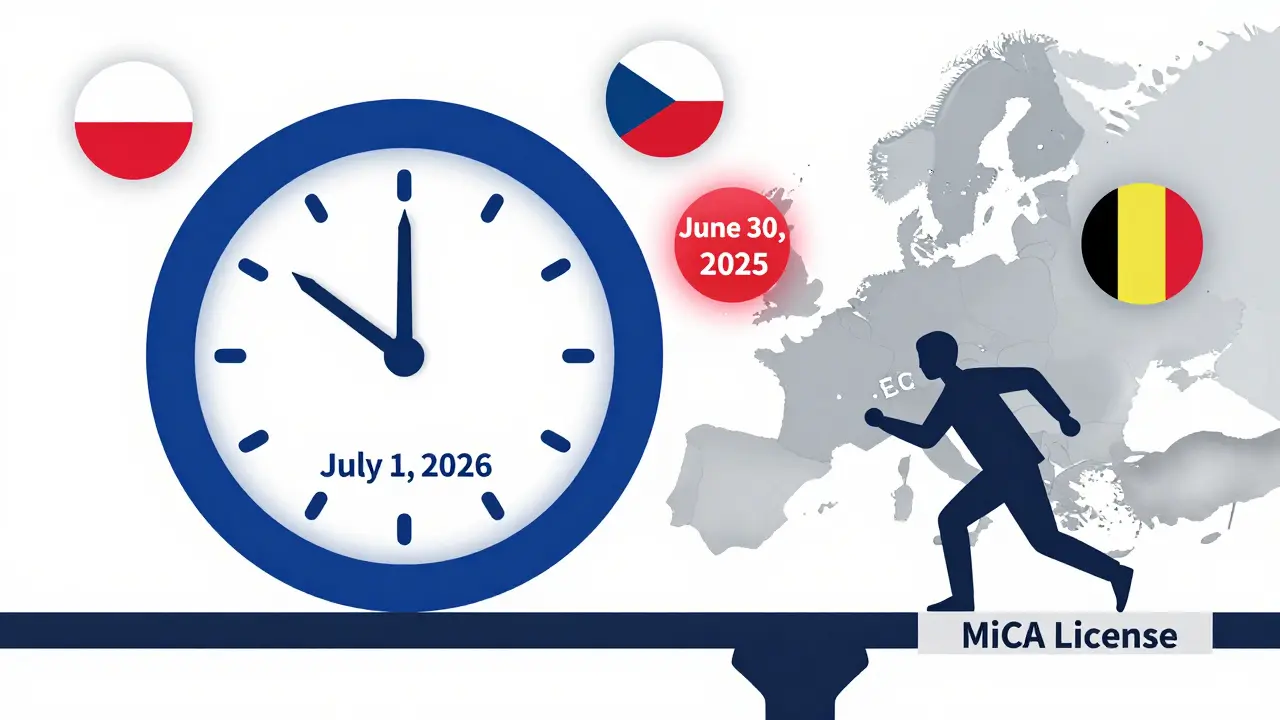
By now, if you're running a crypto business in the EU, you know the clock is ticking. The Markets in Crypto-Assets Regulation (MiCA) became fully enforceable on December 30, 2024. But here's the catch: you don't have to be fully licensed right now. Many crypto firms are still operating under temporary rules called transition periods. These aren't extensions-they're deadlines with consequences. And if you're serving customers across borders, you're already racing against the shortest clock in your operating countries.
What MiCA Actually Changes
MiCA isn't just another regulation. It's the EU's first unified rulebook for crypto. Before MiCA, each country had its own rules. Germany had one system. France had another. Lithuania had its own registration process. That created chaos for businesses trying to scale. MiCA replaces all that. Now, if you're a crypto-asset service provider (CASPer), you need one license-and you get to operate across all 27 EU countries plus the EEA. That's called passporting. But you can't get passporting until you're fully authorized.That means no more hiding behind national registrations. If you were registered under old national laws-like Finland’s Virtual Currency Provider Act-you're not a MiCA-compliant firm yet. You're just on borrowed time.
How Long Do You Have? It Depends on Where You Are
This is where things get messy. The EU gave member states flexibility. Some chose the full 18-month window. Others picked six months. Your transition period isn't based on where your company is headquartered-it's based on where you're serving customers.- Czech Republic, Belgium, Poland: Transition ends July 1, 2026. Applications due by July 31, 2025.
- Lithuania: Transition ends January 1, 2026.
- Latvia, Hungary, Netherlands, Slovenia, Finland: Deadlines in mid-2025, with Finland’s cutoff on June 30, 2025.
- Norway (EEA): Transition lasts until December 30, 2025.
Here’s the kicker: if you serve clients in Finland (deadline June 30, 2025) and also in Poland (deadline July 1, 2026), you have to meet the shorter deadline. The European Securities and Markets Authority (ESMA) made this crystal clear. No exceptions. No loopholes. If you're still operating in Finland after June 30, 2025, without a MiCA license, you're breaking the law-even if you're licensed in Poland.
Finland’s Real-World Test Case
Finland is a perfect example of how messy this transition can be. The Finnish Financial Supervisory Authority (FIN-FSA) reported that zero crypto firms currently hold full MiCA authorization. Seven companies applied before the October 2024 deadline, hoping to keep operating under old rules until June 30, 2025. But here’s the reality: those seven aren’t safe. If the FIN-FSA rejects even one application, that company must stop all services immediately. No grace period. No warning.And here’s what no one talks about: those seven companies don’t have passporting rights. Not yet. They can’t legally serve customers in Germany, France, or Spain until they get their MiCA license. They’re stuck in legal limbo-operating under old rules, but unable to expand. That’s the hidden cost of waiting.
Who’s Already Licensed? And What Does That Mean?
The first MiCA licenses hit the market on December 30, 2024. The Netherlands and Malta were first out of the gate. Germany followed in mid-January 2025. By mid-2025, over 40 CASPs had been authorized across the EU. The majority? From the Netherlands and Germany.Why does this matter? Because those licensed firms aren’t just compliant-they’re competitive. They can now open offices in any EU country. They can market to customers in France without needing French approval. They can offer stablecoins, custody services, and trading under one license. That’s the power of passporting. And it’s not theoretical. It’s happening now.
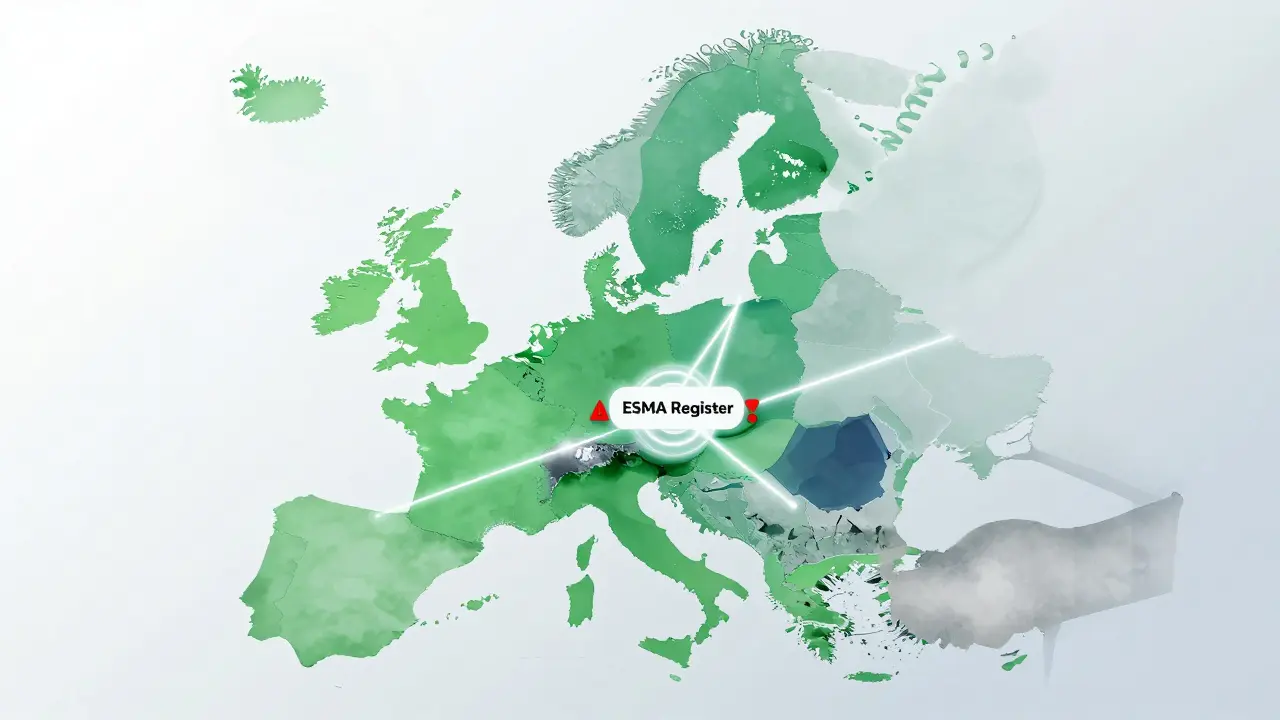
ESMA maintains a public register of licensed CASPs. If your business isn’t on it, you’re not playing the same game. You’re still in the pre-game warm-up.
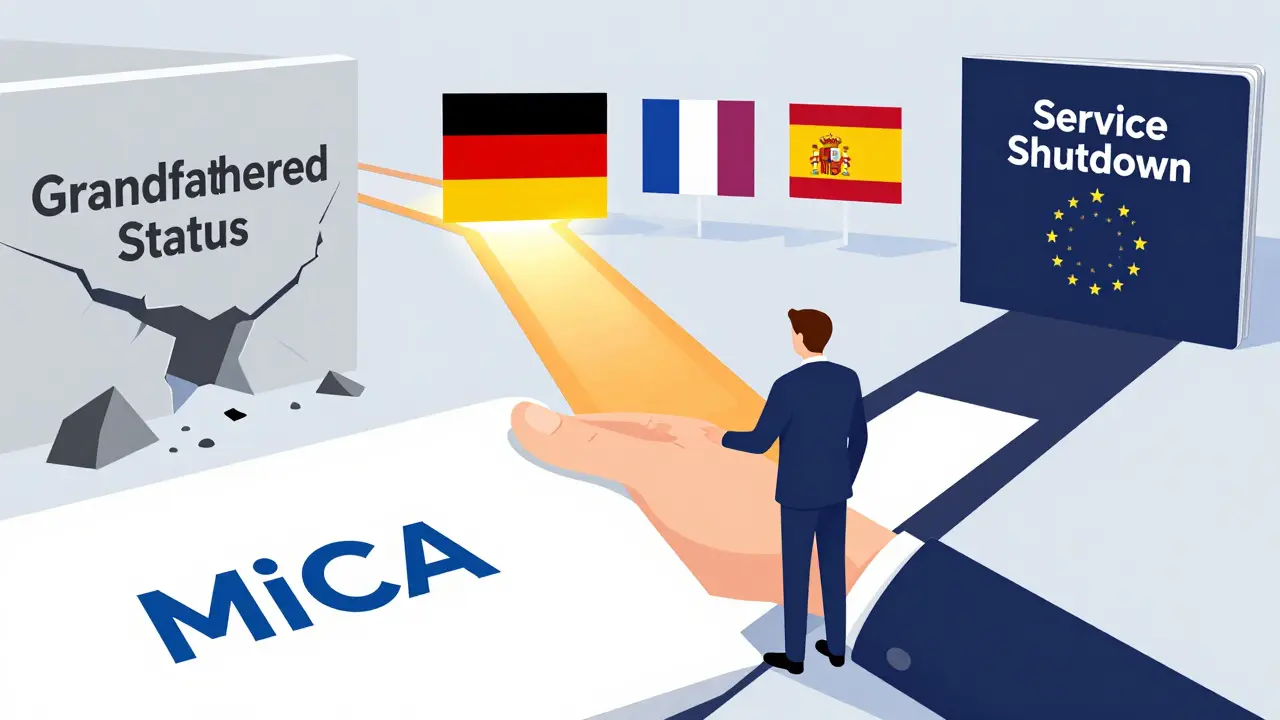
Grandfathering Isn’t a Free Pass
Many firms thought “grandfathering” meant they could keep doing business as usual. It doesn’t. Grandfathering only lets you keep operating temporarily. It doesn’t give you:- Passporting rights
- Legal certainty in other EU countries
- Access to EU-wide investor protections
- Ability to list new crypto-assets under MiCA standards
That means if you’re grandfathered in Poland but want to open a customer support center in Spain, you can’t. If you want to launch a new stablecoin, you can’t under MiCA rules. You’re stuck with the old, fragmented system. You’re not a MiCA player. You’re a holdover.
What Happens When the Clock Runs Out?
If you don’t get licensed by your jurisdiction’s deadline, you have two options:- Stop offering services in the EU entirely.
- Apply for a license and wait-while losing customers, revenue, and trust.
There’s no third option. ESMA and national regulators are enforcing this. No warnings. No extensions. No “we’ll let you slide.” Firms in countries like Finland have already seen services shut down. Others are being audited. The regulators aren’t asking for cooperation-they’re demanding compliance.
What Should You Do Right Now?
If you’re a crypto business in the EU, here’s your action plan:- Identify every country where you have customers or operations.
- Find the shortest transition deadline among them. That’s your real deadline.
- Submit your MiCA application immediately-even if your country allows more time. Processing takes months.
- Stop relying on grandfathering. Treat it as a temporary bridge, not a destination.
- Start preparing for passporting. Update your governance, internal controls, and reporting systems to meet MiCA standards. Don’t wait until the last minute.
Companies that acted early-like those in the Netherlands-have already expanded into five new markets. Those waiting? They’re scrambling. And by July 2026, the last transition period ends. After that, there’s no more grace.
Why This Matters Beyond Compliance
MiCA isn’t just about rules. It’s about trust. Investors, banks, and payment providers are now looking for MiCA-licensed firms. Unlicensed businesses are being cut off from banking services, liquidity pools, and partnerships. You’re not just risking a fine-you’re risking your entire market access.And the global market is watching. The U.S., U.K., and Asia are watching how the EU handles this transition. If the EU gets it right, it becomes the global standard. If it’s messy? Other regions will move faster. Your business doesn’t just need to survive MiCA. It needs to thrive under it.
What happens if I miss my MiCA transition deadline?
If you miss your transition deadline, you must stop offering crypto services in the EU immediately. Regulators will shut down your operations. You can still apply for a license, but you cannot operate while waiting. Any clients you serve after the deadline are at legal risk, and you may face fines or criminal liability depending on the country.
Can I operate in multiple EU countries under one grandfathered status?
No. Even if you’re grandfathered in one country, you must comply with the shortest transition deadline among all countries where you serve customers. For example, if you’re registered in Poland (deadline July 2026) but serve users in Finland (deadline June 2025), you must be fully licensed by June 30, 2025-or stop serving Finnish customers.
Do I need a MiCA license if I only deal with Bitcoin and Ethereum?
Yes. MiCA applies to all crypto-assets, including Bitcoin and Ethereum, if you’re providing services like trading, custody, or exchange. Even if you don’t issue tokens, operating as a service provider requires authorization under MiCA. There are no exemptions for major cryptocurrencies.
How long does it take to get a MiCA license?
Processing times vary. The Netherlands and Germany have issued licenses in under 6 months. Other countries are taking 8-12 months. Submit your application as early as possible. Delays aren’t just administrative-they’re financial. Every month without a license means lost market access and customer trust.
What’s the difference between a CASP and a VASP?
VASP (Virtual Asset Service Provider) is the old term used under national laws. CASP (Crypto-Asset Service Provider) is the new, unified EU term under MiCA. If you’re still calling yourself a VASP, you’re operating under outdated rules. To operate legally across the EU, you must become a licensed CASP.


Author
Ronan Caverly
I'm a blockchain analyst and market strategist bridging crypto and equities. I research protocols, decode tokenomics, and track exchange flows to spot risk and opportunity. I invest privately and advise fintech teams on go-to-market and compliance-aware growth. I also publish weekly insights to help retail and funds navigate digital asset cycles.