
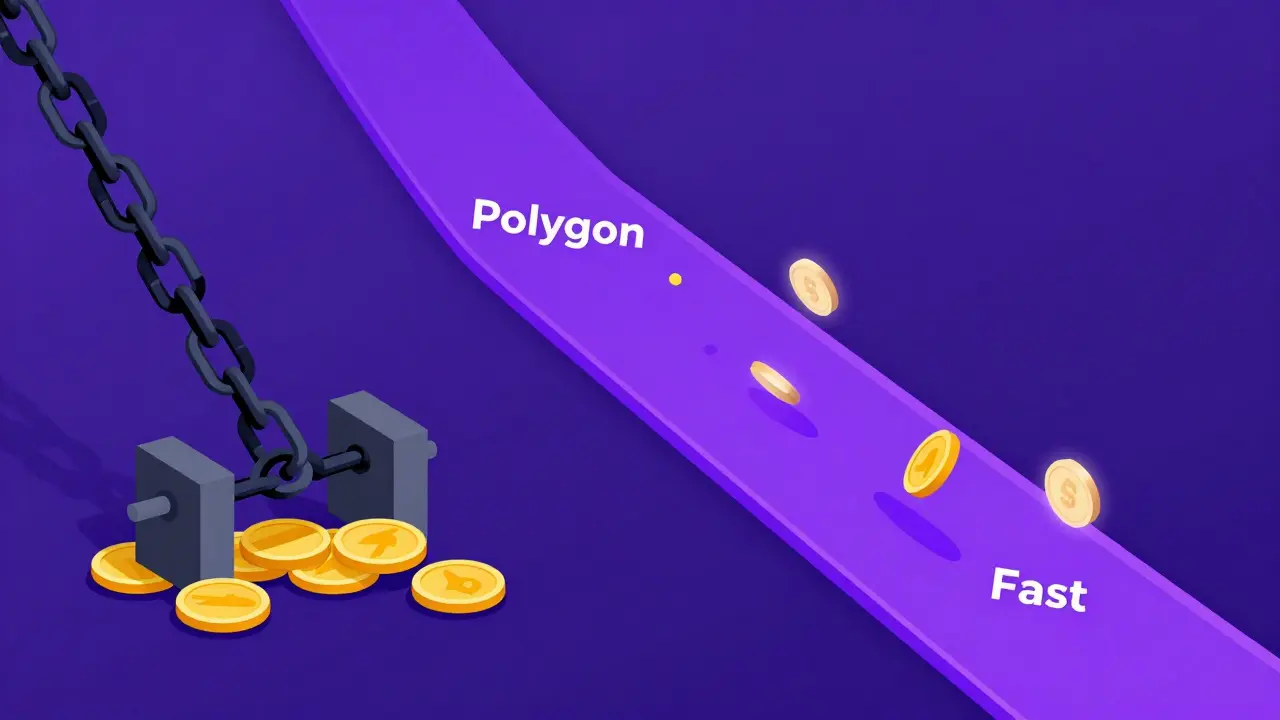
Trading crypto on the Ethereum mainnet used to feel like paying a luxury tax on every single move. If you've ever watched a $10 swap get eaten by a $35 gas fee, you know the pain. That's why Uniswap v2 is a decentralized exchange (DEX) protocol that allows users to trade tokens directly from their wallets without a middleman. By running on Polygon, this protocol turns those expensive trades into something that costs less than a dollar, making it actually viable for regular people to move their assets around.
When you use Uniswap v2 on the Polygon network, you aren't dealing with a company or a CEO. You're interacting with smart contracts-basically self-executing code-that handle the trades automatically. For most of us, the biggest draw here isn't the technical jargon, but the fact that it's fast, cheap, and doesn't require you to hand over your ID to a centralized entity just to trade a few tokens.
The Real Deal on Trading Costs and Speed
If you're moving from Ethereum to Polygon, the difference is night and day. On the main Ethereum chain, you're often fighting for block space, which drives prices up. On Polygon, a layer 2 scaling solution, the fees typically drop to under $1 per swap. This is a game-changer for anyone trading "longtail" assets-those smaller, niche tokens that wouldn't make sense to trade if the fee was higher than the trade itself.
Speed is another huge win. Instead of staring at a loading screen for minutes wondering if your transaction went through, Polygon offers near-instant confirmations. It transforms the experience from a stressful waiting game into something that feels like using a standard web app. Plus, the sequencer-based architecture of the network helps reduce MEV (Maximum Extractable Value) exposure, which is a fancy way of saying you're less likely to get "sandwiched" by bots trying to manipulate your trade price.
Passive Income for Everyone: How Liquidity Works
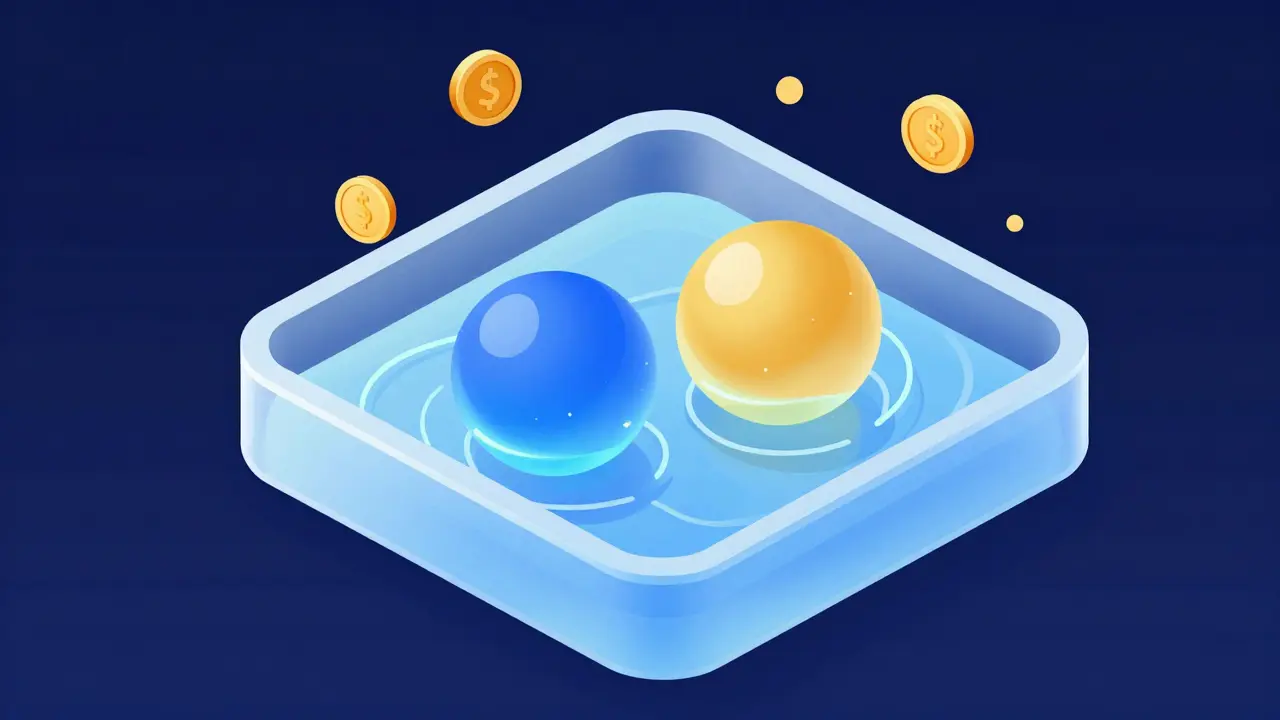
Most people use Uniswap to swap tokens, but the real magic happens when you become a Liquidity Provider is a user who deposits a pair of tokens into a pool to facilitate trades for others in exchange for a share of the transaction fees . In v2, this process is incredibly straightforward. Unlike the more complex v3, which requires you to pick specific price ranges, v2 pools cover the entire price range by default.
This means you can just deposit your tokens and walk away. You don't need to be a professional trader or spend your entire day monitoring charts to make sure your position is still "in range." You earn a slice of the 0.3% fee every time someone makes a swap in your pool. It's the ultimate "set it and forget it" strategy for passive income in DeFi.
| Feature | Uniswap v2 | Uniswap v3 |
|---|---|---|
| Price Range | Full Range (Automatic) | Concentrated (Customizable) |
| Management | Passive / Low Effort | Active / High Effort |
| Capital Efficiency | Lower | Higher (if managed correctly) |
| Setup Complexity | Very Simple | Moderate to Complex |
Technical Safety and the Core Design
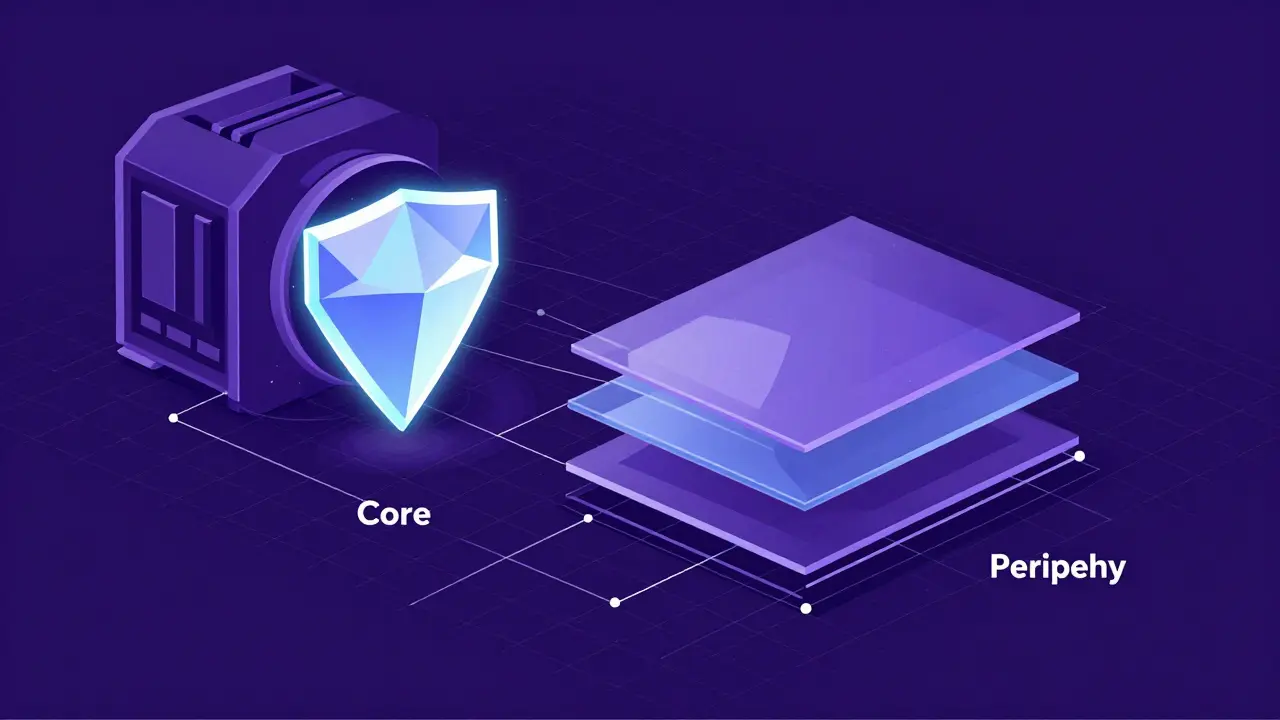
You might wonder why so many people trust their money with this protocol. A big part of it is the Core/Periphery Design is an architectural pattern that separates immutable contracts holding funds from upgradeable router contracts used for the interface . Because the core contracts that hold the money are immutable (meaning they can't be changed), there's a huge layer of security. Even if the user-facing interface changes or gets an update, the actual funds are locked in battle-tested code that hasn't changed since 2020.
Another smart feature is the Time-Weighted Average Price (TWAP) oracle. In the early days of DeFi, "flash loan attacks" were common-where a hacker would manipulate a price for a split second to steal funds. TWAP solves this by averaging the price over time, making it much harder for a single block's price spike to trick the system.
Getting Started: Wallets and Setup
To use Uniswap on Polygon, you'll need a compatible wallet. MetaMask is a software wallet that allows users to interact with the Ethereum blockchain and its compatible layer 2 networks like Polygon is the most common choice. Once your wallet is connected, you just switch your network to Polygon in the wallet settings and head to the app.uniswap.org interface.
One small detail to remember: if you want to trade Ethereum, you can't use native ETH directly in the pools. You'll need WETH is a wrapped version of Ethereum that conforms to the ERC20 token standard, allowing it to be traded in Uniswap pools . Don't let this scare you; the Uniswap router usually handles the wrapping process automatically behind the scenes, so you rarely have to do it manually.
Is It Still Relevant in 2026?
With v3 and v4 offering fancy features like concentrated liquidity and custom hooks, you might think v2 is a relic. But for the average person, simplicity is a feature. While QuickSwap is a decentralized exchange built specifically for the Polygon ecosystem, often offering deeper integration with native Polygon tokens provides a great alternative, Uniswap's global reputation and security record make it a safe harbor.
If you are a professional yield farmer, you'll probably prefer v3 because you can squeeze more profit out of your capital. But if you just want to swap a few tokens or earn some steady fees without checking your phone every hour, v2 on Polygon is still one of the most reliable tools in the shed.
How much does it cost to swap on Uniswap v2 Polygon?
Fees on the Polygon network are significantly lower than on Ethereum. Most swaps cost less than $1, making it an affordable option for smaller trades.
What is the difference between v2 and v3 liquidity?
In v2, your liquidity is spread across the entire price range of the pair, making it passive. In v3, you choose a specific price range to provide liquidity, which can earn more fees but requires active management to avoid your position becoming inactive.
Is Uniswap v2 safe to use on Polygon?
Yes, the v2 protocol is considered battle-tested and highly reliable. Its core/periphery architecture separates the funds-holding contracts from the user interface, reducing the risk of fund loss during updates.
Do I need to wrap my ETH to trade on Uniswap?
Yes, the protocol uses WETH (Wrapped Ethereum) because pools require ERC20 tokens. However, the Uniswap interface typically handles this wrapping automatically for you during a swap.
How do I earn money as a liquidity provider?
You deposit an equal value of two different tokens into a liquidity pool. Every time another user swaps those tokens, you earn a portion of the 0.3% trading fee.


Author
Ronan Caverly
I'm a blockchain analyst and market strategist bridging crypto and equities. I research protocols, decode tokenomics, and track exchange flows to spot risk and opportunity. I invest privately and advise fintech teams on go-to-market and compliance-aware growth. I also publish weekly insights to help retail and funds navigate digital asset cycles.