
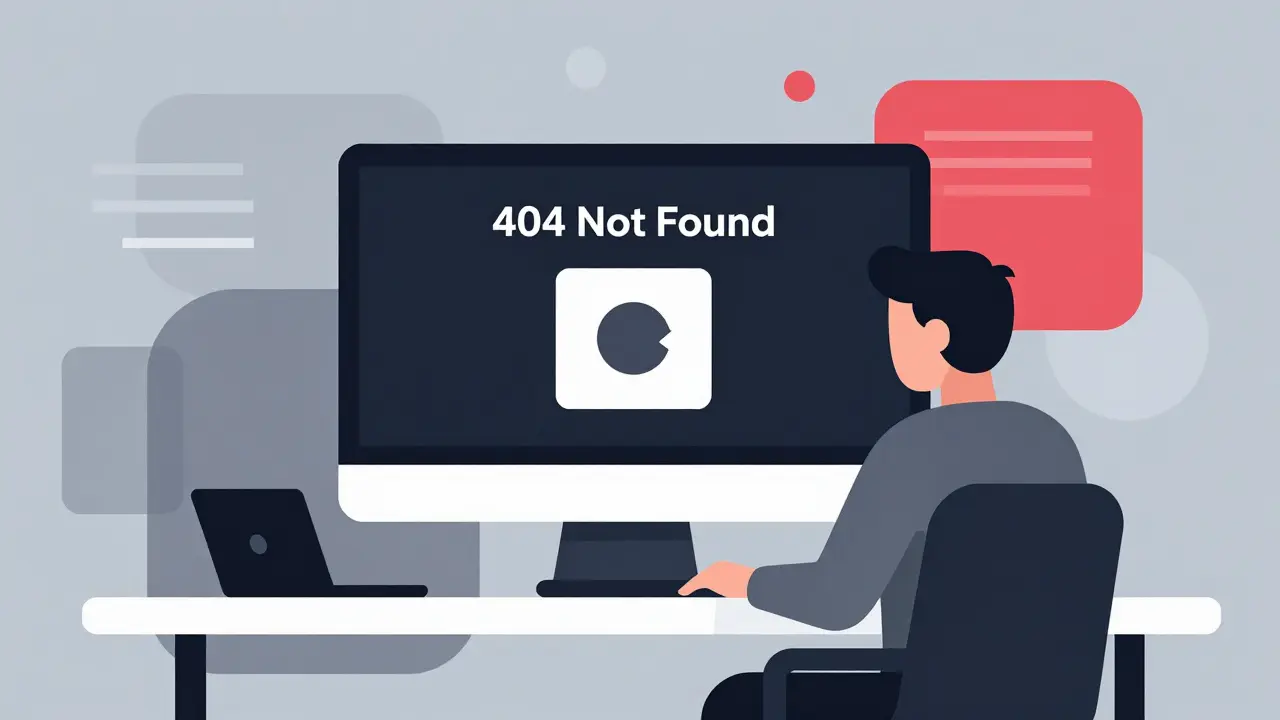
Imagine spending months creating a digital masterpiece, minting it as an NFT, and selling it for a life-changing sum. Then, six months later, you click the link to view your art, and you see a "404 Not Found" error or, worse, a middle-finger image replacing your work. This isn't a hypothetical nightmare; it's a recurring reality in the Web3 world when creators rely on centralized servers for their data.
The core problem isn't the blockchain itself. Blockchains like Ethereum or Solana are immutable ledgers. They don't change. But they are also terrible at storing large files. Instead of storing the actual image or detailed description on-chain, smart contracts store a pointer-a URL-leading to where that data lives. If that server goes down, gets hacked, or decides to take down your content, your NFT becomes a broken link. This is where IPFS steps in as the critical infrastructure layer for true digital ownership.
What Is IPFS and Why It Matters for NFTs
IPFS (InterPlanetary File System) is a peer-to-peer hypermedia protocol designed to make the web faster, safer, and more open. Unlike traditional HTTP, which relies on fetching data from specific servers based on location (like example.com/image.jpg), IPFS fetches data based on its content. Think of it like searching for a book by its ISBN number rather than asking a specific librarian if they have it on shelf B.
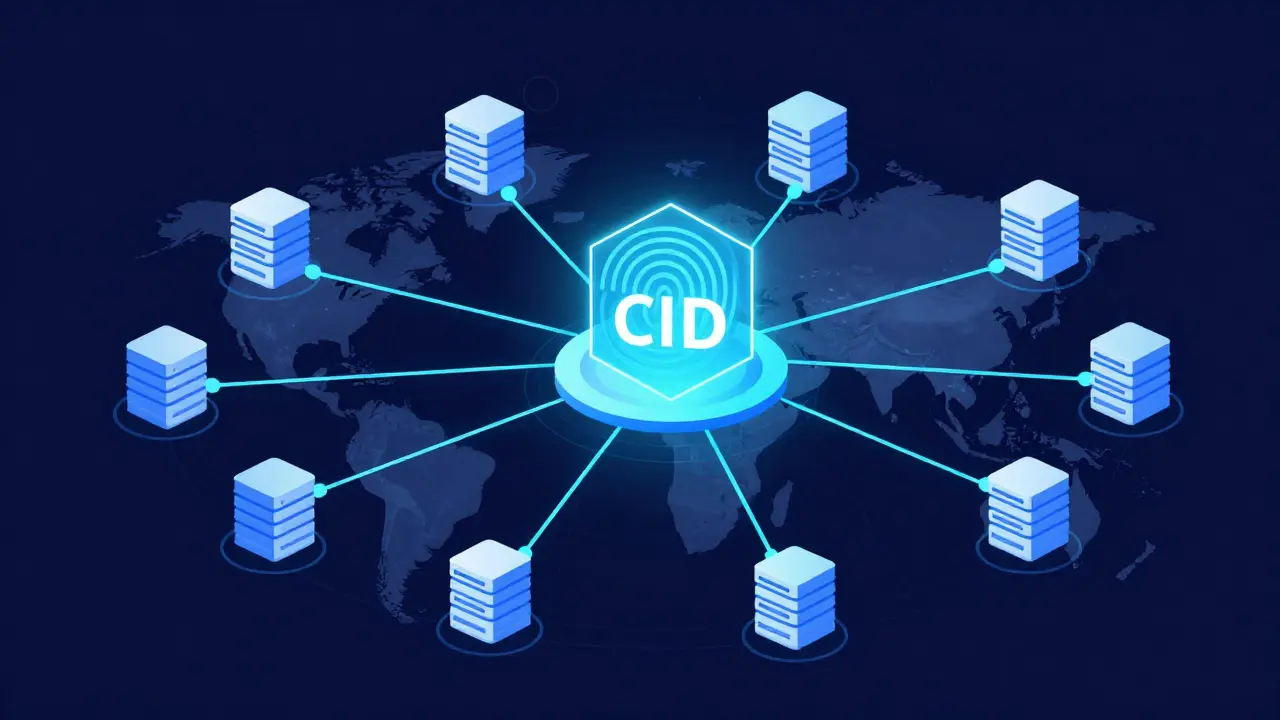
When you upload a file to IPFS, the network breaks it down into chunks and generates a unique cryptographic hash called a Content Identifier (CID). This CID acts as the file's fingerprint. If even one pixel changes in your image, the CID changes completely. This means that anyone can verify the integrity of your NFT metadata instantly. If the CID matches, the content is exactly what was originally uploaded. No tampering, no hidden edits, no silent replacements.
For NFTs, this shift from location-based addressing to content-based addressing is revolutionary. It decouples the existence of your asset from any single company's ability to keep their lights on. Your data lives across a distributed network of nodes worldwide, making it resilient against censorship and server failures.
The Anatomy of NFT Metadata
To understand why storage matters, we need to look at what actually constitutes an NFT. Most people think an NFT is just the JPEG. In reality, the token on the blockchain is just a receipt. The real value lies in the metadata. This is usually a JSON file containing key-value pairs such as:
- Name: The title of the artwork.
- Description: Context, artist statement, or lore.
- Image: A URI pointing to the visual asset.
- Attributes: Traits like rarity, background color, or special powers in gaming contexts.
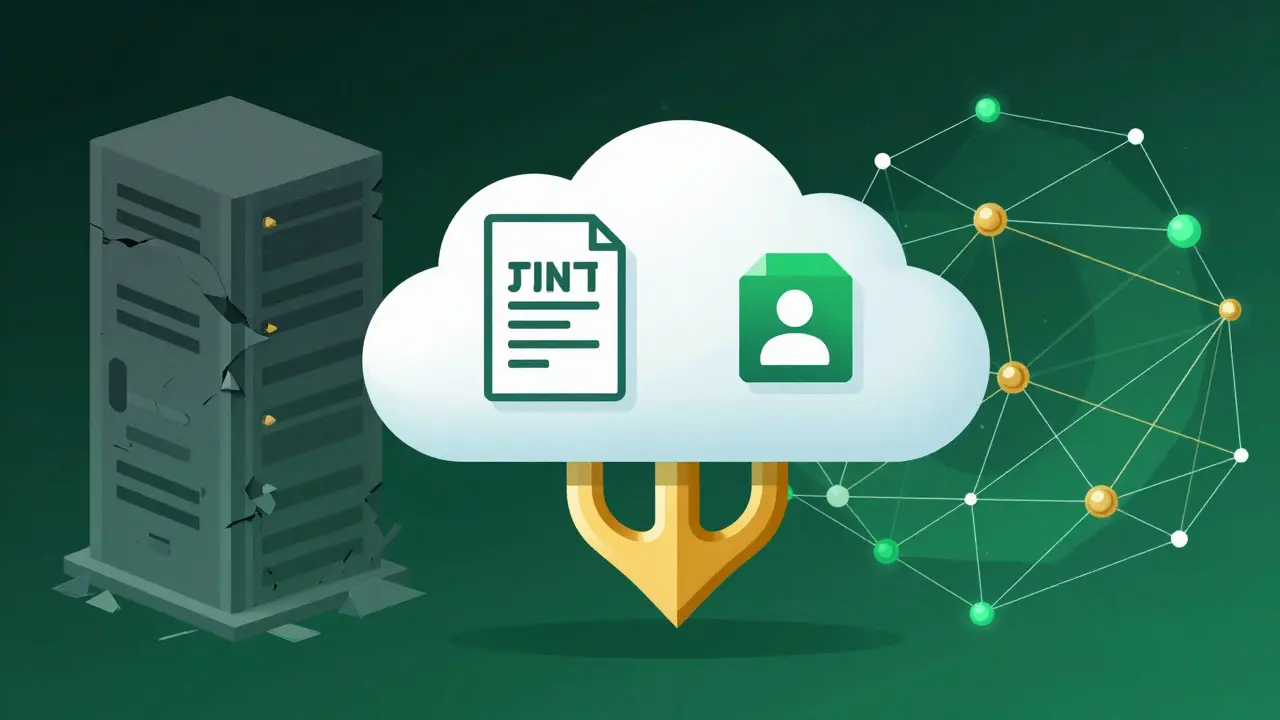
If this JSON file is hosted on a central server (like AWS S3 or Google Cloud) and that server shuts down, the blockchain still points to that dead address. The metadata disappears. The name vanishes. The attributes become null. By hosting this JSON file-and ideally the image itself-on IPFS, you ensure that the definition of your asset remains permanent and verifiable.
Centralized vs. Decentralized Storage: The Real Trade-offs
Let’s be honest: centralized storage is easier. Uploading to Amazon S3 takes two clicks. You get instant access, fast load times, and a familiar dashboard. So why bother with the complexity of IPFS? The answer comes down to risk management and longevity.
| Feature | Centralized (AWS, Google) | Decentralized (IPFS) |
|---|---|---|
| Permanence | Dependent on vendor uptime and policy | Persistent if pinned correctly |
| Censorship Resistance | Low (vendor can remove content) | High (distributed across nodes) |
| Data Integrity | Vulnerable to silent modifications | Cryptographically verified via CID |
| Cost | Ongoing monthly fees | Often free tiers available; pay-as-you-go options |
| Complexity | Low (user-friendly interfaces) | Medium (requires understanding of pinning) |
The biggest myth about IPFS is that once you upload something, it stays there forever automatically. That’s not how it works. IPFS is a retrieval protocol, not a storage guarantee system. If no node is actively hosting your file, it will eventually be garbage-collected and disappear. This is where the concept of pinning becomes crucial.
Understanding Pinning: Keeping Your Data Alive
Pinning is the act of instructing a node to permanently store and serve your file. Without pinning, your IPFS data is ephemeral. For serious NFT projects, relying on your own local node to pin everything is impractical. Instead, developers use pinning services.
These services act as trusted intermediaries that host your content on their high-availability servers while keeping it accessible via the IPFS network. Popular options include:
- Pinata: A robust enterprise-grade solution offering APIs, dashboards, and analytics. Great for teams managing large collections.
- NFT.Storage: Specifically built for NFTs, offering a generous free tier and seamless integration with popular development libraries. Ideal for indie creators and small studios.
- Web3.Storage: Focused on long-term archival, leveraging the Filecoin network for redundancy.
When you use a service like NFT.Storage, you’re essentially renting space on a decentralized grid. The service guarantees that your CIDs remain retrievable. For most creators, using a reputable pinning service is the sweet spot between decentralization ideals and practical reliability.
Step-by-Step: How to Host NFT Metadata on IPFS
You don’t need to be a cryptographer to get started. Here is a streamlined workflow for uploading metadata using a tool like NFT.Storage or Pinata.
- Prepare Your JSON: Create a standard ERC-721 compliant JSON file. Ensure all internal links (like the image URL) also point to IPFS CIDs, not external HTTP URLs. This keeps the entire asset bundle decentralized.
- Choose Your Tool: Sign up for a pinning service. NFT.Storage offers a simple JavaScript client library that makes this trivial.
- Upload the File: Use the provider’s API or drag-and-drop interface to upload your JSON file. The system will return a CID (e.g.,
QmXoypizjW3WknFiJnKLwHCnL72vedxjQkDDP1mXWo6uco). - Verify the Link: Paste the CID into an IPFS gateway (like
ipfs.io/ipfs/YOUR_CID) to ensure the JSON renders correctly and the nested image loads. - Mint the NFT: When deploying your smart contract or minting transaction, set the
tokenURIto the full IPFS link:ipfs://YOUR_CID. Note: Some marketplaces require the gateway URL format instead, so check platform specifics.
A pro tip: Always double-check that your image is also stored on IPFS. A common mistake is storing the JSON on IPFS but leaving the image on Imgur or a personal website. If Imgur deletes the image, your NFT’s visual component is gone, even if the metadata survives.
Common Pitfalls and How to Avoid Them
Even experienced developers trip up on these details. Here’s what to watch out for.
The Gateway Problem: There is a difference between an IPFS CID and a Gateway URL. The CID is the pure identifier. The Gateway URL (e.g., cloudflare-ipfs.com/ipfs/CID) is a bridge for browsers that don’t natively support IPFS. When writing your smart contract, always use the native ipfs:// scheme if possible. This future-proofs your NFT against gateway shutdowns or changes.
Mutable Metadata Illusion: Some platforms offer "mutable metadata" features, allowing you to update the JSON after minting. While useful for evolving game assets, this undermines the core promise of NFTs as static collectibles. If immutability is your goal, ensure your pinning service does not allow overwriting the CID. Once a CID is generated, the content it represents cannot change. To update content, you must create a new file, generate a new CID, and update the smart contract pointer-which requires gas fees and owner approval.
Privacy Concerns: IPFS is public. Anything you pin is theoretically accessible to anyone who has the CID. Do not store sensitive personal information, private keys, or confidential business data in your NFT metadata. Treat IPFS as a public bulletin board.
The Future of On-Chain Metadata
While IPFS is the current gold standard, the landscape is shifting. We are seeing the rise of fully on-chain NFTs, where the entire image and metadata are encoded directly into the blockchain transaction. Projects like Art Blocks pioneered this approach. The benefit? Ultimate permanence with zero reliance on external storage. The downside? Extremely high gas costs and size limitations.
For now, IPFS strikes the best balance. It offers near-permanent storage at a fraction of the cost of on-chain encoding. As Layer 2 scaling solutions mature and protocols like EIP-4804 gain traction, we may see hybrid models emerge. But until then, mastering IPFS is non-negotiable for any serious creator or developer in the Web3 space.
Don’t let your digital legacy depend on a server farm owned by a tech giant. Take control of your data’s destiny. Use IPFS, pin it properly, and ensure your NFTs stand the test of time.
Is IPFS truly permanent?
IPFS itself is not a storage guarantee; it is a retrieval protocol. Files only persist if nodes actively host them. To achieve permanence, you must use pinning services (like Pinata or NFT.Storage) that commit to storing your data long-term. Without pinning, files can disappear if no node requests them.
Can I change my NFT metadata after minting?
If your metadata is hashed into an IPFS CID, the content itself cannot change because the hash would break. However, if your smart contract allows updating the tokenURI, you can point the NFT to a new IPFS CID containing updated metadata. This requires modifying the contract state and paying gas fees.
Why do some NFT images show a "broken link"?
This usually happens when the metadata or image was stored on a centralized server that went offline, or if the IPFS content was not properly pinned and was garbage-collected from the network. It highlights the importance of using reliable pinning services and decentralized storage.
Is IPFS free to use?
Running your own IPFS node is free, but requires technical maintenance. Pinning services often offer free tiers suitable for small projects (e.g., NFT.Storage). Enterprise-level usage with high volume or guaranteed SLAs typically involves paid plans.
Should I store the image on IPFS too?
Yes. Best practice dictates that both the metadata JSON and the associated media files (images, videos) should be stored on IPFS. Storing the JSON on IPFS but the image on a central server creates a single point of failure for the visual component of your NFT.
Author
Ronan Caverly
I'm a blockchain analyst and market strategist bridging crypto and equities. I research protocols, decode tokenomics, and track exchange flows to spot risk and opportunity. I invest privately and advise fintech teams on go-to-market and compliance-aware growth. I also publish weekly insights to help retail and funds navigate digital asset cycles.