

When you hear people talk about running a node on a blockchain, they might mean one of two very different things: a validator node or a full node. They sound similar, but they’re not the same. One earns you money. The other protects the system. Mixing them up can cost you time, money, or even your stake.
What Is a Full Node?
A full node is like a librarian who keeps a complete copy of every book in the library. It doesn’t decide what gets added to the library - it just makes sure everything that’s added follows the rules. Every transaction, every block, every change - it checks it all against the protocol’s rules, independently. Bitcoin was built on full nodes. When Satoshi Nakamoto released the first Bitcoin client in 2009, the idea was simple: let anyone run a node and verify the blockchain without trusting anyone else. That’s decentralization. Today, Bitcoin has around 14,300 publicly visible full nodes. Most run on low-cost hardware - a Raspberry Pi with a 2TB external drive costs about $150 upfront and uses just $3 a month in electricity. Full nodes don’t get paid. No rewards. No staking. But they’re critical. They’re the reason you can trust that your Bitcoin transaction actually went through. Without them, validators could lie, and no one would catch it. Vitalik Buterin put it well: full nodes let users verify the chain themselves, creating a check on validator power. They sync the entire blockchain history. For Bitcoin, that’s over 500GB of data - growing about 1GB per day. For Ethereum, it’s over 1TB. That’s why many people use pruning or lightweight clients. But a true full node keeps everything. It answers queries from wallets, apps, and exchanges. It’s the backbone of network reliability.What Is a Validator Node?
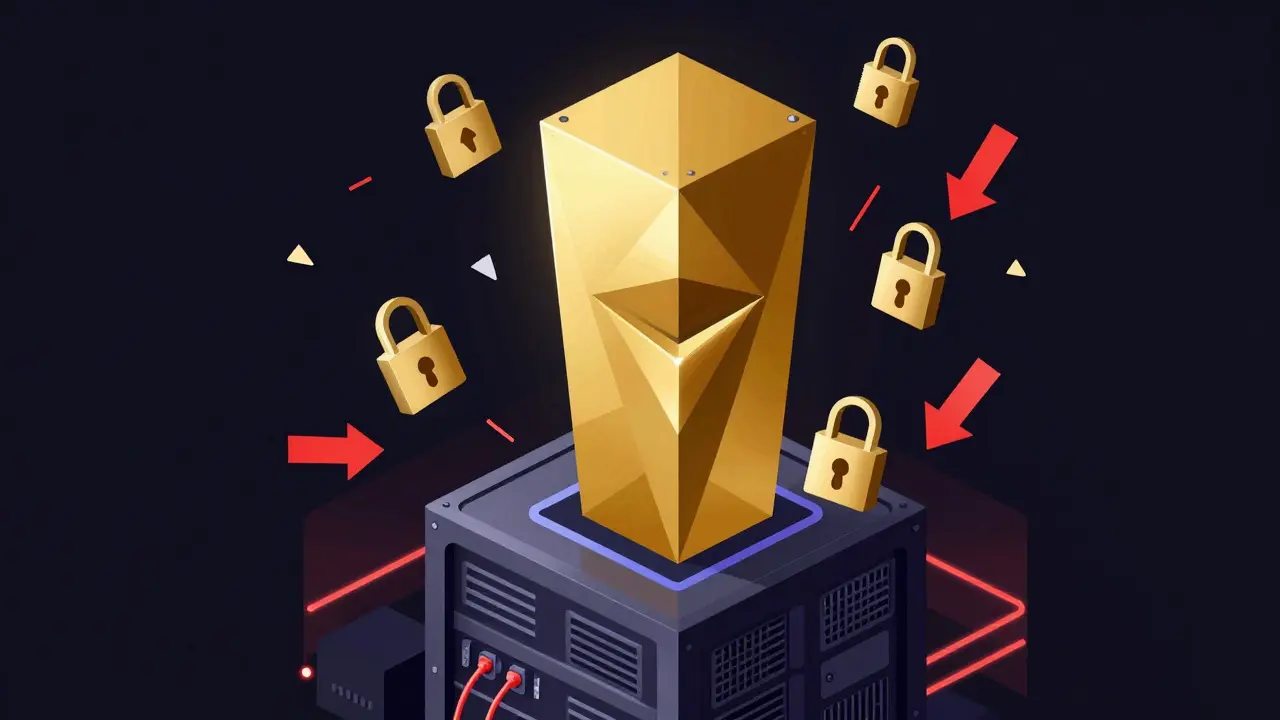
A validator node is a participant in the consensus process. It doesn’t just watch the blockchain - it helps create it. In Proof-of-Stake networks like Ethereum, Cardano, or Solana, validators are chosen to propose new blocks and confirm transactions. They vote on the state of the network. Their stake - the cryptocurrency they lock up - backs their honesty. Ethereum’s shift to Proof-of-Stake in December 2020 turned validators into the core security layer. To become one, you need 32 ETH - roughly $51,200 as of late 2025. That’s not a suggestion. It’s a hard requirement. You can’t skip it. You also need serious hardware: 16GB RAM, a 1TB SSD, and a stable 24/7 internet connection. Miss too many votes? You get slashed. Ethereum has already slashed over $12.7 million in ETH since launch for misbehavior. Solana validators are even more demanding. They need 128GB of RAM, 2TB NVMe storage, and 10Gbps network speed. Why? Because Solana processes up to 65,000 transactions per second. That’s not a typo. That’s what it takes to keep up. Validators earn rewards. Ethereum validators get 3-5% APY. Solana validators earn 6-8%. But those numbers don’t tell the whole story. You’re paying for electricity, hardware, and maintenance. One Reddit user spent $8,500 on hardware and $200/month on power, earned $1,200 in SOL over six months - and barely broke even after price drops.Key Differences at a Glance
| Feature | Validator Node | Full Node |
|---|---|---|
| Role in Network | Participates in consensus; proposes and validates blocks | Verifies transactions and blocks; does not participate in consensus |
| Financial Reward | Yes - staking rewards (3-8% APY) | No - no direct income |
| Staking Requirement | Yes - 32 ETH, 20,000 ATOM, or equivalent | No - no cryptocurrency locked up |
| Hardware Requirements | High - 16GB+ RAM, SSD, 24/7 uptime | Low to moderate - 2GB RAM, 500GB+ storage, standard internet |
| Uptime Expectation | 99.9%+ - missed votes = slashing penalties | 95%+ - occasional downtime is fine |
| Primary Risk | Slashing - losing part or all of your stake | Storage growth - needing to upgrade drives yearly |
| Setup Time | 8-12 hours for experienced users | 30-60 minutes setup, 24-72 hours to sync |
| Technical Skill Needed | Advanced - networking, Linux, monitoring tools | Basic - installing software, managing storage |
| Network Impact | Directly secures the chain | Ensures decentralization and truth verification |
Who Should Run Which Node?
If you’re a casual crypto holder who wants to support the network without risk, run a full node. It’s cheap, quiet, and gives you sovereignty. You don’t need to understand staking or slashing. Just install Bitcoin Core or Ethereum’s execution client, let it sync, and forget about it. You’re doing your part to keep the network honest. If you’re serious about earning passive income and you’ve got the capital, hardware, and technical patience, then validator nodes make sense. But don’t go in blind. Most people underestimate the ongoing costs. Electricity, cloud hosting, monitoring tools, and time spent troubleshooting add up fast. Over 68% of validator outages are caused by misconfiguration, according to Consensys. Many users now use Validator-as-a-Service (VaaS) providers like Lido, Coinbase, or Figment. You can stake 0.1 ETH or even less. But you’re trusting someone else. And that’s the trade-off. You give up some decentralization. The Ethereum Foundation warns that 31.5% of validators are controlled by just three companies. That’s not the vision Satoshi had.What’s Changing in 2025?
The landscape is shifting fast. Ethereum’s Dencun upgrade in early 2024 reduced validator storage needs by cutting data blobs. That means lower hardware costs and easier entry. Meanwhile, distributed validator technology (DVT) - like EigenLayer - lets you split your validator across multiple machines. If one goes down, the others keep working. That’s a big step toward reducing single points of failure. On the full node side, Bitcoin’s upcoming Utreexo upgrade could shrink the blockchain from 500GB to under 1GB. That’s game-changing. Imagine running a full Bitcoin node on a $50 Raspberry Pi. It’s coming. And it will make verification accessible to billions more people. Coinbase just announced a $500 entry point for validator participation. That’s not a full validator - it’s a pooled stake. But it’s a sign: the barrier to entry is falling. The question isn’t whether you can run a node anymore. It’s whether you want to be a passive observer or an active guardian.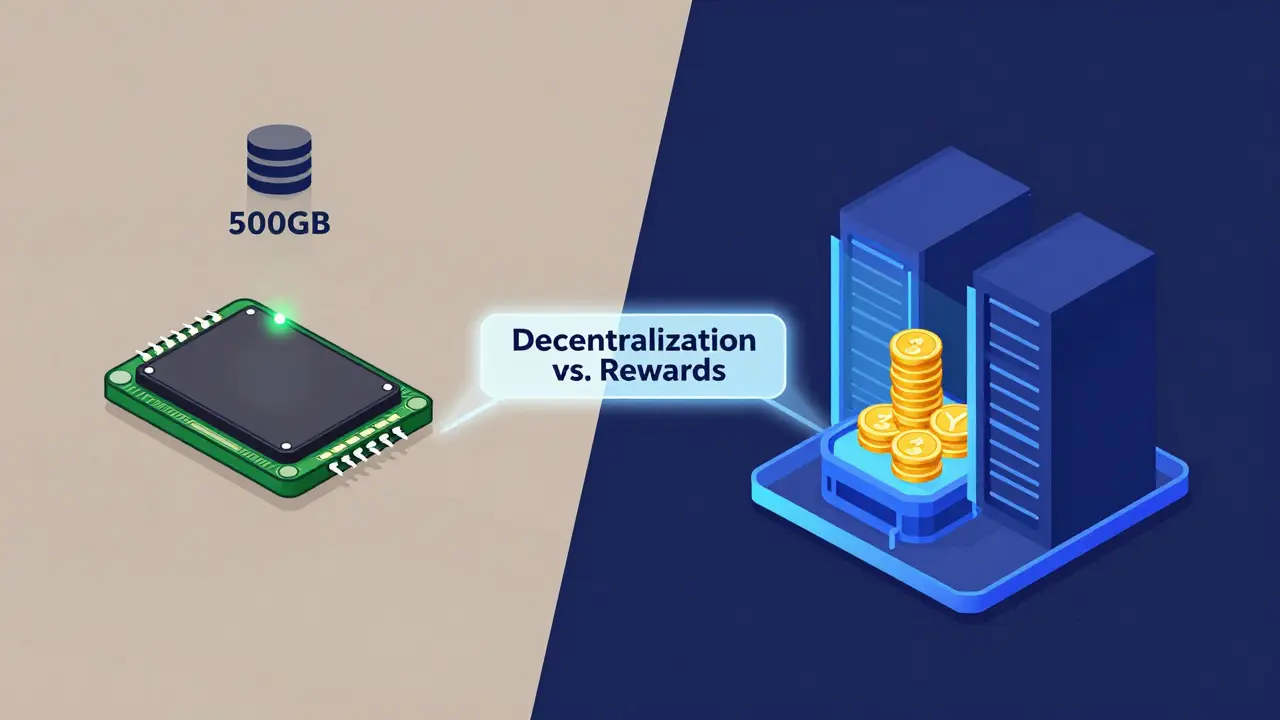
Common Mistakes and How to Avoid Them
- Mistake: Thinking you can run a validator on a laptop. Fix: Validators need 24/7 uptime. A laptop that sleeps or shuts down will get slashed. Use a dedicated server or cloud instance.
- Mistake: Believing full nodes are useless because they don’t earn rewards. Fix: They’re the reason the network isn’t controlled by a few exchanges. Your node helps others trust the chain.
- Mistake: Running a validator without monitoring. Fix: Use Grafana, Prometheus, or a simple Discord bot to alert you when your validator misses attestations.
- Mistake: Ignoring storage growth on full nodes. Fix: Set up automatic cleanup or plan to upgrade your drive every 12-18 months.
- Mistake: Using a third-party staking service without understanding the risks. Fix: If you’re not running your own validator, you’re trusting someone else’s security. Know who they are.
Final Thoughts
Validator nodes and full nodes aren’t competitors. They’re partners. Validators secure the chain. Full nodes verify it. One creates value. The other protects truth. If you care about ownership, run a full node. It’s the simplest way to say, ‘I don’t trust anyone - I check for myself.’ If you care about earning, and you’re ready for the responsibility, run a validator. But know the risks. The rewards are real. So are the penalties. In 2025, blockchain isn’t just about buying crypto. It’s about participating. And whether you choose to validate or verify, you’re helping build a system that doesn’t need banks, brokers, or bosses to work.Can I run a validator node and a full node on the same machine?
Yes, you can - and many do. On Ethereum, for example, you run a validator client (like Lighthouse or Prysm) alongside an execution client (like Geth or Nethermind). Both are full nodes by default. But the hardware must handle both workloads. A machine that barely meets validator specs will struggle with the extra load. For most people, it’s better to separate them: use a cloud validator and a low-cost local full node.
Do I need to be a developer to run a full node?
No. Running a Bitcoin or Ethereum full node doesn’t require coding skills. You download the official software (like Bitcoin Core or Geth), follow the setup guide, and wait for it to sync. Most users do this on a desktop or a small server. The hardest part is waiting 24-72 hours for the blockchain to download. After that, it’s mostly automatic.
What happens if my validator goes offline?
If your validator misses attestations (votes), you lose a small portion of your staked ETH - typically 0.01% per missed slot. If it’s offline for days, penalties compound. If it’s offline for more than 2 weeks, you may be ejected from the validator set. But you won’t be slashed unless you double-sign or behave maliciously. Most downtime is due to internet issues or reboots - not fraud.
Is running a full node worth it if I don’t earn anything?
Absolutely. Full nodes are the reason blockchains remain decentralized. If everyone only trusted exchanges or wallet apps, the network would become vulnerable to censorship and manipulation. Your node helps others verify transactions without relying on third parties. It’s a public good. And in a world where regulation is tightening, having your own copy of the chain is becoming a form of financial sovereignty.
Can I stake less than 32 ETH on Ethereum?
You can’t run your own validator with less than 32 ETH - that’s the protocol rule. But you can join a staking pool like Lido, Coinbase, or Kraken. They combine small stakes from thousands of users into full validators. You get proportional rewards, but you’re trusting their infrastructure. You also give up direct control. It’s easier, but less decentralized.
Will validator rewards disappear in the future?
Yes - gradually. Ethereum’s block rewards are already dropping. By 2025, annual issuance will fall to 0.25% of total supply. That means lower APY. Future rewards will rely more on transaction fees than new coin issuance. Validators will need to optimize costs or rely on higher transaction volumes. This trend is happening across all major PoS chains. Long-term, running a validator may become a business, not a side income.


Author
Ronan Caverly
I'm a blockchain analyst and market strategist bridging crypto and equities. I research protocols, decode tokenomics, and track exchange flows to spot risk and opportunity. I invest privately and advise fintech teams on go-to-market and compliance-aware growth. I also publish weekly insights to help retail and funds navigate digital asset cycles.