
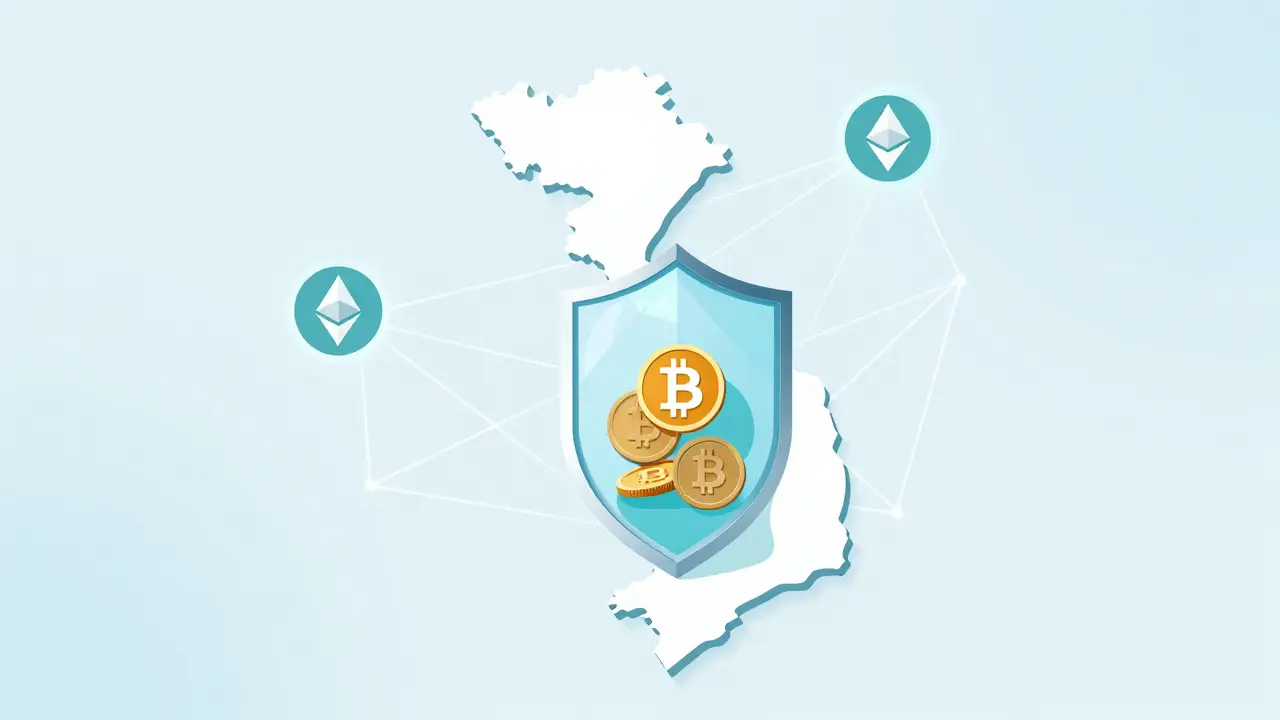
For years, living in Vietnam meant navigating a grey area when it came to cryptocurrency. You could own Bitcoin or Ethereum, but you couldn't legally trade them through banks, and using them for payments was strictly prohibited. That changed dramatically in late 2025. The government launched the world’s first comprehensive five-year pilot program for virtual assets, running from September 9, 2025, to September 8, 2030.
If you are an investor, a business owner, or just someone curious about how this affects your wallet, the landscape has shifted from "don't ask, don't tell" to "follow these specific rules." This isn't just about permission; it's about strict control. Let's break down what this new legal framework actually means for you, especially with the full law taking effect on January 1, 2026.
The Legal Foundation: From Prohibition to Regulation
To understand where we stand in mid-2026, we need to look at the two pillars holding up this new system. First, there is Law No. 71/2025/QH15 on Digital Technology Industry, passed by the National Assembly in June 2025. This law formally recognized virtual assets as legitimate property under the Civil Code. Before this, your crypto holdings had no clear legal standing as an asset class.
Second, and more immediately relevant to daily operations, is Resolution 05/2025/NQ-CP. Signed by Deputy Prime Minister Ho Duc Phoc on September 9, 2025, this resolution established the operational guidelines for the pilot program. It created a controlled runway for technology and capital to operate within a legal boundary. Instead of letting the market grow in the shadows, the government decided to bring it into the light-but only under their watchful eye.
This shift makes Vietnam unique globally. While countries like China maintain total bans, and others like India impose heavy taxes without clear frameworks, Vietnam has chosen a middle path: regulated acceptance. However, "regulated" doesn't mean "free-for-all." The restrictions are tight, designed to prevent money laundering and protect national financial stability.
What Counts as a Virtual Asset?
One of the biggest changes is how the law defines what you can hold. The new framework splits digital assets into three distinct categories:
- Virtual Assets: Electronic environment assets used for exchange or investment. This explicitly excludes securities and digital forms of legal currency (like central bank digital currencies).
- Crypto Assets: A specialized subset that uses encryption technology to authenticate creation, issuance, storage, and transfer. Think Bitcoin, Ethereum, and other major tokens.
- Other Virtual Assets: Anything else that doesn't fit into the first two buckets.
Why does this distinction matter? Because the rules for trading crypto assets are stricter than for general virtual assets. If you are holding NFTs or utility tokens, they fall under different scrutiny levels compared to pure cryptocurrencies. Understanding which bucket your asset falls into is crucial for compliance.
The Six-Month Transition: The Most Critical Window
Here is the part that requires your immediate attention if you are trading. The Ministry of Finance is responsible for licensing crypto asset service providers. The first licensed organizations were expected to begin operations within six months of the resolution's effective date.
Once those first licenses are issued, a clock starts ticking for domestic investors. You have a limited transition period to migrate all your trading activities to these licensed platforms. After this window closes, using unlicensed offshore exchanges or peer-to-peer services for domestic transactions becomes illegal. Non-compliance carries serious consequences, ranging from administrative fines to criminal liability depending on the severity of the violation.
As of mid-2026, this transition is underway. Many users report anxiety about finding compliant platforms that offer the same liquidity and features as the offshore giants they used before. The learning curve is steep, and support infrastructure is still developing. Legal counsel is becoming a necessity rather than a luxury for serious traders.

Restrictions That Remain: Payments and Banking
Despite the legalization of ownership and trading, some old restrictions remain firmly in place. The State Bank of Vietnam continues to prohibit the use of cryptocurrency as a payment method. You cannot buy coffee with Bitcoin here. Furthermore, traditional financial institutions are barred from processing crypto-related transactions directly.
This creates a unique friction point. You can legally own and trade crypto through licensed providers, but you cannot easily move fiat currency (VND) to and from your crypto accounts via standard banking channels. Licensed providers must develop their own secure mechanisms for on-ramping and off-ramping funds, often relying on specialized non-bank payment processors. This separation is intentional-it prevents crypto volatility from impacting the broader banking system.
Taxation and Mining: The Unknown Variables
Two areas remain shrouded in uncertainty: taxation and mining. Currently, temporary application of securities taxation rules applies until specific crypto tax regulations emerge. This means profits from trading might be taxed similarly to stock gains, but the exact rates and reporting requirements are not yet finalized. The Ministry of Finance is working on detailed guidance, but businesses are advised to prepare for worst-case scenarios regarding audit trails.
Mining remains in regulatory limbo. There is no explicit ban, but there is also no clear license category for miners. Given Vietnam's energy constraints and environmental goals, large-scale industrial mining faces significant hurdles. Small-scale hobbyist mining exists in a grey zone, but scaling up without clarification risks enforcement actions. Watch for sector-specific rules expected later in the pilot period.

Comparison: Vietnam vs. Regional Neighbors
| Country | Ownership Status | Trading Legality | Payment Use | Key Restriction |
|---|---|---|---|---|
| Vietnam | Legal (Asset) | Legal (Licensed Only) | Prohibited | No bank processing; strict KYC/AML |
| China | Banned | Banned | Banned | Total prohibition of activities |
| India | Legal | Legal | Restricted | High taxation (30% + TDS) |
| Singapore | Legal | Legal (MAS Licensed) | Allowed | Strict marketing rules |
Vietnam's model sits between the total bans of China and the open markets of Singapore. It aims to capture regional digital asset flows while maintaining strict capital controls. For Vietnamese citizens, this offers legal protection previously unavailable. For foreign investors, it provides a structured entry point, provided they comply with local anti-money laundering and cybersecurity protocols.
Practical Steps for Investors and Businesses
If you want to participate in this pilot program safely, here is what you need to do right now:
- Identify Licensed Providers: Do not assume every platform you know is licensed. Check the Ministry of Finance registry regularly. Only use platforms that have received official approval.
- Prepare Documentation: Compliance requires robust identity verification, source-of-funds documentation, and adherence to anti-terrorism financing measures. Have your records ready.
- Monitor Tax Updates: Consult with a local tax advisor. Since specific crypto tax laws are pending, treat all gains as taxable income until told otherwise.
- Avoid P2P Risks: While informal peer-to-peer trading feels convenient, it lacks legal protection under the new framework. Stick to licensed channels to avoid sanctions.
- Stay Informed on Mining: If you mine, keep operations small and monitor announcements regarding energy usage and industrial licensing.
The transition is messy. Social media discussions reflect cautious optimism mixed with frustration over bureaucratic hurdles. But the direction is clear: Vietnam is building a formalized crypto economy. Ignoring the rules is no longer an option.
Looking Ahead: 2026 to 2030
The pilot program runs until September 2030. Success depends on effective enforcement and industry compliance. Early data shows strong demand, with daily transaction volumes exceeding $600 million before the full rollout. As the framework matures, we expect more clarity on decentralized finance (DeFi) and non-fungible tokens (NFTs), which currently exist in secondary focus areas.
Risks remain. Regulatory capture by established financial institutions could limit access for smaller players. Conflicts between local rules and international standards may create friction for global firms. However, the government's commitment to the five-year timeline suggests a long-term vision. For those willing to navigate the complexity, Vietnam offers a rare opportunity to participate in a newly legalized digital asset market.
Is cryptocurrency legal in Vietnam in 2026?
Yes, owning and trading cryptocurrency is legal in Vietnam under the five-year pilot program (2025-2030). However, it must be done through licensed service providers approved by the Ministry of Finance. Using unlicensed platforms or offshore exchanges for domestic transactions is prohibited.
Can I use Bitcoin to pay for goods in Vietnam?
No. The State Bank of Vietnam prohibits the use of cryptocurrency as a payment method. Crypto is recognized as an investment asset, not legal tender. You cannot use it to buy products or services directly.
What happens if I trade on unlicensed platforms?
Trading on unlicensed platforms after the transition period ends exposes you to administrative sanctions or potential criminal liability. The government enforces strict compliance to prevent money laundering and ensure market stability.
How are crypto profits taxed in Vietnam?
Specific crypto tax regulations are still being developed. Currently, temporary securities taxation rules apply. Investors should consult tax professionals and prepare for audits, as final guidelines are expected before the end of the pilot program.
Is crypto mining allowed in Vietnam?
Mining exists in a regulatory grey area. There is no explicit ban, but no specific license category exists yet. Large-scale industrial mining faces significant hurdles due to energy policies. Small-scale hobbyist mining is tolerated but risky without clear future guidelines.
When does the pilot program end?
The current pilot program runs until September 8, 2030. The full legal framework under Law No. 71/2025/QH15 took effect on January 1, 2026. Extensions or permanent adoption will depend on performance metrics during the pilot phase.


Author
Ronan Caverly
I'm a blockchain analyst and market strategist bridging crypto and equities. I research protocols, decode tokenomics, and track exchange flows to spot risk and opportunity. I invest privately and advise fintech teams on go-to-market and compliance-aware growth. I also publish weekly insights to help retail and funds navigate digital asset cycles.