

Quick Summary / Key Takeaways
- SENSO is the native utility token for Sensorium Galaxy, a blockchain-based social virtual reality platform focused on immersive arts and entertainment.
- The token operates as an ERC-20 token on the Ethereum blockchain, used for buying virtual items, minting NFTs, and participating in DAO governance.
- With a total supply of 1.7 billion tokens but only ~70 million in circulation, SENSO has significant locked reserves that could impact future price dynamics.
- Unlike gaming-focused metaverses like The Sandbox, Sensorium targets premium live events such as VR concerts with artists like David Guetta and Ministry of Sound.
- Risks include high dependency on single-platform adoption, Ethereum gas fees, and slower user growth compared to competitors like Decentraland.
What Is SENSO Crypto?
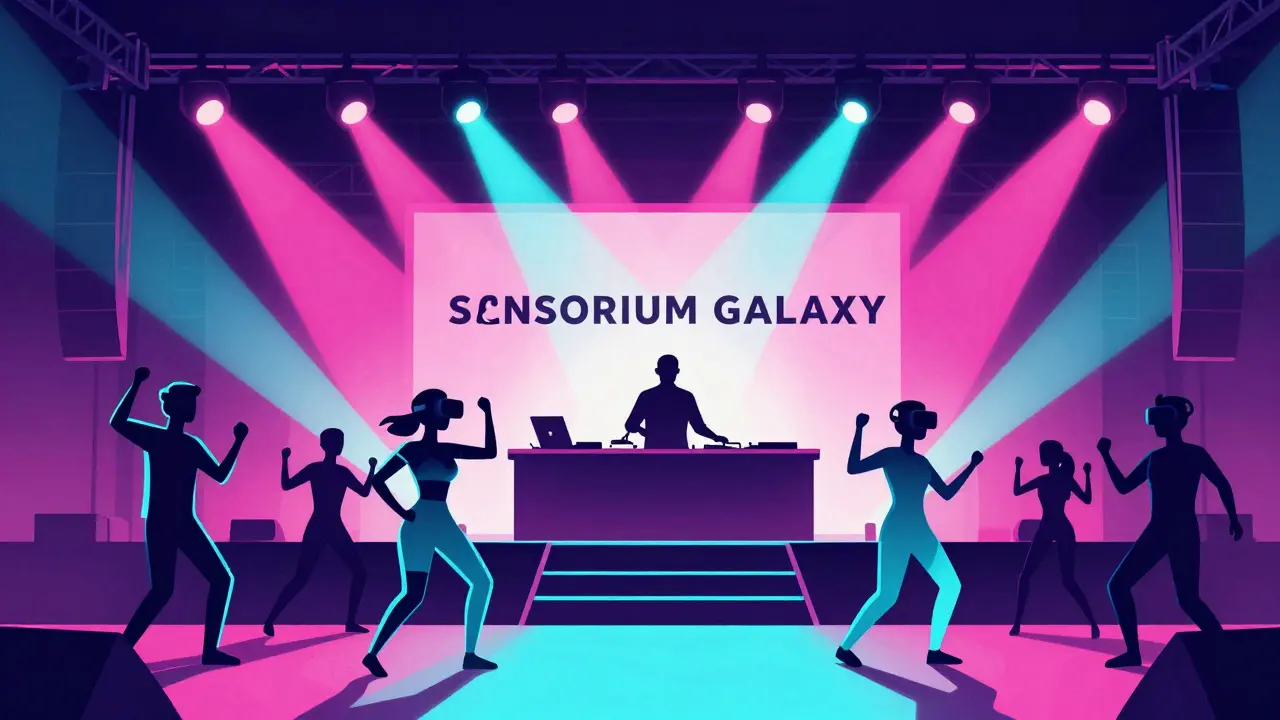
If you have been scrolling through crypto news lately, you might have seen the ticker SENSO. It is not just another random coin popping up on your exchange list. SENSO is the fuel behind Sensorium Galaxy, an immersive digital universe where people hang out, attend concerts, and experience art in virtual reality. Think of it as the currency inside a specific theme park. You do not use dollars to buy rides or souvenirs there; you use the park’s own tokens. In this case, that token is SENSO.
Sensorium Galaxy launched its project to blend artificial intelligence, blockchain technology, and high-fidelity virtual reality. The goal was simple: create a place where fans could feel like they are front-row at a concert without leaving their living room. To make this economy work, they needed a native asset. That is why SENSO exists. It handles everything from paying for avatar clothes to voting on how the platform should evolve.
How Does the SENSO Token Work?
To understand SENSO, you need to look at what it actually does. It is classified as a utility token, a type of cryptocurrency designed to provide access to a product or service rather than representing ownership in a company. This means it is not a security like a stock. Instead, it is a tool. Here is how users interact with it daily:
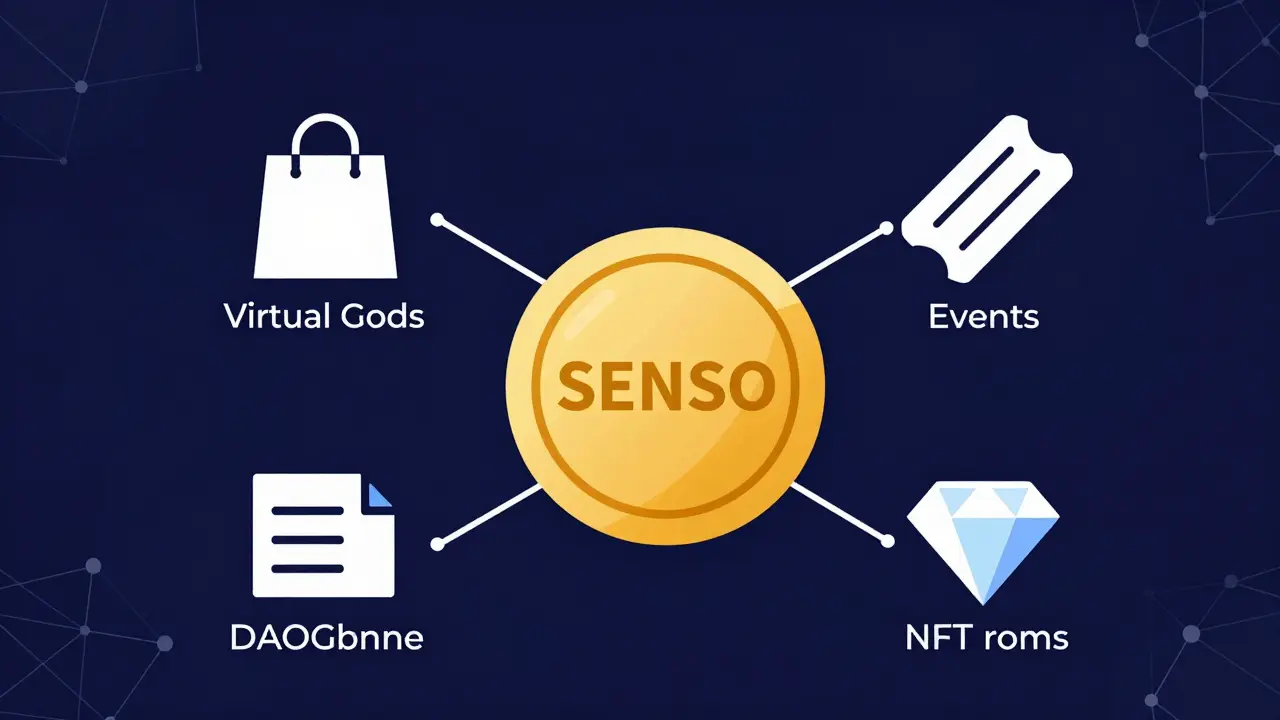
- Purchasing Virtual Goods: Want a new skin for your avatar or a special badge? You pay with SENSO in the built-in store.
- Minting NFTs: Creators use SENSO to mint non-fungible tokens. These can be unique digital artworks, avatar accessories, or even tickets to exclusive events.
- Governance: Holders can participate in the DAO (Decentralized Autonomous Organization). This lets the community vote on major decisions regarding the platform’s future, ensuring the users have a say in how things run.
- Ticketing: Access to premium VR experiences, like live DJ sets or artist meet-and-greets, often requires SENSO.
Technically, SENSO runs on the Ethereum blockchain as an ERC-20 standard token. This choice makes sense because Ethereum is widely supported by wallets like MetaMask and exchanges. However, relying on Ethereum also means dealing with its downsides, such as network congestion and variable gas fees. The team has discussed migrating to the Substrate framework in the future to improve scalability, but as of mid-2026, the primary infrastructure remains Ethereum-based.
Tokenomics: Supply, Burn, and Circulation
One of the most critical aspects of any crypto investment is understanding the supply mechanics. SENSO has a fixed total supply of 1.7 billion tokens. But here is the catch: not all of them are floating around the market. According to data from Coinbase and earlier reports from BeInCrypto, only about 70 million SENSO tokens are currently in circulation.
Where did the rest go? Back in April 2021, the Sensorium team executed a massive token burn. They sent 70% of the initial emission to an inaccessible "eater smart contract." This move was designed to reduce inflationary pressure and demonstrate commitment to long-term value. By locking or burning the majority of the supply, the team aimed to prevent early investors from dumping millions of tokens onto the market all at once.
This creates a unique dynamic. With a low circulating supply relative to the total, the token can be more volatile. If large amounts of the reserved tokens ever enter circulation, it could dilute the value. Conversely, if demand for VR experiences grows while supply stays tight, the scarcity could drive prices up. Investors need to watch these reserve releases closely.
| Feature | SENSO (Sensorium Galaxy) | MANA (Decentraland) | SAND (The Sandbox) |
|---|---|---|---|
| Blockchain | Ethereum (ERC-20) | Ethereum (ERC-20) | Ethereum (ERC-20) |
| Primary Focus | Premium Live Events & Arts | User-generated Worlds & Gaming | Gaming & Brand Partnerships |
| Total Supply | 1.7 Billion | 2.19 Billion | 3 Billion |
| Circulating Supply | ~70 Million | ~1.6 Billion | ~1.4 Billion |
| Key Utility | Concert Tickets, NFT Minting, DAO | Land Purchase, Avatars, Governance | Game Creation, Land, Staking |
| Major Partners | Ministry of Sound, David Guetta, HTC Vive | Atari, Adidas, Samsung | Adidas, Snoop Dogg, Ubisoft |
Why Choose Sensorium Galaxy Over Other Metaverses?
You might wonder, "Why not just use Decentraland or The Sandbox?" Those platforms are giants in the space, but they focus heavily on gaming and user-generated content. Sensorium Galaxy takes a different path. It positions itself as a premium entertainment hub.
Imagine attending a concert by a top-tier electronic music producer. In traditional VR, you might see avatars waving hands awkwardly. In Sensorium, the integration of AI-driven virtual beings and high-quality audio aims to replicate the energy of a real club. They have secured partnerships with major entities like Ministry of Sound and artists like David Guetta. This gives SENSO a distinct edge in the music and arts vertical.
Furthermore, the platform emphasizes direct support for creators. When you buy a ticket or an NFT, a portion goes directly to the artist. For example, electronic music producer Reboot reportedly earned over 15,000 SENSO tokens from virtual performances in early 2022. This creator-first approach attracts a specific demographic: fans who want deeper engagement with their favorite artists, not just gamers looking for a sandbox to build in.
Risks and Challenges to Consider
No crypto asset is without risk, and SENSO has some specific hurdles. First, there is the "single-point-of-failure" problem. The value of SENSO is entirely tied to the success of Sensorium Galaxy. If the platform fails to attract users or loses its key artist partnerships, the token’s utility evaporates. Unlike Bitcoin, which has global utility, or Ethereum, which powers thousands of apps, SENSO only works within one ecosystem.
Second, accessibility remains a barrier. Virtual Reality headsets are still expensive and require powerful computers. While Sensorium partners with hardware makers like HTC Vive to pre-install their software, the addressable market is smaller than mobile gaming. Trustpilot reviews from 2022-2023 highlighted that about 32% of users faced technical difficulties, particularly newcomers struggling with the VR learning curve.
Third, regulatory uncertainty looms over all utility tokens. While Coinbase lists SENSO as a utility token, the SEC’s stance on digital assets continues to evolve. Any reclassification could impact trading availability on major exchanges. Currently, SENSO trades on mid-tier exchanges like KuCoin, Poloniex, and MEXC, but its absence from top-tier venues like Binance limits liquidity and retail exposure.
How to Buy and Store SENSO
If you decide to get involved, the process is straightforward but requires attention to detail. Since SENSO is an ERC-20 token, you cannot hold it in a basic email-linked account. You need a wallet that supports Ethereum.
- Choose an Exchange: Platforms like MEXC, KuCoin, and Poloniex list SENSO. You can buy it using credit cards, PayPal, or bank transfers depending on the exchange’s features.
- Set Up a Wallet: Download a non-custodial wallet like MetaMask. This gives you full control over your private keys. Never share your seed phrase with anyone.
- Transfer Tokens: Withdraw SENSO from the exchange to your MetaMask address. Ensure you select the Ethereum network during withdrawal to avoid losing funds.
- Connect to Sensorium: Once you have SENSO in your wallet, connect it to the Sensorium Galaxy platform to start purchasing items or attending events.
Keep in mind that Ethereum gas fees can add up. During peak network times, sending SENSO might cost more than the transaction itself. Monitoring gas trackers before moving large amounts can save you money.
Future Outlook: What Lies Ahead for SENSO?
The roadmap for Sensorium Galaxy includes ambitious plans. One key goal is achieving cross-platform interoperability by 2025. This would allow SENSO to be used beyond just Sensorium’s walls, potentially integrating with other VR environments. If successful, this would drastically increase the token’s utility and demand.
Market analysts remain cautious. LBank’s prediction models suggest a modest price target of around $0.00294 by 2026, reflecting the niche nature of the project. However, Bitget notes that if VR headset adoption accelerates and Sensorium hits its user acquisition targets, annual growth could range between 15-25%. The partnership with HTC Vive provides a distribution channel that many competitors lack, offering a potential advantage in reaching early adopters.
Ultimately, SENSO’s fate rests on execution. Can Sensorium maintain its high-quality events? Can it onboard enough users to create a vibrant economy? If yes, SENSO could become a staple in the digital arts economy. If no, it risks becoming another forgotten metaverse token. As always, do your own research and never invest more than you can afford to lose.
Is SENSO a good investment?
Whether SENSO is a good investment depends on your belief in the long-term viability of virtual reality entertainment. It carries higher risk than major cryptocurrencies like Bitcoin due to its reliance on a single platform's success. However, if Sensorium Galaxy captures a significant share of the premium VR event market, the low circulating supply could lead to value appreciation. Always consult financial advice before investing.
Can I use SENSO outside of Sensorium Galaxy?
Currently, SENSO has limited utility outside the Sensorium Galaxy ecosystem. Its primary use cases are purchasing virtual goods, minting NFTs, and governance within the platform. Future roadmaps mention cross-platform interoperability, but as of mid-2026, it remains largely confined to Sensorium’s environment.
What is the difference between SENSO and MANA?
MANA is the token for Decentraland, which focuses on user-generated worlds, land ownership, and general gaming. SENSO is for Sensorium Galaxy, which specializes in high-fidelity live events, music concerts, and artistic experiences. MANA has a larger circulating supply and broader brand recognition, while SENSO targets a niche premium entertainment audience.
Do I need a VR headset to use SENSO?
While you can hold and trade SENSO on exchanges without a headset, fully utilizing its purpose-attending events and exploring the metaverse-requires compatible VR hardware. Sensorium Galaxy optimizes for devices like HTC Vive and Oculus Quest. Without a headset, you miss out on the core immersive experience that drives token demand.
Is SENSO secure?
SENSO operates on the Ethereum blockchain, inheriting its robust security features. Transactions are immutable and transparent. However, security risks arise from user error, such as phishing scams or poor wallet management. Always verify contract addresses and use reputable wallets like MetaMask. The token itself has not suffered major hacks, but the broader crypto space remains vulnerable to external threats.
Author
Ronan Caverly
I'm a blockchain analyst and market strategist bridging crypto and equities. I research protocols, decode tokenomics, and track exchange flows to spot risk and opportunity. I invest privately and advise fintech teams on go-to-market and compliance-aware growth. I also publish weekly insights to help retail and funds navigate digital asset cycles.