

When you hear the name Cryptojacks (CJ), you might think it’s just another altcoin trying to break into the crypto scene. But the truth is far more straightforward - and far less exciting. Cryptojacks isn’t a living project. It’s a ghost. A relic from 2016 that stopped moving years ago, with no trading, no updates, and no future.
What Cryptojacks Was Supposed to Be
Cryptojacks launched on October 24, 2016, with a clear goal: to be the go-to cryptocurrency for online gambling. Back then, blockchain-based casinos were still new. People were excited about the idea of provably fair games, instant payouts, and anonymous betting. Cryptojacks aimed to ride that wave. It wasn’t built on Ethereum or any smart contract platform. It had its own blockchain, using the X13 hashing algorithm - the same one Dash used - designed to be secure and resistant to ASIC mining. That meant regular PCs could still mine it in the early days. The total supply was locked at 406,568,580.90842 CJ coins. No more could ever be created. That’s a fixed number. No inflation. No surprises. Sounds good on paper, right? But here’s the catch: no one ever built the ecosystem to make it useful.Why It Never Took Off
Cryptojacks didn’t fail because it was poorly coded. It failed because timing and competition killed it. By 2017, Ethereum-based gambling tokens like FunFair (FUN) and Edgeless (EDG) started appearing. These weren’t just coins - they were full platforms. Smart contracts handled game logic automatically. Players could verify fairness without trusting a casino. They had real communities, active developers, and listings on major exchanges. Cryptojacks? It had a website that went dark in 2019. No GitHub updates after October 2016. No Discord. No Twitter. No Reddit activity after 2018. The gambling crypto space didn’t just move on - it left Cryptojacks behind. While FunFair hit a market cap of $35 million in 2023, Cryptojacks’ market cap hovered around $400,000 in early 2024 - and even that number is misleading. There’s been zero trading volume since October 15, 2019. Not a single CJ coin has changed hands in over four years.The Numbers Don’t Lie
Let’s break down the facts:- Price: CoinMarketCap lists it at $0.0009827; LiveCoinWatch says $0.000083. Why the difference? Because no one’s buying. Prices are just guesses from tiny, outdated trades.
- Market Cap: Around $399,540 on CoinMarketCap - but only because the circulating supply is multiplied by a price that hasn’t been validated by real trades in years.
- Exchange Listings: Zero. Not on Binance. Not on Coinbase. Not on Kraken. Not even on obscure ones.
- Wallet Activity: In late 2016, around 1,200 wallets held CJ. By 2018, that dropped to under 50. Today? Probably less than 10. Maybe none.
- Blockchain Explorer: No integration with major explorers. It uses a strange "UCID 1306" identifier instead of standard addresses. That’s not a feature - it’s a red flag.
Is It Still Mineable?
Technically, yes. The X13 algorithm still exists. You could still run a miner. But there’s no point. Mining pools shut down years ago. The original wallet software hasn’t been updated since 2016. If you download it now, it won’t sync with the network. Even if it did, you’d be mining coins with no buyers, no value, and no way to spend them. And here’s the kicker: the website - cryptojacks.com - has been offline since at least July 2019. The Wayback Machine shows a broken, empty page. No downloads. No support. No hope.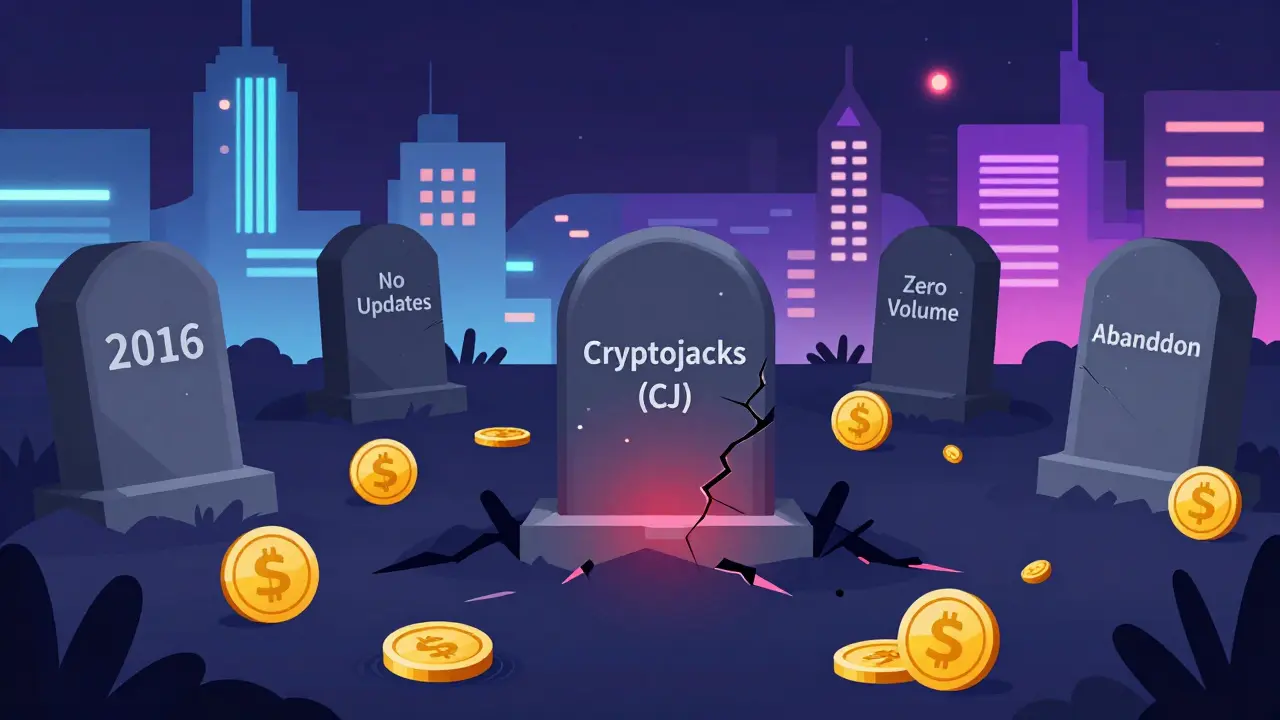
What Experts Say
Cryptocurrency researcher Alex Saunders called Cryptojacks a "zombie coin" in a 2020 report - a coin that’s technically alive but functionally dead. BitBoy Crypto’s Ben Armstrong called it out in his "Crypto Graveyard" series: "It was a niche token with no community, no updates, and no reason to exist once better tech came along." CoinGecko’s 2022 report put it bluntly: "Effectively zero network activity and no measurable community engagement." Messari’s 2023 report says tokens with zero trading volume for over three years have a 99.8% chance of permanent abandonment. Cryptojacks has been dead for more than five.Should You Buy It?
No. Not because it’s a scam. Not because it was a Ponzi. But because it’s already over. There’s no upside. No roadmap. No team. No exchange. No future. Some people still hold CJ out of nostalgia. Maybe they mined a few coins back in 2016 and forgot about them. Others bought it on obscure exchanges during a hype spike, never realizing it was dead. But if you’re thinking of buying CJ now - even at a fraction of a cent - you’re not investing. You’re collecting a digital artifact.Where Does Cryptojacks Fit Today?
Cryptojacks belongs in a museum. Not the kind with glass cases and plaques. The kind you find in a GitHub archive, a forgotten Bitcointalk thread, or a CoinMarketCap ranking at #6336 - buried under thousands of more active coins. It’s a lesson. Not about how to build a successful crypto project. But about what happens when you build something for a market that moves faster than you do. When your website goes dark. When your devs disappear. When your community stops talking. You don’t get a second chance. Cryptojacks (CJ) is not a coin you trade. It’s not a coin you mine. It’s not a coin you invest in. It’s a coin that died.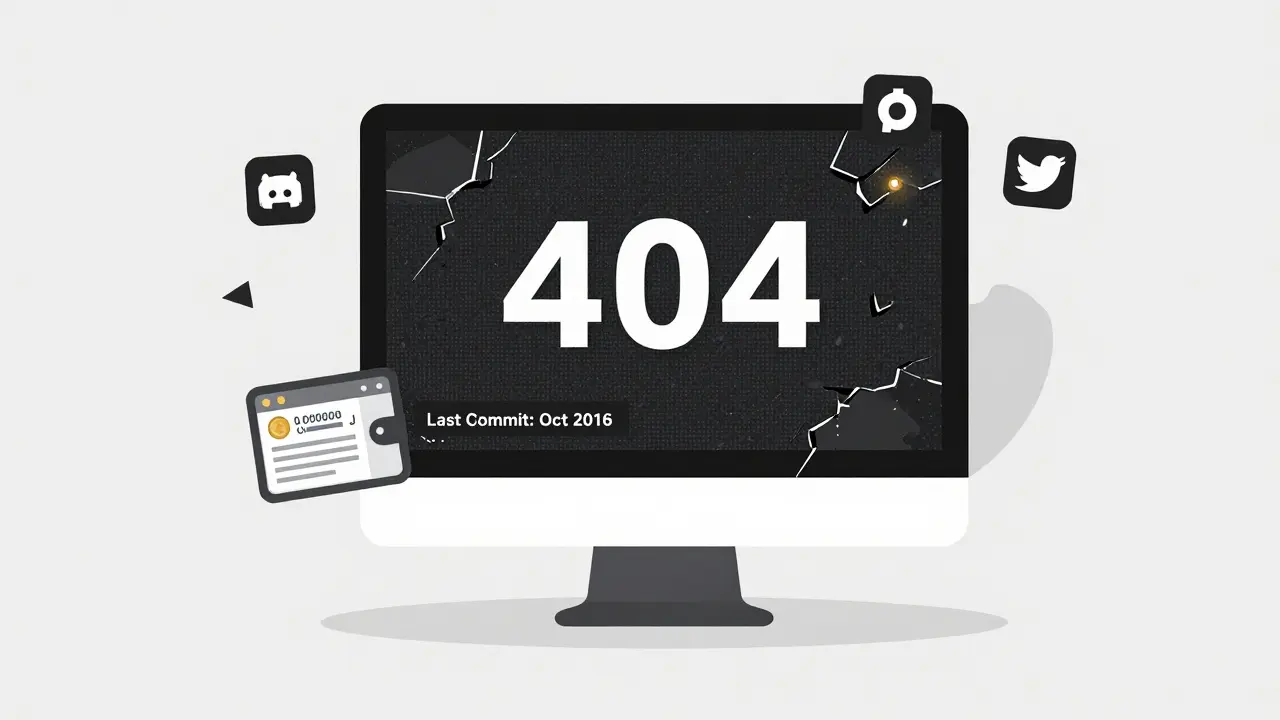
What Happened to the Team?
No one knows. The founders were anonymous. No names. No LinkedIn profiles. No interviews. No press releases. After the initial launch, they vanished. No updates. No announcements. No explanations. Just silence. In the crypto world, anonymity isn’t always bad. But when you disappear without a trace - and your project stops working - it looks like abandonment, not privacy.Could Cryptojacks Come Back?
Theoretically, yes. Someone could fork the code, revive the blockchain, relaunch the website, and rebuild the community. But there’s zero evidence anyone’s trying. No GitHub commits since 2016. No Discord activity. No Telegram group. No Reddit posts in six years. No news. No whispers. In crypto, revival is rare. And when it happens, it’s loud. It’s backed by a team. It has funding. It has a roadmap. Cryptojacks has none of that. It’s not a sleeper hit. It’s not a hidden gem. It’s a tombstone.Final Thoughts
Cryptojacks (CJ) is a cautionary tale. It’s not a coin you should care about unless you’re studying the history of failed crypto projects. It has no utility. No liquidity. No future. If you see CJ listed somewhere, don’t be fooled by the price. That number is meaningless. There’s no market. No buyers. No sellers. The only thing left of Cryptojacks is its name - and even that’s fading.Is Cryptojacks (CJ) still being traded?
No. Cryptojacks has had zero trading volume on any major exchange since October 15, 2019. All platforms, including CoinMarketCap and Binance, report $0 in 24-hour trading. The price you might see online is based on outdated, isolated trades - not real market activity.
Can I still mine Cryptojacks today?
Technically, yes - the X13 algorithm still exists. But there are no active mining pools, no updated wallets, and no way to sync with the blockchain. Even if you mine a coin, you can’t send it or sell it. Mining CJ today is like building a car with no roads to drive on.
Is Cryptojacks listed on Binance or Coinbase?
No. Neither Binance nor Coinbase lists Cryptojacks. Binance explicitly states it is "not listed for trading and services." Coinbase has never supported it. You won’t find CJ on any major exchange.
What was Cryptojacks used for?
Cryptojacks was created as a cryptocurrency for online gambling platforms in 2016. It was meant to be used for betting on games like dice, poker, and slots. But it never gained traction because better, Ethereum-based alternatives like FunFair launched shortly after, offering smart contracts and provably fair systems.
Why did Cryptojacks fail?
It failed because it had no active development, no community, and no exchange support after 2018. Its website went offline in 2019. The team disappeared. Meanwhile, competitors built better, transparent gambling platforms on Ethereum. Without updates or users, Cryptojacks became obsolete.
Can I recover my Cryptojacks coins if I still have them?
You can still access your wallet if you have the private keys - but there’s nowhere to send the coins, no exchange to sell them, and no value attached to them. They’re essentially digital collectibles with no utility. There’s no recovery path because there’s no active network to interact with.


Author
Ronan Caverly
I'm a blockchain analyst and market strategist bridging crypto and equities. I research protocols, decode tokenomics, and track exchange flows to spot risk and opportunity. I invest privately and advise fintech teams on go-to-market and compliance-aware growth. I also publish weekly insights to help retail and funds navigate digital asset cycles.