
BITmarkets Token (BTMT) isn't just another cryptocurrency. It's a utility token built to serve one main purpose: making the BITmarkets exchange better for its users. Unlike Bitcoin or Ethereum, BTMT doesn't aim to be money. Instead, it acts like a membership card that gives you real perks when you trade on the BITmarkets platform.
How BTMT Works on the BITmarkets Platform
BTMT runs on the Polygon blockchain, not Ethereum or Solana. This choice matters because Polygon keeps transaction fees low and speeds up trades. That’s why BITmarkets picked it - lower costs for users mean more people trade more often.
If you hold BTMT, you get discounts on trading fees. The more tokens you own, the bigger the discount. For example, someone holding 10,000 BTMT might pay 0.05% per trade, while someone with 100,000 could pay just 0.01%. That adds up fast if you're trading daily.
But fee cuts aren't the only perk. BTMT holders also get early access to new tokens listed on BITmarkets. Many exchanges hold private sales for new projects, and BTMT owners get in first. This isn't just about being early - it's about getting better pricing before the public sees the token.
Staking BTMT for Passive Income
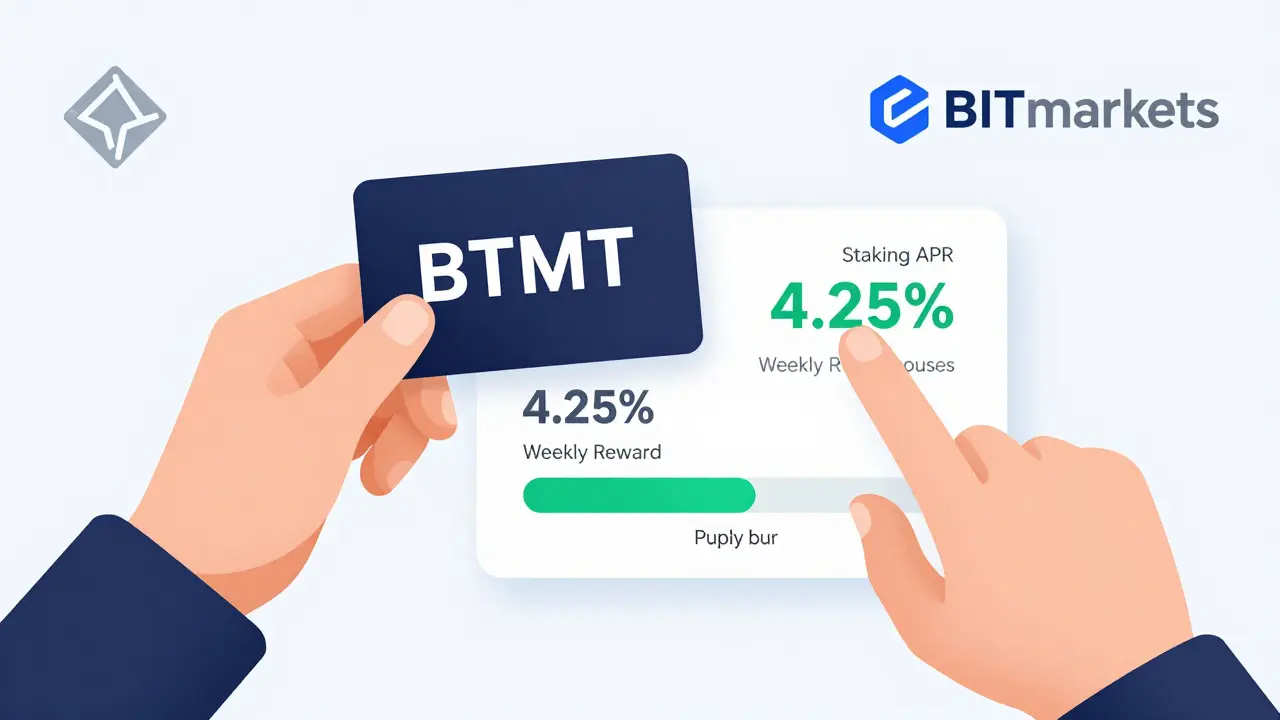
One of the most attractive features of BTMT is staking. You can lock your tokens in the BITmarkets wallet and earn up to 4.25% APR. That’s higher than most savings accounts and competitive among crypto staking options.
There’s no long lock-up period mentioned, so you can withdraw your tokens when you want. The rewards are paid out weekly, and they compound automatically. That means even if you don’t add more BTMT, your balance grows just from holding it.
Staking isn’t just about earning. It also gives you more voting power in the platform’s governance system. The more you stake, the more influence you have over future changes to the exchange.
Governance and ESG Voting
BTMT holders can vote on key decisions. Not just technical upgrades - but also which companies BITmarkets supports. The platform has an Environmental, Social, and Governance (ESG) dashboard where projects apply for funding. Holders vote on which ones get listed and funded.
For example, a team building solar-powered mining rigs could pitch their project. If BTMT holders approve it, BITmarkets allocates funds from token sales to help them launch. This creates a feedback loop: more users = more token sales = more ESG funding = more trust in the platform.
It’s not just marketing. BITmarkets says over 30% of token sale proceeds go directly into ESG projects. That’s unusual in crypto, where most teams just pocket the money.
How to Buy BTMT and Where It Trades
You can buy BTMT directly on the BITmarkets exchange using credit cards, bank transfers, or by swapping other cryptos like USDT, ETH, or BTC. The platform makes it easy - no need to use third-party wallets or complex swaps.
As of March 2026, BTMT trades at around $0.042 to $0.058 depending on the platform. CoinMarketCap shows $0.04205, while Binance lists it at $0.058211. The difference comes down to liquidity. BITmarkets.com has the deepest market, so prices there are more reliable.
The total supply started at 300 million, but the team plans to burn 100 million over time using a deflationary model. That means fewer tokens in circulation = potentially higher value if demand stays steady.
Market Data and Risk Factors
BTMT’s market cap is around $5.46 million, with a fully diluted valuation of $14-17 million. That puts it in the lower tier of crypto assets - ranked between #4220 and #4394 on tracking sites.
There are only about 2,530 wallet addresses holding BTMT. That’s a very small number. When only a few people hold most of the supply, price swings get wild. A single large sell order could drop the price 20% in minutes.
Recent price action shows a 33% drop over the last 30 days. That’s normal for small tokens. The all-time high was $0.123, so we’re still down nearly 70% from peak. Don’t expect steady growth. BTMT moves in spikes - when new features launch, or when it gets listed on another exchange.
BITmarkets says it’s working on getting BTMT listed on other major exchanges. That’s the biggest hope for price stability. More listings = more buyers = less volatility.
Who Should Buy BTMT?
BTMT isn’t for casual investors. If you’re looking for a quick flip, this isn’t the coin. It’s designed for people who already trade on BITmarkets and want to save money on fees.
It’s also good for those who care about ESG. If you want your crypto holdings to support green tech or ethical startups, BTMT gives you real voting power to make that happen.
But if you’re in the U.S. or a sanctioned country, you can’t buy BTMT. BITmarkets blocks access from those regions due to regulatory uncertainty. That limits its growth potential.
The Big Picture: Utility Over Speculation
BTMT’s value doesn’t come from hype. It comes from usage. If more people start trading on BITmarkets, they’ll need more BTMT to get fee discounts. That drives demand. If the platform adds new features - like NFT trading or margin lending - BTMT will be required to access them.
The staking yield, governance rights, and ESG impact make BTMT more than a speculative asset. It’s a tool. And like any tool, its worth depends on how well it works.
Right now, BITmarkets isn’t Binance or Coinbase. But if it grows, BTMT could become essential. If it doesn’t, BTMT might fade into obscurity. That’s the gamble.
Is BTMT a good investment?
BTMT isn’t a traditional investment. It’s a utility token. Its value comes from how much you use the BITmarkets exchange. If you trade frequently, BTMT saves you money on fees and earns you staking rewards. But if you’re just buying to flip it, you’re taking on high risk. The token has low liquidity, a small holder base, and depends entirely on BITmarkets’ growth.
Can I stake BTMT on other platforms?
No. BTMT staking is only available through the official BITmarkets wallet. You can’t stake it on Binance, Coinbase, or third-party staking services. This is intentional - BITmarkets wants to keep all staking activity on its own platform to drive user engagement and control rewards distribution.
Why does BTMT have different prices on different sites?
The price varies because BTMT is only actively traded on BITmarkets.com. Other sites like CoinMarketCap and Binance pull prices from that single exchange, but they use different methods to calculate averages. Some include only large trades, others include small ones. Binance’s price is often higher because it’s based on more active trading volume on its own platform, while CoinMarketCap reflects the slower, less liquid market on BITmarkets.
Is BTMT available in the United States?
No. BITmarkets explicitly blocks U.S. citizens and residents from buying or holding BTMT. This is due to unclear U.S. regulations around utility tokens and the risk of being classified as a security. If you’re in the U.S., you won’t be able to access the platform or purchase BTMT through any means.
What happens if BITmarkets shuts down?
If BITmarkets shuts down, BTMT loses its primary utility. There’s no decentralized network or independent blockchain behind it - it’s tied entirely to the exchange. Without the platform, there’s no fee discounts, no staking, no governance. The token would likely become worthless. That’s why BTMT is not a standalone asset - it’s a service pass.


Author
Ronan Caverly
I'm a blockchain analyst and market strategist bridging crypto and equities. I research protocols, decode tokenomics, and track exchange flows to spot risk and opportunity. I invest privately and advise fintech teams on go-to-market and compliance-aware growth. I also publish weekly insights to help retail and funds navigate digital asset cycles.