
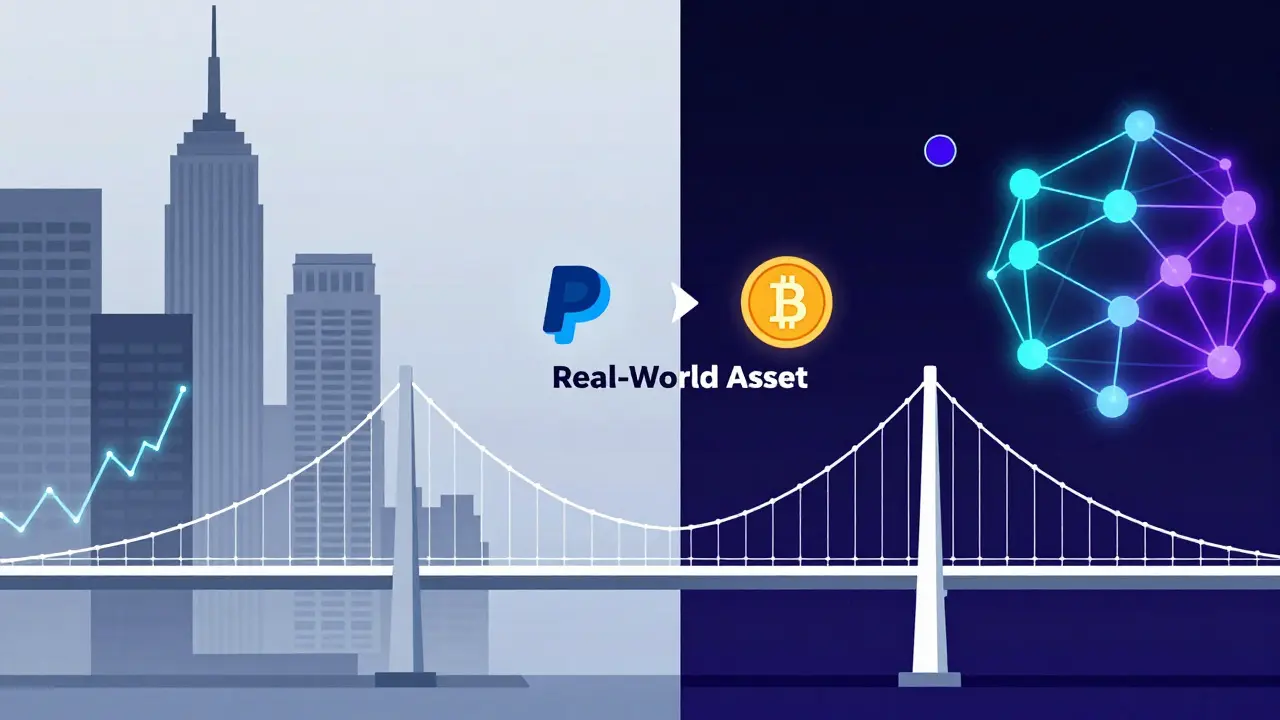
You want exposure to PayPal, a global payments giant, but you are restricted by geographic borders or trading hours. Enter PayPal Tokenized Stock (Ondo), known by the ticker PYPLon, which allows non-US investors to hold a blockchain-based representation of PayPal shares with 24/5 liquidity.. This isn't just another meme coin hoping for viral attention. It belongs to a growing sector called Real-World Assets (RWA), where traditional financial instruments are bridged onto public blockchains. If you have ever wondered how to trade US equities from outside the United States without dealing with complex international banking wires, this asset offers a direct on-chain solution.
The Core Concept: Bridging Wall Street and Blockchain
To understand PYPLon, you first need to grasp what it actually represents. It is not a native cryptocurrency like Bitcoin or Ethereum that derives value from network usage or mining rewards. Instead, it is a digital receipt for ownership in PayPal Inc. (ticker: PYPL). The platform behind this innovation is Ondo Finance, a protocol specializing in bringing institutional-grade real-world assets, such as US Treasuries and equities, onto the blockchain..
When you buy PYPLon, you are essentially buying a tokenized slice of PayPal stock. The design ensures that your economic exposure mirrors holding the actual stock, including the reinvestment of any dividends PayPal might pay out. Think of it as a wrapper. Inside the wrapper is traditional equity; outside is a smart contract on a blockchain. This structure solves a major pain point for global investors: accessibility. Traditional stock markets close at night and on weekends. They also often restrict accounts based on your country of residence. PYPLon removes these barriers for eligible users, allowing trades around the clock, five days a week.
How Does PYPLon Actually Work?
The mechanics rely on a process called minting and redeeming. Authorized participants-often large financial institutions-buy actual PayPal shares on the New York Stock Exchange and deposit them into a custodian account. In exchange, the Ondo protocol mints an equivalent amount of PYPLon tokens on the blockchain. When someone wants to exit their position, they send the tokens back to the protocol, which burns them and releases the underlying cash value from the custodian account.
This mechanism keeps the price of PYPLon tightly correlated with the actual market price of PayPal stock. If PayPal’s share price rises by 5%, the value of PYPLon should theoretically rise by a similar percentage, minus any minor fees associated with the tokenization service. It is important to note that while the token tracks the stock's performance, it operates within the regulatory framework designed for securities. This means there are strict rules about who can participate.
| Feature | PYPLon (Tokenized) | Traditional PYPL Shares |
|---|---|---|
| Trading Hours | 24 hours/day, 5 days/week | 9:30 AM - 4:00 PM ET, Mon-Fri |
| Accessibility | Non-US retail & institutional users | Primarily US residents (or via complex offshore brokers) |
| Custody | Digital wallet (self-custody possible) | Brokerage account |
| Settlement Time | Near-instant (blockchain speed) | T+1 or T+2 business days |
| Dividends | Automatically reinvested into token value | Cash payout to brokerage account |
Who Can Buy PYPLon? Eligibility and Restrictions
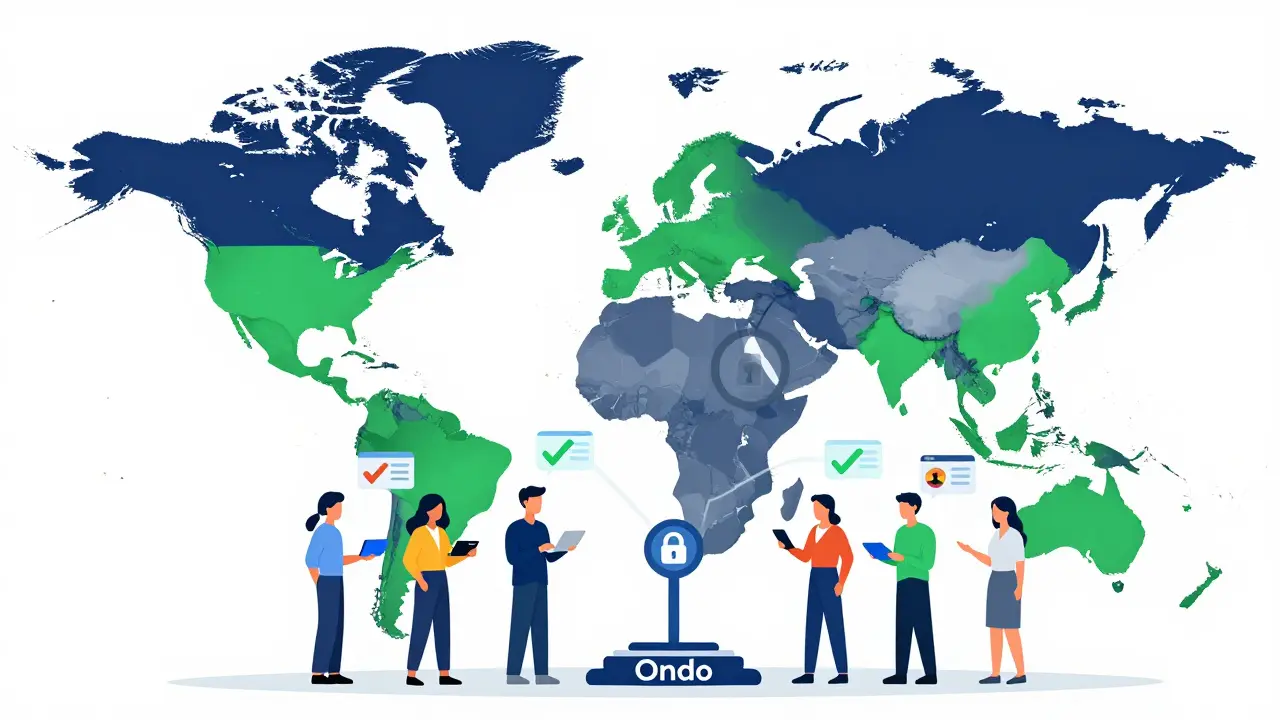
Here is the catch that catches many people off guard: you cannot simply buy PYPLon if you live in the United States. The product is explicitly designed for non-US retail and institutional users. This restriction exists because US securities laws are incredibly strict regarding the sale of fractionalized or tokenized equities to the general public. By targeting international markets, Ondo navigates a different regulatory landscape that allows for broader access among qualified foreign investors.
If you are located in countries like New Zealand, Ghana, Turkey, or elsewhere outside the US, you may be eligible. However, "eligible" does not mean anonymous. Because this is a security, not a utility token, you must undergo Know Your Customer (KYC) and Anti-Money Laundering (AML) checks. You will need to verify your identity with a government ID and proof of address before you can mint or trade PYPLon on supported platforms. This adds a layer of friction compared to buying Bitcoin, but it provides the legal safety net required for the underlying assets to exist.
Market Performance and Liquidity Analysis
As of early June 2026, PYPLon has established itself as a niche but active asset. The token recently hit an all-time high of $81.98 USD in late October 2025, driven by a surge in interest for tokenized equities and strong performance from PayPal’s underlying business. Currently, the price hovers around the $45-$46 range, representing a significant drawdown from its peak. This volatility reflects both the movement of PayPal’s actual stock price and the speculative premium often attached to new crypto-native products.
Liquidity is a critical factor for any tokenized stock. Unlike some obscure altcoins that you might buy but never sell, PYPLon maintains healthy daily trading volumes, often exceeding $780,000 USD in a single day. Given its total market capitalization of roughly $1 million USD, this volume indicates high turnover. For traders, this means you can likely enter and exit positions without causing massive slippage. The small circulating supply of approximately 24,610 tokens makes it a concentrated market, so large institutional moves can impact the price more sharply than in broader cryptocurrencies.
Where and How to Trade PYPLon
You won’t find PYPLon on every corner exchange. It is primarily listed on major centralized exchanges that support advanced asset classes, such as Binance and MEXC Global. The process to acquire it is straightforward if you already have a verified account:
- Create and Verify Account: Sign up on a supported exchange and complete the KYC verification process. Ensure your residency is declared correctly, as US IPs may trigger restrictions.
- Fund Your Wallet: Deposit fiat currency (like USD, EUR, or local currencies via P2P) or transfer stablecoins (USDT/USDC) to your exchange wallet.
- Locate the Pair: Search for the
PYPLon/USDTorPYPLon/USDtrading pair. - Execute the Trade: Place a market order for immediate execution or a limit order to buy at a specific price target.
- Withdraw (Optional): You can keep PYPLon on the exchange for easy trading or withdraw it to a compatible Web3 wallet that supports ERC-20 tokens, assuming the exchange allows withdrawals of security tokens.
For those preferring decentralized finance (DeFi) routes, direct DEX swaps for security tokens are currently limited due to compliance requirements. Most transactions still route through centralized venues that handle the legal paperwork in the background.
Risks You Must Understand Before Investing
No investment is risk-free, and tokenized stocks introduce a unique blend of traditional and crypto-specific dangers. First, consider counterparty risk. While the tokens are backed by real shares held in custody, you are trusting the custodian bank and the Ondo protocol to manage those assets correctly. If the custodian fails or the smart contracts contain vulnerabilities, your exposure could be compromised.
Second, there is regulatory uncertainty. Governments worldwide are still figuring out how to classify tokenized securities. A sudden change in law in your home country could restrict your ability to trade or even hold PYPLon. Third, remember the liquidity mismatch. While PYPLon trades 24/5, the underlying PayPal stock only trades during market hours. During weekends or holidays, the token’s price might drift slightly from the true fair value of the stock due to lack of arbitrage activity.
The Future of Tokenized Equities
PYPLon is just one piece of a much larger puzzle. Ondo Finance and similar protocols are working toward a future where anyone with an internet connection can build a diversified portfolio of global assets instantly. Imagine buying fractional shares of Apple, Tesla, and Coca-Cola simultaneously using a single crypto wallet, settling in seconds rather than days. We are seeing the early stages of this shift now. As regulatory frameworks mature and more banks adopt blockchain infrastructure, tokens like PYPLon could become standard tools for international wealth management, offering transparency and efficiency that traditional brokerages struggle to match.
Can US citizens buy PYPLon?
No. PYPLon is explicitly restricted to non-US residents due to current US securities regulations. Attempting to purchase it while residing in the United States may violate terms of service and local laws.
Does PYPLon pay dividends directly to my wallet?
Not typically as cash payouts. Instead, the structure is designed to mimic dividend reinvestment. Any dividends earned by the underlying PayPal shares are used to increase the value of the token or adjust the redemption rate, effectively compounding your return within the token itself.
Is PYPLon safe from hacking?
Like all crypto assets, it carries smart contract and exchange risks. However, the underlying PayPal shares are held in regulated custodial accounts separate from the blockchain code. This separation provides a layer of protection against pure cyber threats affecting the token layer.
How does the price of PYPLon stay aligned with PayPal stock?
Authorized participants act as arbitrageurs. If PYPLon trades below the value of the underlying stock, they buy the cheap token, redeem it for the actual shares, and sell the shares for profit. This action pushes the token price back up. The reverse happens if the token trades too high.
What happens if Ondo Finance shuts down?
The underlying assets (PayPal shares) are held by independent third-party custodians, not by Ondo itself. In a worst-case scenario, legal mechanisms would allow holders to claim their proportional share of the underlying equity, though the process would be complex and time-consuming.
Author
Ronan Caverly
I'm a blockchain analyst and market strategist bridging crypto and equities. I research protocols, decode tokenomics, and track exchange flows to spot risk and opportunity. I invest privately and advise fintech teams on go-to-market and compliance-aware growth. I also publish weekly insights to help retail and funds navigate digital asset cycles.